What is Kuta Beach?
Kuta Beach is a 2.5-kilometre stretch of sand on the southwestern coast of Bali, Indonesia. It runs from the airport in the south to Legian Beach in the north, fronting one of the most developed tourist strips on the island. For decades it has been Bali’s default first stop – the beach that backpackers in the 1970s put on the map, the beach that package tourists in the 1990s filled with resort towers, and the beach that still draws more visitors than any other on the island. Indonesia is one of the more affordable travel destinations in Southeast Asia once you leave the resort strips.
Kuta divides opinion. Some travelers see it as overcrowded, over-commercialised, and past its prime. Others see it as the most convenient base in Bali – 10 minutes from the airport, walking distance to shopping, restaurants, and nightlife, and home to one of the best beginner surf breaks in Southeast Asia. Both views are accurate. What Kuta is not, anymore, is a quiet fishing village. Knowing what you are getting before you arrive is the key to enjoying it.
There is also a second Kuta – Kuta Lombok – a completely different beach on the neighbouring island of Lombok. This guide covers both, starting with Kuta Bali.
Things to do at Kuta Beach Bali
Surfing
Kuta Beach is where most people in Bali learn to surf. The break is a long, gentle beach break with sandy bottom – no reef, no rocks, no sharp coral. Waves are consistent year-round, typically 1-3 feet, and the whitewash rolls in evenly across a wide stretch. Board rental costs about IDR 50,000-100,000 ($3-6 USD) per hour, and surf lessons from local instructors run IDR 300,000-500,000 ($19-31 USD) for a two-hour session.
If you can already surf, Kuta will bore you – the waves are small and crowded. Head to Uluwatu, Padang Padang, or Canggu for more serious breaks. But for absolute beginners, especially families with children, Kuta’s gentle waves and sandy floor are hard to beat.
Sunset watching
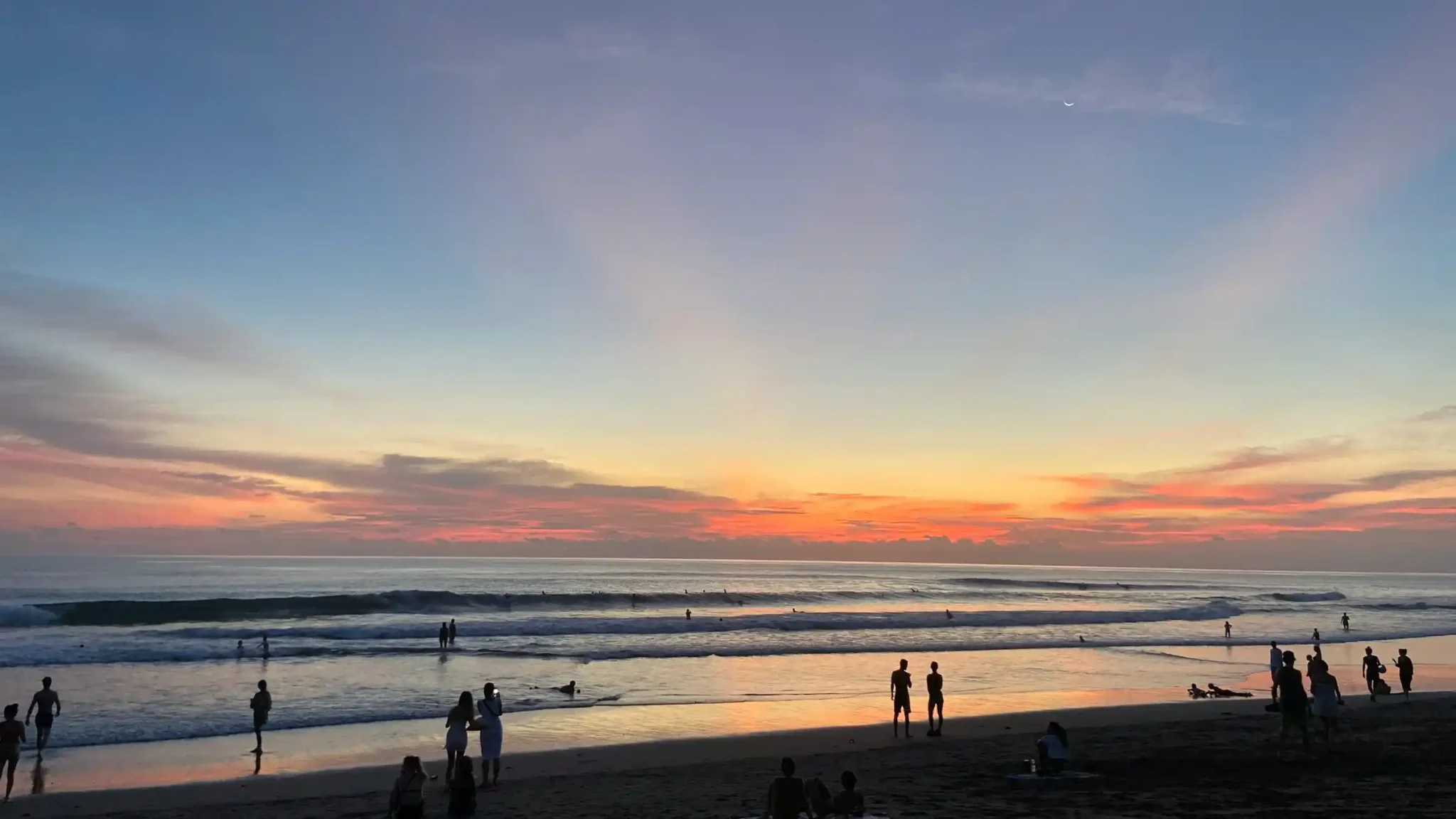
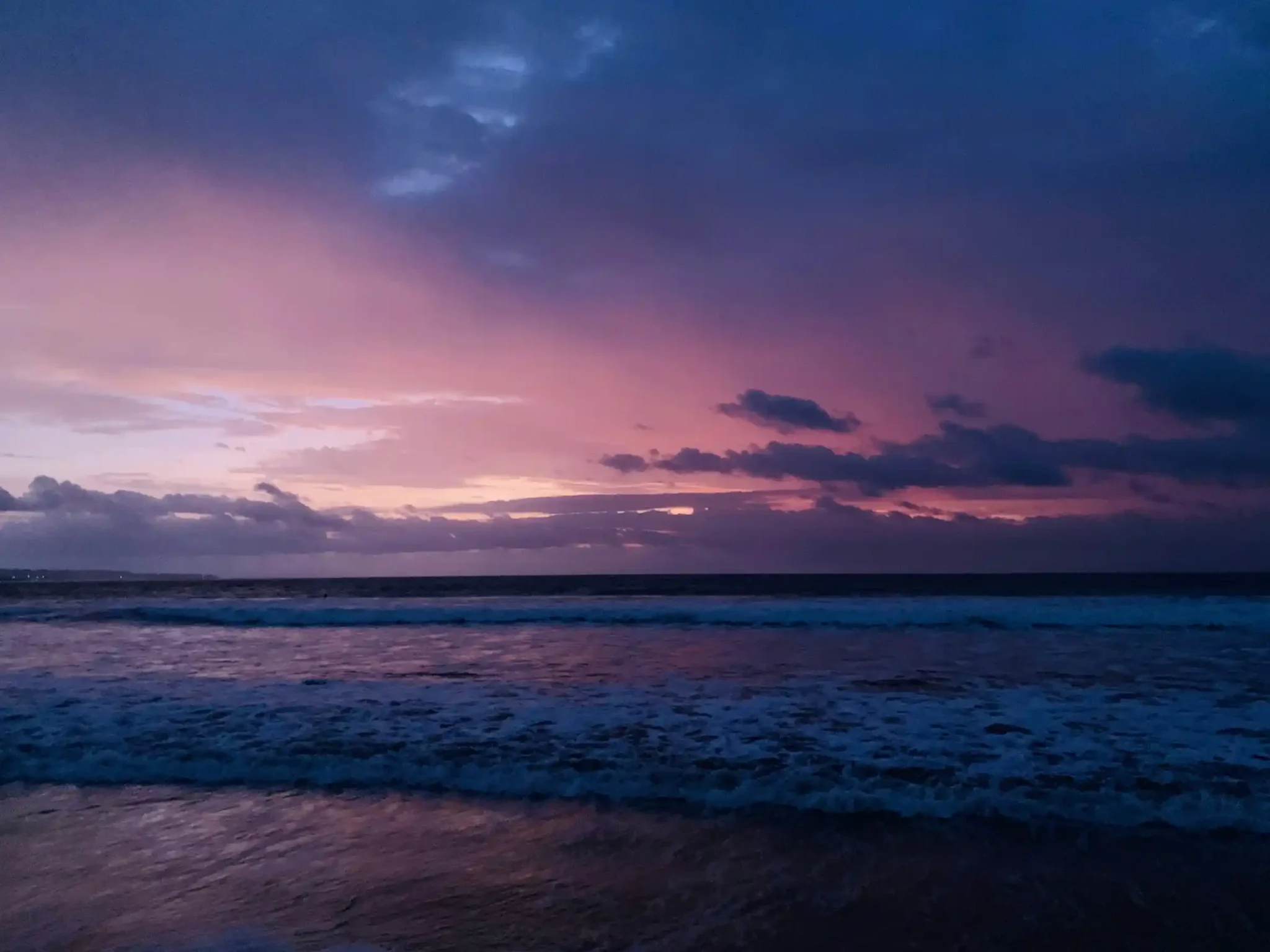
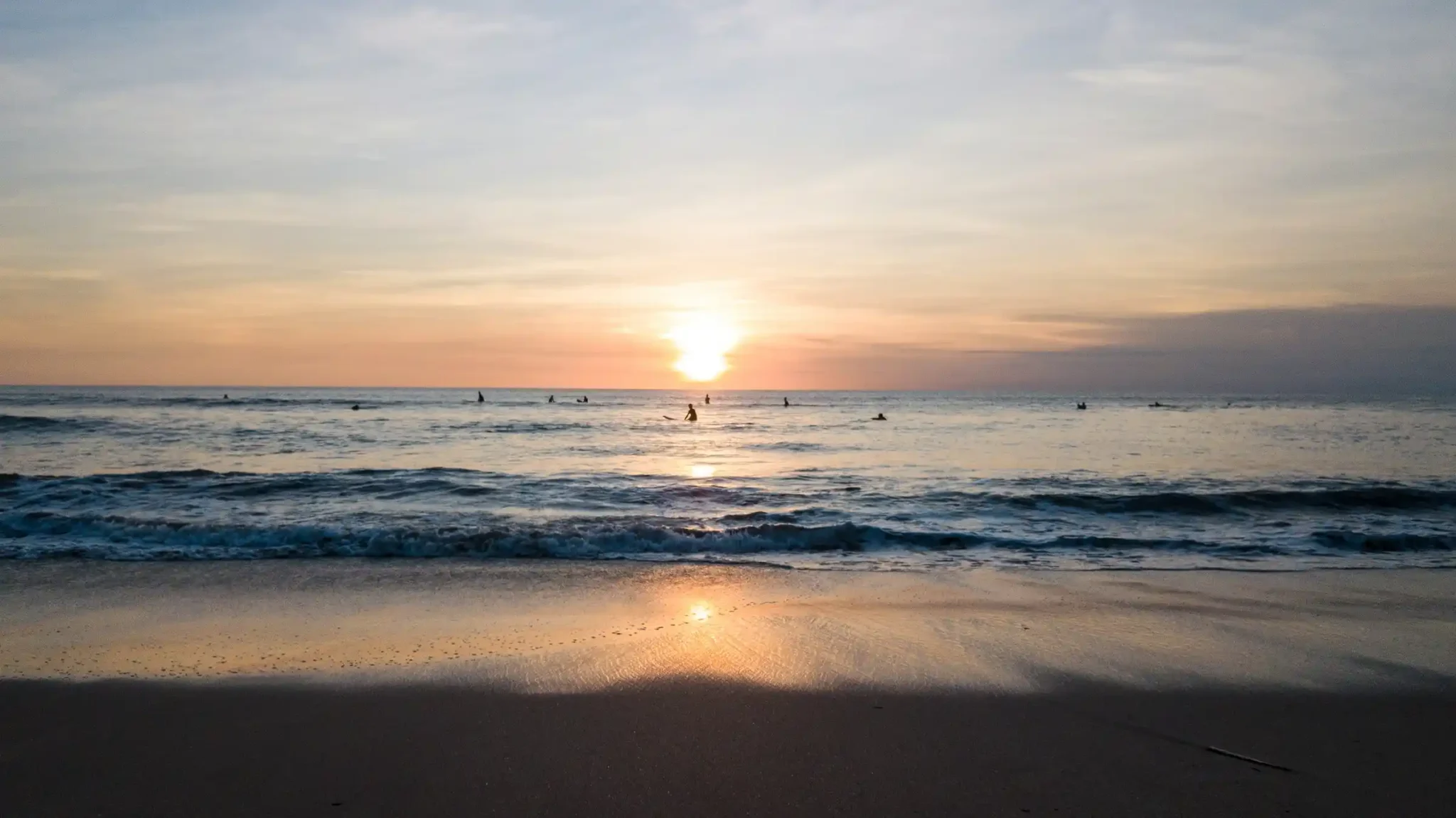
Kuta Beach faces west, which means unobstructed sunsets over the Indian Ocean every evening. The best spot is the southern end of the beach near the airport, where planes descend low over the water on approach to Ngurah Rai – the combination of a pink sky, crashing waves, and a 737 passing fifty metres overhead is uniquely Kuta. No other beach in Bali serves this particular visual.
Shopping at Beachwalk
Beachwalk Shopping Center is an open-air mall on Jalan Pantai Kuta, directly across from the beach. It opened in 2012 and stands out from Bali’s otherwise chaotic commercial landscape as a modern, well-designed retail space with international and local brands, a cinema, restaurants on the upper floors, and a Starbucks facing the sunset.
For practical shopping – sunscreen, swimwear, phone accessories, souvenirs that are not mass-produced – Beachwalk is efficient. For bargain shopping on textiles, crafts, and art, the street markets along Jalan Legian and Poppies Lane are where locals and experienced visitors go instead.
Poppies Lane
Poppies Lane 1 and Poppies Lane 2 are narrow streets that cut from Jalan Legian down toward the beach, packed with small restaurants, surf shops, massage parlours, tattoo studios, and budget guesthouses. This is the backpacker spine of Kuta – cheaper and grittier than Beachwalk, more authentic than the resort strip, and the closest thing Kuta has to a neighbourhood with character. Eat at the local warungs (small family-run restaurants) here for IDR 25,000-50,000 ($1.50-3 USD) per meal.
Water sports beyond surfing
Operators along the beach rent bodyboards, stand-up paddleboards, and parasailing rides. The water sports vendors on Kuta Beach itself tend to overcharge – negotiate firmly, or book through your hotel or a reputable agency for fixed prices. Jet ski rentals are available but the crowded surf zone makes them less enjoyable here than at Tanjung Benoa to the south.
Waterbom Bali
Waterbom Bali is a water park on Jalan Kartika Plaza, a short walk south of Kuta Beach. It has been consistently rated one of the best water parks in Asia, with slides ranging from gentle family rides to a near-vertical freefall called Climax. Tickets cost about IDR 535,000 ($33 USD) for adults. Worth a half-day if you are traveling with kids or want a break from the beach.
Where to stay in Kuta
Quick guide by budget
- Budget (under $20/night): Hostels and guesthouses on Poppies Lane and Jalan Benesari – dorm beds from $5, private rooms from $12
- Mid-range ($40-80/night): Hotels along Jalan Pantai Kuta and Jalan Kartika Plaza with pools and breakfast – The Bene, Ramayana, Kuta Heritage Residence
- Beachfront ($80-200/night): Hotels directly on the sand – Hard Rock Hotel Bali, The Patra Bali, Kartika Plaza
- Airport convenience: If you have an early flight or late arrival, hotels on Jalan Kartika Plaza are 5 minutes from Ngurah Rai – closer than anywhere in Seminyak or Ubud
Kuta’s main advantage as a base is proximity to the airport. Ngurah Rai International Airport (DPS) is literally adjacent to Kuta – a taxi from arrivals to most Kuta hotels takes 10-15 minutes and costs IDR 80,000-120,000 ($5-7 USD) by metered taxi or Grab. Compare this to 45 minutes to Seminyak, 90 minutes to Ubud, or 2 hours to Uluwatu in traffic.
Nearby beaches
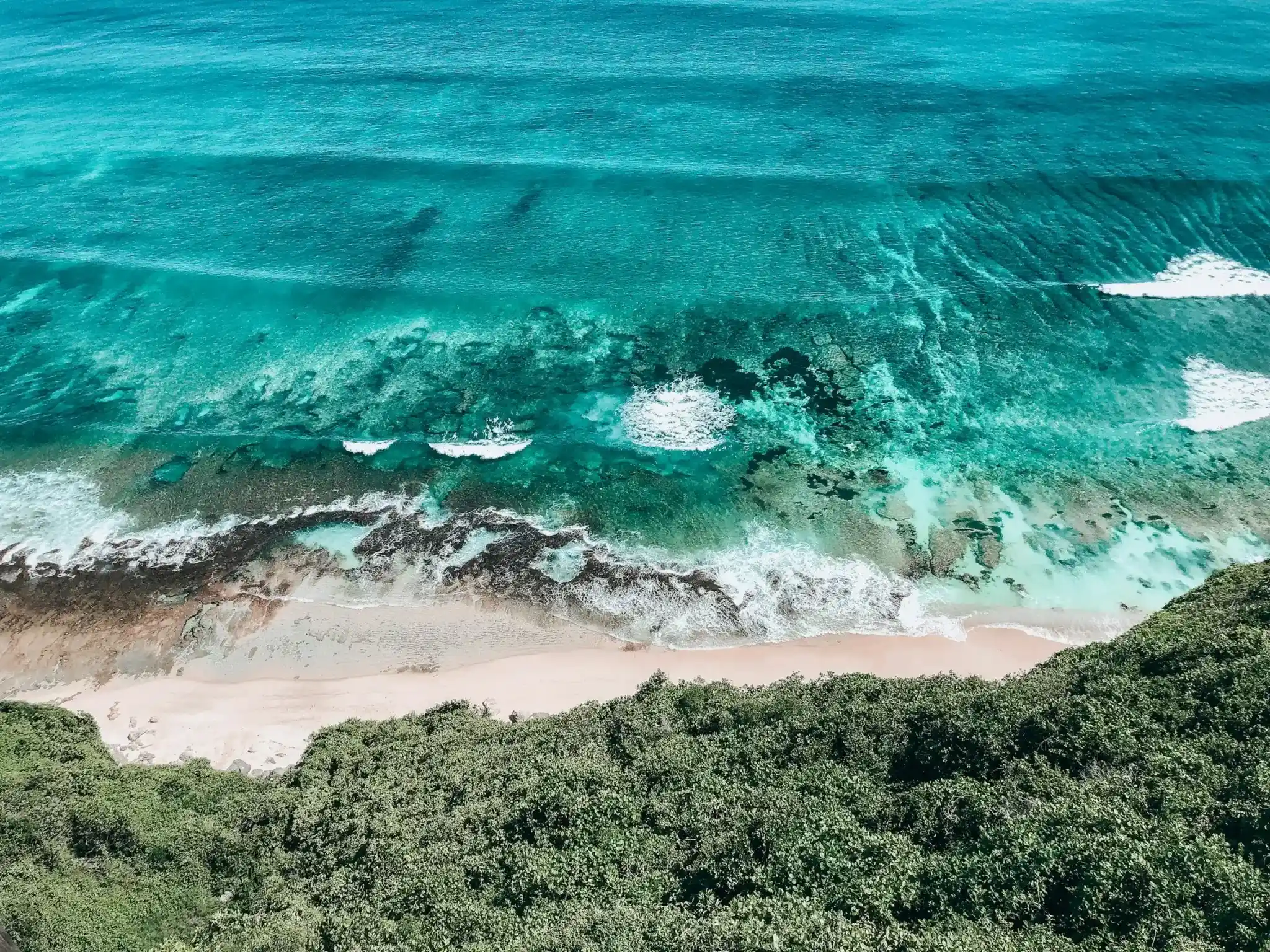
Kuta Beach blends seamlessly into its neighbours – there are no walls or fences, just a continuous stretch of sand that changes name every few hundred metres. Walking north from Kuta:
Legian Beach
Legian starts where Kuta ends, roughly at Jalan Melasti. The sand is the same, the waves are the same, but the crowd thins out slightly. Legian has a more relaxed restaurant scene than Kuta and fewer hawkers on the sand. A 15-minute walk from central Kuta.
Seminyak Beach
Continue north past Legian and you reach Seminyak – Bali’s upscale beach strip. Beach clubs like Ku De Ta, Potato Head, and Mrs. Sippy line the shore. The sand is wider, the vibe is more curated, and prices are 2-3x higher than Kuta. About 30 minutes on foot from Kuta or a short taxi ride.
Jimbaran Beach
South of the airport, Jimbaran Bay is a crescent of calm water known for its seafood restaurants directly on the sand. At sunset, dozens of restaurants set up tables on the beach with grilled fish, candles, and views of arriving planes. A 15-minute taxi ride from Kuta.
Practical information
Getting to Kuta Beach
From Ngurah Rai International Airport, take a metered taxi (Blue Bird is the most trusted company) or book a Grab. The ride is under 15 minutes. If you are coming from other parts of Bali, Kuta is accessible by taxi, Grab, or rented scooter. Traffic in the Kuta-Legian-Seminyak corridor is heavy from 4-7 PM – plan around it.
Best time to visit
Bali’s dry season runs from April to October, with the driest months being June through September. This is peak tourist season at Kuta Beach – sunny skies, consistent surf, and warm water. The wet season (November-March) brings afternoon downpours that usually clear within an hour or two. Kuta is warm year-round, typically 27-33°C (80-91°F).
Safety at Kuta Beach
The ocean at Kuta has a strong shore break and rip currents. Swim between the red-and-yellow flags where lifeguards are posted. Drownings happen every year at Kuta, almost always to swimmers who go beyond the flagged zones or swim at unpatrolled hours. The beach has lifeguard coverage from roughly 7 AM to 6 PM.
On land, petty theft is the main concern – do not leave valuables unattended on the sand. The nightlife strip on Jalan Legian can get rowdy after midnight, particularly around Sky Garden and the surrounding bars. Drink spiking has been reported; watch your glass.
Money and costs
Indonesia uses the Rupiah (IDR). ATMs are everywhere in Kuta – BCA, Mandiri, and BNI are reliable and have the lowest fees. Avoid the standalone “ATM” booths in shops, which often charge high commissions. Kuta is one of the cheapest beach destinations in Southeast Asia for daily spending:
Typical costs at Kuta Beach
- Warung meal: IDR 25,000-50,000 ($1.50-3 USD)
- Restaurant meal: IDR 80,000-150,000 ($5-9 USD)
- Large Bintang beer: IDR 35,000-50,000 ($2-3 USD)
- Surf board rental: IDR 50,000-100,000/hour ($3-6 USD)
- Surf lesson (2 hrs): IDR 300,000-500,000 ($19-31 USD)
- Balinese massage (1 hr): IDR 80,000-150,000 ($5-9 USD)
- Scooter rental: IDR 60,000-80,000/day ($4-5 USD)
- Grab to Seminyak: IDR 30,000-50,000 ($2-3 USD)
Kuta Lombok: The other Kuta
There is a second Kuta in Indonesia, and it could not be more different. Kuta Lombok sits on the south coast of Lombok, the island east of Bali. Where Kuta Bali is urban, developed, and noisy, Kuta Lombok is rural, quiet, and ringed by empty white-sand beaches backed by dry brown hills.
Kuta Lombok has developed rapidly since Lombok’s new international airport (LOP) opened nearby, but it still feels like early-stage Bali – small guesthouses, a handful of restaurants, and beaches that you can walk along without seeing another tourist. The main draws are:
- Tanjung Aan Beach: A wide bay with powder-white sand and calm turquoise water, about 5 km east of Kuta Lombok. One of the most beautiful beaches in Indonesia.
- Mawun Beach: A horseshoe-shaped cove 7 km west, sheltered and swimmable.
- Selong Belanak: A long crescent of white sand 15 km west, popular for beginner surfing – Lombok’s answer to Kuta Bali’s gentle waves.
- Surfing: Gerupuk Bay, accessible by boat from Kuta Lombok, has reef breaks for intermediate to advanced surfers.
Getting to Kuta Lombok from Bali takes about 3-4 hours: a 30-minute flight from Ngurah Rai to Lombok International Airport, then a 30-minute drive south. Alternatively, fast boats from Bali to Lombok (Bangsal or Senggigi) run daily, followed by a 1.5-hour drive across the island.
Is Kuta Beach worth visiting?
That depends on what you want from Bali.
Kuta is worth it if: you are arriving late or leaving early and want to be near the airport, you want to learn to surf on safe beginner waves, you are traveling on a tight budget, you enjoy nightlife, or you want easy access to shopping and restaurants without renting a scooter.
Kuta is not worth it if: you want a quiet, photogenic beach experience (go to Uluwatu or Nusa Penida), you want rice terraces and cultural immersion (go to Ubud), or you want upscale beach clubs and boutique dining (go to Seminyak or Canggu).
Most experienced Bali visitors spend one night in Kuta on arrival, then move elsewhere. First-time visitors who do not want to deal with logistics often stay for three or four nights and use it as a base for day trips. Neither approach is wrong – Kuta works best when you use it for what it is rather than expecting what it is not.
Frequently asked questions
Where is Kuta Beach Indonesia?
Kuta Beach is located on the southwestern coast of Bali, Indonesia, in the Badung Regency, around 10 kilometres south of Denpasar. It is directly adjacent to Ngurah Rai International Airport – the closest major beach to the airport at under 3 kilometres.
Is Kuta Beach good for swimming?
Kuta Beach is swimmable but has strong shore break and rip currents. Always swim between the red-and-yellow flags where lifeguards are on duty. The waves make it better for surfing and bodyboarding than for calm swimming. For flat water, try Jimbaran Bay or Sanur Beach instead.
What is the difference between Kuta Bali and Kuta Lombok?
They share a name but almost nothing else. Kuta Bali is a busy, urban beach town with hotels, nightlife, and heavy tourist traffic. Kuta Lombok is a quiet, rural area on the neighbouring island of Lombok, known for empty white-sand beaches, dry landscapes, and a fraction of Bali’s crowds.
How far is Kuta Beach from Bali airport?
Kuta Beach is about 2.5 kilometres from Ngurah Rai International Airport – a 10-15 minute taxi or Grab ride. It is the closest beach to the airport on the island.
What is Beachwalk Bali?
Beachwalk is an open-air shopping centre on Jalan Pantai Kuta, directly across from Kuta Beach. It has international brands, local shops, restaurants, a cinema, and a supermarket. It is the most modern retail space in the Kuta-Legian area.