What is the monsoon season in Vietnam?
Vietnam stretches over 1,650 kilometres from north to south, and the monsoon does not hit the whole country at the same time. The monsoon is also called the rainy season or wet season, and the three terms mean the same thing: the months when a region gets its heaviest rain. There is no single “rainy season in Vietnam” – instead, three distinct climate zones each get their heaviest rain in different months. Understanding this is the key to planning around the weather, or deciding to travel through it anyway. Vietnam also ranks among the most affordable travel destinations anywhere, which is a big part of its appeal. Other tropical countries follow a similar wet-and-dry rhythm – see our guide to the best time to visit Costa Rica for another example.
In simple terms: the southwest monsoon brings rain to the north and south from roughly May to October, while the northeast monsoon drenches the central coast from September to December. At almost any time of year, some part of Vietnam is dry while another is wet. This means you can often adjust your route rather than cancel your trip.
When is monsoon season in Vietnam?
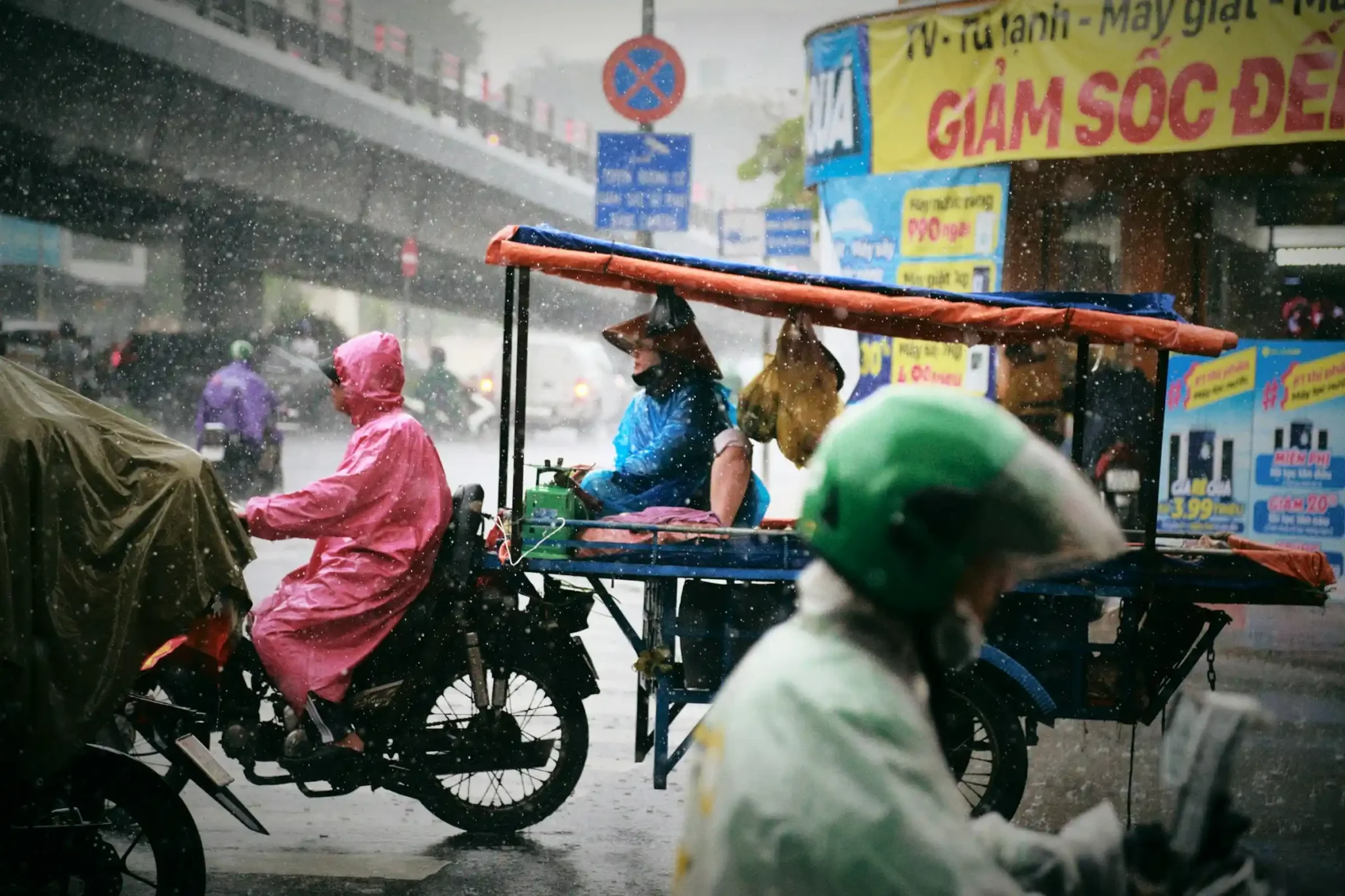
The monsoon months in Vietnam vary by region. Here is the breakdown:
| Region | Key cities | Monsoon months | Heaviest rain |
|---|---|---|---|
| North | Hanoi, Sapa, Ha Long Bay | May – September | July – August |
| Central | Da Nang, Hoi An, Hue | September – December | October – November |
| South | Ho Chi Minh City, Mekong Delta, Phu Quoc | May – November | June – August |
This staggered pattern is what makes Vietnam different from countries like Thailand or Indonesia, where the monsoon sweeps the whole country at once. In Vietnam, if the north is drenched in July, the central coast is still dry. If Da Nang is flooded in November, Saigon is coming out of its rainy season and the north is already cool and dry.
Hanoi monsoon season
Hanoi and the north of Vietnam get their monsoon from May to September, with the heaviest rain falling in July and August. Average rainfall in Hanoi peaks at around 300-320 mm in August – roughly ten times the driest month (January, at about 20 mm).
Rain in Hanoi during monsoon season typically arrives as intense afternoon or evening downpours rather than all-day drizzle. Mornings are often clear, which means you can still sightsee, visit Hoan Kiem Lake, and walk the Old Quarter before the clouds build. The storms are warm – temperatures hover around 30-35°C with high humidity – so you will be wet from rain or sweat either way.
Practical note: Flash flooding hits Hanoi’s streets regularly during heavy July and August storms. Low-lying areas of the Old Quarter can flood knee-deep within an hour. Avoid booking ground-floor rooms in the old city during peak monsoon, and carry waterproof bags for electronics.
Ha Long Bay tours still run during the monsoon, but visibility drops, seas can be rough, and some operators cancel overnight cruises during storms. Sapa trekking is possible but trails become muddy and slippery, and the rice terraces – while lush and green – are often hidden behind low cloud and fog.
Da Nang and Hoi An monsoon season
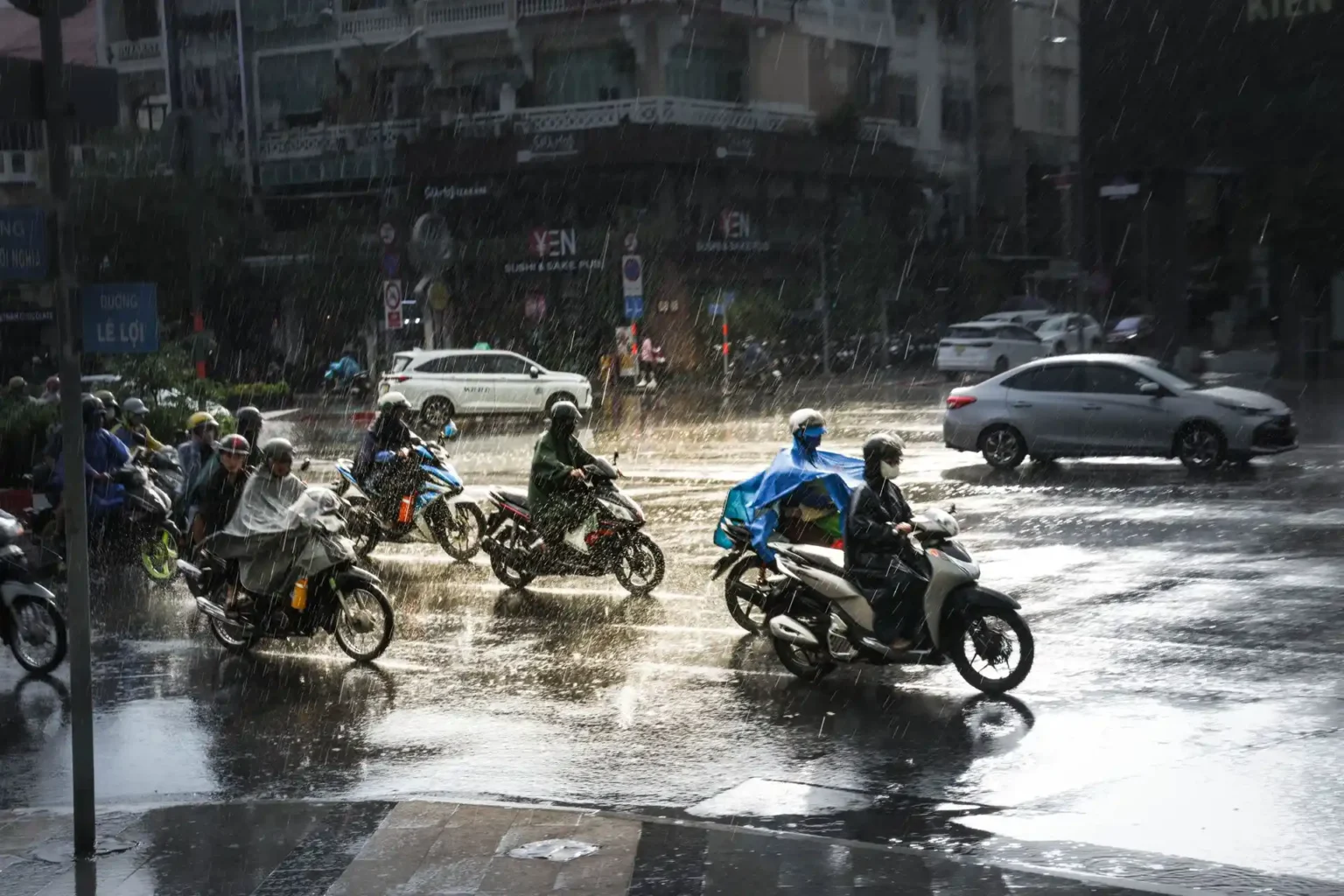
The central coast has the latest monsoon in Vietnam, running from September to December with the worst conditions in October and November. This is also the region most vulnerable to typhoons, which can bring sustained heavy rain, flooding, and storm surges along the coast.
Da Nang monsoon season is noticeably different from what the north and south experience. While Hanoi and Saigon get afternoon thunderstorms that clear quickly, the central coast can see days of continuous grey rain during the peak months, with little break between downpours.
Hoi An, sitting on the Thu Bon River just 30 km south of Da Nang, is particularly flood-prone. The old town floods almost every year during the October-November monsoon peak – sometimes waist-deep. Local businesses are used to it, but for visitors it means sodden streets, closed restaurants, and boat rides replacing walking. The iconic Japanese Bridge and the lantern-lit streets of the Ancient Town are best enjoyed outside these months.
Best time for Da Nang and Hoi An: February to May – dry, warm, and calm seas. The beaches at My Khe and An Bang are at their best, and Hoi An is dry enough to walk comfortably.
Ho Chi Minh City monsoon season
Saigon and the south follow the same monsoon timing as the north – May to November – but with a more predictable daily pattern. Rain arrives like clockwork in the mid-to-late afternoon, usually between 3 and 6 PM, pours hard for 30 to 90 minutes, and then stops. By evening the streets are drying and the city is cooler.
This daily rhythm makes Ho Chi Minh City one of the easiest places to visit during the monsoon. Schedule outdoor plans for the morning, find a café or museum in the early afternoon, wait out the rain, and resume after it passes. Temperatures stay at 28-34°C year-round, so the rain is warm.
The Mekong Delta, south of Saigon, actually benefits from the monsoon. Water levels rise, the landscape turns a deep green, and the floating markets are busier as farmers bring in their monsoon-season harvest. Boat trips run as normal – you will just need a waterproof layer.
Should you visit Vietnam during monsoon season?
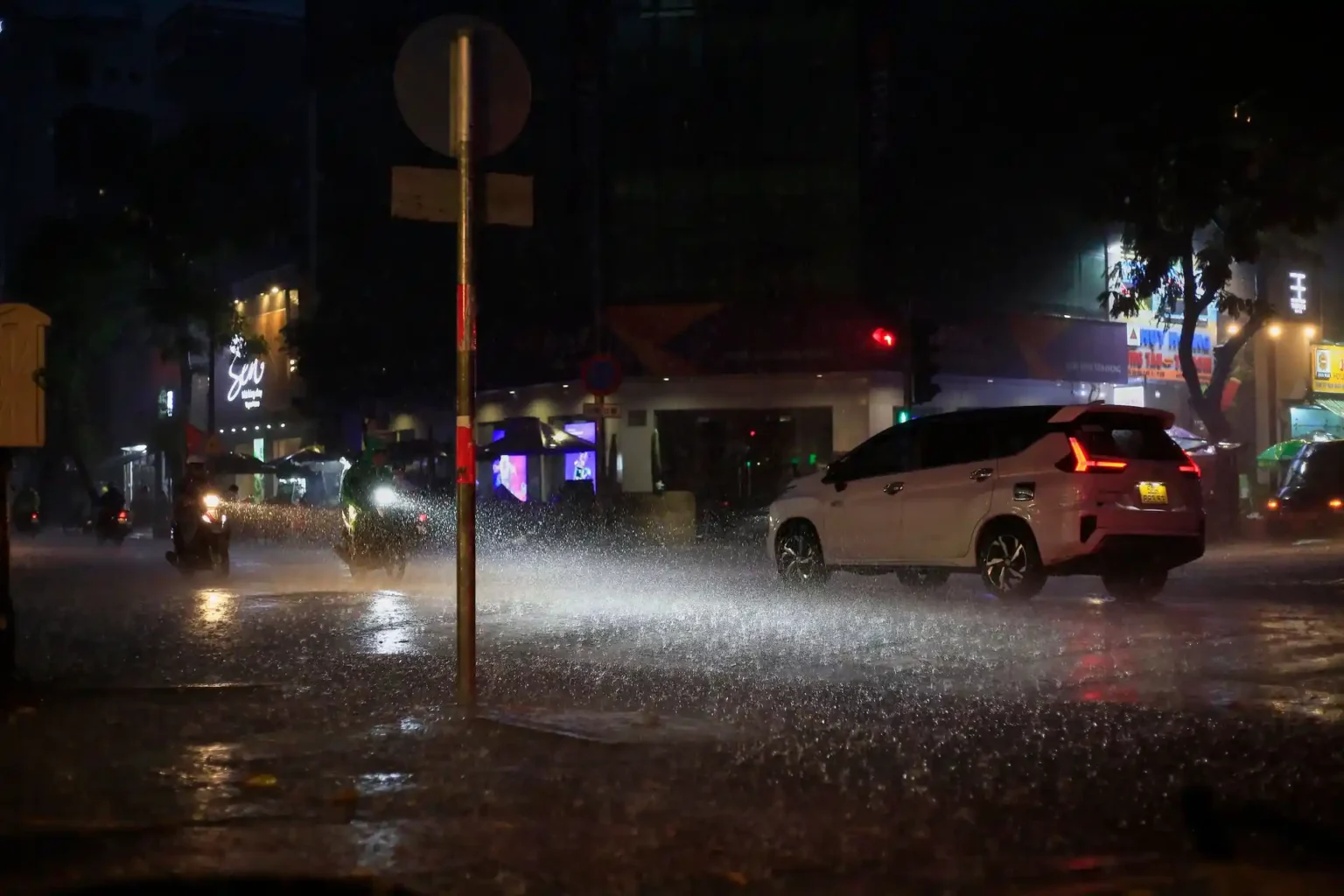
Yes, with caveats. The monsoon season in Vietnam is not a reason to avoid the country – it is a reason to plan your route carefully. Here is an honest breakdown:
Reasons to go
- Fewer tourists: Monsoon months see significantly fewer visitors, which means shorter queues, lower hotel prices, and a less crowded experience at major sites like Ha Long Bay, Hoi An, and the Cu Chi Tunnels.
- Lower prices: Hotels drop rates by 20-40% during monsoon season, and last-minute deals are common.
- Lush scenery: The rain turns Vietnam’s landscapes vivid green – rice terraces in Sapa, the Mekong Delta, and the hills around Da Lat are at their most photogenic.
- Rain is rarely all day: In most of the country, monsoon rain falls in short, heavy bursts. You will get a couple of wet hours, not wet days (except on the central coast in October-November).
Reasons to reconsider
- Central coast flooding: Hoi An and Da Nang in October and November can be genuinely unpleasant, with streets underwater and beaches unsafe for swimming.
- Typhoon risk: Central Vietnam is in the typhoon belt. Flights get cancelled, roads flood, and tours shut down during major storms.
- Humidity: Heat plus moisture can be exhausting, especially in the south. Air conditioning becomes essential, not optional.
- Reduced beach time: Seas are rougher, beaches have debris washed in, and lifeguard flags go up more often.
How to plan your route around the monsoon
Because the monsoon hits different regions at different times, you can often dodge the worst weather by adjusting your itinerary:
Route suggestions by month
- May – August: Focus on central Vietnam (Da Nang, Hoi An, Hue) – this is their dry season while the north and south are wet.
- September – November: Stick to the north (Hanoi, Ha Long) which is drying out, or the south (Saigon, Mekong) where rain is easing. Avoid the central coast.
- December – April: The whole country is either dry or drying – the traditional “best time” to visit. Go anywhere.
What to pack for monsoon season
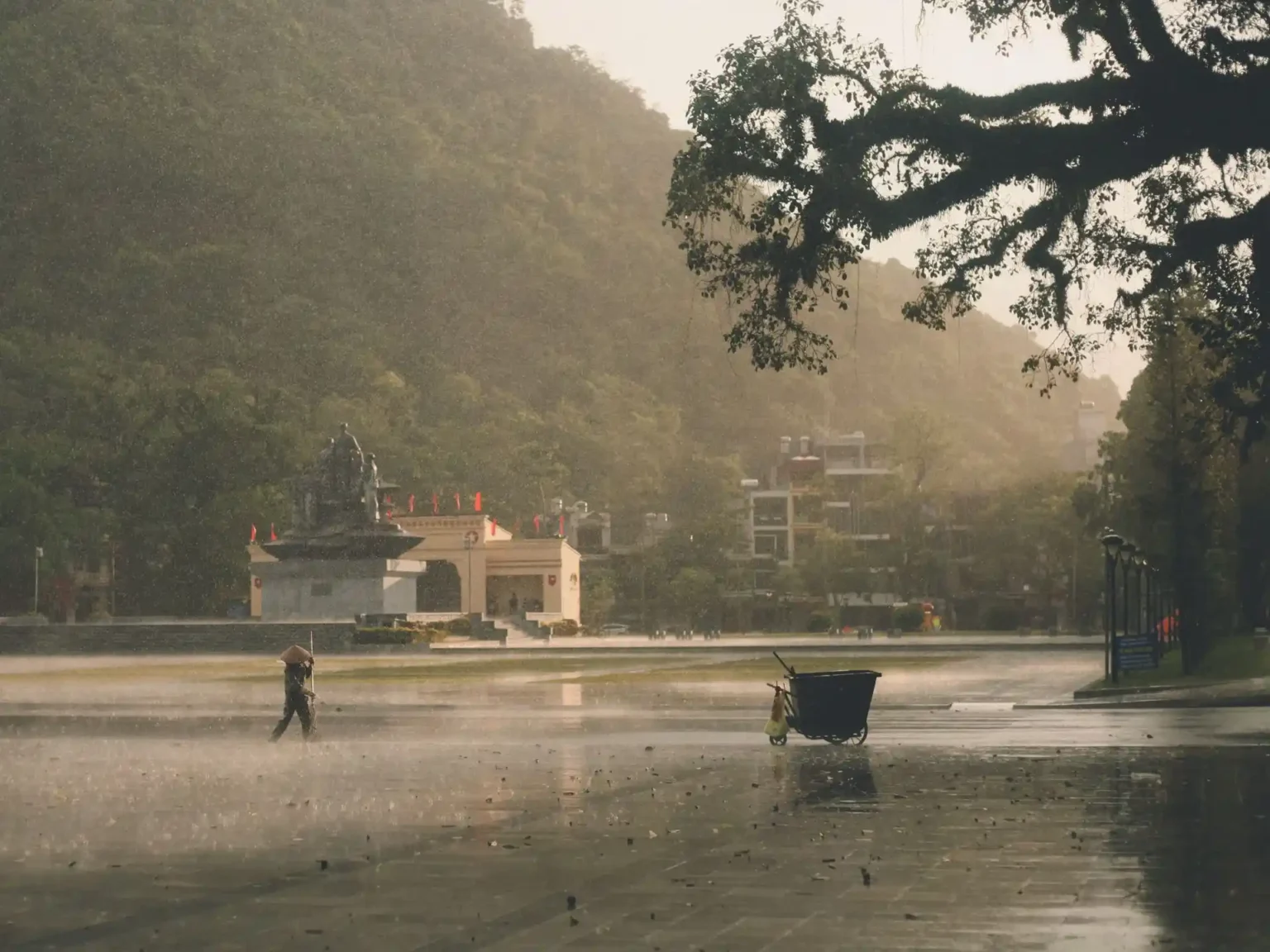
Packing for the monsoon in Vietnam is about staying functional, not staying dry – you will get wet regardless. The goal is to dry fast and protect your valuables.
- A lightweight rain jacket – not an umbrella. You need your hands free for motorbike taxis, crowded streets, and holding onto things in the wind. A packable rain shell that fits in your daypack is ideal.
- Quick-dry clothing – cotton stays wet for hours in the humidity. Synthetic or merino fabrics dry on your body within 30 minutes after a downpour.
- Waterproof phone pouch – the single most important monsoon accessory. Your phone is your map, translator, and ride-hailing app. A simple roll-top pouch keeps it safe.
- Sandals with grip – marble and tile surfaces across Vietnam become ice rinks when wet. Sport sandals or rubber-soled flip-flops with decent tread beat trainers, which take hours to dry.
- Dry bag – a 10-litre roll-top dry bag keeps your passport, cash, and electronics safe inside your daypack during downpours and boat trips.
Vietnam and Cambodia: rainy season comparison
Many travellers combine Vietnam and Cambodia in one trip. Both countries share a similar monsoon pattern in the south – the wet season runs from May to October in Cambodia, overlapping with southern Vietnam. The heaviest months in Cambodia are August and September, when Siem Reap gets around 250 mm per month and the Tonle Sap lake floods to several times its dry-season size.
The timing works in your favour if you plan it right: visit northern Vietnam (Hanoi, Ha Long) in October or November when the rain is tapering off, then fly to Siem Reap in November or December when Cambodia is entering its dry season and Angkor Wat is at its greenest without the mud.
Frequently asked questions
When is the monsoon season in Vietnam?
It depends on the region. The north (Hanoi) and south (Ho Chi Minh City) get rain from May to October, while the central coast (Da Nang, Hoi An) gets its monsoon later, from September to December.
Does it rain all day during monsoon season in Vietnam?
Rarely. In most of the country, rain falls in short, heavy bursts lasting one to two hours, usually in the afternoon. The exception is the central coast in October-November, where rain can be continuous for days.
Is it worth visiting Vietnam in the rainy season?
Yes. Fewer crowds, lower prices, and green landscapes make it worthwhile. Plan your route to follow the dry zones – when the north is wet, the central coast is dry, and vice versa.
What is the worst month to visit Vietnam?
October is the most challenging month overall. The central coast is at peak typhoon risk, the north is still getting late-monsoon rain, and only the south is beginning to dry out. November is similarly risky for the central coast.
Does Hoi An flood during monsoon season?
Yes. Hoi An floods almost every year during October and November. The old town can see water waist-deep during severe events. It is best to visit Hoi An between February and May.
Does Vietnam have a monsoon season?
Yes. Vietnam has a tropical monsoon climate, but the rain is split across three regions that get their wettest months at different times, rather than one nationwide rainy season.
When does the monsoon season end in Vietnam?
It ends at different times by region. The north winds down by late September and the south by November, while the central coast, which gets the latest and heaviest rain, usually clears by late December. January to March is dry across most of the country.
What are the wettest months in Vietnam?
It depends where you are: July and August in the north, June to August in the south, and October to November on the central coast, which sees the heaviest rain of all.