Costa Rica has two seasons – a dry season from December to April and a green (wet) season from May to November – but the best time to visit depends on where you are going and what you want to do. The Pacific coast, the Caribbean coast, and the cloud forests each run on different weather clocks, and the wildlife calendar rarely lines up with the sunniest months. Here is exactly when to go, broken down by month, region, and reason for travelling.
Quick answer
For reliable sun and beach weather, visit between mid-December and April (the dry season). For fewer crowds, lower prices, and green landscapes, come in the shoulder months of May, June, and November. For wildlife – especially whales and nesting turtles – August to October is unbeatable despite the rain. The only region that flips this pattern is the Caribbean coast, which is often driest in September and October.
Dry season vs green season
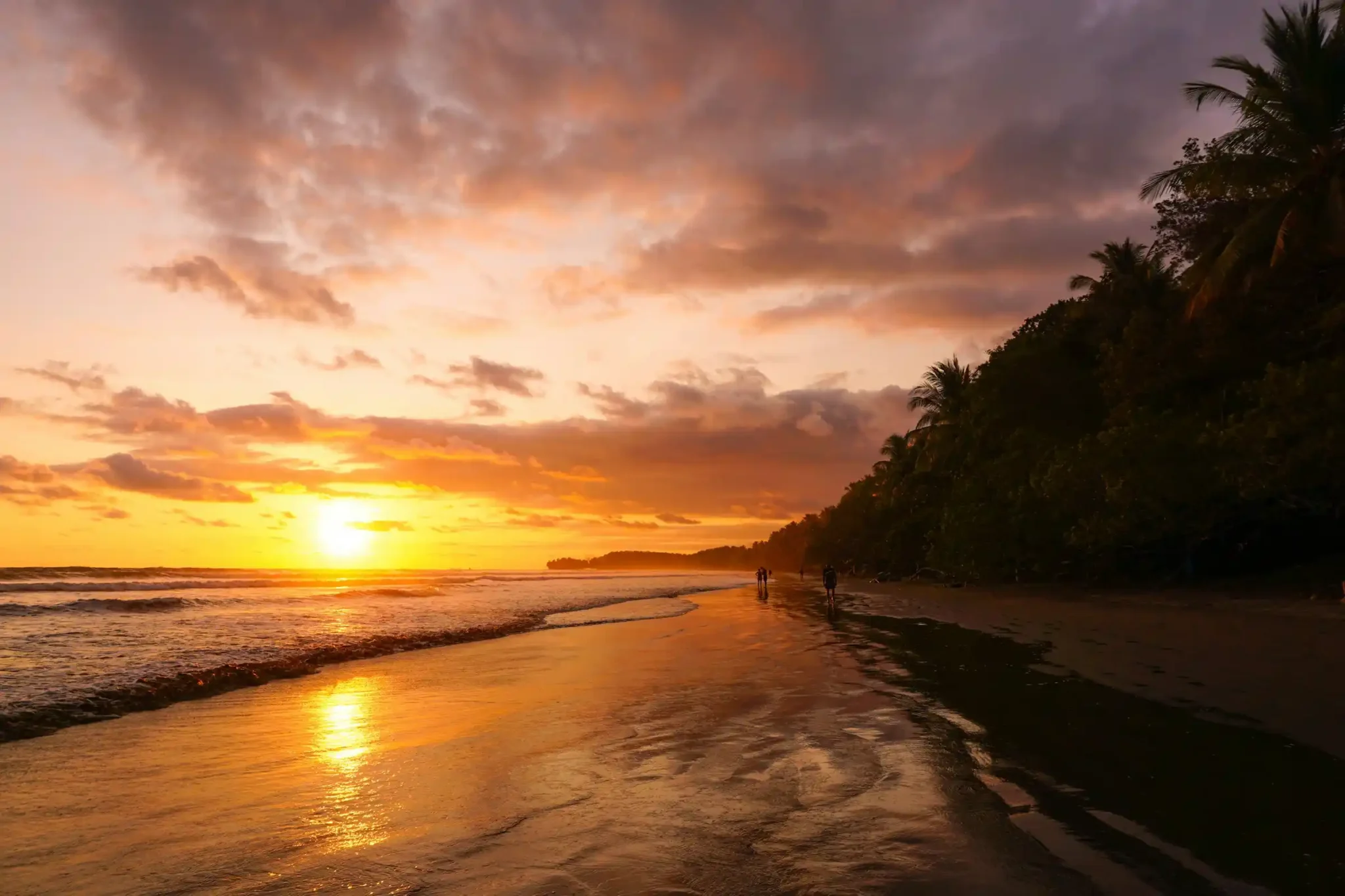
Costa Rica sits between 8 and 11 degrees north of the equator, so it does not have a true summer and winter. Instead, the year splits into two rainfall seasons.
| Dry season (Dec-Apr) | Green season (May-Nov) | |
|---|---|---|
| Weather | Sunny, little rain | Clear mornings, afternoon showers |
| Landscape | Drier, some brown in Guanacaste | Lush, green, full rivers and waterfalls |
| Crowds | High, peaks at Christmas and Easter | Low, quiet outside July-August |
| Prices | Highest of the year | 20-40% lower |
| Best for | Beaches, sun, first-timers | Wildlife, waterfalls, budget, surf |
Green season does not mean washed-out days. For most of it, mornings are bright and the rain arrives as a heavy afternoon downpour that clears within a couple of hours – a pattern that will feel familiar if you have read our guide to the monsoon season in Vietnam. The exceptions are September and October, when the Pacific side can see longer stretches of rain.
Costa Rica month by month
| Month | Weather | Crowds | Why go |
|---|---|---|---|
| January | Dry, sunny | High | Perfect beach weather after the holiday peak eases |
| February | Driest month | High | Best all-round weather; quetzal breeding begins |
| March | Dry, hot | High | Warm seas, great diving; book early for Easter |
| April | Dry, ending | Med-High | Last of the dry season, greener by month’s end |
| May | First rains | Low | Green landscapes, low prices, still mostly dry mornings |
| June | Afternoon showers | Low | Lush and quiet; good value shoulder month |
| July | “Veranillo” mini-dry spell | Med | A drier window mid-green-season; family travel |
| August | Showers return | Med | Whale watching starts on the south Pacific |
| September | Wettest (Pacific) | Very low | Peak whales and turtles; driest on the Caribbean |
| October | Wettest (Pacific) | Very low | Lowest prices; Caribbean coast at its best |
| November | Rains ease | Low | Green but drying, quiet, excellent value |
| December | Dry returns | High | Sunny; holiday crowds and prices from mid-month |
Best time to visit by region
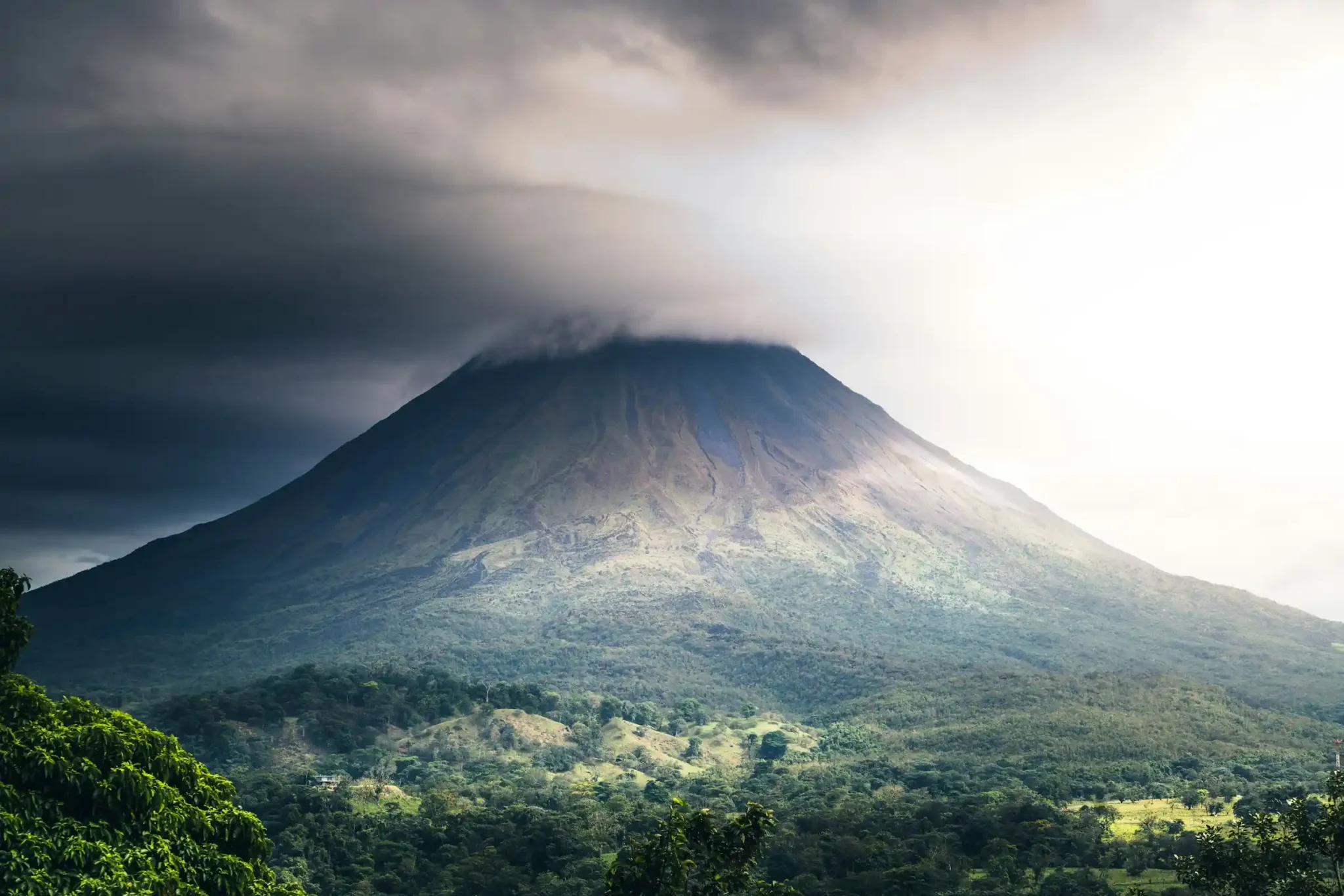
This is where most guides fall short. Costa Rica’s regions do not share one weather pattern, so the best time genuinely changes depending on which coast you are heading to.
North Pacific (Guanacaste, Tamarindo)
The driest, sunniest region in the country. Dry season here is bone-dry and reliably hot; the green season is milder than elsewhere. Best from December to April for beaches, though the landscape turns brown by March.
Central Pacific (Manuel Antonio, Jaco, Uvita)
Classic dry/green pattern. December to April for sun; August to October for humpback whales off Uvita. September and October are the wettest weeks of the year here.
Caribbean coast (Puerto Viejo, Tortuguero)
The rule-breaker. The Caribbean side has no true dry season but gets its clearest, driest spells in September-October and again in February-March – the opposite of the Pacific. If the rest of the country is rained out in September, this coast is often the sunniest place to be.
Central Valley and cloud forests (San José, Monteverde)
The Central Valley enjoys spring-like weather all year, 20-26°C, which is why San José sits at a comfortable altitude. Monteverde and the cloud forests are misty and cool year-round; February to April are the least wet months for hiking the hanging bridges.
Best time to visit Costa Rica for wildlife
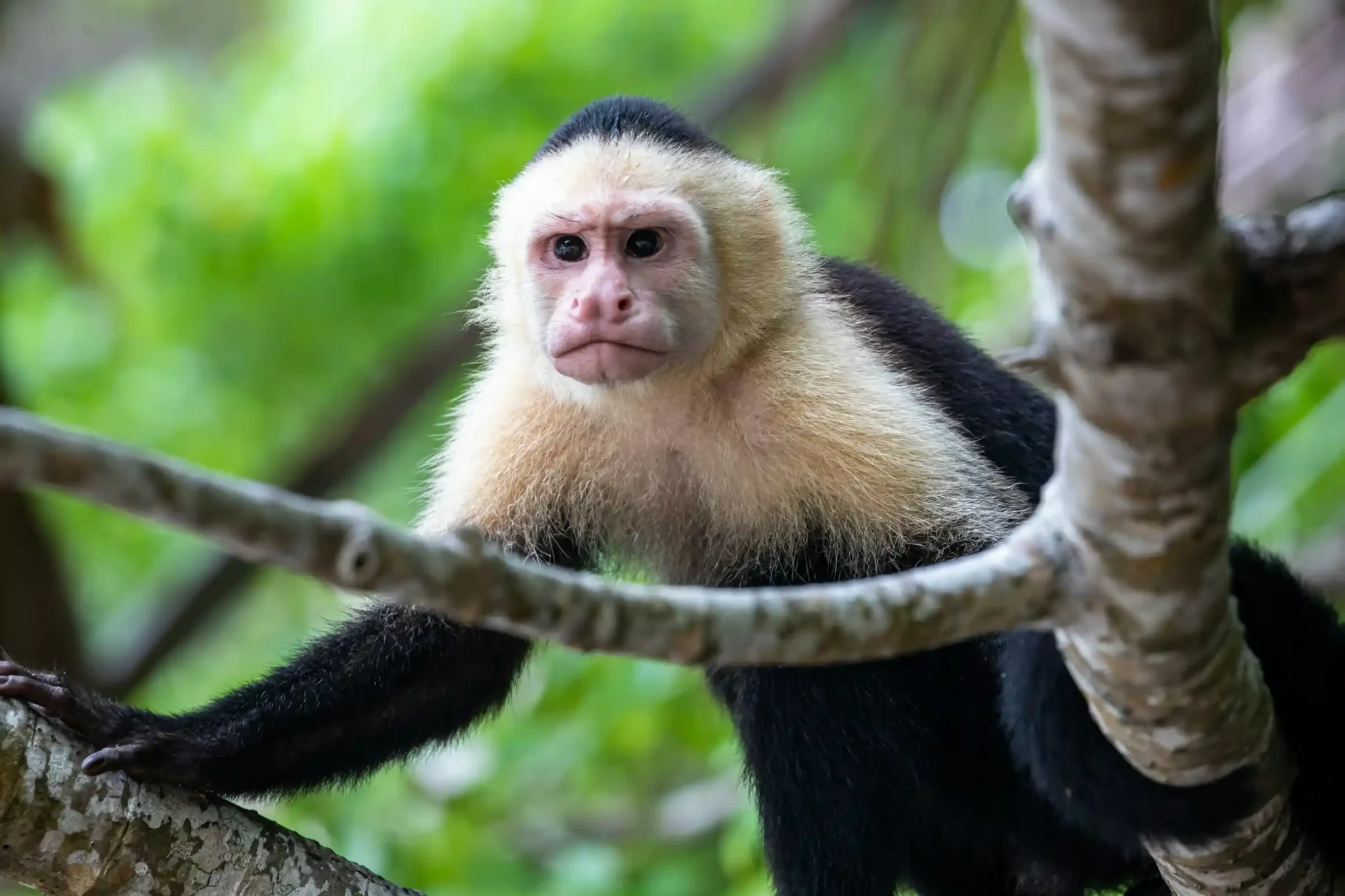
Costa Rica protects a quarter of its land, and the wildlife calendar is a reason to visit in the “wrong” season. Some of the best sightings happen in the rainiest months.
- Humpback whales – Marino Ballena near Uvita has one of the longest whale-watching seasons on earth. The northern-hemisphere whales arrive late July to October (the peak), with a second season from December to early April.
- Nesting sea turtles – Olive Ridley arribadas at Ostional peak in September and October, when thousands nest at once. Green turtles nest at Tortuguero from July to October; leatherbacks on the Caribbean from March to June.
- Resplendent quetzals – the cloud-forest icon is easiest to spot during breeding season, February to May, in Monteverde and San Gerardo de Dota.
- Migratory birds – the shoulder months of September-October and February-April bring the biggest movements.
Best time for fewer crowds and lower prices
If your priority is value rather than guaranteed sun, the green season wins outright. Hotels drop rates 20-40%, tours have space, and the big sights – Arenal, Monteverde, Manuel Antonio – are far quieter.
Sweet spots: May, June, and November give you the best balance – green landscapes, low prices, thin crowds, and mostly dry mornings, without the heavy rain of September and October. Costa Rica is one of the pricier countries in Central America, so timing your trip to the green season is the single easiest way to keep costs down. See our guide to affordable travel destinations for more on stretching a budget.
The months to think twice about
September and October are the wettest on the Pacific and Central regions, with roads occasionally flooding and some remote lodges closing. That said, these same weeks are peak wildlife season and the best time for the Caribbean coast – so “worst” depends entirely on your plans. The other pinch points are the Christmas-New Year weeks and Semana Santa (Easter week), when domestic tourism spikes, prices jump, and beaches fill with local crowds.
Visiting Costa Rica in December

December is one of the most popular months to visit. The rains taper off early in the month and the dry season sets in, giving sunny days and green, freshly watered landscapes – arguably the best-looking time of year. The trade-off is cost: from mid-December through New Year, prices reach their annual peak and the top lodges book out months ahead. For December sun without the holiday premium, travel in the first two weeks of the month.
Frequently asked questions
What is the best month to visit Costa Rica?
February is the best all-round month – it is the driest, sunniest month with excellent weather nationwide and the start of quetzal breeding season. For value with good weather, May and November are close seconds.
What is the rainiest time in Costa Rica?
September and October are the wettest months on the Pacific and Central regions, with frequent afternoon and evening rain. The Caribbean coast is the exception – it is often at its driest and sunniest during these same weeks.
When is the cheapest time to visit Costa Rica?
The green season from May to November has the lowest prices, with hotels 20-40% cheaper than the December-April peak. September and October are the cheapest of all, though also the wettest on the Pacific side.
When is the best time to see whales in Costa Rica?
Late July to October is the peak for humpback whales off the south Pacific coast near Uvita, one of the longest whale-watching seasons in the world. A second, shorter season runs from December to early April.
Is the green season a bad time to visit Costa Rica?
No. Outside September and October, green-season rain usually falls in short afternoon bursts, leaving sunny mornings for activities. You get lush scenery, full waterfalls, fewer crowds, lower prices, and the best wildlife of the year.