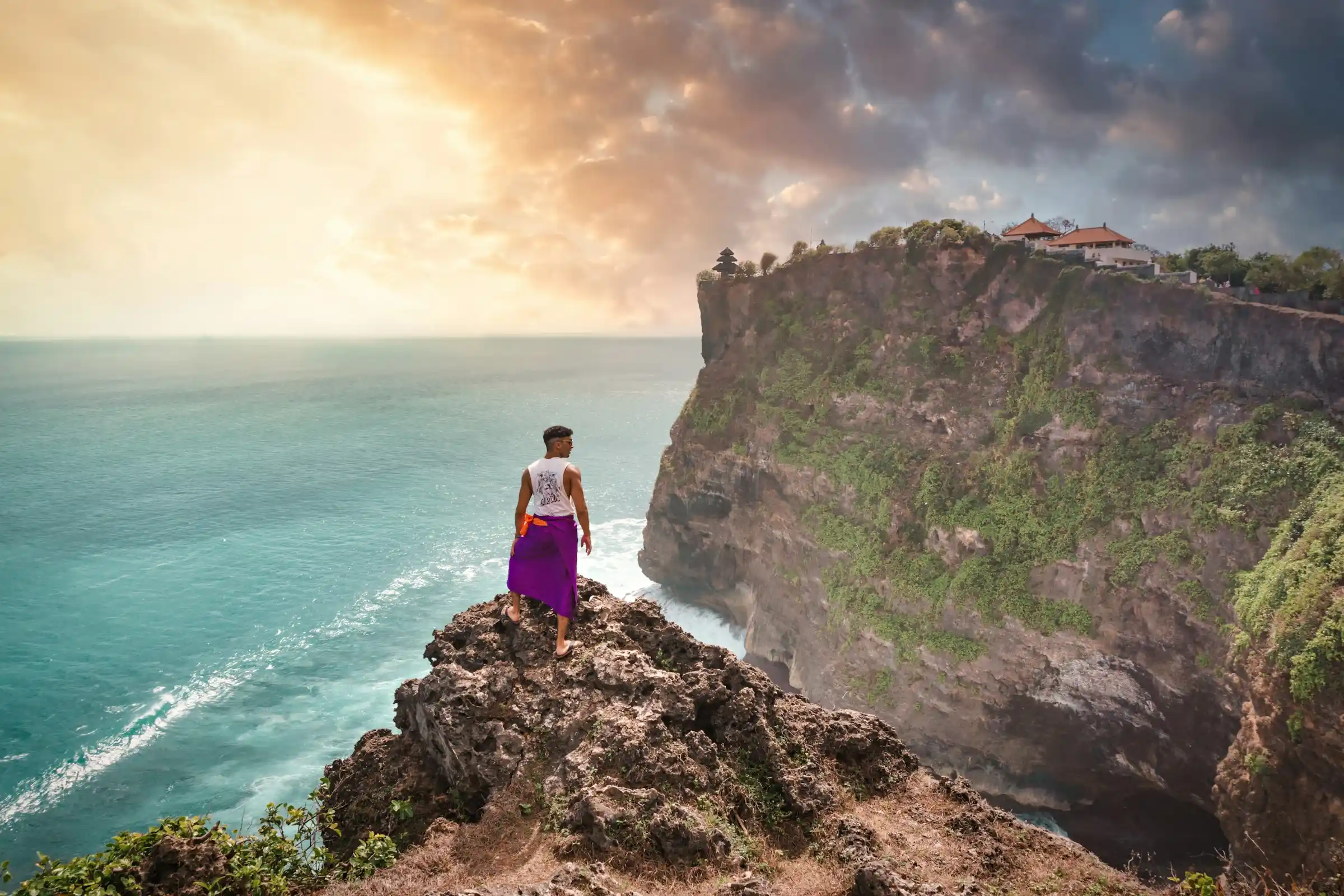
Of all Bali’s temples, Uluwatu is the one that best combines setting, timing and spectacle. It stands on a cliff edge 70 metres above the Indian Ocean on the Bukit Peninsula, and its nightly Kecak fire dance, performed in a clifftop amphitheatre as the sun drops into the sea, is the single most atmospheric hour you can spend at a Balinese temple. This guide covers what the temple is, how the Kecak dance works, ticket details, the monkeys, and the best time to arrive.
What Uluwatu Temple is
Pura Luhur Uluwatu is one of Bali’s six sad kahyangan — the great directional temples believed to protect the island from evil spirits, each guarding a point of the compass. Uluwatu guards the southwest. It is thought to date to the 11th century, and its position on the sheer cliff makes it one of the most dramatic temple sites in Indonesia. The temple itself is small and, as at other sea temples, its inner sanctum is reserved for worshippers; visitors walk the clifftop paths that run along the edge in both directions, with the ocean crashing far below.
The Kecak fire dance
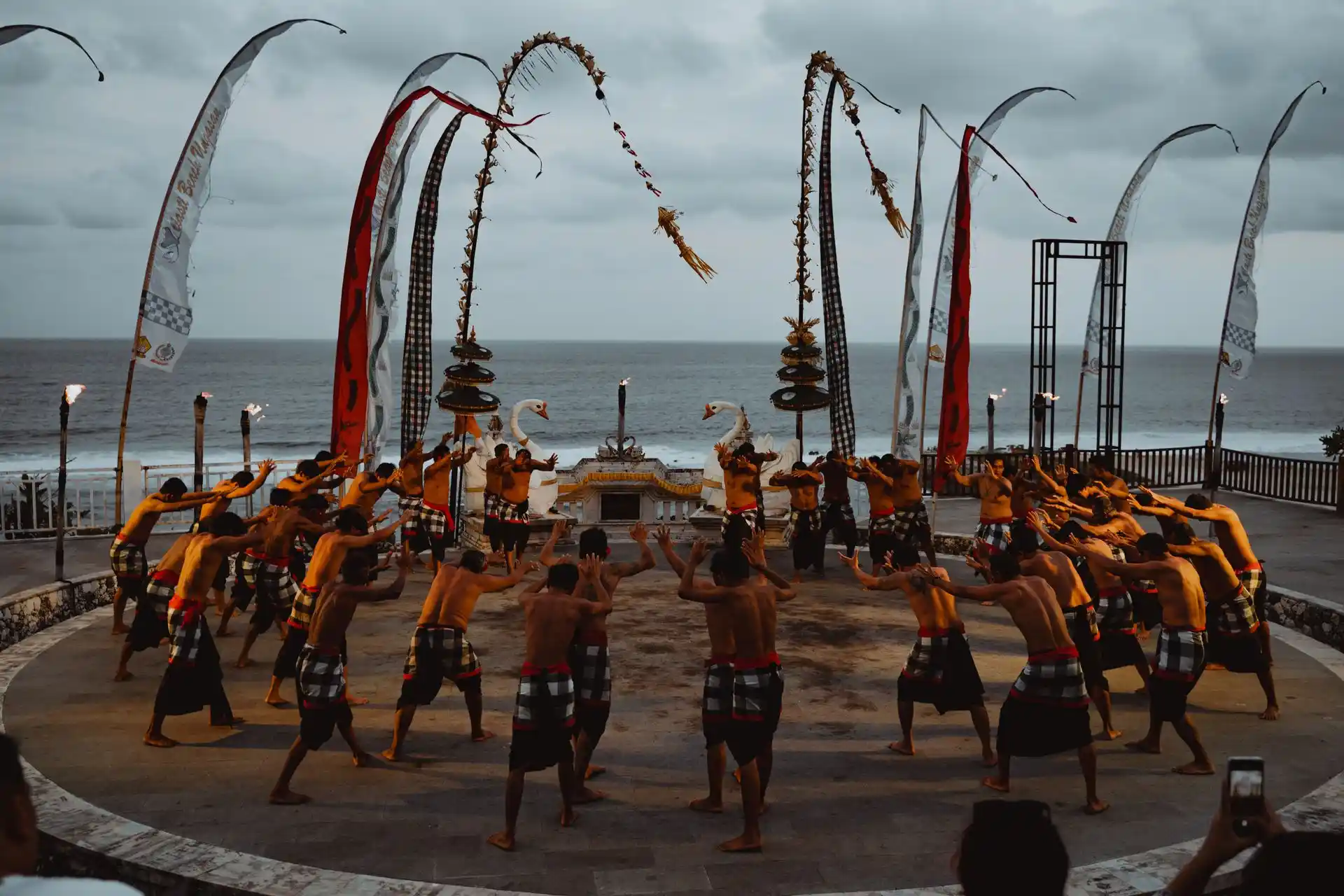
The Kecak is Bali’s most famous dance, and the Uluwatu performance is the one to see because of the backdrop. There is no instrumental music: instead, a circle of dozens of bare-chested men chant “cak-cak-cak” in interlocking rhythm, creating a hypnotic wall of sound. The dance tells an episode from the Ramayana — the abduction of Sita and her rescue by the monkey army — and it ends with a fire scene. It runs for about an hour, starting around 6 p.m. and finishing as the sky darkens behind the stage.
The amphitheatre is open to the sky on the cliff edge, so the setting sun and the ocean are part of the show. Seats are stone steps; arrive early for a spot with the sun behind the stage rather than in your eyes.
Tickets and timing
- Temple entry: around IDR 50,000 per adult, sarong and sash included and required.
- Kecak dance: a separate ticket, around IDR 150,000 per adult. It sells out at peak season, so buy on arrival in the afternoon or in advance online.
- Timing: aim to arrive by 4.30 to 5 p.m. That gives you time to buy tickets, walk the clifftop paths in good light, and take your seat for the 6 p.m. dance.
You can visit the temple during the day without seeing the dance, but late afternoon into the Kecak is what makes the trip special.
The monkeys (take this seriously)
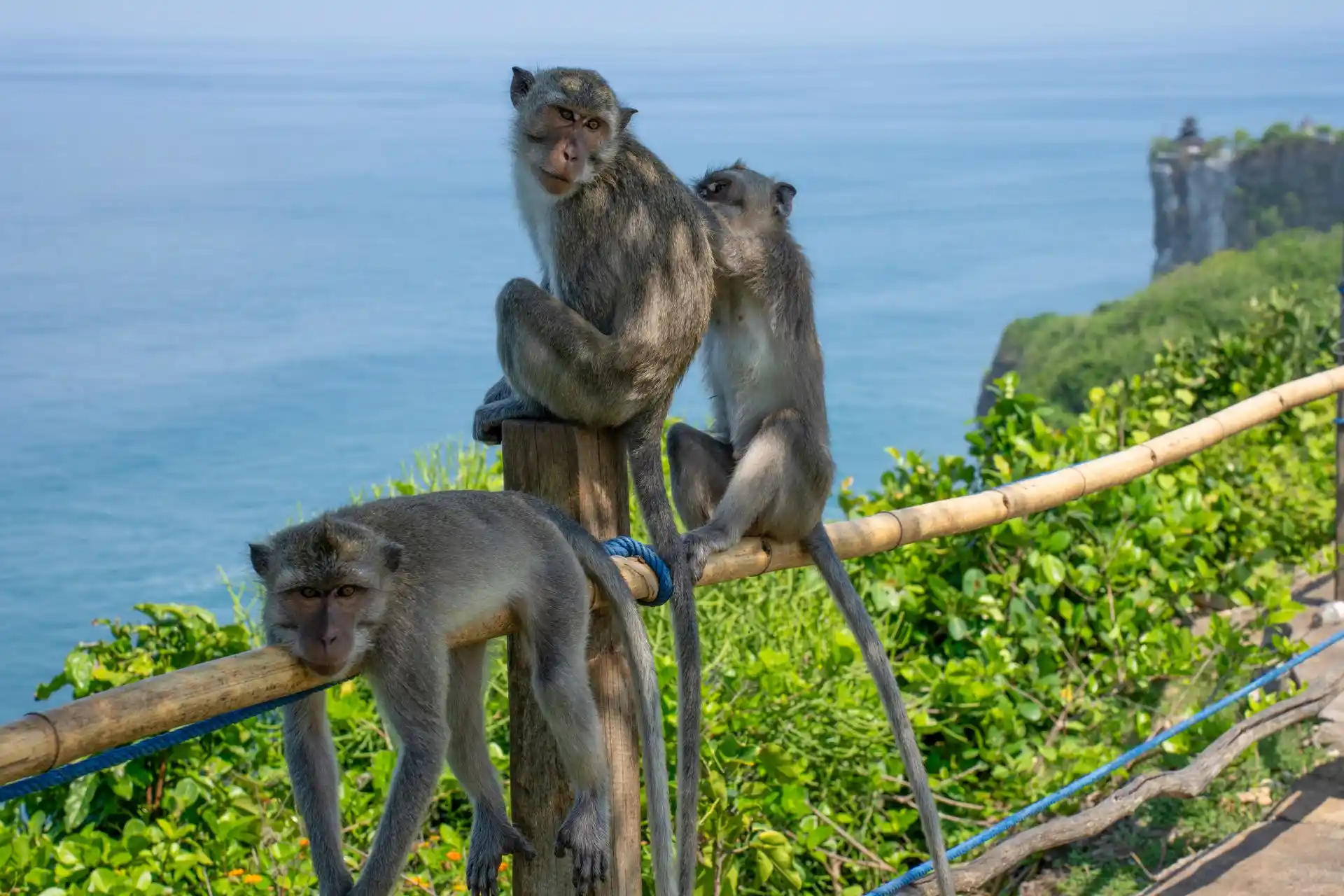
Uluwatu’s cliffs are home to a large troop of long-tailed macaques, and they are practised thieves. They target sunglasses, phones, hats, water bottles and anything dangling, and some have learned to “trade” a stolen item back for food offered by staff. This is not a rare nuisance — it happens constantly. Protect yourself:
- Take off loose sunglasses and keep your phone in a zipped bag or secure pocket.
- Do not carry visible food or drinks.
- Do not try to pull a stolen item back from a monkey; let staff handle the trade.
- Keep a firm hold of small children’s hats and toys.
Getting there and combining the trip
Uluwatu is on the far south of the island, 45 minutes to over two hours from the main tourist areas depending on where you start and the traffic. Because the return trip after the dance is the hard part — everyone leaves at once and ride-hailing cars surge — many visitors hire a private driver for the afternoon. Our dedicated guide to getting to Uluwatu breaks down times and costs from Canggu, Seminyak, Kuta and Ubud, and you can compare fares with the taxi and ride-share fare estimator.
Make an afternoon of it: the Bukit has some of Bali’s best beaches and beach clubs (Padang Padang, Bingin, Melasti) within 20 minutes of the temple, ideal before the sunset show. For the wider picture, see our complete guide to Bali’s temples.
Frequently asked questions
How much does the Kecak dance at Uluwatu cost?
The Kecak fire dance is around IDR 150,000 per adult, a separate ticket from the temple entry of about IDR 50,000. It can sell out in peak season, so buy on arrival in the afternoon or book in advance. The performance lasts about an hour, starting around 6 p.m. as the sun sets.
What time does the Uluwatu Kecak dance start?
It starts around 6 p.m. and runs for about an hour, timed to finish as the sky darkens. Arrive by 4.30 to 5 p.m. to buy tickets, walk the clifftop paths in good light and get a seat where the setting sun is behind the stage rather than in your eyes.
Are the monkeys at Uluwatu a problem?
Yes, the macaques routinely snatch sunglasses, phones, hats and water bottles, and some have learned to trade stolen items back for food. Keep sunglasses off, your phone zipped away, and no visible food or drink. If a monkey takes something, let staff handle the trade rather than trying to grab it back.
Can you visit Uluwatu Temple without seeing the dance?
Yes. The temple and its clifftop paths are open during the day on the standard entry ticket, and the views are spectacular at any time. The Kecak dance is a separate ticket and a separate experience; late afternoon into the dance is what most visitors find makes the trip worthwhile.