Fog rolls in off the Atlantic, the surf pounds an empty shore, and the rusting hull of a ship sits half buried in the sand. This is the Skeleton Coast, Namibia, a 500 kilometre stretch of desert meeting ocean that sailors once called the Gates of Hell. The San people named it the Land God Made in Anger, and the name that stuck comes from the whale and seal bones that littered the beaches alongside the wrecks of ships. It sounds bleak, yet it is one of the most extraordinary places in Africa, home to desert lions, shipwrecks you can walk up to, and some of the emptiest horizons on earth. This guide covers the history, the wildlife, the national park, and exactly how to visit.
Why it is called the Skeleton Coast
The name works on two levels. The beaches were long scattered with the bones of whales and seals, left by hunting and by the ocean itself, so the shore really did look like a graveyard. Over the centuries those bones were joined by the skeletons of ships, and later of the sailors who made it ashore only to face a waterless desert. The San people of the interior called the region the Land God Made in Anger, while Portuguese sailors knew it as the Gates of Hell. Both names capture the same truth: this is a coast that gives ships no second chance.
The Skeleton Coast runs for about 500 kilometres along the northern Atlantic edge of Namibia, from the Kunene River on the Angolan border down to the Swakop River near Swakopmund. The southern half is flat gravel plain, while north of Terrace Bay it rises into towering dunes that spill straight into the sea. Rain almost never falls here, often less than 10 millimetres a year, so nearly all the moisture comes from the ocean fog.
The shipwrecks and the eerie history
The danger comes from a cold ocean current. The Benguela current sweeps up from the south and meets the hot desert air, throwing a thick fog over the water that can last for days. Add hidden rocks, a relentless surf, and winds that blow from the land out to sea, and sailing ships that drifted too close were pushed onto the shore with no way back. Over the years the coast has claimed hundreds of vessels, with estimates running past a thousand once small craft are counted.
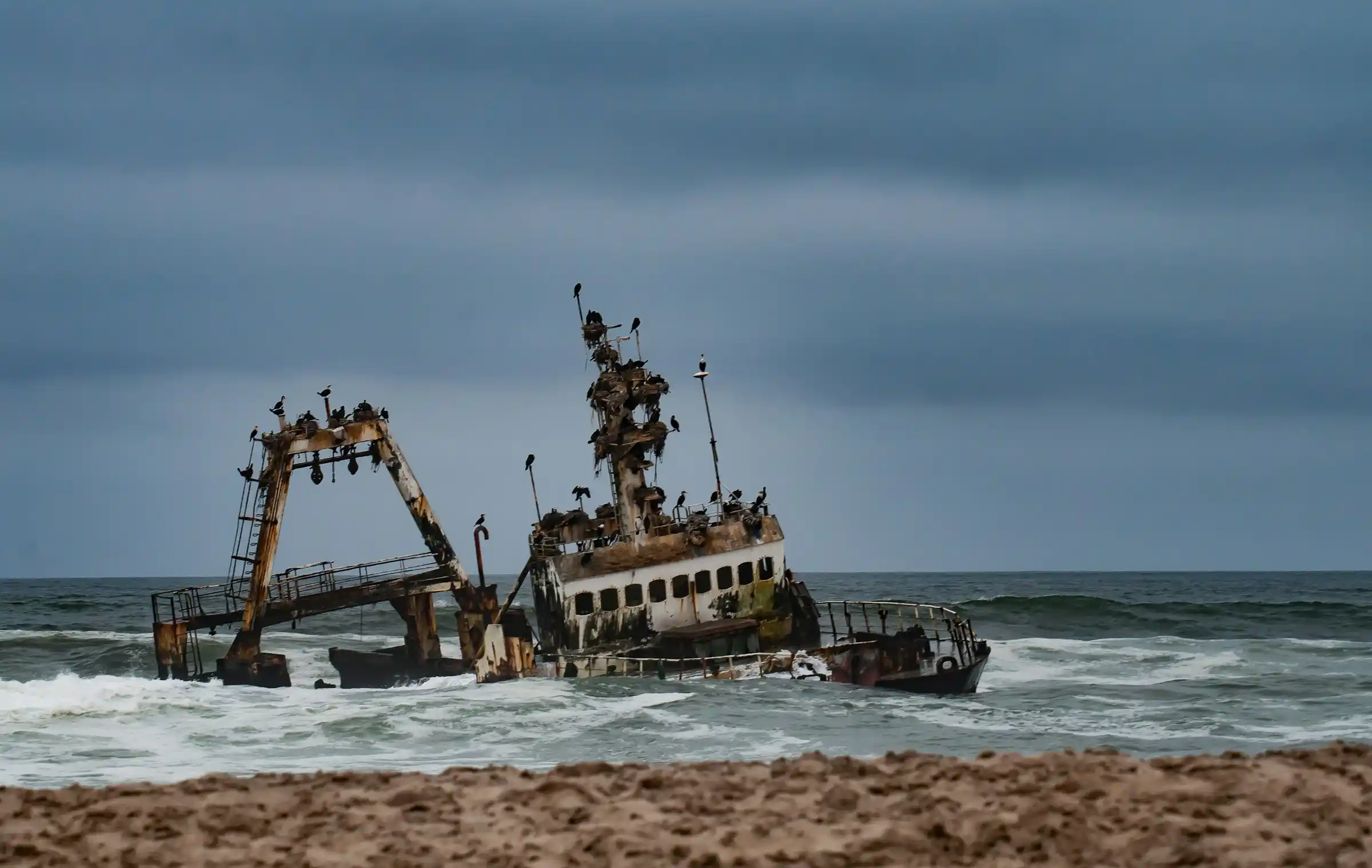
A few wrecks have become landmarks. The Eduard Bohlen ran aground in 1909 and now sits far inland, stranded as the desert pushed the shoreline back. The Dunedin Star drama of 1942 saw more than 100 passengers rescued in a desperate overland effort that cost further lives and aircraft. The oldest known wreck, a Portuguese trading ship called the Bom Jesus, dates to the 1530s and was found with a cargo of gold and ivory. The most photographed today is the Zeila, grounded in 2008 just north of Henties Bay, close enough to the road that self drive visitors can see it from the beach.
Skeleton Coast National Park
Most of the shoreline is protected as the Skeleton Coast National Park, which covers roughly 16,000 square kilometres and runs the full length of the coast in a narrow strip. The park is split in two for visitors. The southern section, reached through the Ugab River gate and the Springbokwasser gate, is open to self drive travellers with a permit. The far northern section, beyond Terrace Bay, is a strict wilderness open only through fly in concessions, which is why so few people ever see it.
Inside the southern park the two main stops are Torra Bay, a bare campsite open mainly in the December fishing season, and Terrace Bay, a simple rest camp that marks the end of the public road. Further north lies Mowe Bay, a tiny settlement and research base. Day visitors must pass through the gates within set hours, usually entering in the morning and clearing the park by mid afternoon unless they hold an overnight booking, so plan the drive with the gate times in mind.
Wildlife of the Skeleton Coast
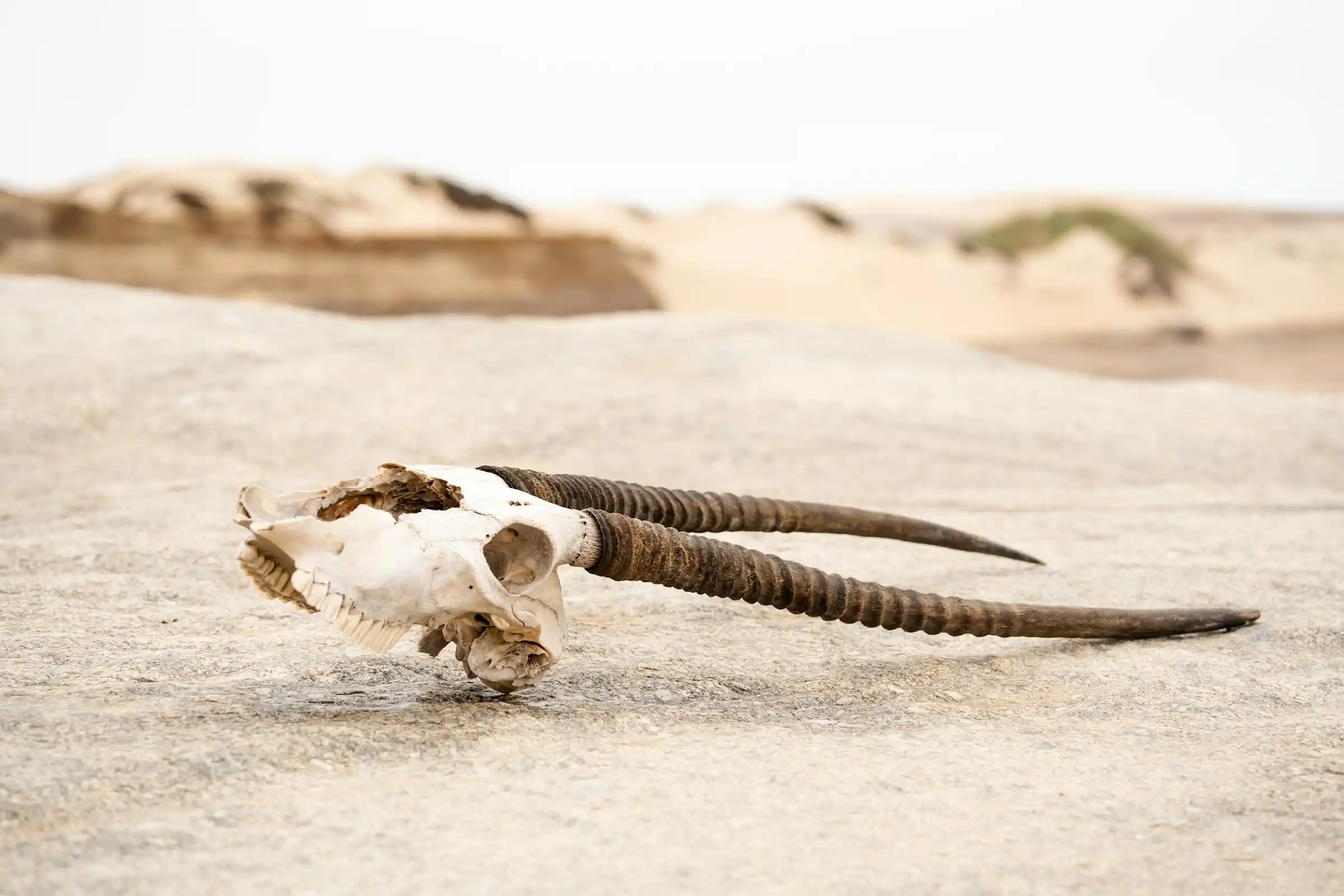
It looks lifeless, but the Skeleton Coast and the Kaokoveld behind it support animals found almost nowhere else. Desert adapted lions range right down to the beach to hunt seals, a behaviour unique to this corner of Africa. Desert adapted elephants, giraffe, gemsbok, springbok, brown hyena, and black backed jackal all survive on the fog moisture and the dry riverbeds that cut inland. Birdwatchers record well over 200 species along the coast and wetlands.
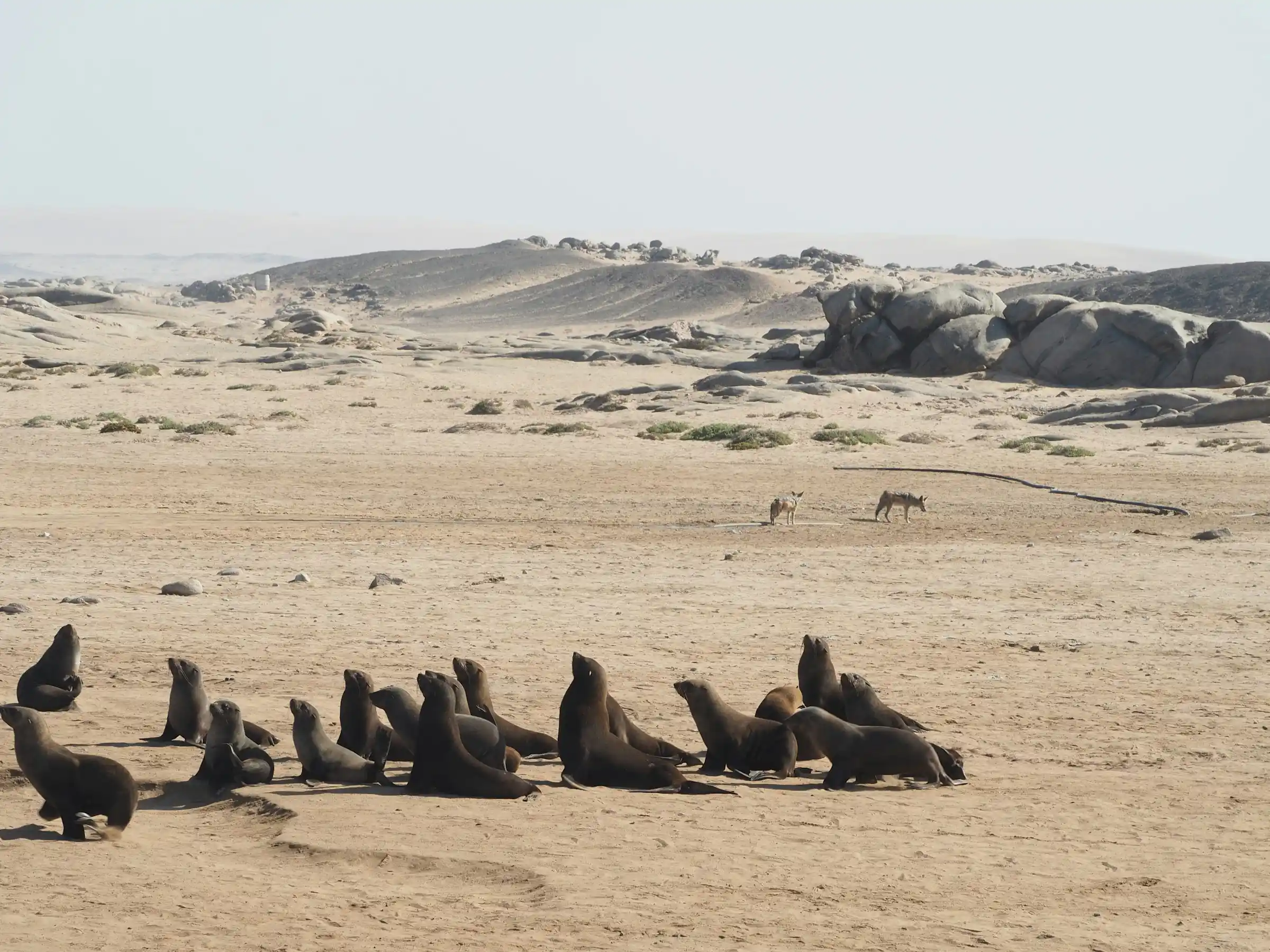
The single greatest spectacle sits just south of the park at Cape Cross, where a colony of Cape fur seals numbers in the tens of thousands and often swells past 100,000 in season. It is noisy, pungent, and unforgettable, and it is also where the Portuguese navigator Diogo Cao planted a stone cross in 1486, one of the first European marks on this coast. Cape Cross is reached on a normal road from Swakopmund, so it is the easiest wildlife stop of all.
Is the Skeleton Coast dangerous for visitors?
The fearsome reputation belongs to ships and to stranded sailors, not to modern travellers. For visitors the Skeleton Coast is safe, as long as you respect the conditions. There is no fresh water and little fuel along the shore, phone signal is rare, and the fog can cut visibility to almost nothing, so you carry your own water, fuel, and food, tell someone your route, and never drive off the marked tracks. Swimming is dangerous because of the cold water and strong currents, so the ocean here is for looking, not bathing.
How to visit the Skeleton Coast
There are two very different ways to see it. The accessible southern coast is a self drive trip. Most people base in Swakopmund, then head north through Henties Bay, passing the Zeila wreck and the Cape Cross seals before entering the park at the Ugab gate. A 4×4 is strongly advised, and the drive from Windhoek to the coast takes most of a day, so build in an overnight in Swakopmund first.
The remote north is a different world. It can only be reached on a fly in safari to one of a handful of concessions, where small camps run guided drives across dunes and dry rivers that ordinary visitors never touch. This is the expensive, bucket list version of the coast, usually combined with the wider Kaokoveld and the Himba communities who live in the interior. Whichever way you go, it pairs well with a wider Namibia route through Swakopmund, Damaraland, and the dunes of the south.
Best time to visit
The dry winter months from May to October are the best time to visit. Wildlife is easier to find around the riverbeds, the days are mild, and the tracks are reliable. Mornings are often grey and cold as the fog sits over the shore, usually burning off by midday, so pack layers whatever the season. December brings the seal pupping at Cape Cross and the brief fishing season at Torra Bay, when the southern camps are busiest. The desert nights are cold year round, a point worth remembering if you are coming from warmer parts of Africa, much like the swing you get in our guide to the Sahara desert temperature at night.
What to bring
A Skeleton Coast trip needs sun protection for the glare, warm layers for the fog and the cold nights, plenty of water, and a full tank wherever you can fill up. If you are building a list from scratch, our packing list generator can put one together for a desert and coast trip like this. If the raw, otherworldly emptiness is what draws you, you may also like our guide to Socotra Island, another remote place that feels like nowhere else on earth.
Frequently asked questions
Where is the Skeleton Coast in Namibia?
It runs along the northern Atlantic coast of Namibia for about 500 kilometres, from the Kunene River on the Angolan border south to the Swakop River near Swakopmund. Most of it is protected within the Skeleton Coast National Park.
Why is it called the Skeleton Coast?
The beaches were once littered with the bones of whales and seals, and over the centuries with the wrecks of ships and the remains of stranded sailors. The San people called it the Land God Made in Anger, and Portuguese sailors called it the Gates of Hell.
Can you see the shipwrecks on the Skeleton Coast?
Yes. The most accessible is the Zeila, grounded in 2008 just north of Henties Bay and visible from the beach on a self drive trip. The famous Eduard Bohlen now lies inland in the dunes and is usually seen on a scenic flight.
Is the Skeleton Coast dangerous to visit?
It is safe for visitors who come prepared. The old danger was to ships and shipwrecked sailors. Today the risks are practical: no fresh water, little fuel, thick fog, and cold rough seas, so carry supplies, stay on the tracks, and do not swim.
How do you get to the Skeleton Coast?
The southern coast is a self drive from Swakopmund north through Henties Bay and the park gates, ideally in a 4×4. The remote northern wilderness can only be reached on a fly in safari to a private concession.
When is the best time to visit the Skeleton Coast?
The dry winter from May to October is best for wildlife and reliable driving. Expect grey, cold fog in the mornings that usually clears by midday, and pack warm layers because the desert nights are cold all year.