Iceland’s black sand beaches are among the most striking coastlines on earth, where jet-black volcanic sand meets white surf, basalt columns, and sea stacks under a wide northern sky. They look otherworldly because they are: the sand is ground-down lava, not shell and coral. The most famous is Reynisfjara near the village of Vik, but black beaches run along much of the south coast. This guide covers where to find Iceland’s black sand beaches, what makes them black, and the serious safety rules you need to know before you go.
Why the sand is black
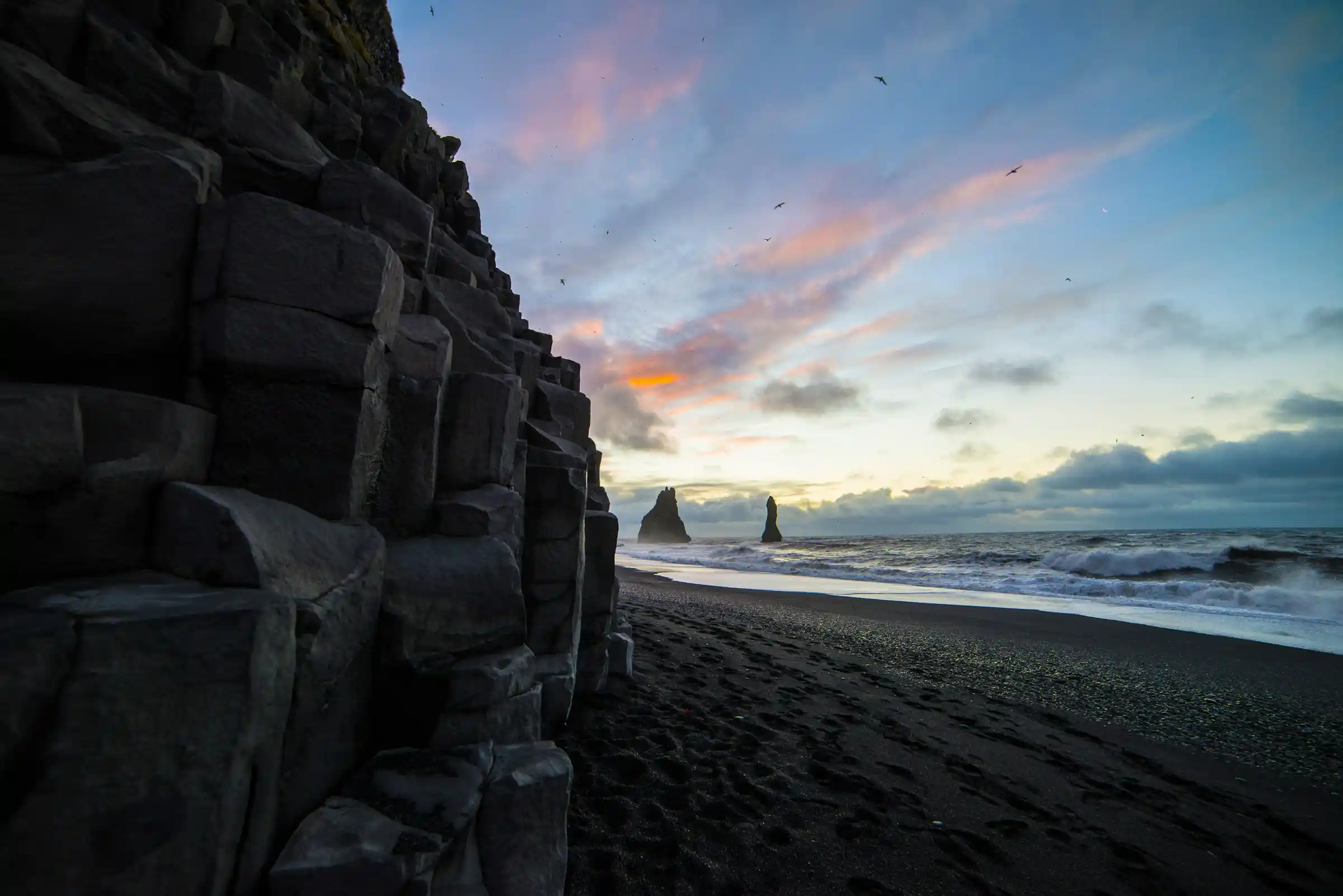
Iceland sits on a volcanic hot spot, and its beaches are made from basalt, the dark rock that forms when lava cools. As the ocean grinds that rock down over time, it produces fine black sand instead of the pale sand of coral coasts. In places the lava also cooled into neat hexagonal columns, which is why beaches like Reynisfjara are backed by walls of basalt that look almost man-made.
Reynisfjara, the famous one
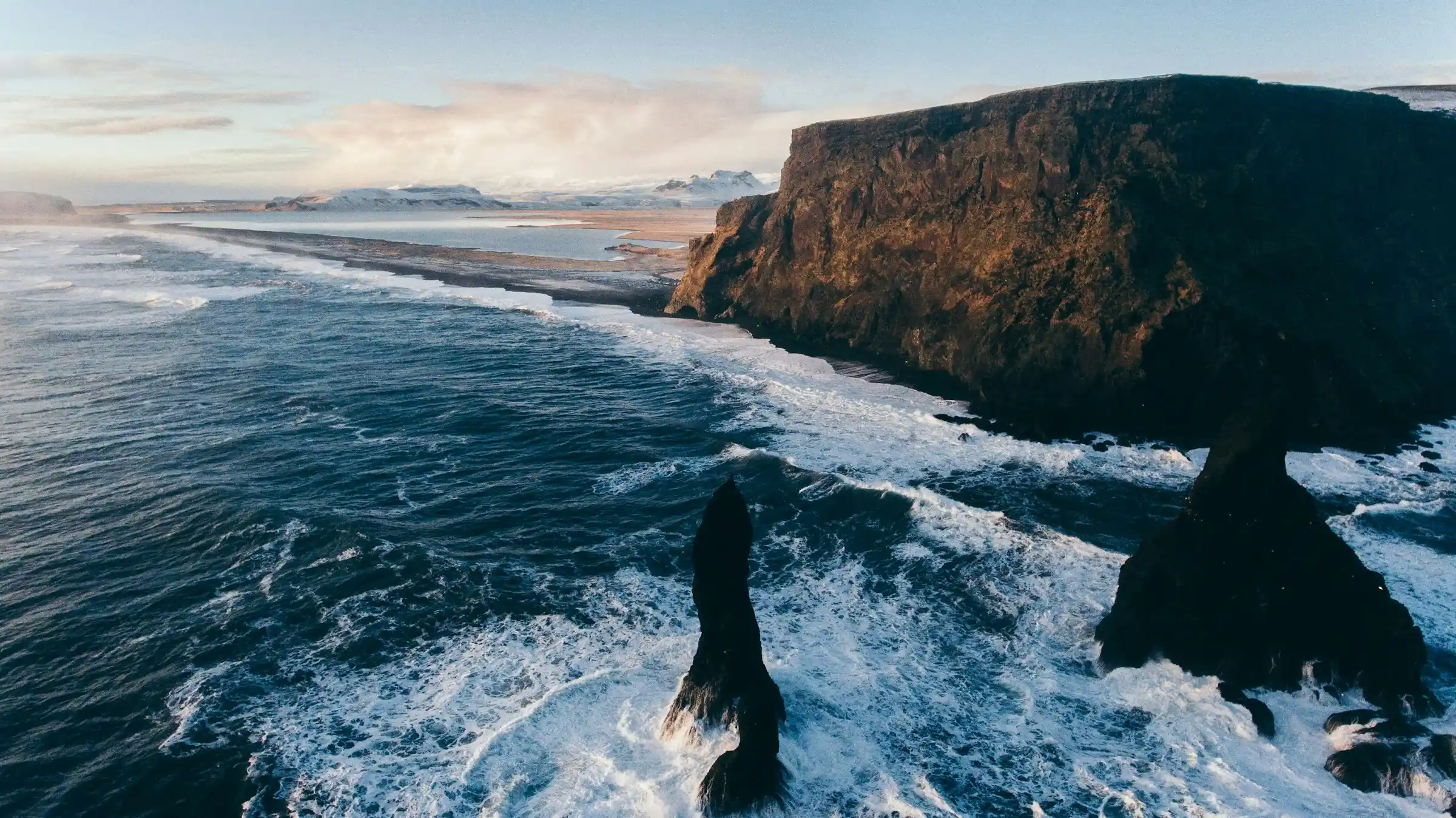
Reynisfjara, just outside Vik on the south coast, is the black sand beach most people picture. It has towering basalt columns, a cave, puffins in summer, and the dramatic Reynisdrangar sea stacks rising offshore. It is about two and a half hours from Reykjavik and sits right on the Ring Road, which makes it the easiest of the great black beaches to reach. It is also the most dangerous, for reasons every visitor must understand before arriving.
The sneaker wave warning
Reynisfjara and the other south-coast beaches are known for sneaker waves, sudden surges that race far up the sand without warning and have pulled visitors into the freezing sea. The water is powerful, cold, and has no safe swimming anywhere on these beaches. Never turn your back on the ocean, keep well back from the waterline, and watch the warning signs and the colour-coded danger system at Reynisfjara. Treat the sea here as something to admire from a distance, not approach.
Diamond Beach and Jokulsarlon
Further east, where the Ring Road passes the Jokulsarlon glacier lagoon, lies Diamond Beach. Here chunks of clear glacier ice wash up and scatter across the black sand, glittering like jewels in the light. The contrast of white and blue ice on black sand is unforgettable, and the neighbouring lagoon is full of floating icebergs and seals. It is around five hours from Reykjavik, so most people reach it on a multi-day trip along the south coast.
Other black beaches worth finding
- Solheimasandur, where the wreck of a crashed US plane sits on a vast black plain.
- Stokksnes, with the jagged Vestrahorn mountain rising behind black dunes.
- Djupalonssandur on the Snaefellsnes peninsula, a pebbly black cove with old shipwreck remains.
- The beach at Vik itself, an easy and safer stretch to walk right by the village.
How to visit
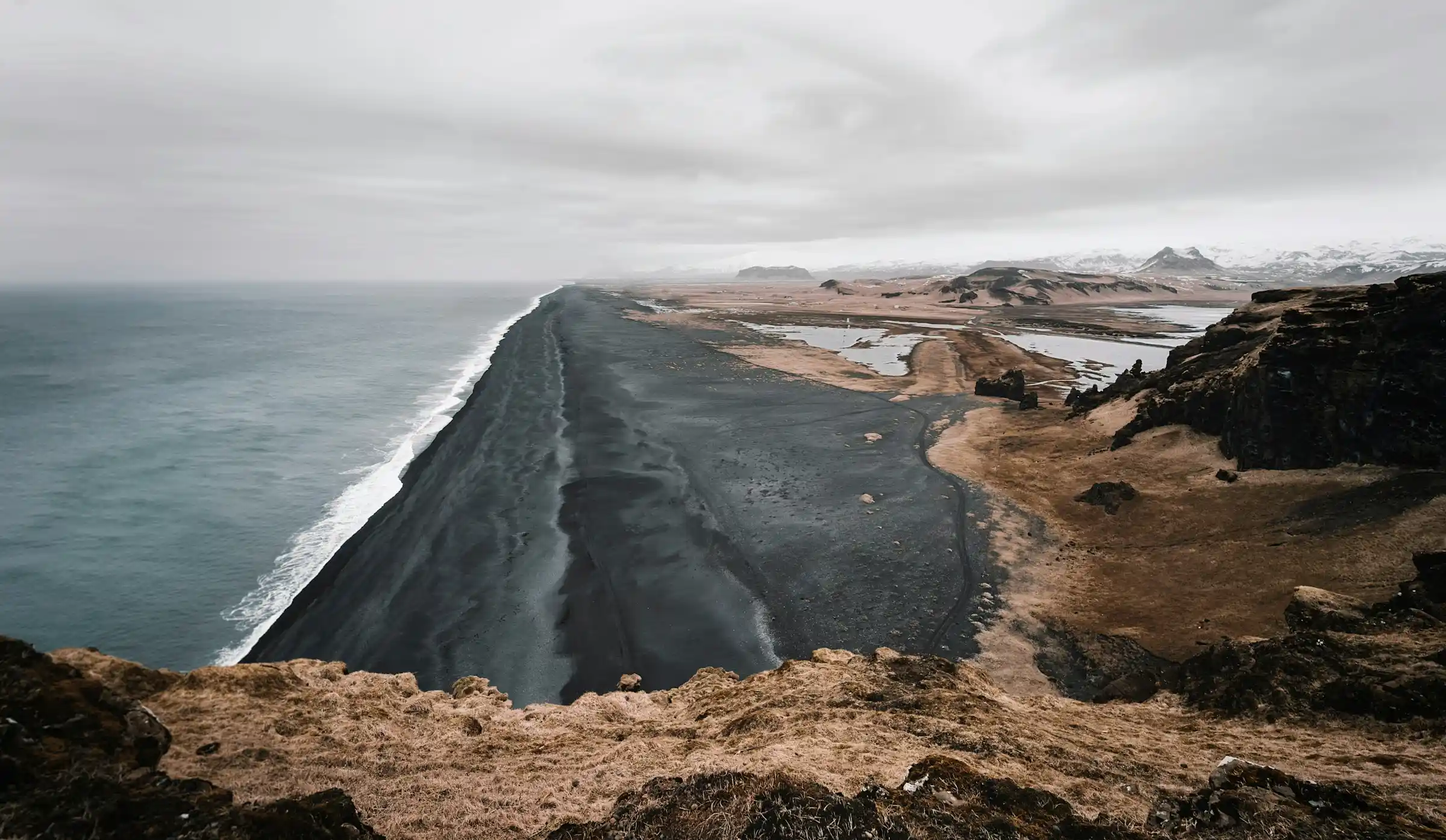
Most of Iceland’s black beaches line the south coast along the Ring Road, so they slot naturally into a self-drive trip or a guided south-coast tour from Reykjavik. Reynisfjara can be done as a long day trip, while Diamond Beach needs an overnight. Dress for wind and cold spray in any season, and keep to firm sand away from the waves. A black sand beach stop pairs perfectly with the Golden Circle on a first trip, or with the full Iceland Ring Road if you have a week or more.
Frequently asked questions
Where is the famous black sand beach in Iceland?
The most famous is Reynisfjara, just outside the village of Vik on the south coast, about two and a half hours from Reykjavik on the Ring Road. It is known for its basalt columns and the Reynisdrangar sea stacks.
Why are Iceland’s beaches black?
The sand is made from basalt, the dark volcanic rock formed when lava cools. The ocean grinds it down into fine black sand, which is why Iceland’s beaches are black rather than the pale colour of coral coasts.
Are Iceland’s black sand beaches dangerous?
The beaches themselves are safe to walk, but the sea is not. Reynisfjara and the south-coast beaches have sneaker waves that surge up the sand without warning. Never turn your back on the ocean, stay well back, and do not swim.
What is Diamond Beach?
Diamond Beach sits beside the Jokulsarlon glacier lagoon on the south-east coast. Chunks of clear glacier ice wash onto the black sand and shine like diamonds. It is about five hours from Reykjavik and usually visited on a multi-day trip.
Can you swim at Iceland’s black sand beaches?
No. The water is freezing, the currents are strong, and sneaker waves make the shoreline dangerous. These beaches are for looking and walking on firm sand away from the water, not for swimming.
How many black sand beaches are there in Iceland?
Many of Iceland’s beaches are black because of its volcanic geology. The best known are Reynisfjara, Diamond Beach, Solheimasandur, Stokksnes, and Djupalonssandur, most of them along the south coast near the Ring Road.