Introduction
The Definition of Connecting Flight is simple: a connecting flight is a trip where you take one flight, change planes at another airport, and then continue to your final destination on another flight. In plain terms, your journey is split into two or more flight legs instead of one non-stop flight. This matters because the time between flights can affect baggage, security checks, immigration, and the risk of missing the next plane.
In this guide, you’ll learn how connecting flights work, how they differ from direct flights, how much layover time you may need, and what to do if your first flight is delayed. You’ll also get a simple checklist to make your airport transfer easier in 2026.
Table of Contents
- Definition of Connecting Flight
- How Connecting Flights Work Step by Step
- Layover vs Stopover
- How Much Layover Time Do You Need?
- Domestic vs International Connecting Flights
- Baggage, Security, and Immigration Rules
- What Happens If You Miss a Connecting Flight?
- Connecting Flight Checklist
- Conclusion
- Frequently Asked Questions
Definition of Connecting Flight
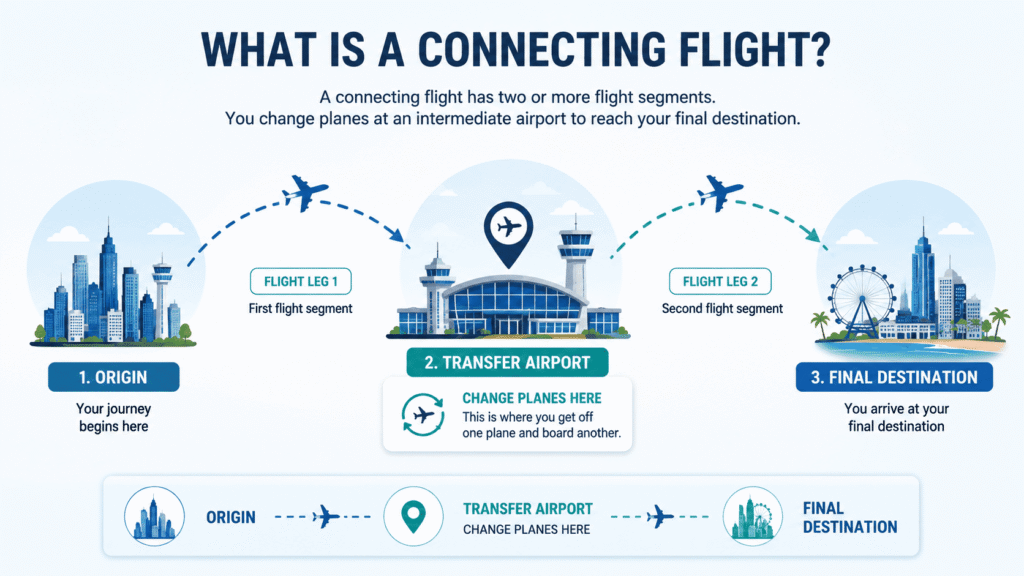
A connecting flight is an itinerary that requires you to change aircraft before reaching your final destination. For example, you may fly from Dubai to London, then change planes in London for a flight to New York.
Definition of Connecting Flight in Simple Words
The Definition of Connecting Flight means your ticket includes at least one transfer airport. You do not stay on the same plane for the whole trip. Instead, you leave the first aircraft, move through the airport, and board another aircraft.
This can happen on one ticket or on separate tickets. A single-ticket connection is usually easier because the airline or partner airlines plan the transfer. Separate tickets, also called a self-transfer, can be riskier because you may need to collect bags, check in again, and pass through passport control.
Connecting Flight vs Direct Flight vs Non-Stop Flight
Travelers often mix up these terms. Here is a simple comparison.
| Flight Type | What It Means | Do You Change Planes? | Common Example |
|---|---|---|---|
| Non-stop flight | One flight from origin to destination with no planned stop | No | Dubai to Paris |
| Direct flight | One flight number, but it may stop on the way | Usually no, but it depends | Dubai to Sydney with a stop |
| Connecting flight | Two or more flights with a plane change | Yes | Dubai to London to New York |
The Definition of Connecting Flight is different from a direct flight because you actively transfer to another plane. Therefore, your layover time matters.
How Connecting Flights Work Step by Step
A connecting flight follows a basic pattern. First, you check in and board the first flight. If your connection is on one ticket, you may receive boarding passes for both flights at the start.
Next, you arrive at the transfer airport. You leave the aircraft and follow signs for “Transfers,” “Flight Connections,” or your next terminal. Large airports may require a train, bus, or long walk between gates.
Then, check the airport screens or airline app for your next gate. Gates can change, so do not rely only on the gate printed on your original boarding pass.
Depending on the airport and route, you may pass through security again. On some international routes, you may also clear passport control or customs. Heathrow Airport notes that many single-journey connections do not require passengers to transfer baggage, check in again, or clear passport control, but this depends on the route and ticket.
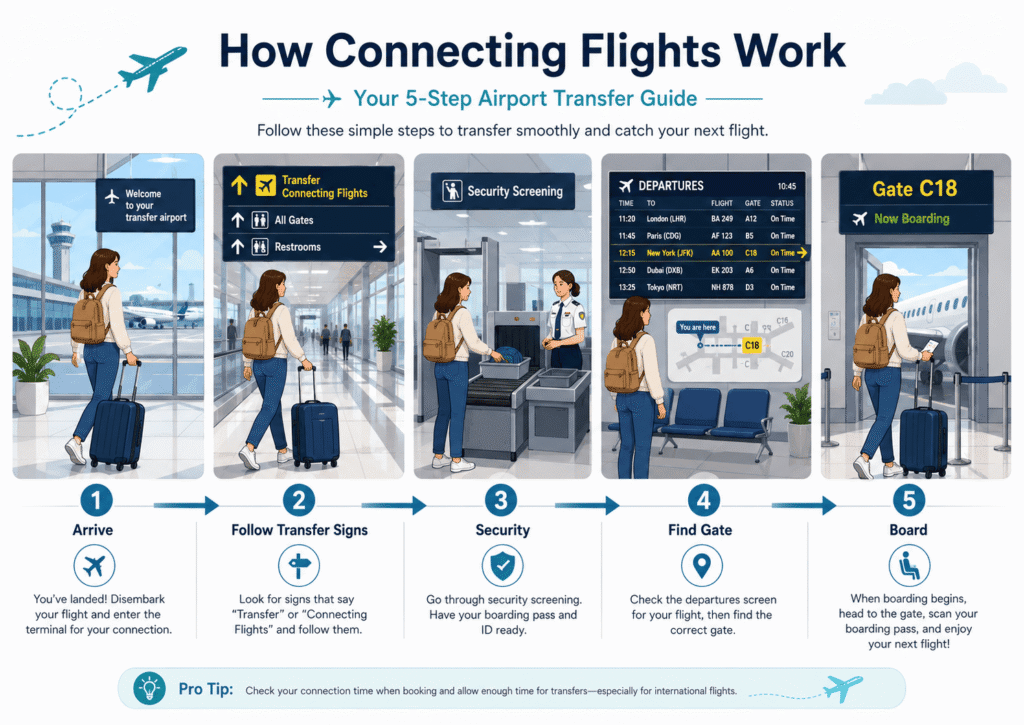
Finally, you reach the next gate and board your onward flight. The process is simple when everything is on time, but delays and terminal changes can add stress.
Layover vs Stopover
A layover is the waiting time between two flights on the same journey. For most travelers, a layover means staying inside the airport and waiting for the next flight.
A stopover is usually a longer break. It may allow you to leave the airport, sleep in a hotel, or explore the city before continuing your trip. Airline rules vary, so always check the fare conditions.
Here is the easy way to remember it:
- Layover: short waiting time between flights.
- Stopover: longer planned break in the connecting city.
- Connection: the process of changing from one flight to another.
How Much Layover Time Do You Need?
There is no perfect layover time for every trip. The right amount depends on the airport, terminal change, airline, passport control, baggage rules, and whether both flights are on one ticket.
As a practical planning guide, many travelers prefer at least 60 to 90 minutes for a simple domestic connection. For international connections, two to three hours is often safer. Some airports require more time, especially if you must change terminals or recheck baggage.
The aviation industry uses minimum connection times, often called MCTs. IATA describes Station Standard MCT as the official shortest airport time interval needed to transfer a passenger and baggage from one flight to another.
Before booking, test your itinerary with Boarding Gate’s Flight Connection Risk Calculator. It can help you review risk factors such as short layovers, international checks, terminal changes, and separate tickets.

Domestic vs International Connecting Flights
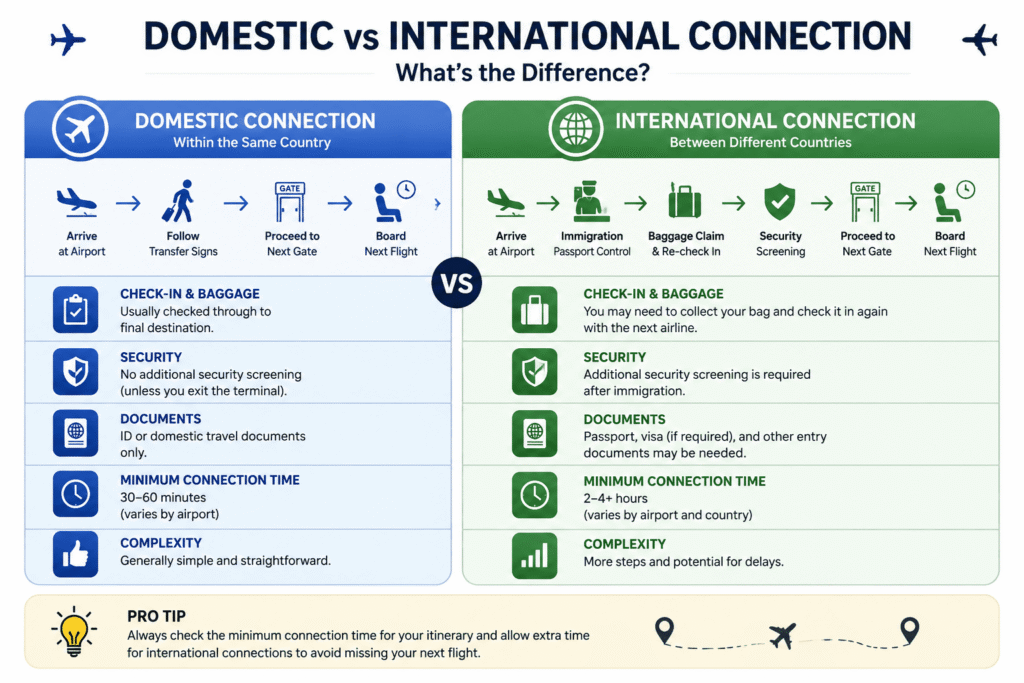
Domestic connecting flights are usually simpler. In many cases, you move from one gate to another within the same country. You may still go through security again if you change terminals, but customs and immigration are usually not involved.
International connecting flights can take more time. You may need to pass through passport control, show travel documents, clear security, or meet transit visa rules. In some airports, you may remain airside. In others, you may need to enter the country briefly to reach your next flight.
The Definition of Connecting Flight stays the same in both cases. The difference is the number of checks between the two flights.
Before flying internationally, check whether you need a transit visa, whether your bags are checked through, and whether your next flight leaves from another terminal.
Baggage, Security, and Immigration Rules
Baggage rules depend mainly on your ticket type. If your flights are on one ticket, your checked bag is often tagged to the final destination. Still, confirm this at check-in and read the baggage tag carefully.
If your flights are on separate tickets, do not assume your bag will transfer. You may need to collect it, pass through immigration, check in again, and go back through security. Dubai Airports explains that passengers transiting through DXB on separate tickets may need to clear passport control, collect baggage, and check in again for the next flight.
The United States has its own important rule. U.S. Customs and Border Protection says travelers entering the U.S. from overseas generally need to collect luggage and bring it through customs before rechecking it for the next flight.
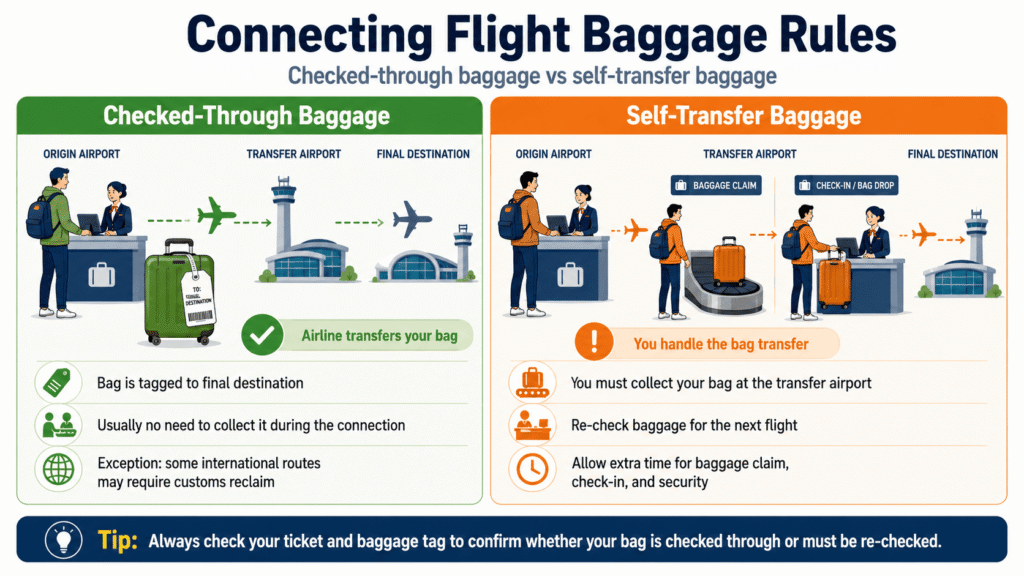
Security can also vary. Therefore, keep liquids, electronics, and travel documents easy to access.
What Happens If You Miss a Connecting Flight?
If you miss a connecting flight, the outcome depends on the reason and how you booked.
If both flights are on one ticket and the first flight is delayed, the airline will usually help rebook you on another available flight. This is one reason single-ticket connections are safer.
If you booked separate tickets, the second airline may treat you as a no-show. In that case, you may need to buy a new ticket or pay change fees. This is why self-transfers need longer layovers.
Here is what to do right away:
- Speak to airline staff before leaving the transfer area.
- Check your airline app for automatic rebooking.
- Ask about the next available flight.
- Keep boarding passes and delay notices.
- Stay polite and calm when requesting help.
Connecting Flight Checklist
Use this simple checklist before booking and before travel.
Before Booking
- Choose one ticket when possible.
- Avoid very short layovers at large airports.
- Check whether the connection is domestic or international.
- Confirm if you need a transit visa.
- Use the Flight Connection Risk Calculator for risky itineraries.
- Leave extra time if traveling with children, elderly passengers, or mobility needs.
At the Airport
- Download the airline app.
- Keep documents, medicine, chargers, and valuables in your carry-on.
- Check baggage tags at the airport.
- Follow transfer signs first.
- Check screens for gate changes.
- Ask staff if your connection is tight.
- Go to the gate early, especially for international flights.
A good connection is not only about minutes. It is about how many steps you must complete between flights.
Conclusion
The main takeaway is that a connecting flight is a multi-leg journey where you change planes before reaching your final destination. Once you understand the Definition of Connecting Flight, it becomes easier to choose the right itinerary, avoid tight transfers, and prepare for baggage or security checks.
For the smoothest trip, book flights on one ticket where possible, allow extra time for international routes, and confirm baggage rules at check-in. If your route includes a short layover, terminal change, separate ticket, or immigration check, treat it as higher risk. Before you book, use Boarding Gate’s Flight Connection Risk Calculator to check whether your connection looks comfortable or risky.
Frequently Asked Questions
What is the Definition of Connecting Flight?
The Definition of Connecting Flight is a flight journey where you change planes at an intermediate airport before reaching your final destination. It usually includes two or more flight legs.
Do I have to check in again for a connecting flight?
You usually do not need to check in again if all flights are on one ticket. If you booked separate tickets, you may need to collect bags, check in again, and go through security.
Is one hour enough for a connecting flight?
One hour may be enough for some simple domestic connections, but it can be risky at large airports or on international routes. Add more time if you need to change terminals, pass security, or clear immigration.
Will my luggage transfer automatically on a connecting flight?
Often, yes, if your flights are on the same ticket and your bag is tagged to the final destination. However, some international arrivals and separate-ticket trips require you to collect and recheck baggage.
What is the difference between a layover and a connecting flight?
A connecting flight is the journey that requires changing planes. A layover is the waiting time between the first flight and the next flight.