An airport body scanner does not show a naked image. The millimetre wave scanners used at US checkpoints mark any possible threat on a generic outline of a person on a monitor, and if nothing is found the screen simply shows “OK”. In the US you can usually opt out and choose a pat-down instead. In the UK you can ask for a private hand search instead of a body scan. Either way, you can ask for a private room and an officer of the same sex.
This guide covers what the scanner sees, whether it is safe, how opting out works in the US and UK, what a pat-down involves, and the rights you have at the checkpoint.
Airport body scanners: key facts
- The screen shows a generic outline, not your body.
- Millimetre wave energy is about 1,000 times below international limits, TSA says.
- US: you can generally opt out and have a pat-down instead.
- UK: you can ask for a private search instead of a body scan.
- You can ask for private screening with a same-sex officer and a witness.
Table of Contents
- What an airport body scanner actually sees
- Is the body scanner safe?
- Can you opt out of the body scanner?
- What happens in a pat-down
- Your privacy rights at the checkpoint
- Implants, prosthetics and medical devices
- How to get through the scanner faster
- Frequently asked questions
What an airport body scanner actually sees
You empty your pockets, step into the portal, raise your arms and stand still for a few seconds. According to TSA, millimetre wave imaging uses electromagnetic waves to detect potential threats, which are highlighted on a generic outline of a person on a monitor attached to the unit. If there is no alarm, an “OK” appears with no outline.
The UK works the same way. GOV.UK says only you and a security officer see a mannequin-style diagram on a small screen after the scan. If an area is flagged, an officer checks just that area with a targeted pat-down. Alarms are common and often caused by sweat, folds in clothing, or items left in pockets, so a flag does not mean anyone thinks you did something wrong.
Is the body scanner safe?
TSA says advanced imaging technology meets national health and safety standards, and that the energy emitted by millimetre wave technology is 1,000 times less than international limits and guidelines (TSA). Millimetre waves are non-ionising, unlike X-rays. GOV.UK notes that pregnant passengers and children can also be asked to go through the scanner.
Can you opt out of the body scanner?
| Country | Can you opt out? | What happens instead |
|---|---|---|
| United States | Generally yes | A physical pat-down. A small number of passengers selected for enhanced screening must use the scanner |
| United Kingdom | Yes, by asking for a private search | A thorough hand search in private, where you may be asked to loosen or remove some clothing |
| Other countries | Varies | Some require the scan with no alternative. Ask the officer before you enter the lane |
In the US, TSA says passengers will generally have the opportunity to decline imaging in favour of physical screening. The exception is passengers whose boarding pass shows they were selected for enhanced screening before they reached the checkpoint. TSA says this happens in a very limited number of cases.
To opt out, tell the officer before you step into the scanner: “I would like to opt out, please.” Expect to wait for an available officer of the same sex, and keep an eye on your belongings on the belt while you wait.
What happens in a pat-down
TSA describes the process on its pat-down screening page:
- The pat-down is done by an officer of the same sex.
- The officer explains the process before and during the screening.
- Because the aim is to find items hidden under clothing, the officer has to use enough pressure to detect them.
- Tell the officer about any medical condition or areas that are painful to touch.
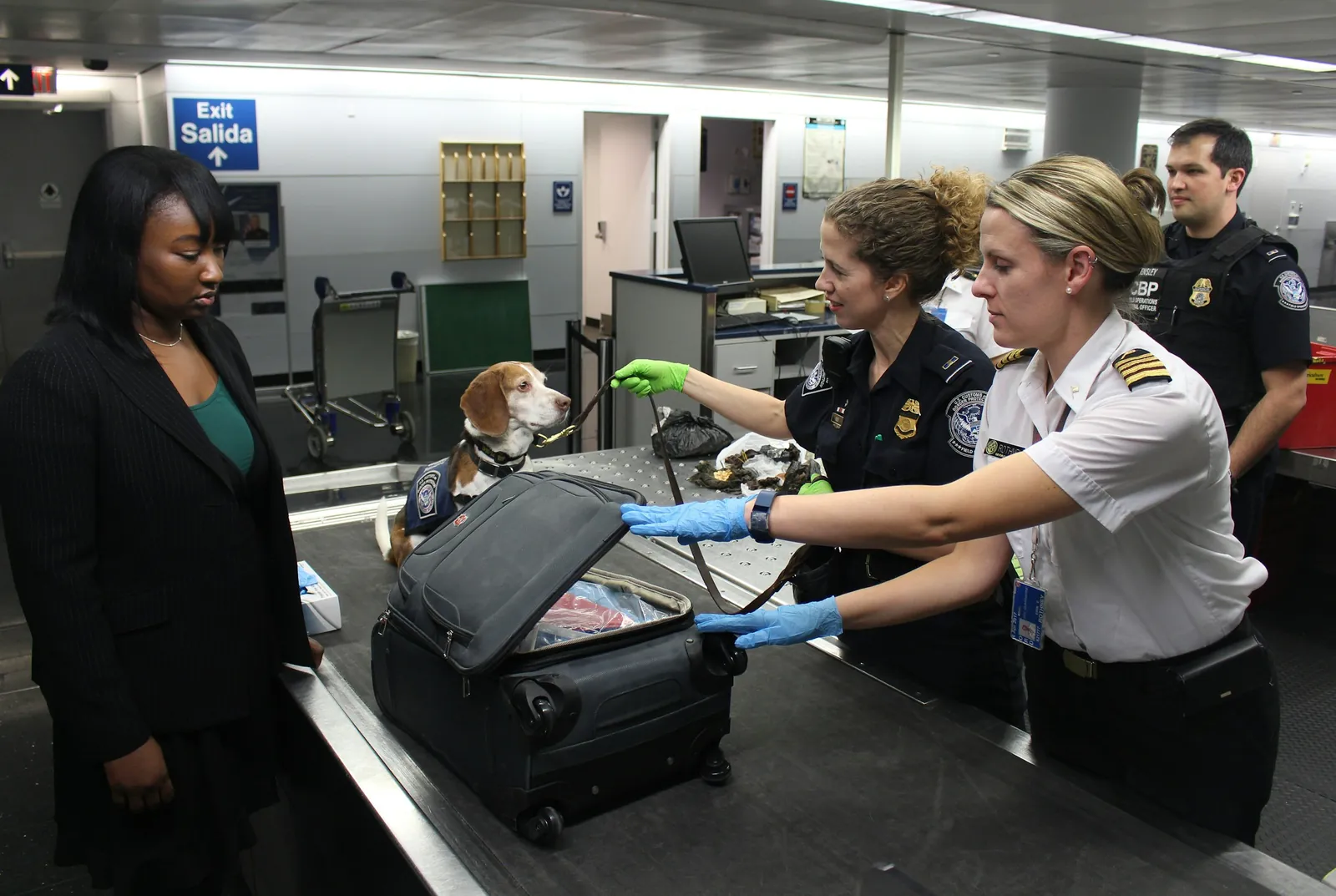
- At any time, you can ask for private screening and have a witness of your choice present.
Officers usually use the back of the hand on sensitive areas. Your hands may also be swabbed for explosive traces. A swab can alarm on some lotions and medicines, which leads to extra checks rather than trouble.
Your privacy rights at the checkpoint
- Private screening. Available on request in the US and the UK.
- Same-sex officer. TSA pat-downs are done by an officer of the same sex. In the UK, you can ask for an officer of the same sex to review your scan image, and the officer will not be able to identify you from it.
- A witness. In the US, you can have a witness of your choice present.
- Religious headwear. In the UK, you can ask for headgear worn for religious or cultural reasons to be checked with a hand-held scanner so you do not have to remove it.
Implants, prosthetics and medical devices
GOV.UK notes that the scan image will show a colostomy, implant or prosthesis, and that staff are trained to handle this respectfully. Passengers with an implantable cardioverter defibrillator can ask for a hand search, and should carry their ICD card. For insulin pumps, glucose monitors and other devices, check the manufacturer’s advice on scanners and tell the officer before screening.
Carrying medicine or medical liquids? Our guide to bringing medication on a plane covers what to declare. Travelling with an urn? Our guide to flying with ashes explains how the X-ray rules work.
How to get through the scanner faster
- Empty every pocket, including paper, tissues and receipts. The scanner detects non-metallic items too.
- Wear clothes without metal studs or large buckles, and avoid bulky layers.
- Pack liquids within the limits in our carry-on liquid guide so the bag check goes quickly.
- If you plan to opt out, allow extra time. Our airport arrival guide shows how much buffer to leave.
Frequently asked questions
What do airport body scanners see?
They do not show a naked image. US millimetre wave scanners highlight possible threats on a generic outline of a person, and show “OK” if nothing is found. In the UK, a mannequin-style diagram is shown only to you and a security officer.
Can I refuse the airport body scanner?
In the US, you can generally opt out and have a pat-down, unless your boarding pass shows you were selected for enhanced screening. In the UK, you can ask for a private hand search instead.
Are airport body scanners safe?
TSA says its millimetre wave scanners meet national health and safety standards and emit energy 1,000 times below international limits. Pregnant passengers and children can be asked to use them in the UK.
What happens during a TSA pat-down?
An officer of the same sex explains the process and checks areas of your clothing with enough pressure to detect hidden items. You can ask for private screening with a witness present.
Why did the body scanner alarm?
Common causes are items left in pockets, sweat, folds in clothing, or jewellery. The officer will usually check only the flagged area with a short pat-down.
Can I go through the body scanner with an implant or prosthesis?
Yes. The image may show an implant, prosthesis or colostomy, and staff are trained to handle it respectfully. Tell the officer beforehand. People with an ICD can ask for a hand search.