Bangkok has a reputation for traffic, and it is deserved, but the city also has a clean, cheap, and fast public transport network that most visitors never fully use. Learn the two train systems, the river boats, and when to reach for a taxi, and you can skip the gridlock entirely. This guide covers the BTS Skytrain, the MRT subway, the airport link, the boats, and the road options, with the fares, cards, and timing tips that make it all work.
The BTS Skytrain
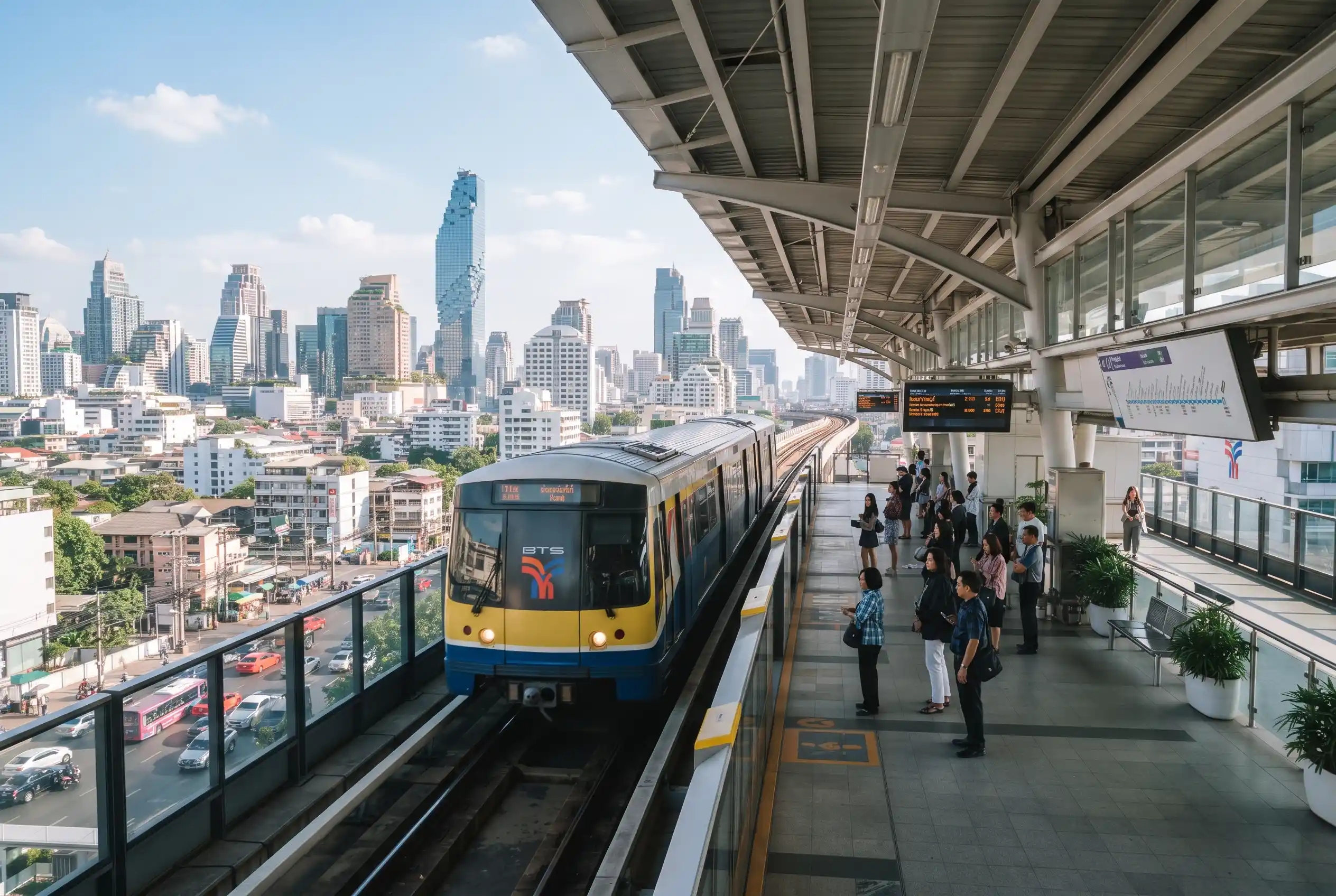
The BTS Skytrain is the elevated railway that most travellers use the most. It has two main lines, the Sukhumvit line and the Silom line, which cross at Siam station in the shopping heart of the city. It is fast, air conditioned, and runs from around 6 am to midnight. Fares are distance based, roughly 17 to 62 baht a trip, and it links most of the areas visitors stay in, including Sukhumvit, Silom, Siam, and the weekend giant Chatuchak market at Mo Chit. You can buy single journey tickets from machines, tap a stored value Rabbit card, or use a contactless bank card at the gates.
The MRT subway
The MRT is the underground system, and it complements the BTS rather than duplicating it. The Blue line is the most useful for visitors, reaching Chinatown (Wat Mangkon), the old town edge (Sanam Chai, near Wat Pho and the Grand Palace), and the business and nightlife districts. Fares run about 17 to 70 baht. The MRT uses its own tokens or stored value card, which is not the same as the Rabbit card, though contactless bank cards now work here too. The BTS and MRT connect at several stations, including Asok and Sukhumvit, Sala Daeng and Silom, and Mo Chit and Chatuchak Park, so you can switch between them easily.
Getting to and from the airports
Bangkok has two airports. Suvarnabhumi, the main international one, is connected to the city by the Airport Rail Link, which runs to Phaya Thai in about 30 minutes for 15 to 45 baht, with interchanges to the MRT at Makkasan and the BTS at Phaya Thai. It is far faster than a taxi in rush hour. The budget airline hub, Don Mueang, has no train and is reached by bus, minivan, or taxi. If you have a long wait between flights, our layover survival planner can help you make the most of it.
River and canal boats
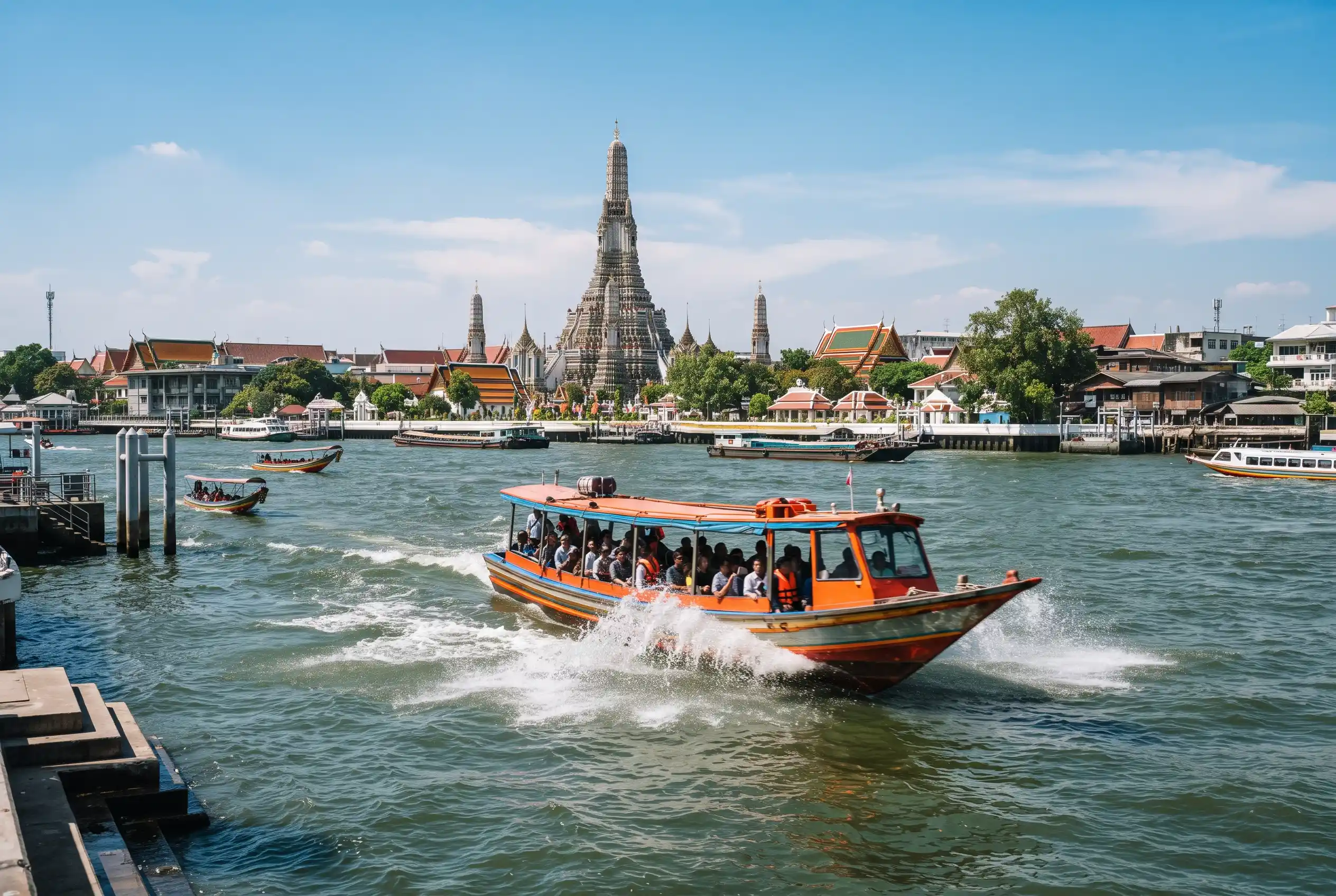
For the old town, the water is often the best way to travel. The Chao Phraya Express Boats run up and down the river, with the orange flag service costing around 16 baht and stopping at piers for the big sights: Tha Tien for Wat Pho, Tha Chang for the Grand Palace, and Sathorn pier, which connects to the BTS at Saphan Taksin. There is also a tourist boat with a day pass if you want to hop on and off freely. Away from the river, the Khlong Saen Saep canal boats are a fast, cheap way to cross the city east to west, useful for Pratunam and the Golden Mount area, though they are splashy and take some nerve to board.
Buses, taxis, Grab, and tuk-tuks
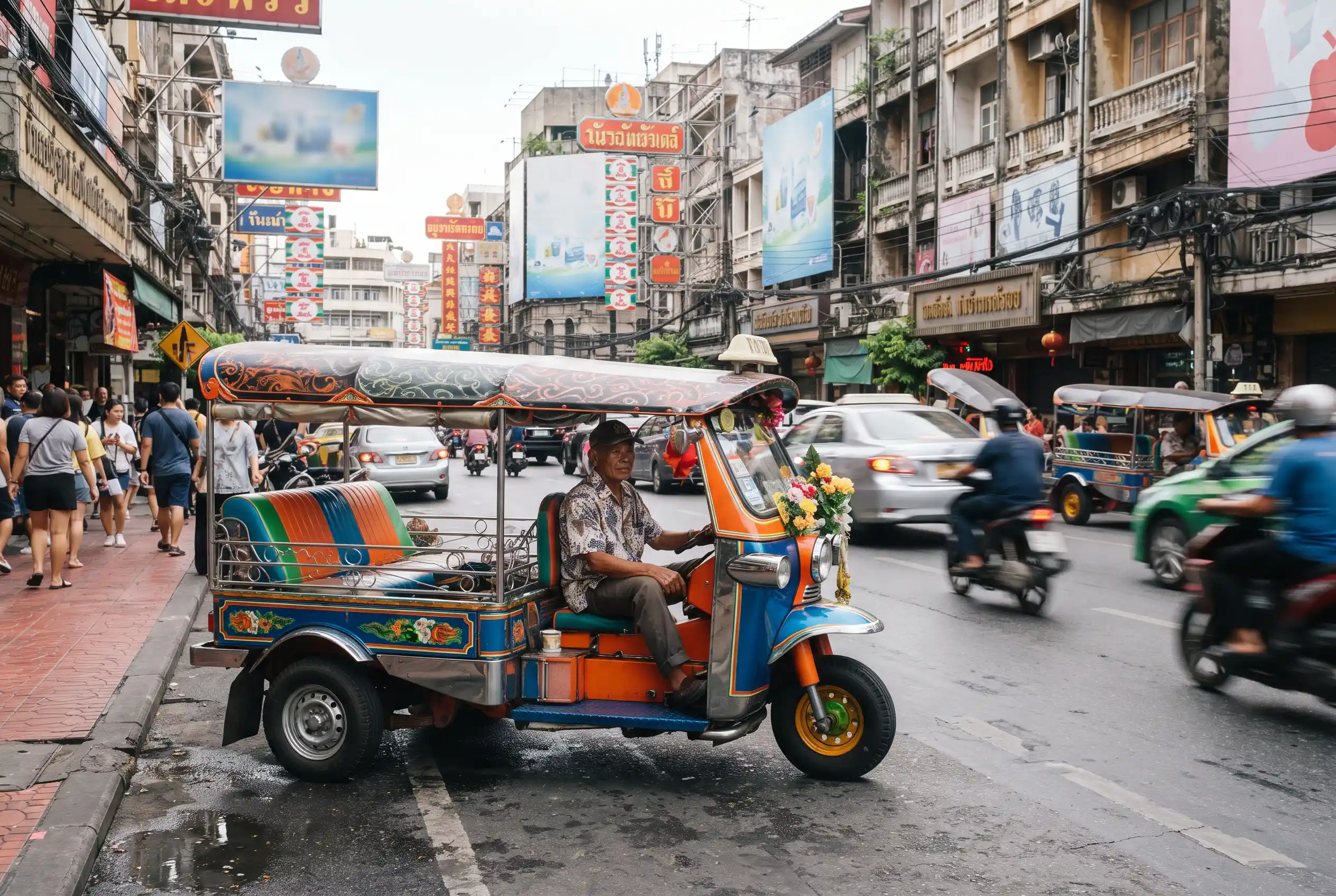
On the roads you have several choices. City buses cover more than 400 routes and cost only 8 to 25 baht, but they are hard to use without local knowledge. Metered taxis are cheap by Western standards, starting at 35 baht, but you must insist the driver uses the meter and avoid anyone who quotes a flat fare. Ride hailing apps like Grab and Bolt remove the haggling with fixed, up front pricing, and are the easiest option for most visitors. Tuk-tuks are fun for a short hop but you must negotiate hard and they are rarely cheaper than a taxi, so treat them as an experience. Motorbike taxis, with riders in numbered orange vests, are the fastest way to cover a short distance in traffic, though they carry more risk. To gauge a fair price before you ride, use our taxi fare estimator.
Cards, fares, and paying
If you are staying several days and will use the BTS often, a Rabbit card saves time at the gates. For the MRT, a separate stored value card does the same. The simplest change in recent years is that contactless Visa and Mastercard now work directly on the BTS and MRT gates, so many visitors skip the cards entirely and just tap a bank card. Keep a stash of small notes and coins for boats, buses, and taxis, which are cash based. A data connection makes the whole network far easier to navigate with a maps app, and our eSIM data calculator can size a plan before you land.
Tips for getting around
- Avoid the trains and roads at rush hour, roughly 7:30 to 9:30 am and 5 to 7:30 pm.
- Use the BTS or MRT first, and reach for a taxi or Grab only for the last stretch.
- Take the river boat for the Grand Palace, Wat Pho, and the old town rather than sitting in road traffic.
- Carry small cash for boats, buses, and taxis, and tap a contactless card on the trains.
- Always insist on the meter in a taxi, or use a ride hailing app for a fixed price.
With the network sorted, you can spend your days on the things that matter, from the floating markets to the temples. A quick read of our guide to Thai culture and traditions will help you handle those with confidence. For official route and fare information, see the BTS Skytrain and the Tourism Authority of Thailand.
Frequently asked questions
What is the best way to get around Bangkok?
The BTS Skytrain and MRT subway are the fastest and cheapest way to cross the city and avoid traffic. Use the Chao Phraya river boats for the old town and the Grand Palace, and a taxi or Grab for the last stretch to your destination.
What is the difference between the BTS and the MRT?
The BTS is the elevated Skytrain and the MRT is the underground subway. They are run by different operators and use different cards, but they connect at several stations such as Asok and Sukhumvit, so you can switch between them. Contactless bank cards now work on both.
How do I get from Suvarnabhumi Airport to the city?
The Airport Rail Link runs from Suvarnabhumi to Phaya Thai in about 30 minutes for 15 to 45 baht, connecting to the MRT at Makkasan and the BTS at Phaya Thai. It is much faster than a taxi during rush hour. Don Mueang airport has no train and needs a bus or taxi.
Do I need a travel card for Bangkok trains?
Not necessarily. A Rabbit card for the BTS and a stored value card for the MRT save time if you travel often, but contactless Visa and Mastercard now work directly at the gates of both systems, so many visitors just tap a bank card.
Are taxis in Bangkok cheap?
Yes, metered taxis are inexpensive by Western standards, starting at 35 baht, but you must insist on the meter and avoid drivers who quote a flat fare. Ride hailing apps like Grab and Bolt offer fixed up front pricing and are the easiest option for most visitors.