Introduction
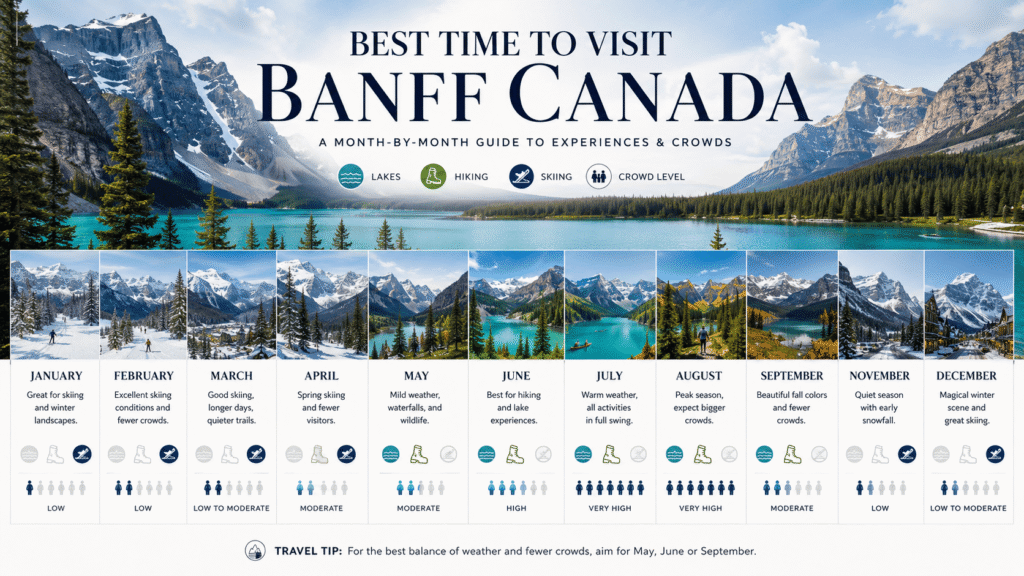
The best time to visit Banff Canada depends on the trip you want. For turquoise lakes, hiking, and long daylight, late June to September is usually best. if its for Skiing, snow, and winter scenery, then December to March is stronger. Someone looking for fewer crowds, May, October, and November can work, but each shoulder-season month has trade-offs. For most first-time visitors, June and September offer the best balance of scenery, access, and crowd control.
This 2026 month-by-month guide explains Banff weather, lake conditions, hiking seasons, winter travel, crowds, transport planning, and what to expect in every month. It also links to useful tools for itinerary planning, packing, insurance checks, and flight connections.
Table of Contents
- Best Time to Visit Banff Canada: Quick Answer
- Banff Weather and Seasons at a Glance
- Best Time to Visit Banff – Month by Month
- Best Time to Visit Banff by Travel Style
- Banff Crowds, Bookings, and Transport
- What to Pack for Banff by Season
- Common Mistakes When Choosing When to Visit
- Best Time to Visit Banff – Monthly Summary
- Best Time to Visit Banff: Conclusion
- Frequently Asked Questions
Best Time to Visit Banff Canada: Quick Answer
Best time to visit Banff Canada for lakes and hiking
The best time to visit Banff Canada for lakes and hiking is usually late June through September. By late June, many lakes start showing their famous color, although exact thaw and color timing can vary. July and August give you the warmest weather and the widest access. September brings cooler days, fall color, and fewer families than peak summer.
If this is your first Banff trip and you want the classic postcard version, choose late June, July, August, or September. If you dislike crowds, lean toward June or September.
Best time for skiing and winter scenery
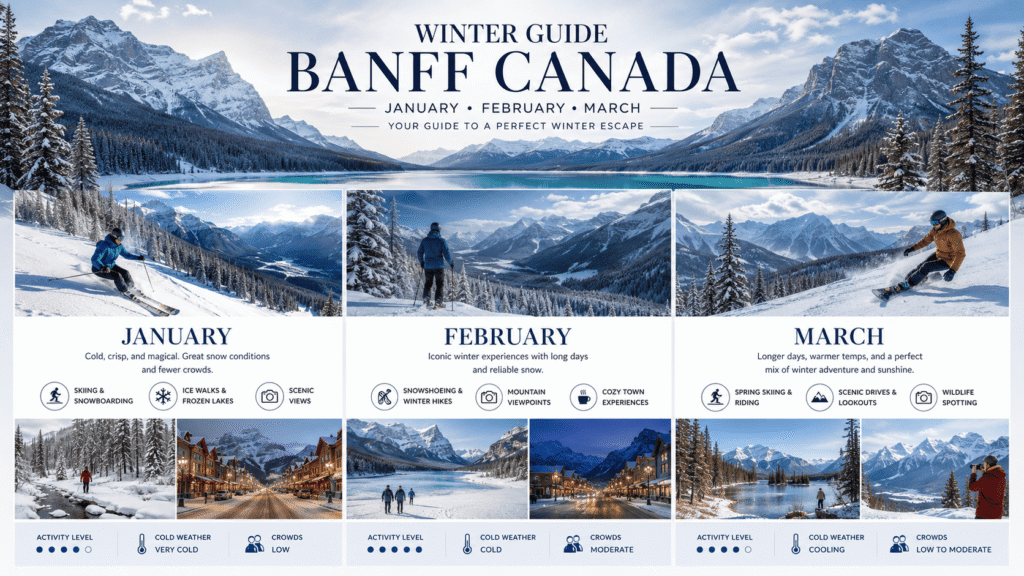
For skiing and winter scenery, visit from December to March. January is usually the coldest month, while March often gives a better mix of snow, longer daylight, and slightly easier temperatures.
Banff winter is best if your dream trip includes skiing, snow-covered mountains, ice walks, frozen waterfalls, cozy meals, and winter photography.
Best Time to Visit Banff for fewer crowds
May, October, and November are better for lower crowds, but they are not perfect substitutes for summer. May can still feel early, with some lakes frozen and higher trails snowy. October can be beautiful but weather changes quickly. November can be quiet, but it is often between fall and full winter.
For many travelers, September is the best crowd-and-scenery compromise.
Banff Weather and Seasons at a Glance
Banff is a mountain destination, so averages only tell part of the story. Weather can change quickly, and snow can appear outside the months visitors expect. Still, seasons help you plan.
| Season | Months | Best for | Watch out for |
|---|---|---|---|
| Winter | December to March | Skiing, snow, ice walks, winter photos | Cold weather, shorter days, road conditions |
| Spring | April to May | Lower crowds, spring skiing, town exploring | Frozen lakes, muddy trails, limited alpine access |
| Summer | June to August | Lakes, hiking, long days, scenic drives | Peak crowds, parking, shuttle bookings |
| Fall | September to November | Larches, cooler hikes, quieter town | Early snow, road/trail changes, shorter days |
Banff & Lake Louise Tourism says July is the warmest month, with average highs around 22°C, but evenings can cool significantly because Banff sits above 1,400 metres. Parks Canada also notes that January is the coldest month, with average lows around -15°C and occasional drops into the minus thirties.
Best Time to Visit Banff – Month by Month
Banff in January
January is cold in Banff Canada, snowy, and very winter-focused. This is a good month for skiing, snowboarding, winter photos, and cozy mountain travel. It is not the right month for turquoise lakes or summer hikes.
The main challenge is the cold. Bring serious winter clothing, not light city layers. Expect short daylight, icy paths, and winter driving conditions. On the positive side, the scenery can be stunning, especially around Lake Louise, Bow River, and the ski areas.
January is best for travelers who want snow more than flexibility.
Banff in February
Banff in February is still winter, but days slowly get longer. Skiing remains a major draw, and the snow-covered landscape is beautiful. It can be a strong month for couples, photographers, and travelers who want winter without the holiday rush.
You still need warm layers, waterproof boots, gloves, and traction for icy sidewalks or canyon walks. February can also be a good month for Johnston Canyon ice walks if conditions are right.
If you are flying long-haul to Calgary, use the Jet Lag Sleep Planner before departure so your first ski or sightseeing day does not feel wasted.
Banff in March
Banff in March is one of the best winter months for many visitors. You can still ski, but daylight improves and the worst of deep winter may feel less intense. It is also a popular month around spring break periods, so do not assume it will be empty.
March is a good fit if you want skiing in Banff, snow photos, and winter scenery with slightly more comfortable timing. Trails at higher elevations are still winter routes, not summer hikes.
For a first winter trip, March is often easier than January.
Banff in April
April is a transition month in Banff. Some ski areas may still be operating, but town can feel more springlike. The scenery can be mixed: snow in shaded areas, wet paths in town, and frozen or partially frozen lakes.
April is not the best time to visit Banff Canada for the classic lake-color trip. However, it can work for lower prices, quieter streets, and a flexible traveler who understands the limitations.
Pack for winter and spring in the same bag.
Banff in May
Banff in May is shoulder season. It can be a smart month for lower crowds, but it is too early for some summer expectations. Lake Louise may still look wintery early in the month. Moraine Lake access normally starts later than Lake Louise shuttle service, and high trails can still be snowy.
May is good for Banff town, Bow Falls, Surprise Corner, lower-elevation walks, Cave and Basin, Banff Gondola, and early scenic drives where open. It is not ideal if your whole trip depends on high alpine hiking or fully thawed lakes.
If you choose May, keep the plan flexible and check current conditions close to your dates.
Banff in June
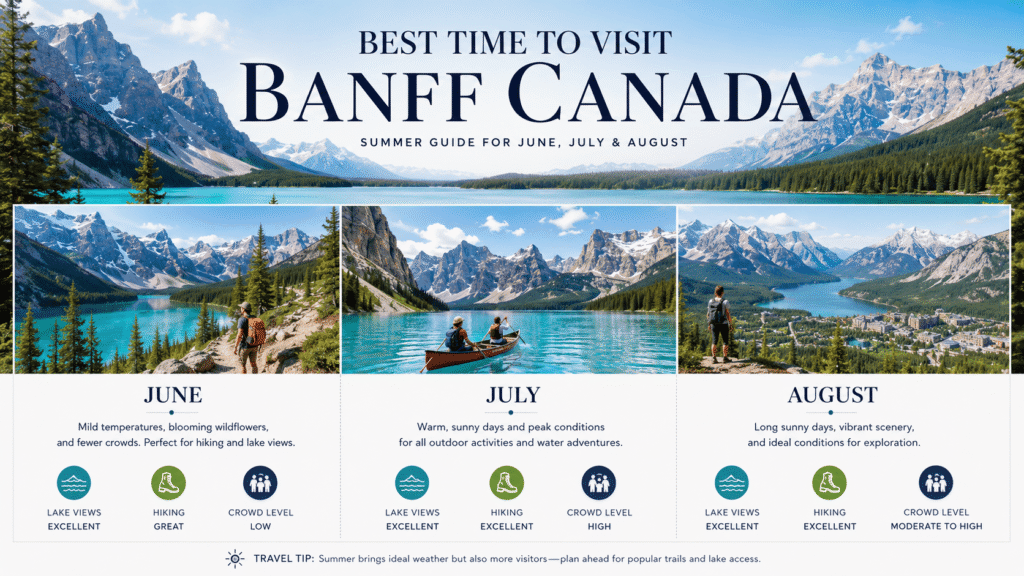
Banff in June is when the summer season starts to build. The lakes begin moving toward their famous color, shuttle operations are active for Lake Louise and Moraine Lake during their listed seasons, and more trails become possible as snow melts.
Parks Canada lists 2026 shuttle service to Lake Louise Lakeshore from May 15 to October 12 and Moraine Lake from June 1 to October 12, weather permitting. Shuttle reservations are one of the most important parts of a summer Banff plan.
The temp in Banff in June can feel pleasant during the day and cool at night. Rain is also possible, so bring a waterproof shell. June is a good choice if you want summer access with fewer peak-season crowds than July and August.
Banff in July
Banff in July is the classic summer trip. It is warm by Banff standards, the lakes are usually at their best, many hikes are accessible, and long daylight gives you more time outside.
The trade-off is crowding. July is one of the busiest months, so book accommodation, shuttles, and key activities early. Start days early and avoid building plans around mid-day parking at famous locations.
For weather in July in Banff Canada, expect the warmest average conditions of the year, but still pack a layer for evenings. Mountain weather can change fast, even in summer.
Banff in August
August is still peak summer in Banff. It is one of the best months for hiking, lakes, scenic drives, biking, and full access to many outdoor activities. Banff weather August searches are popular because travelers want to know if it is still warm. In general, yes, but cool evenings and sudden weather shifts still happen.
August is excellent for first-time visitors who want maximum access. However, it is also busy and can be expensive. Book early and keep your itinerary realistic.
If you want to hike, start in the morning and check trail status before heading out.
Banff in September
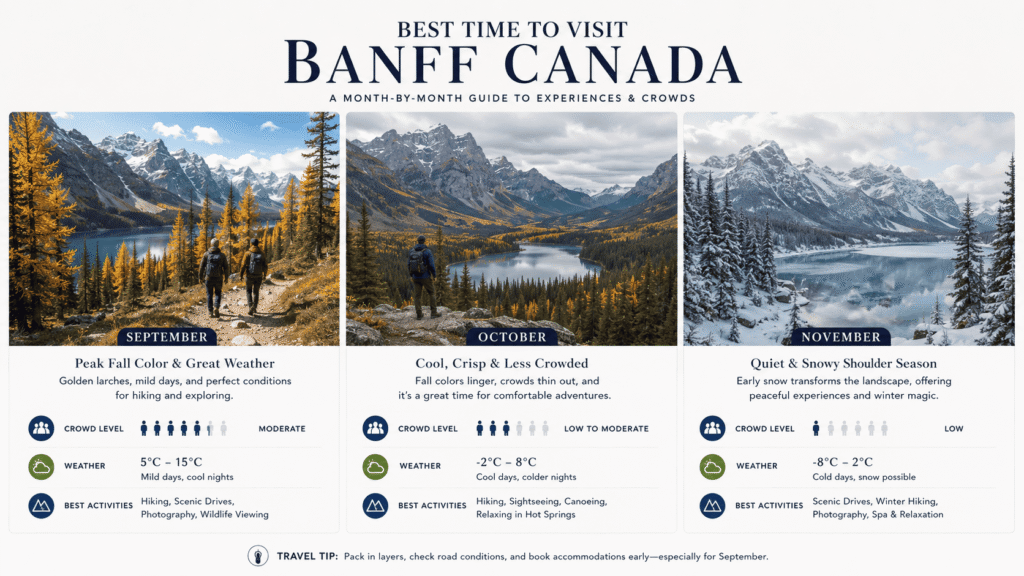
September is one of the best months overall. The weather is cooler, the summer crowds ease after school holidays, and fall colors begin. Banff Canada in September is especially popular for larch hikes, photography, and travelers who prefer a quieter version of the summer experience.
Banff weather September can vary. Early September may still feel summery in the afternoon. Late September can feel much colder, especially in the morning and evening. Snow is possible at higher elevations.
For many visitors, September is the best time to visit Banff Canada because it balances lake scenery, hiking, and fewer peak crowds.
Banff in October
October is crisp in Banff, quieter, and less predictable. Fall colors may linger early in the month, but snow can arrive. Some services, shuttles, and seasonal operations begin to wind down, depending on the year and weather.
October can be beautiful for flexible travelers. It is less ideal for visitors who want guaranteed summer-style access. If you go, plan a mix of town activities, scenic viewpoints, lower hikes, and weather-friendly options.
October is also a smart month for travelers who prefer photography and calm over full activity access.
Banff in November
Banff in November is one of the trickiest months to plan. It can feel too late for fall and too early for the full winter atmosphere, depending on the year. Some ski operations may begin, but conditions vary.
Banff Canada in November can still be worthwhile if you want quieter streets, lower demand, and a slower mountain trip. However, do not choose November expecting turquoise lakes, golden larches, and peak ski conditions all at once.
This is a better month for repeat visitors than first-timers.
Banff in December
Its winter travel with a festive feel in Banff in december. Ski season is underway, snow scenery becomes a major attraction, and the town feels cozy. It can be cold, but it is also one of the best months for travelers who want a winter holiday atmosphere.
December is good for skiing, Lake Louise winter photos, Banff Avenue, hot springs, and winter dining. It is not a cheap secret month, especially around Christmas and New Year.
Book early if traveling during the holidays.
Best Time to Visit Banff by Travel Style
Best time for Lake Louise and Moraine Lake
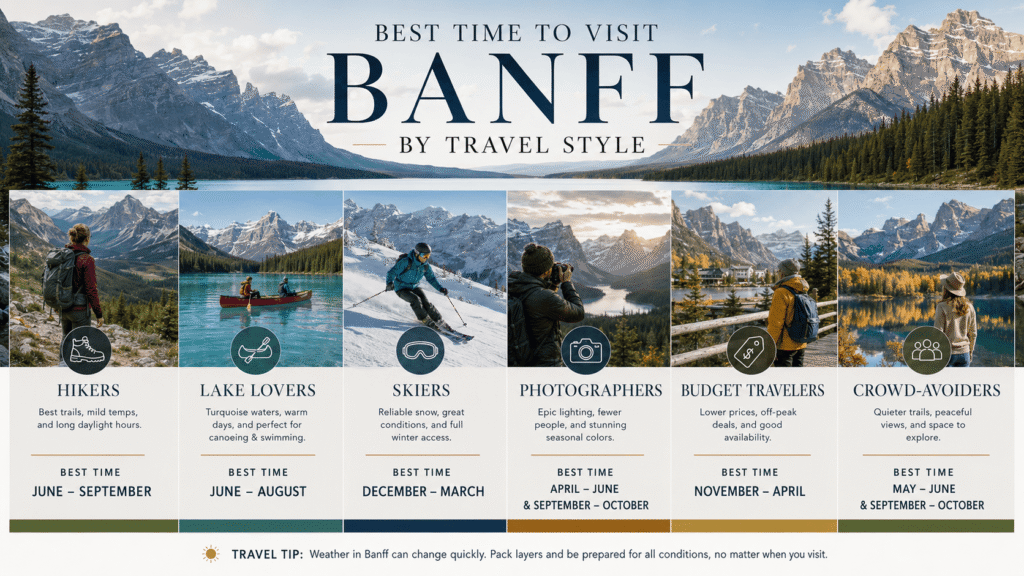
For Lake Louise and Moraine Lake, late June through September is usually the safest planning window for the classic lake experience. July and August offer the most reliable summer feel, while September gives you cooler weather and fewer peak crowds.
The main planning issue is access. Moraine Lake Road is closed to personal vehicles year-round, and visitors must use approved shuttle, transit, licensed operator, or lodge access.
If Moraine Lake is essential to your trip, choose dates inside the operating window and book transportation early.
Best time for hiking
The best time for hiking is usually July through mid-September. Parks Canada says prime hiking season in Banff typically runs from July through mid-September, with many passes still snow-bound until late June.
June can still be good for lower-elevation trails. September can be excellent for cooler hikes and larch color. May and October require more caution because snow, mud, and closures are more likely.
For a detailed activity guide, read the companion post: Things to Do in Banff Canada.
Best time for skiing in Banff
The best time for skiing in Banff is generally December through March. March is especially appealing if you want longer daylight and a slightly softer winter feel.
January and February are colder, but they can deliver a true winter mountain experience. If skiing is your main goal, build the trip around snow conditions, resort dates, and your comfort with cold weather.
Best time for Banff restaurants and town exploring
Banff restaurants, cafés, museums, shops, and hot springs work year-round. For a town-focused trip, shoulder seasons can be enjoyable because the pace is slower.
May, October, November, and early December can work well if you are not relying on high alpine hikes or peak lake color. In peak summer and holidays, reserve dinners early.
Best Time to Visit Banff for Northern Lights
Northern lights Banff trips are possible, but not guaranteed. Winter gives longer dark hours, which can help. However, aurora viewing depends on solar activity, clear skies, darkness, and luck.
Do not build your whole Banff trip around northern lights. Treat them as a bonus.
Best time for budget travelers
For lower prices and fewer crowds, look at May, October, November, and early December outside holiday periods. However, “cheaper” does not always mean “better.” You may trade lower demand for reduced access, uncertain weather, or fewer seasonal activities.
In 2026, Parks Canada is offering free admission from June 19 to September 7 through the Canada Strong Pass, plus a 25% discount on camping and overnight stays. This does not cover every fee, and it may increase demand during peak summer.
Banff Crowds, Bookings, and Transport
Summer crowd planning
Summer is busy because it gives travelers what they came for: bright lakes, warmer weather, long days, and open trails. July and August need the most planning.
Book accommodation early. Reserve shuttles early. Start major sightseeing days early. Keep meals simple during the day so you do not lose the best hours waiting for tables.
If you want a practical day-by-day plan, use the Boarding Gate Trip Itinerary Builder after choosing your travel month.
Lake Louise and Moraine Lake planning
Lake Louise and Moraine Lake are the two places where planning matters most. Parks Canada says reserving a shuttle seat is the best way to guarantee access to both lakes in one day. Your reservation includes return travel from the Lake Louise Park and Ride and access to the Lake Connector shuttle.
For most first-time visitors, this is easier than trying to gamble on parking.
Road and trail closures
Banff has seasonal closures that protect wildlife and manage safety. Parks Canada lists restrictions on areas such as Moraine Lake Road, parts of Minnewanka Loop Road, Bow Valley Parkway, and some trails during specific periods.
Always check current conditions before finalizing your daily plan. A good Banff itinerary has backup options.
Flying to Calgary
Most travelers fly into Calgary and continue to Banff by rental car, shuttle, or private transfer. If you are booking a connecting flight, leave enough time for immigration, baggage, terminal changes, and delays. The Flight Connection Risk Calculator is useful if you are comparing two flight options into Calgary.
What to Pack for Banff by Season
Winter packing
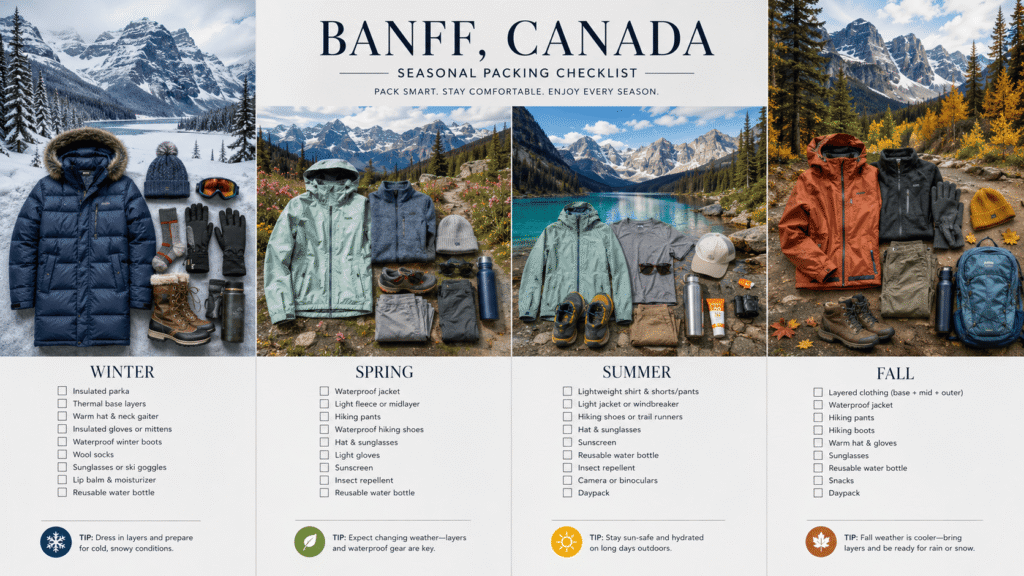
For December through March, pack thermal layers, a warm insulated jacket, gloves, winter hat, waterproof boots, thick socks, and traction for icy paths. Skiers should also check whether their travel insurance covers winter sports.
Use the Travel Insurance Coverage Checklist before booking activities like skiing, snowboarding, ice walks, or guided winter adventures.
Spring packing
For April and May, pack for mixed weather. You may need a winter jacket in the morning and lighter layers later. Bring waterproof shoes or boots because paths can be wet, muddy, or icy.
Do not pack only for spring city weather. Banff is still a mountain destination.
Summer packing
For June through August, pack hiking shoes, a rain jacket, sun protection, sunglasses, refillable water bottle, light fleece, and a daypack. Even if the afternoon is warm, evenings can cool quickly.
If you plan to hike, bring snacks, layers, and bear spray. You can buy or rent some gear locally, but do not leave basics until the last minute.
Fall packing
For September through November, pack layers and expect change. September may feel mild in the afternoon but cold in the morning. October can bring rain or snow. November is often winterlike.
The Packing List Generator can help you create a checklist based on your trip dates, travelers, and activity style.
Common Mistakes When Choosing When to Visit
Assuming May looks like July
May can be lovely, but it is not peak summer. Some lakes may still be frozen, and higher trails can still hold snow. Visit in May for lower crowds and flexibility, not guaranteed turquoise lake views.
Visiting in July without reservations
July gives you great access, but it also brings high demand. Accommodation, shuttles, tours, and dinner reservations can fill. If July is your only option, book early and start days early.
Expecting Moraine Lake to be drive-up
Moraine Lake is not a normal drive-up stop. Personal vehicles are not allowed on Moraine Lake Road. Plan approved transport in advance.
Ignoring winter driving conditions
Winter Banff is beautiful, but roads and sidewalks can be icy. If you rent a car, understand winter driving, check road conditions, and avoid pushing long drives in poor weather.
Picking November for a first Banff trip
November can be peaceful, but it is often a shoulder month with limited summer activities and uncertain winter conditions. If this is your once-in-a-lifetime Banff trip, June, July, August, September, or March may be stronger.
Packing too lightly in summer
Summer does not mean tropical. Banff evenings can be cool, and mountain weather changes quickly. Bring layers even for July and August.
Ignoring wildlife safety
Wildlife can appear near roads, trails, and town. Parks Canada advises keeping at least 30 metres from animals such as elk, deer, sheep, and moose, and 100 metres from bears, wolves, cougars, and coyotes.
Best Time to Visit Banff – Monthly Summary
| Month | Best for | Not ideal for | Overall verdict |
|---|---|---|---|
| January | Skiing, snow, winter photos | Warmth, lakes, long days | Best for deep winter |
| February | Skiing, ice walks, couples trips | Summer activities | Strong winter choice |
| March | Skiing with longer daylight | Lake color | Best winter balance |
| April | Quiet travel, spring skiing | Classic Banff scenery | Flexible travelers only |
| May | Lower crowds, town exploring | Thawed lakes, alpine hiking | Good shoulder month |
| June | Early summer, lake access, fewer crowds than July | Guaranteed dry weather | Great first-timer option |
| July | Warmest weather, lakes, hiking | Crowds and prices | Best full-access month |
| August | Hiking, lakes, road trips | Budget travel | Excellent but busy |
| September | Larches, hiking, fewer crowds | Hot weather | Best overall balance |
| October | Fall mood, quieter trips | Reliable access | Good for flexible travelers |
| November | Quiet, early winter feel | First-time classic Banff | Risky shoulder month |
| December | Festive winter, skiing | Low prices around holidays | Great winter atmosphere |
Best Time to Visit Banff: Conclusion
The best time to visit Banff Canada is not the same for every traveler. Choose late June to September for lakes, hiking, and classic Banff scenery; December to March for skiing and winter landscapes; May, October, or November only if you are comfortable with shoulder-season trade-offs. For most first-time visitors, June and September are the strongest balance months.
Before you book, decide what matters most: lake color, hiking, skiing, fewer crowds, or lower prices. Then build your itinerary around that season instead of trying to force every Banff activity into the wrong month.
Frequently Asked Questions
What is the best month to visit Banff Canada?
September is one of the best months for many travelers because it offers cooler hiking weather, fall color, lake scenery, and fewer peak-summer crowds. July and August are best for maximum access, while March is best for winter trips.
When is the best time to visit Banff Canada for turquoise lakes?
Late June through September is usually best for turquoise lakes. July and August are the safest peak-summer months. June and September can be excellent, but exact lake color and thaw timing vary by year.
Is June a good time to visit Banff?
Yes, June is a good time to visit Banff if you want early summer scenery with fewer crowds than July and August. Some higher trails may still have snow early in the month, so keep your hiking plans flexible.
Is September a good time to visit Banff Canada?
Yes. Banff in September is one of the best choices for hiking, photography, larch color, and fewer crowds. Early September feels closer to summer, while late September can feel colder and more fall-like.
Is Banff better in summer or winter?
Banff is better in summer if you want lakes, hiking, scenic drives, and long days. Banff is better in winter if you want skiing, snow, ice walks, and cozy mountain scenery. The better season depends on your trip style.
What is Banff like in May?
Banff in May is quieter and cheaper than peak summer, but it can still feel early. Some lakes may be frozen, and higher trails can be snowy or muddy. It is good for flexible travelers, not those who need full summer conditions.
Is November a bad time to visit Banff?
November is not bad, but it is risky for first-time visitors. It can be too late for fall and too early for reliable full winter conditions. Choose November for quiet travel, not for classic lake views.
When is the cheapest time to visit Banff?
May, October, November, and early December can be cheaper than peak summer or holiday winter periods. Prices vary by hotel demand, events, and booking timing, so compare dates before assuming one month is always cheapest.
Can you visit Moraine Lake in winter?
Moraine Lake Road is closed to personal vehicles year-round, and regular seasonal shuttle access is limited to the warmer operating season. Winter access is not a standard sightseeing visit, so most travelers should plan Moraine Lake for summer or early fall.
How many days do you need in Banff?
Three days gives you a good first visit. Five days is better if you want Lake Louise, Moraine Lake, Banff town, Johnston Canyon, Lake Minnewanka, hikes, and a scenic drive without rushing.