Yes — you can bring one ordinary lighter on a plane, in your carry-on or on your person. The rules are stricter than most items because a lighter is a fire source, so the type matters and checked baggage is largely off-limits. These are US TSA rules, which most travelers are searching for. Other authorities — the UK, EU and the UAE’s GCAA — follow similar but not identical limits, and the final call always rests with the security officer and your airline. Check before you fly.
Table of Contents
Lighters You Can Bring in Carry-On
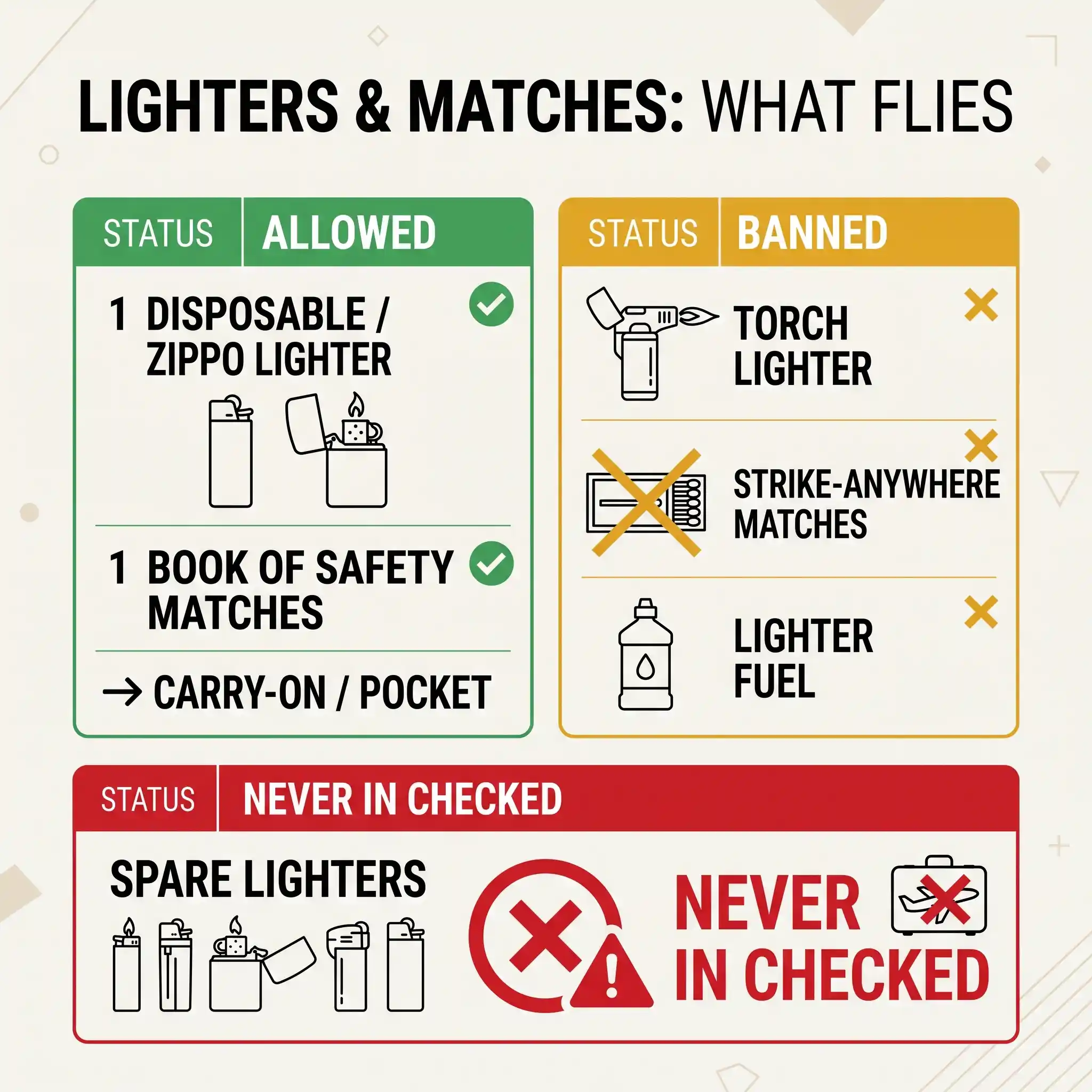
A single disposable Bic-style lighter or a Zippo-style absorbed-fuel lighter is allowed in your carry-on or pocket. That is the FAA limit — one per passenger. Arc, plasma and electric (rechargeable) lighters are treated the same way: one, in the cabin.
Torch Lighters Are Banned
A torch lighter — the kind with a hot, jet-like blue flame used for cigars and crafts — is prohibited from both carry-on and checked baggage entirely. If your lighter produces a focused jet flame rather than a soft one, leave it at home.
Lighters in Checked Baggage
As a rule, do not pack lighters in checked baggage. The single exception is a lighter without fuel, or one sealed in a DOT-approved airtight case — and even then, up to two. It is simpler to keep your one lighter on you. Lighter refill fuel and butane canisters are banned from both bags.
Matches on a Plane
You may carry one book of safety matches (the kind that only strike on their own box) in your carry-on or pocket. Strike-anywhere matches are banned from both carry-on and checked baggage. Matches of any kind are not allowed in checked bags.
Vapes and E-Cigarettes
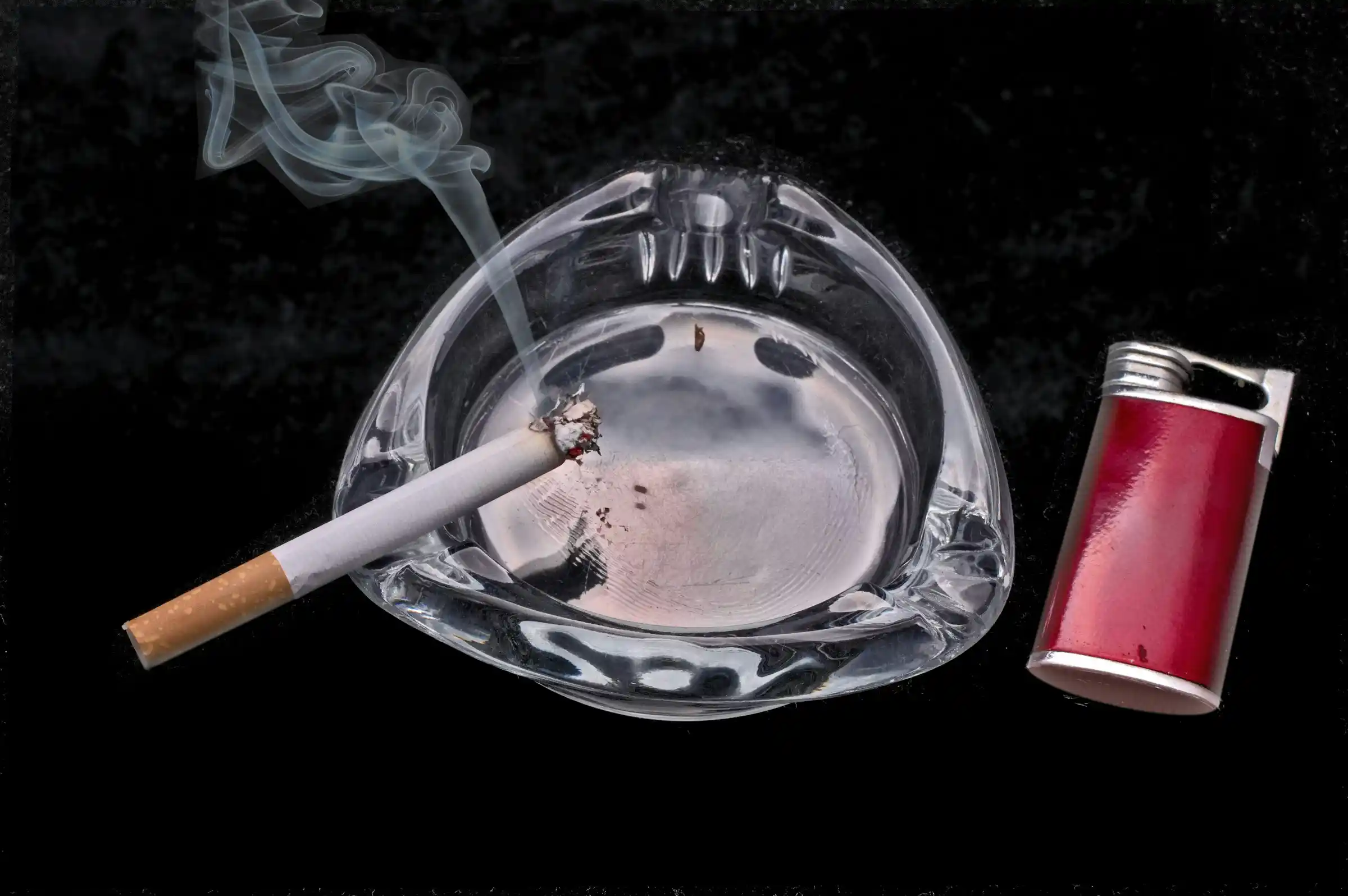
Vapes and e-cigarettes follow the battery rule, not the lighter rule: they are allowed only in the cabin, never in checked baggage, because of their lithium batteries. You cannot use or charge them in flight.
This is one item in our full guide to what you can bring on a plane — the complete carry-on and checked-bag rundown.
Country differences and why the limit exists
The common guidance is one ordinary lighter carried on your person, not in your bag, but this is one of the least consistent rules in aviation. Some countries and airlines ban lighters from the cabin entirely, others allow one, and a few permit them only in a special fire-resistant case. Because the policy depends on your departure country and carrier, treat the “one lighter” rule as a starting point rather than a guarantee, and confirm it for your specific route — especially on flights within or departing from Asia, where several authorities are notably stricter.
The reasoning behind the restrictions explains the inconsistency. A lighter is a small ignition source, and the concern is fire risk in a pressurised cabin or an inaccessible hold, which is why torch and jet-flame lighters — which burn hotter and are harder to extinguish — are treated more harshly than a basic disposable. If a lighter is found where it is not allowed, the standard outcome is that it is surrendered at the checkpoint; there is rarely a penalty beyond losing the item. The safe habit is to buy a cheap lighter at your destination rather than risk carrying one through a security regime you are unsure about.
The same logic covers batteries. Power banks and spare lithium batteries belong in your carry-on, never the hold, because a battery fire is far more dangerous where no one can reach it. If you vape, the device and its batteries must also travel in the cabin and should never be charged or used in flight. The theme across all of these is consistent: anything that can ignite is kept where the crew can act.
Frequently Asked Questions
Can you bring a lighter on a plane?
Yes, one ordinary disposable or Zippo-style lighter in your carry-on or pocket. Torch lighters are banned, and lighters should not go in checked baggage.
Can you take a lighter in checked luggage?
Generally no. The only exception is a fuel-free lighter or one sealed in a DOT-approved case. Keep your single lighter on your person instead.
Can you bring matches on a plane?
You may carry one book of safety matches in your carry-on or pocket. Strike-anywhere matches are banned, and no matches are allowed in checked baggage.
How many lighters can you fly with?
One ordinary lighter per passenger in the cabin. Up to two are allowed in checked baggage only if each is in a DOT-approved travel case.
Are torch lighters allowed on planes?
No. Torch and jet-flame lighters are prohibited from both carry-on and checked baggage.
Can you bring a vape on a plane?
Yes, in your carry-on or pocket only — never in checked baggage, and you cannot use or charge it in flight.
Can you bring lighter fluid, butane, or refill canisters?
No. Containers of lighter fluid, butane gas, and refill canisters are forbidden in both carry-on and checked baggage. Only the fuel already sealed inside an allowed lighter may travel — you cannot pack spare fuel to refill it.
Are electric, arc, or plasma lighters allowed?
Yes, but in your carry-on only. Rechargeable arc, plasma and electric (lithium-battery) lighters are treated like other lithium devices: they must travel in the cabin, never in checked baggage, and should be protected from accidental activation. Do not charge one during the flight.
Can you put a torch lighter in checked baggage?
No. Torch lighters — the jet or blue-flame type used for cigars and crafts — are prohibited from both carry-on and checked baggage, so there is no bag you can legally pack one in. Leave it at home.