The Dambulla Cave Temple is the largest and best preserved cave temple complex in Sri Lanka, and one of the most rewarding stops on the island’s Cultural Triangle. Five caves cut into a single granite outcrop hold 153 Buddha statues and more than 2,000 square metres of painted ceilings, some of them more than two thousand years old. This guide covers what you will actually see in each cave, the history behind it, the climb and the dress code, the entrance fee, and how to combine Dambulla with nearby Sigiriya.
What the Dambulla Cave Temple is
Dambulla sits in the Central Province, about 148 km northeast of Colombo and roughly 24 km south of Sigiriya. The temple is carved into the overhang of a large rock that rises around 160 metres above the surrounding plain. It has been a place of worship and pilgrimage without a break for more than 22 centuries, which is part of why UNESCO added it to the World Heritage list in 1991. Locals also call it Rangiri Dambulla and, because of the modern gilded shrine at the base, the Golden Temple of Dambulla.
A short history
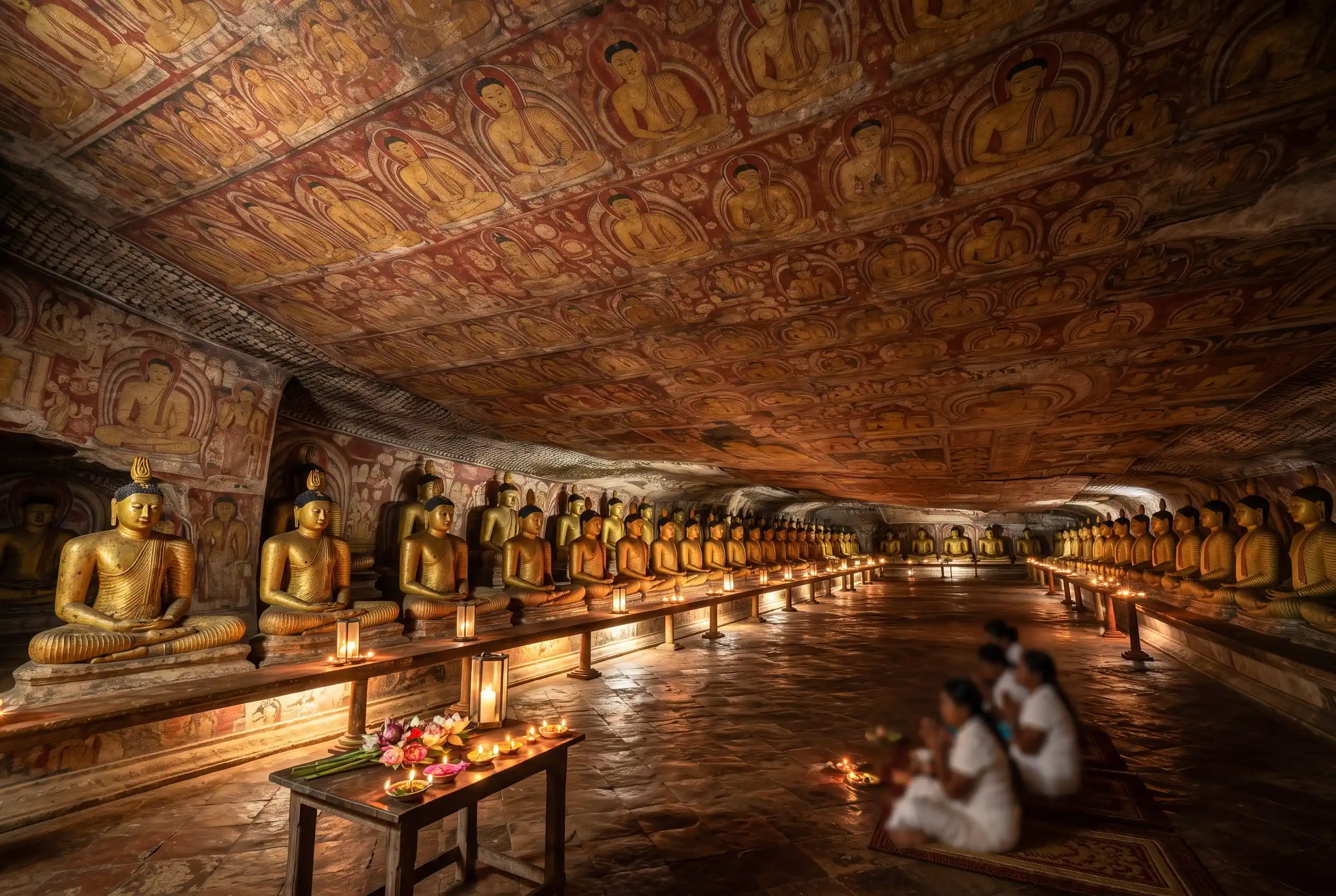
The story starts in the 1st century BC with King Valagamba, who was driven out of his capital at Anuradhapura and spent around 14 years hiding among these caves. When he regained his throne, he had the caves converted into a magnificent rock temple in thanks to the monks who had sheltered him. Later kings added to the work over the centuries. The painted ceilings and many of the statues you see today were restored and expanded during the Kandyan period in the 18th century, which is why the art blends very old and more recent styles.
The five caves and what to see
All five caves open onto a single long terrace near the top of the rock. You visit them left to right, and each has its own character.
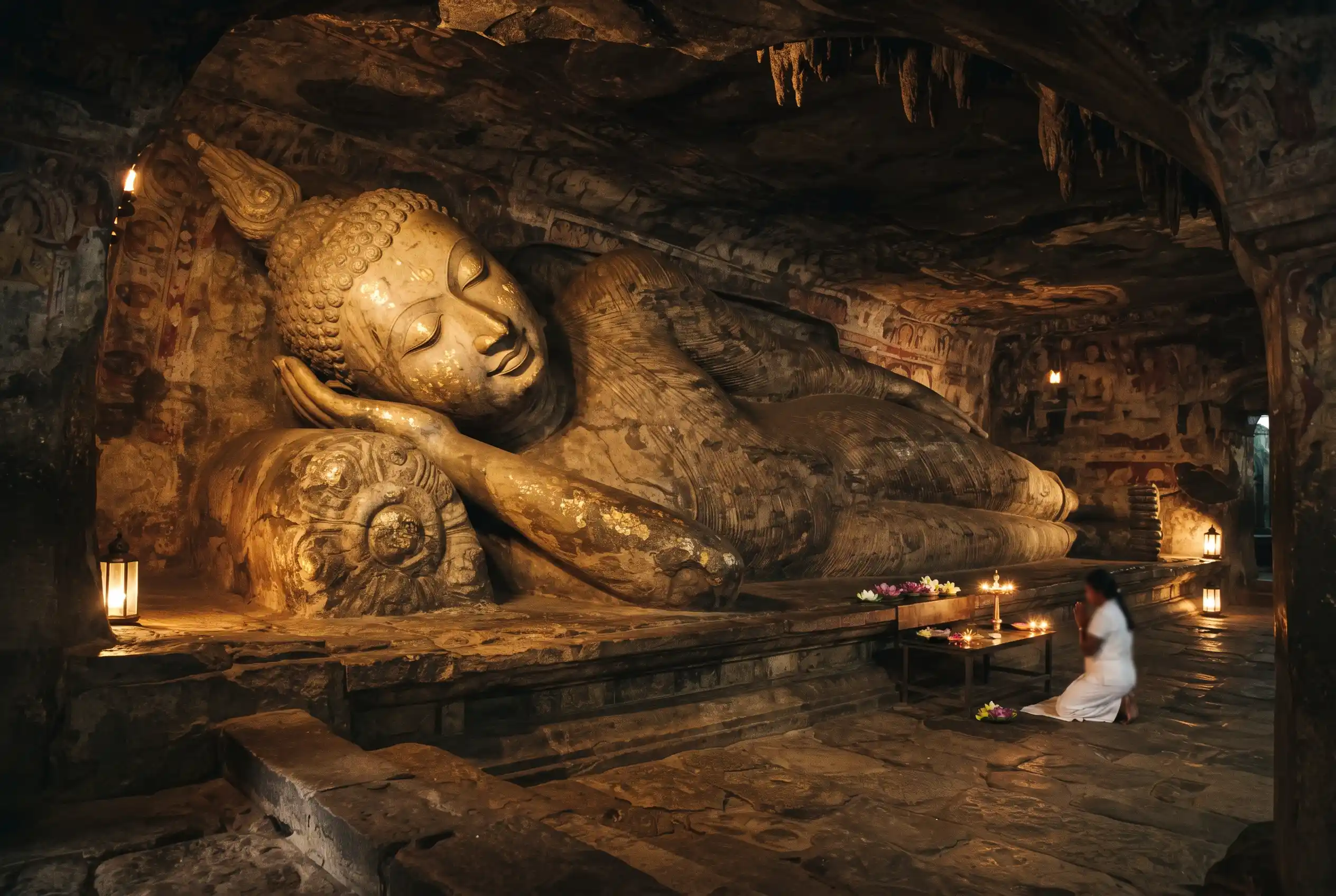
Cave 1, Devaraja Viharaya (Temple of the King of Gods). The first and smallest cave is dominated by a 14 metre reclining Buddha carved out of the rock, showing the moment of entering nirvana. His disciple Ananda stands at his feet.
Cave 2, Maharaja Viharaya (Temple of the Great Kings). This is the largest and most spectacular cave, and the one most photos come from. It holds around 56 statues, seated and standing Buddhas, a dagoba, and figures of the gods Vishnu and Saman, plus statues of kings Valagamba and Nissanka Malla. The entire ceiling is covered in painting, and a small spring drips water that is collected for rituals, a quiet marvel given it sits near the top of a rock.
Cave 3, Maha Alut Viharaya (Great New Monastery). Added in the 18th century under King Kirti Sri Rajasinha, this cave shows the Kandyan style, with more Buddha statues and vivid ceiling murals.
Caves 4 and 5 are smaller and later, with further seated Buddhas and a reclining figure, and they round off the visit. Across all five, the 153 Buddha images and the painted surfaces make this the richest single temple interior in the country.
Dambulla Cave Temple or the Golden Temple?
This confuses a lot of first time visitors. At the base of the rock is the modern Golden Temple, a 21st century complex with a huge seated golden Buddha statue and a small museum. It is free and takes a few minutes. The ancient caves are a separate, ticketed site reached by climbing the rock behind it. The caves are the real reason to come. Do not spend all your time at the shiny statue at the bottom and miss the climb.
The climb, fees, and dress code
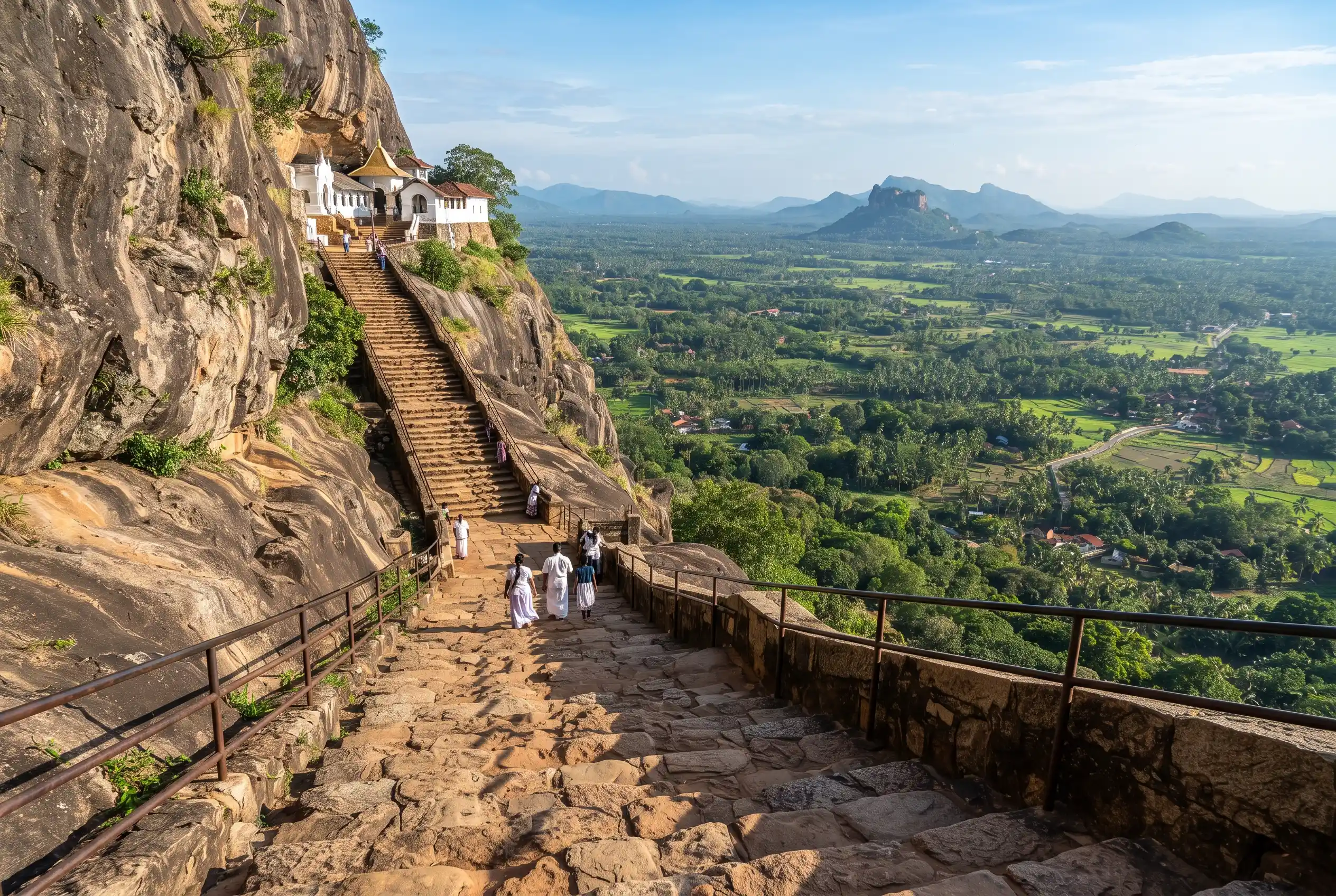
Reaching the caves means climbing a stepped path of roughly 360 steps, which takes most people 20 to 30 minutes at a steady pace. It is not a technical climb, but it is exposed, so go early or late to avoid the midday heat and carry water. Monkeys patrol the steps and will grab food or loose bags, so keep snacks out of sight.
The entrance fee for foreign visitors has been around 3,000 Sri Lankan rupees in recent seasons, and the ticket office is often at the base rather than the top, so buy before you climb and carry cash. Opening hours run roughly from 7 am to 7 pm. As at any working Buddhist temple, shoulders and knees must be covered, and you remove shoes and hats before stepping onto the cave terrace. The stone gets very hot underfoot by midday, so a pair of socks is worth packing. Our packing list tool can help you remember the cover up and socks before you fly.
How to get there and combine with Sigiriya
Dambulla sits on the main Kandy to Jaffna road, so it is easy to reach by bus or car from Kandy (about two hours) or Colombo (about four). Most travellers pair it with Sigiriya, which is only 24 km away, and the two make a natural single day on the Cultural Triangle. A common plan is to climb Sigiriya at dawn when it is cool, then visit the Dambulla caves in the late afternoon. For the full rundown on its famous neighbour, see our guide to the Sigiriya Rock Fortress. If you want a sense of how temple etiquette works elsewhere in the region, our guide to Bali’s temples covers similar dress and behaviour rules.
Best time to visit
The Cultural Triangle is driest and most comfortable from roughly May to September. Dambulla can be visited year round, but early morning and late afternoon are always the best windows, both for cooler stone underfoot and for softer light on the painted ceilings. Allow about one to two hours at the caves themselves, plus the climb. For official visitor information, the UNESCO listing for the Golden Temple of Dambulla and the Sri Lanka Tourism board are reliable references.
Frequently asked questions
How much is the Dambulla Cave Temple entrance fee?
The ticket for foreign visitors has been around 3,000 Sri Lankan rupees in recent seasons. Buy it at the office near the base before you climb, and carry cash, as card payment is not reliable.
How many steps are there at Dambulla?
The stepped path to the caves is roughly 360 steps and takes most visitors 20 to 30 minutes. It is steady rather than steep, but there is little shade, so climb early or late and bring water.
What is the dress code?
Shoulders and knees must be covered for everyone. You also remove shoes and hats before entering the cave terrace. The stone gets hot by midday, so a pair of socks is useful.
How long do you need at Dambulla?
Plan on about one to two hours at the caves, plus 20 to 30 minutes for the climb each way. It pairs well with Sigiriya, 24 km away, for a full day on the Cultural Triangle.
Is Dambulla worth visiting?
Yes. It is the largest and best preserved cave temple in Sri Lanka, with 153 statues and more than 2,000 square metres of painting across five caves, and over 2,000 years of unbroken history. For most travellers it is a highlight of central Sri Lanka.