Goa Gajah, the “Elephant Cave,” is one of the oldest and strangest sites near Ubud: a small cave whose entrance is carved into a glaring demonic face, set above a courtyard of ancient bathing pools that lay buried until the 1950s. It is compact, shaded and genuinely atmospheric, and because it takes less than an hour to see, it slots easily into a morning around Ubud. Here is what to expect and how to visit.
A brief history
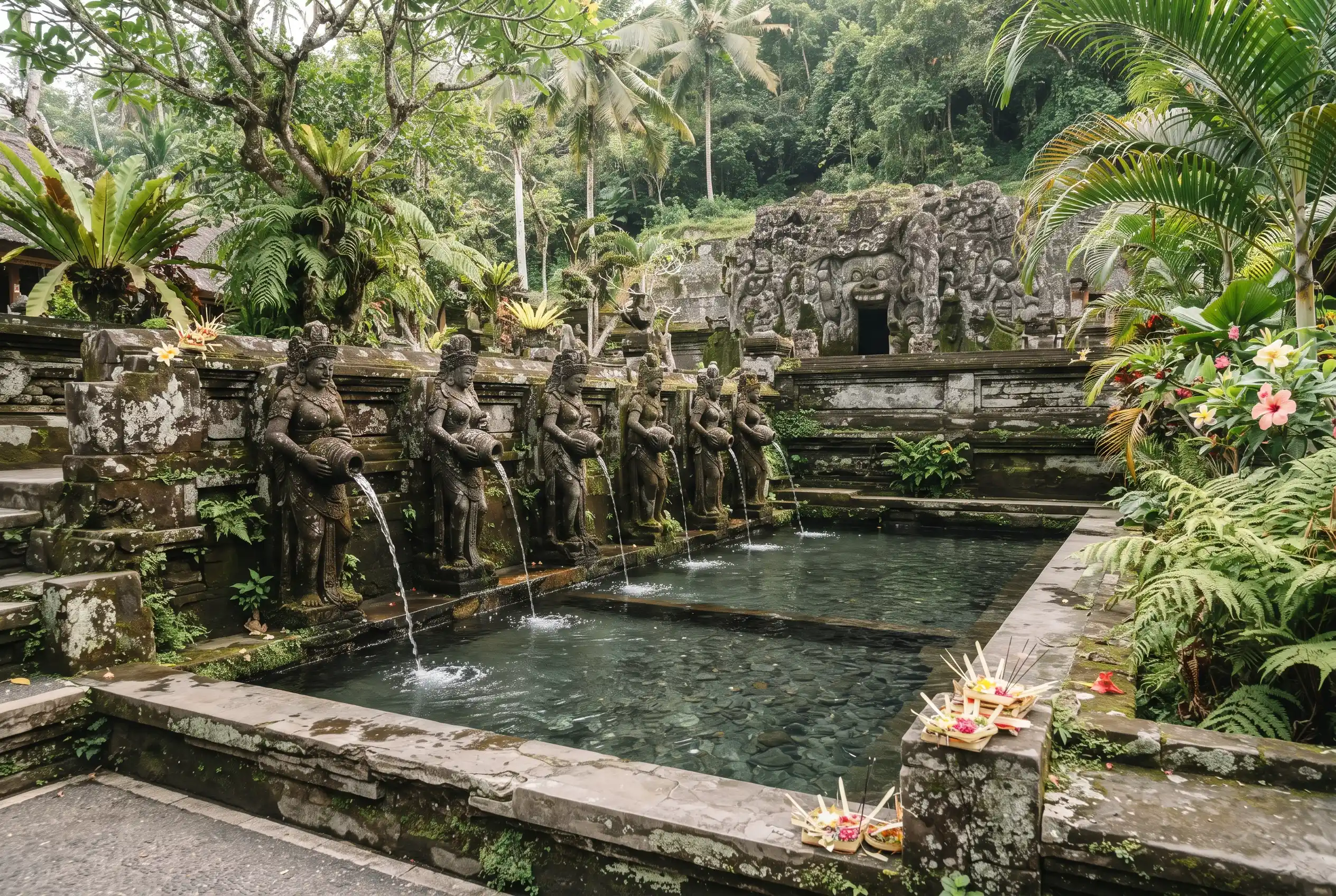
Goa Gajah dates to around the 9th to 11th centuries and shows both Hindu and Buddhist influences, a reminder that the two traditions coexisted on Bali in that era. Inside the shallow cave, carved into the rock, are a statue of Ganesha and a set of lingga-yoni shrines. The name “Elephant Cave” probably comes from the nearby Petanu River, once known as the Elephant River, or from the Ganesha figure — there were never elephants here. The bathing pools in front of the cave, with their stone spout figures, were excavated by Dutch archaeologists in 1954 after being lost for centuries.
What to see
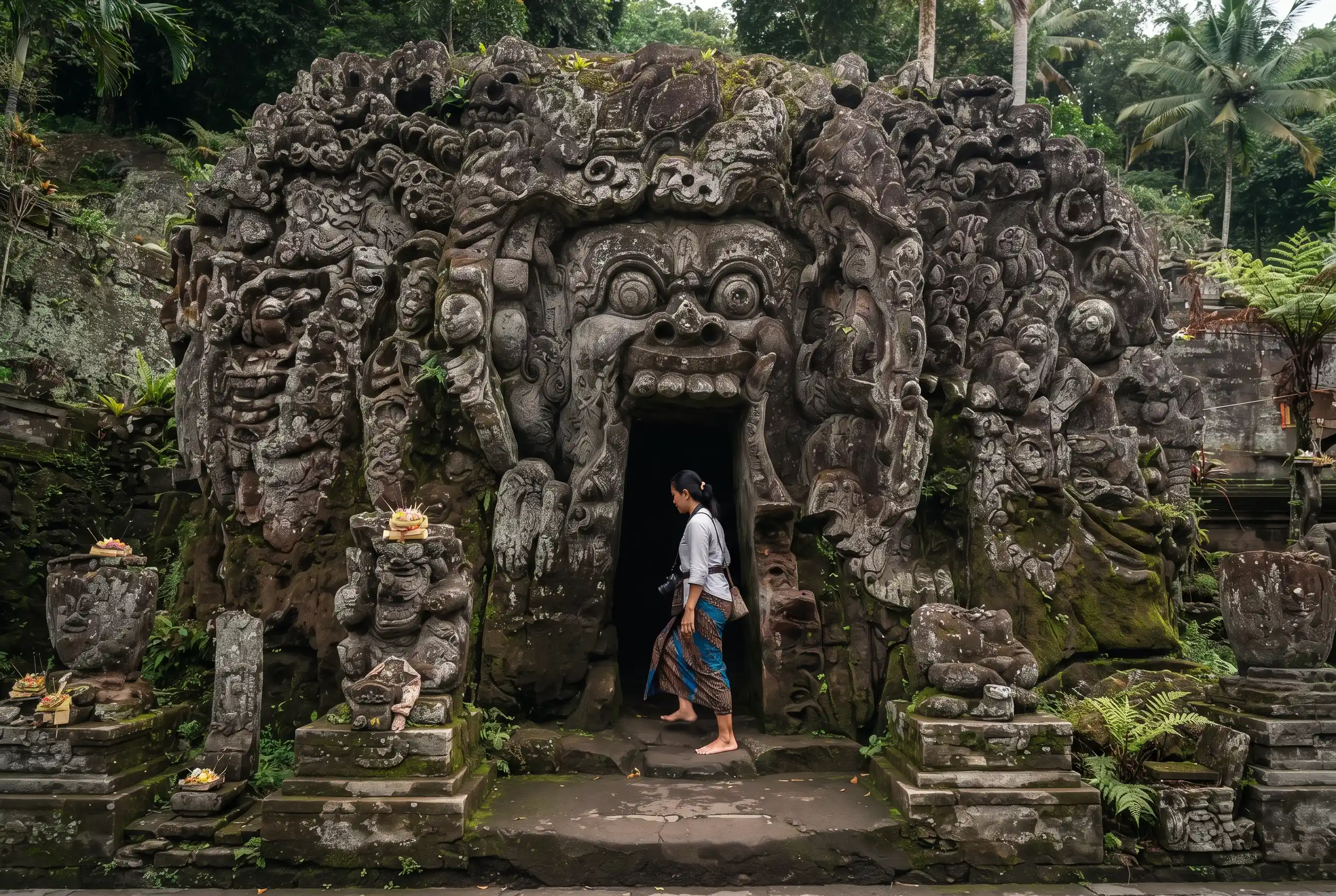
- The cave mouth. The carved face around the entrance — mouth agape, hands seeming to part the rock — is the signature image. You step through the mouth into the dim interior.
- The bathing pools. Below the cave, six stone figures pour water into the restored pools. This is the most photogenic corner.
- The temple grounds and jungle walk. A path leads down through trees past Buddhist rock carvings and a stream — a cool, quiet loop that most tour groups skip.
The site is small; an unhurried visit takes 45 minutes to an hour, including the walk down into the valley.
How to visit
Where it is: Bedulu, about 15 to 20 minutes southeast of central Ubud. Getting there: ride-hailing app, private driver or scooter; there is no public transport. Estimate the fare with our taxi and ride-share fare estimator.
Entry: around IDR 50,000 per adult, sarong included and required. Best time: opening time, about 8 a.m., before the tour buses arrive and while the valley is still cool. Combine it with: the water temples at Gunung Kawi Sebatu and Tirta Empul, or the Tegallalang rice terraces, all a short drive north.
A note on the entrance: vendors and unofficial “guides” sometimes approach visitors in the car park. You do not need a guide for a site this small, and sarongs are provided with your ticket — you should not have to pay extra for one.
Getting there and combining your visit
Goa Gajah sits just outside Ubud, only around fifteen minutes away by car or scooter, which makes it an easy addition to a day exploring central Bali rather than a destination in itself. Many visitors pair it with other nearby sights on the same loop — the Tegalalang rice terraces to the north, or the holy spring temple of Tirta Empul a little further on — turning a short cave visit into a satisfying half-day of culture and countryside.
A few practical notes make the visit smoother. There is a modest entrance fee, and because this is an active temple site, a sarong and sash are required to enter; these are provided at the gate, but dressing modestly from the start is respectful. Arrive early in the morning to beat both the heat and the tour groups, when the mossy courtyard and bathing pools are at their most atmospheric. Steps lead down to the site, so wear comfortable shoes, and allow around an hour to take in the cave, the pools and the quiet forest paths beyond.
Frequently asked questions
Why is it called the Elephant Cave if there are no elephants?
There were never elephants at Goa Gajah. The name most likely comes from the nearby Petanu River, historically called the Elephant River, or from the statue of the elephant-headed god Ganesha inside the cave. The carved face around the cave entrance is a demonic guardian figure, not an elephant.
How long do you need at Goa Gajah?
About 45 minutes to an hour is enough to see the cave, the bathing pools and the jungle path down into the valley. The site is compact, which makes it easy to combine with the water temples or rice terraces to the north in a single morning around Ubud.
How much is the entrance fee to Goa Gajah?
Entry is around IDR 50,000 per adult, with a sarong included and required to enter. Prices are set locally and can change, so confirm at the gate. You should not need to pay extra for a sarong or a guide at a site this small.
What is the best time to visit Goa Gajah?
Arrive at opening time, around 8 a.m., before the tour buses and while the valley is still cool and shaded. It pairs well with an early start to the water temples at Tirta Empul and Gunung Kawi Sebatu, which are a short drive to the north.