Introduction
Learning how to pack a suit for travel without wrinkles can save you from arriving at a wedding, meeting or formal dinner with crushed lapels and deep fold lines. You do not always need a full-size garment bag, but you do need to fold the jacket around its natural structure and protect it from pressure.
The best method is to turn one jacket shoulder inside out, tuck the other shoulder into it, fold the jacket loosely and place it near the top of your suitcase. Fold the trousers along their existing creases, pack the shirt separately and unpack everything as soon as you arrive.
This guide explains the full process for carry-on bags, checked suitcases and garment bags. It also covers dress shirts, trousers, wrinkle removal and the packing mistakes most likely to damage a suit.
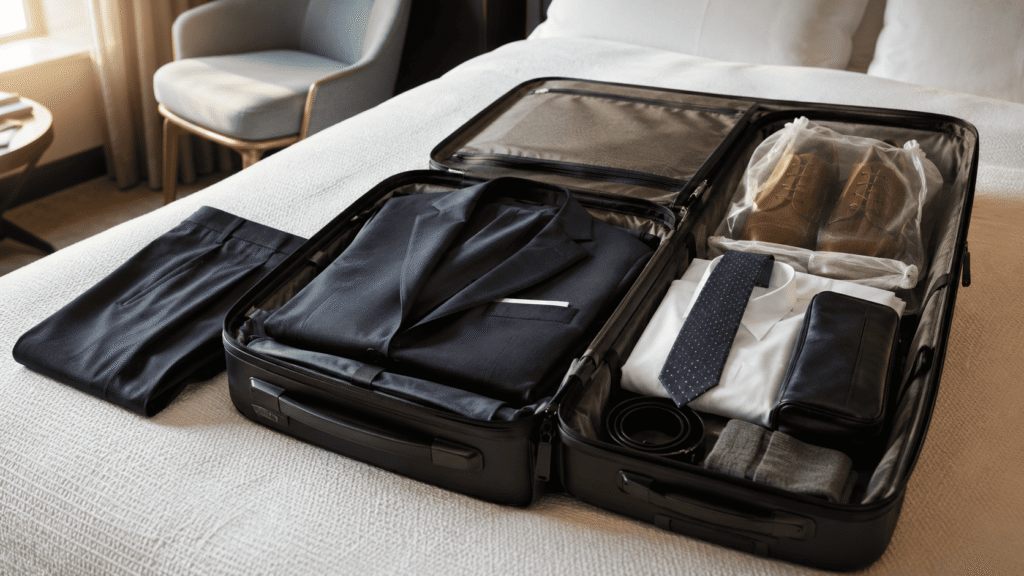
Table of Contents
- Quick Answer: What Is the Best Way to Pack a Suit?
- Suitcase, Garment Bag or Wearing the Suit?
- Prepare the Suit Before You Pack
- How to Pack a Suit for Travel Without Wrinkles
- Should You Use Plastic or Tissue Paper?
- How to Travel With a Suit on a Plane
- How to Use a Garment Bag Without Creating New Wrinkles
- How to Pack More Than One Suit
- Choose Suit Fabrics With Travel in Mind
- Remove Wrinkles as Soon as You Arrive
- Common Mistakes That Cause Deep Wrinkles
- Final Suit Travel Checklist
- Conclusion
- Frequently Asked Questions
Quick Answer: What Is the Best Way to Pack a Suit?
The safest approach depends on how much luggage you can carry.
For a short trip with one suit, a structured carry-on suitcase usually works well. Fold the jacket with the shoulder-tuck method, fold the trousers along their natural creases and keep both items near the top of the bag.
A garment bag is better when:
- The suit is expensive or highly structured
- You are carrying several formal outfits
- You need the suit immediately after landing
- Your airline accepts the garment bag within your cabin allowance
- You have enough space to avoid tightly folding the bag
Wearing the jacket during the journey is another option. However, sitting on it for several hours can create wrinkles across the lower back. You may also expose it to food, drinks and dirty airport surfaces.
No packing method can promise a completely crease-free result. However, careful folding, light pressure and immediate unpacking can keep most wrinkles minor and easy to remove.
Suitcase, Garment Bag or Wearing the Suit?
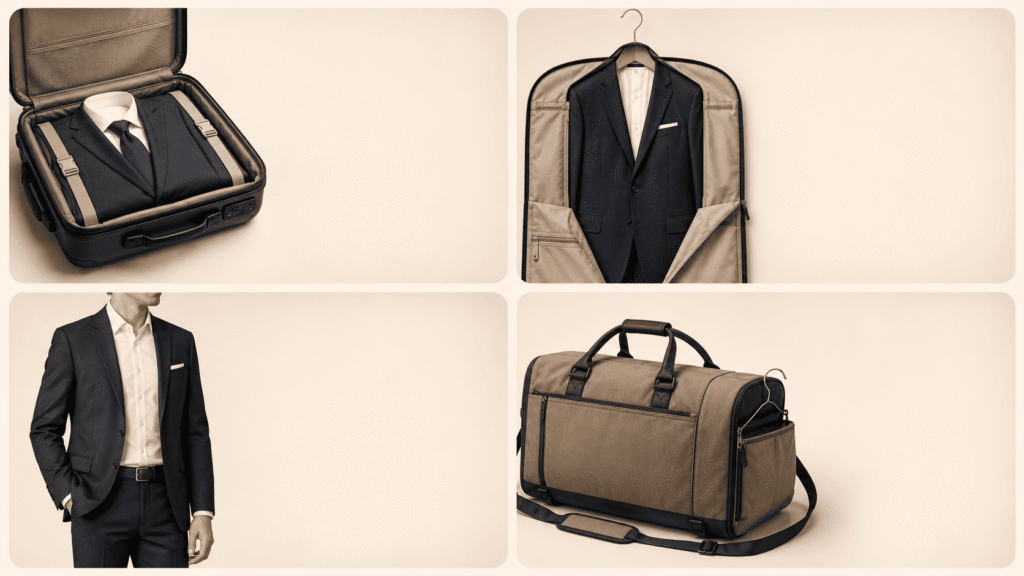
Each method has advantages and limitations.
| Packing method | Best for | Main advantage | Main drawback |
|---|---|---|---|
| Carry-on suitcase | Short business trips and weddings | Compact and easy to manage | Requires careful folding |
| Checked suitcase | Longer trips with more clothing | More packing space | Greater pressure and handling |
| Garment bag | Valuable suits and multiple formal outfits | Reduces hard fold lines | May count as a cabin bag |
| Wearing the suit | Very short trips | No suitcase folding | Wrinkles can form while sitting |
| Garment duffel | Business trips with shoes and accessories | Combines hanging and folded storage | Can become bulky when overfilled |
Before choosing, check your airline’s baggage allowance. The International Air Transport Association notes that carry-on size and weight limits vary by airline, cabin class and aircraft. It lists 56 × 45 × 25 cm as a general reference used by many carriers, but this is not a universal allowance.
A garment bag may be treated as your main cabin bag rather than an additional personal item. Therefore, confirm the rule for your airline and fare before reaching the airport.
BoardingGate’s Baggage Calculator can help you review size, weight and possible baggage fees before packing.
Prepare the Suit Before You Pack
A clean, dry and properly pressed suit is easier to pack than one that already has creases.
Start preparing several hours before departure rather than folding the suit while leaving for the airport.
Empty every pocket
Remove your wallet, keys, coins, tissues, business cards and other objects. Even a small item can press a visible shape into the fabric.
Check:
- Inside chest pockets
- Lower jacket pockets
- Ticket or phone pockets
- Trouser pockets
- Small coin pockets
Do not leave a passport or boarding pass inside the jacket. Apart from the risk of losing it, the document can distort the jacket when pressure is placed on the suitcase.
Unbutton the jacket
Leave the jacket unbuttoned while folding. This allows the front panels to move naturally and reduces strain around the buttons.
For trousers, close the zip and fastening so the waistband stays aligned. Do not over-tighten adjustable side tabs.
Brush and inspect the fabric
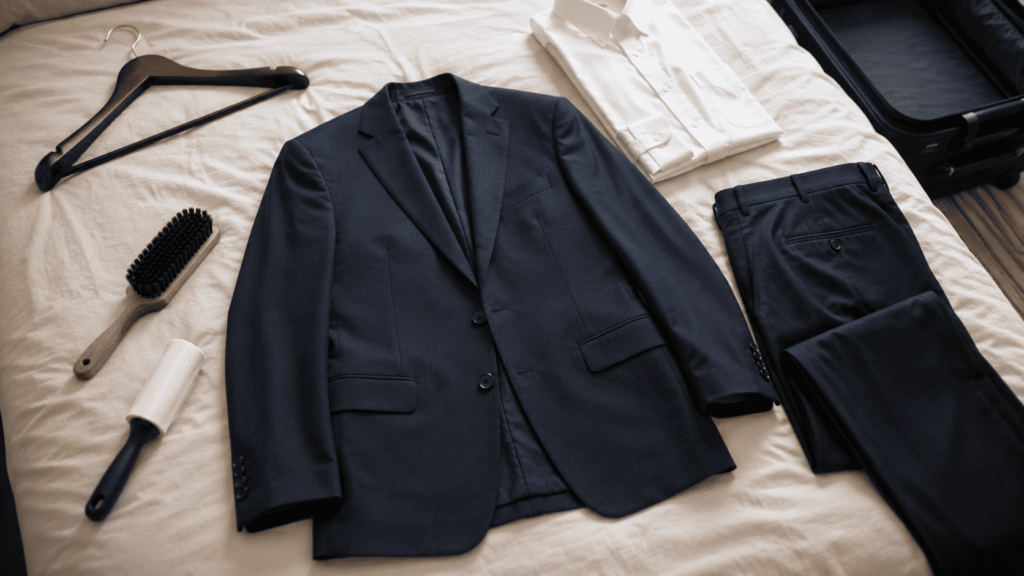
Remove dust, lint and loose hair with a clothes brush or lint roller. Look for stains while you still have time to deal with them safely.
You should also check the garment’s care label before using heat, steam or any cleaning product. Some fabrics and decorative details require lower temperatures or professional care.
Let the suit cool after ironing
Do not fold a jacket immediately after ironing or steaming it. Warm or slightly damp fabric can set into new creases inside a suitcase.
Hang the suit until it feels completely cool and dry. Then begin packing.
How to Pack a Suit for Travel Without Wrinkles
The following method works in most cabin-size and medium checked suitcases. It protects the shoulders, keeps the lapels supported and avoids sharp folds through the front of the jacket.
Use a clean bed, table or other flat surface. Smooth the fabric gently during every step, but do not press down hard.
How to Pack a Suit for Travel Without Wrinkles in a Carry-On
Follow this order:
- Prepare and fold the jacket.
- Fold the trousers along their creases.
- Fold the dress shirt separately.
- Pack shoes and heavy items first.
- Add everyday clothing around the base.
- Place the suit near the top.
- Fill gaps without compressing the jacket.
- Close the suitcase without forcing it.
The key principle is simple: protect the suit from concentrated pressure. A careful fold will not help if heavy shoes, toiletries or electronics crush the jacket during the journey.
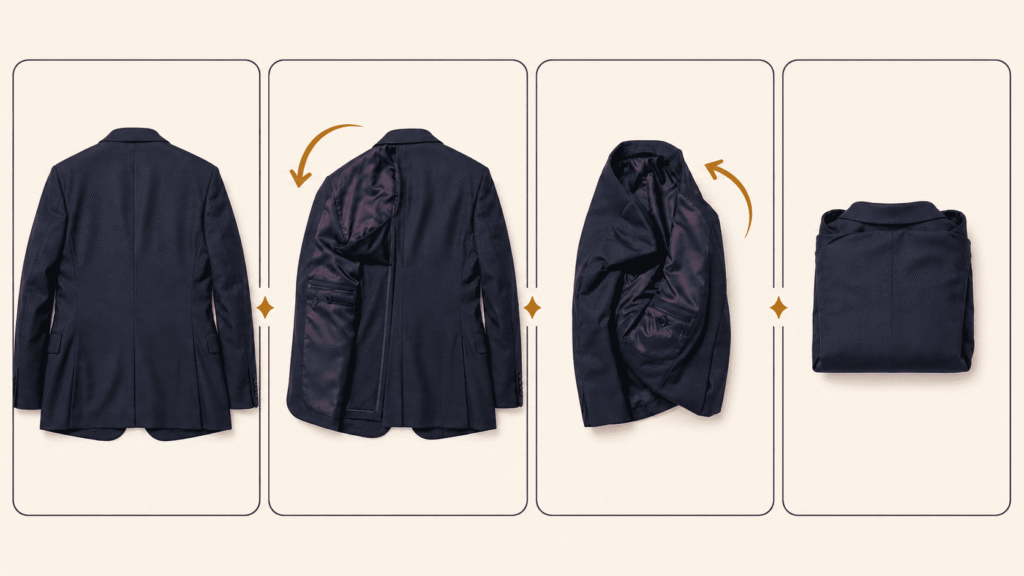
Step 1: Fold the Suit Jacket Using the Shoulder-Tuck Method
This method is sometimes called the inside-out shoulder fold.
Lay the jacket face down
Place the jacket on a flat surface with its back facing upward. Straighten the sleeves and gently align the collar.
Turn one shoulder inside out
Choose either shoulder. Carefully pull the shoulder area inside out without pulling the full sleeve through.
The jacket lining should now cover the outside of that shoulder. This lining acts as a protective layer during the fold.
Tuck the other shoulder into it
Bring the normal shoulder toward the reversed shoulder. Insert it gently into the pocket-like space created by the lining.
The two shoulders should sit inside each other. Do not flatten the shoulder padding or force one side too deeply into the other.
Align the lapels and sleeves
Once the shoulders are nested, the jacket should be folded vertically with the lining facing outward.
Smooth the sleeves so they follow the jacket body. Check that the lapels are not bent backward or trapped at an awkward angle.
Fold the jacket horizontally
Depending on your suitcase, fold the jacket once across the middle or bring the lower section upward toward the collar.
Keep the fold loose and rounded. A hard crease across the jacket can be more difficult to remove than several light surface wrinkles.
This general shoulder-tuck approach is also recommended in established suit-packing guides because nesting the shoulders protects their shape while placing the lining on the outside.
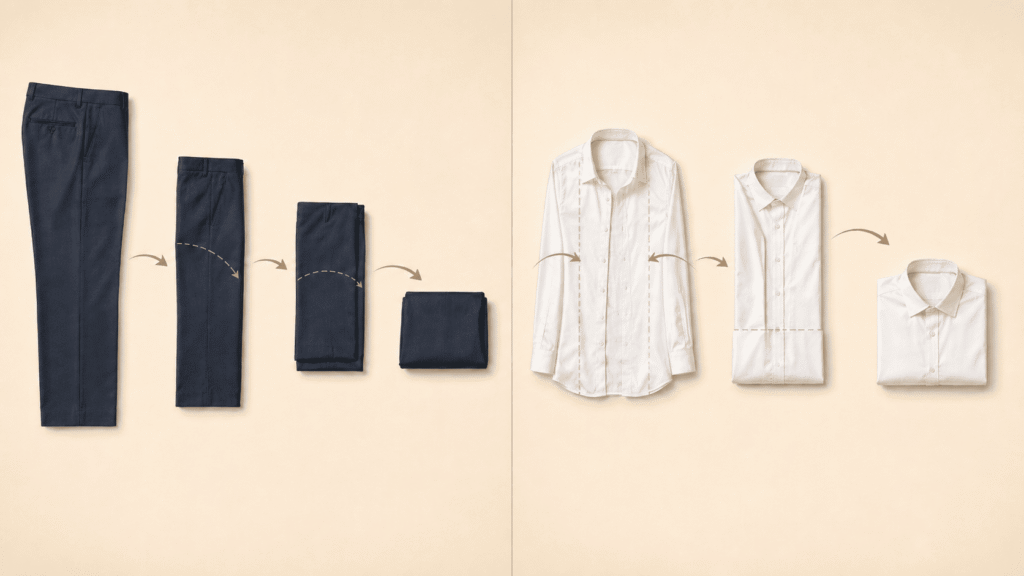
Step 2: Fold Suit Trousers Along Their Natural Creases
Hold the trousers from the waistband and allow the legs to hang naturally. Align the seams and existing front creases before placing them on a flat surface.
Then:
- Place one trouser leg over the other.
- Smooth the fabric from the waistband downward.
- Fold the trousers in half for a larger suitcase.
- Fold them in thirds for a smaller carry-on.
- Avoid creating a fold directly across a prominent pocket or belt loop.
Victorinox’s packing guidance similarly recommends aligning the natural trouser creases first, then adjusting the number of folds to the suitcase size.
For additional protection, place the folded trousers around the jacket rather than forming a separate tight bundle. You can lay part of the trousers beneath the jacket and fold the remaining length loosely over it.
This creates a soft wrap and helps prevent the jacket from moving.
Step 3: Fold a Dress Shirt for Travel
A dress shirt needs its own fold. Do not leave it inside the jacket unless you are using a garment bag with enough room for both pieces to hang.
Button the shirt fully, including the collar button. This helps the front panels stay aligned.
Then:
- Lay the shirt face down.
- Smooth the back and collar.
- Fold one side inward toward the centre.
- Fold the sleeve back along the shirt body.
- Repeat on the other side.
- Fold the lower third upward.
- Fold again, stopping below the collar.
Place a thin sheet of clean tissue paper between folds when packing a delicate or freshly pressed shirt. The paper reduces direct fabric-to-fabric friction, although it cannot prevent every wrinkle.
Keep the collar open by placing a rolled belt, pair of clean socks or a purpose-made collar support inside it. Do not use anything that stretches the collar.
Step 4: Build the Suitcase in Layers
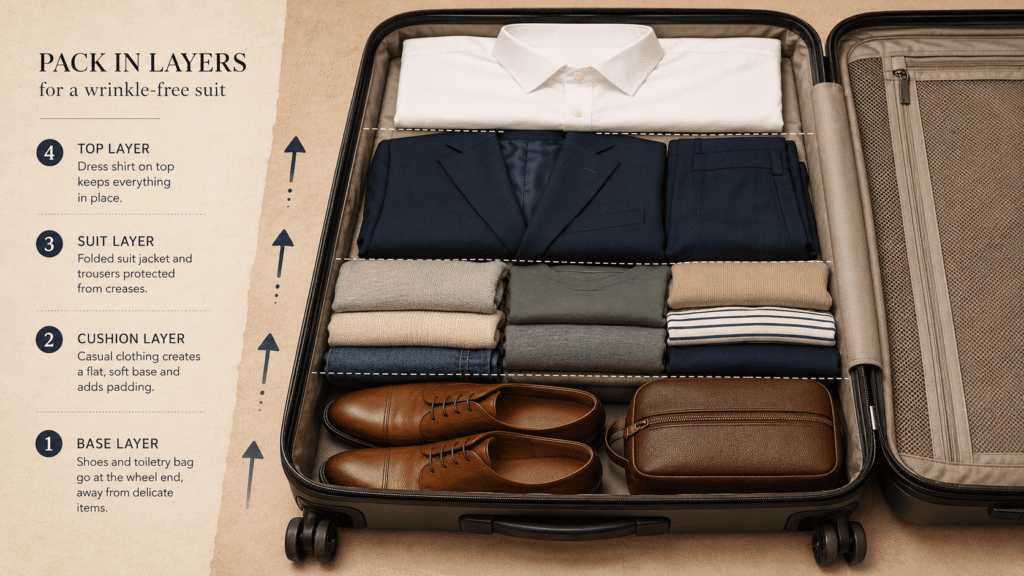
How you arrange the rest of the suitcase matters as much as the jacket fold.
Bottom layer: heavy and structured items
Place shoes near the wheels of a rolling suitcase. Pack each shoe in a shoe bag so the soles do not touch your clothing.
Also place dense items such as toiletry bags and chargers near the bottom. This keeps the suitcase balanced while upright.
Middle layer: everyday clothing
Use folded or rolled casual clothing to create a relatively level surface.
Soft items such as T-shirts, sleepwear and knitwear can fill gaps around shoes. However, do not create large bumps beneath the suit.
Top layer: the suit
Place the folded jacket and trousers across the broadest, flattest section. Keep the lapels facing upward when possible.
The suit should be one of the final items added to the suitcase. Place the folded dress shirt above or beside it, depending on the available space.
Final cushioning layer
A thin sweater, clean T-shirt or dry-cleaning bag can provide a smooth barrier above the suit.
Do not place a hard packing cube, laptop, book or toiletry case directly on top of the jacket.
Finally, close the suitcase slowly. If you need to sit on the case or force the zip, remove something. Excess pressure is one of the main reasons carefully folded formalwear arrives heavily creased.
Should You Use Plastic or Tissue Paper?
A thin dry-cleaning bag can help fabric slide rather than grip when the suitcase moves. Place the jacket inside the bag before folding, or lay the plastic between major clothing layers.
However, plastic should only be used for short-term transport. Remove it when you arrive because it is not ideal for long-term clothing storage.
Acid-free tissue paper is another option for delicate shirts, tuxedo trousers or lightweight fabrics. Place it inside sleeves and between folds to soften pressure points.
Neither material replaces proper folding. Their purpose is to reduce friction and prevent one layer from pulling against another.
Avoid bulky wrapping. Too much material can make the folded suit larger and increase pressure when the suitcase closes.
How to Travel With a Suit on a Plane
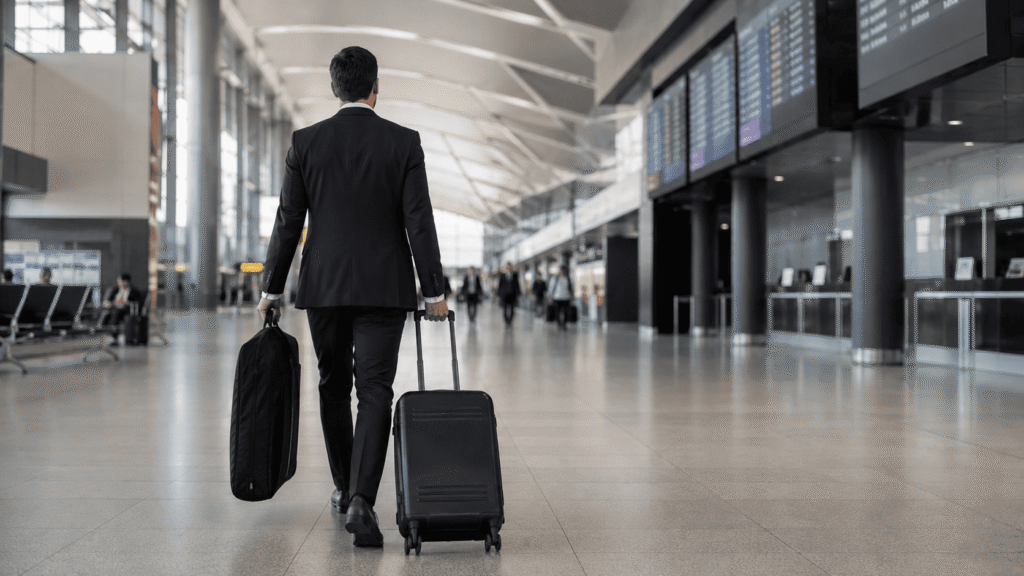
Travelling with a suit on a plane requires more than choosing the correct fold. You also need to protect the bag during boarding and storage.
Keep the suit in your cabin baggage when practical
A carry-on gives you more control over how the suit is handled. A checked suitcase may be stacked under other bags, moved through conveyor systems and left packed for longer.
However, cabin baggage is only helpful when it meets your airline’s rules. Check the permitted dimensions, weight and number of items before departure.
Do not assume a garment bag will be accepted as a free extra. Some airlines count it as your main carry-on.
Board with enough time to find space
If your fare or airline permits overhead storage, avoid arriving at the gate after most passengers have boarded. Overhead bins may already be full.
Place a suitcase flat according to the airline’s instructions. Avoid forcing it between bags when another passenger’s case could press against the suit.
When using a soft garment bag, ask cabin crew whether hanging space is available. Some aircraft have a closet, but space is limited and access is never guaranteed.
Keep wrinkle-release liquids within security limits
A small wrinkle-release spray may help after arrival. In the United States, TSA requires liquids, aerosols, gels, creams and pastes in carry-on bags to use containers no larger than 3.4 ounces or 100 millilitres and fit within the permitted liquids bag. Other countries may apply similar or different security rules.
Check the departure airport’s official rules, especially when carrying an aerosol product.
Avoid opening the suitcase during the flight
Repeatedly moving the jacket increases the chance of disturbing the fold. Keep travel documents, headphones, medication and chargers in your personal item rather than underneath the suit.
How to Use a Garment Bag Without Creating New Wrinkles
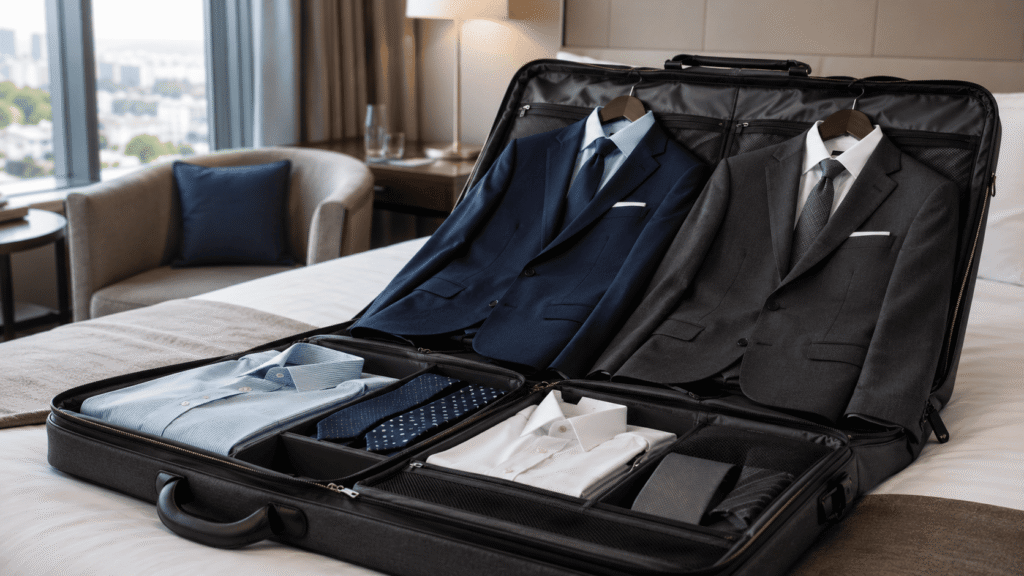
A garment bag is often the best option for several suits, tuxedos or formal dresses. However, overfilling it can still crush the garments.
Choose a bag that:
- Supports the hanger securely
- Has enough length for the jacket
- Provides space around the shoulders
- Includes straps that stop clothing from shifting
- Folds without a hard crease across the garment
- Meets your airline’s baggage requirements
Place the trousers over a hanger bar with the creases aligned. Add the dress shirt on its own hanger when space allows. Then place the jacket over the shirt.
Fasten any internal straps loosely. They should control movement, not flatten the clothing.
If the garment bag must be folded, fold it once through the middle. A tightly rolled or repeatedly folded garment bag defeats much of its purpose.
Travelpro’s garment-bag guidance also stresses selecting a bag that fits the clothing without creating unnecessary crowding.
When you arrive, unfold and hang the bag before unpacking anything else.
How to Pack More Than One Suit
Packing two or three suits requires more space, but the same principles apply.
Do not fold each jacket into a separate dense block. Instead, alternate the direction of the jackets so their shoulders do not all create thickness in the same place.
For example:
- Place the first jacket with its shoulders toward the left.
- Place the second with its shoulders toward the right.
- Keep the jackets loosely folded.
- Place trousers between or around the jackets.
- Use shirts as light cushioning layers.
A garment bag becomes more useful once you are carrying multiple formal outfits. It lets the jackets share a hanging space without squeezing each one into a compact fold.
Bring only the pieces you will genuinely wear. Two suits can often create several outfits when paired with different shirts and ties.
BoardingGate’s free Packing List Generator can help you build a trip-specific checklist based on your destination, season and travel style.
Choose Suit Fabrics With Travel in Mind
Some suits recover from packing more easily than others.
A very lightweight, smooth fabric may show fold lines quickly. Meanwhile, a slightly textured cloth can make minor creases less visible.
For frequent travel, consider:
- Wool or wool-blend suiting with good natural recovery
- Textured weaves that disguise minor creases
- Jackets with lighter internal construction
- Fabrics sold specifically for business travel
- Dark or patterned cloth that hides small wrinkles
Be cautious with linen. It is comfortable in warm weather, but visible creasing is part of its natural appearance.
A heavily padded or fully structured jacket may also require more protection than an unstructured blazer. If the jacket has strong shoulders, use a garment bag or keep the suitcase fold especially loose.
Always follow the care label. Do not apply high heat simply because a wrinkle is difficult to remove.
Remove Wrinkles as Soon as You Arrive
Unpack the suit before checking email, ordering food or going to sleep. Time on a hanger allows light packing wrinkles to relax naturally.
Hang each piece correctly
Use a broad suit hanger for the jacket. Thin wire hangers do not support the shoulders well.
Hang the trousers from the cuffs or fold them neatly over a padded trouser bar. Keep the natural creases aligned.
Leave space between garments so air can circulate.
Use bathroom steam carefully
Hang the suit in the bathroom while running a hot shower. Keep it away from direct water and allow the room to become lightly steamy.
After several minutes, smooth the fabric gently with clean hands and let it dry outside the bathroom.
This method can relax light surface wrinkles. It may not remove deep fold lines.
Use a garment steamer
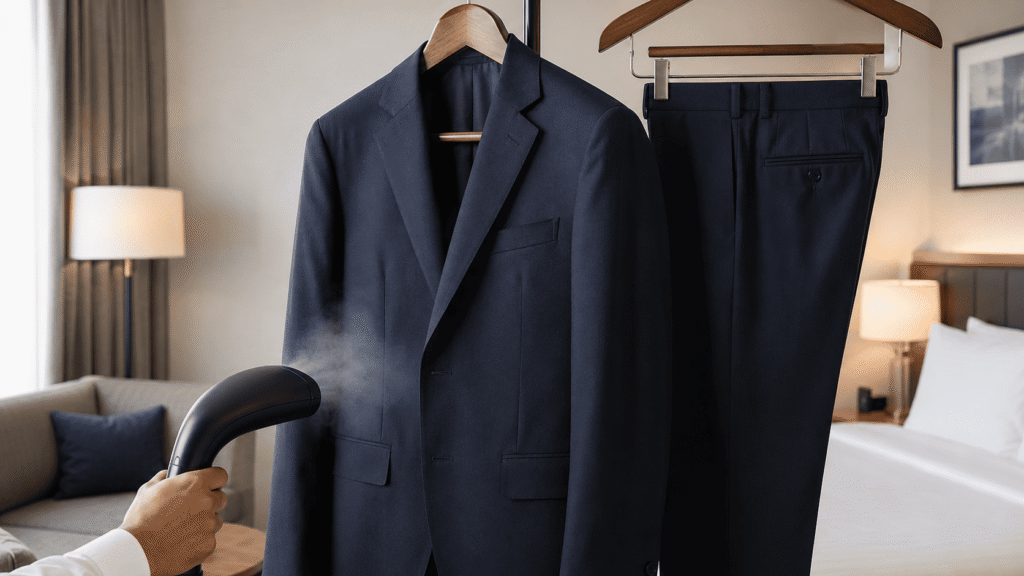
A travel steamer provides more control. Keep the steamer head a safe distance from the fabric and move continuously.
Test an inside area first. Avoid concentrating steam on delicate trims, adhesives or fabrics that react poorly to heat and moisture.
Ask the hotel for help
Many hotels provide an iron, ironing board, steamer or pressing service. Ask about availability before packing extra equipment.
For a wedding or important meeting, arrange pressing early. Do not wait until ten minutes before leaving.
Common Mistakes That Cause Deep Wrinkles
Overpacking the suitcase:
A full suitcase creates constant pressure across the jacket. Remove non-essential items instead of forcing the case shut.
Placing the suit at the bottom
Shoes, packing cubes and toiletries can crush the shoulders and lapels. Keep formalwear near the top.
Rolling the jacket tightly
Rolling works well for many casual clothes, but a structured suit jacket contains lapels, canvas, lining and shaped shoulders. A tight roll can distort these areas.
Folding across the lapels
Lapels should lie naturally. Do not create a hard horizontal fold through them.
Packing the suit while damp
Moisture helps creases set. Make sure the suit is fully dry after cleaning, ironing or steaming.
Leaving objects in the pockets
Keys, pens and wallets can leave impressions. A leaking pen can also ruin the suit.
Packing shoes against the fabric
Use shoe bags and position footwear away from the jacket.
Leaving the suit packed after arrival
Even a good fold can become more visible after another full day inside a closed suitcase. Hang the suit immediately.
Assuming a garment bag is an extra cabin item
Airline policies differ. Check your specific ticket rather than relying on a general rule.
Final Suit Travel Checklist
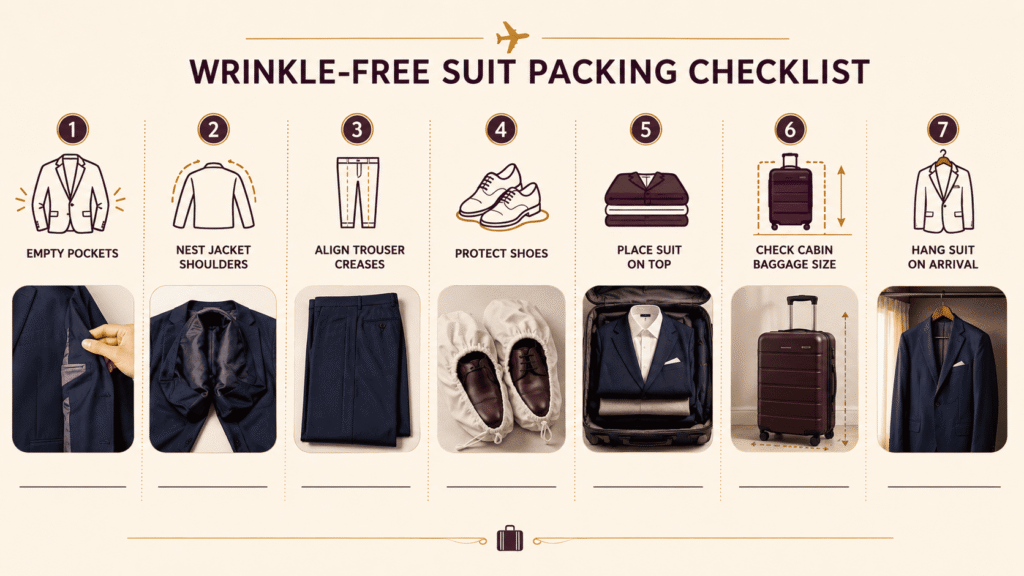
Use this checklist before closing your luggage.
Before folding
- Suit is clean and completely dry
- Existing wrinkles have been removed
- All pockets are empty
- Jacket is unbuttoned
- Trousers are aligned along their creases
- Dress shirt is buttoned
- Shoes are in separate bags
While packing
- Jacket shoulders are nested
- Lapels are lying naturally
- Folds are loose rather than sharply pressed
- Heavy items are at the bottom
- Suit is near the top
- No hard object is pressing on the jacket
- Suitcase closes without force
Before flying
- Cabin bag meets the airline’s dimensions
- Garment bag allowance has been confirmed
- Wrinkle-release spray meets security rules
- Travel documents are stored outside the suit
- Essential items are accessible without unpacking it
On arrival
- Suit is unpacked immediately
- Jacket is placed on a broad hanger
- Trousers are hung along their creases
- Light wrinkles are steamed
- Deep creases are professionally pressed if necessary
Conclusion
How to pack a suit for travel without wrinkles comes down to protecting its structure and limiting pressure. Nest the jacket shoulders, keep the lining on the outside, fold the trousers along their existing creases and place the complete suit near the top of your luggage.
A loosely folded suit in a properly packed carry-on will usually arrive in better condition than a perfect fold squeezed beneath an overfilled suitcase.
After landing, unpack the suit immediately and give the fabric time to relax. Use light steam for minor wrinkles and professional pressing when the outfit must look flawless.
Before your next business trip or formal event, check your baggage allowance, prepare the suit early and use the final checklist above while packing.
Frequently Asked Questions
Can you pack a suit in a suitcase without wrinkling it?
You can greatly reduce wrinkles, although no suitcase method guarantees a perfectly pressed result. Use the shoulder-tuck fold, avoid overpacking, place the suit near the top and hang it immediately after arrival.
Is it better to roll or fold a suit?
Fold a structured suit jacket rather than rolling it tightly. Rolling can twist the lapels, lining and shoulders. Trousers may be loosely rolled in some situations, but folding along their natural creases usually gives a neater result.
Should I put my suit in a dry-cleaning bag?
A thin dry-cleaning bag can reduce friction between fabric layers during a short journey. Remove the plastic when you arrive and do not use it for long-term storage.
Can I bring a suit garment bag on a plane?
Usually, yes, provided it meets the airline’s cabin baggage rules. However, the garment bag may count as your main carry-on rather than an additional free item. Check your airline and fare conditions before departure.
Where should a suit go inside a suitcase?
Place it near the top on a smooth layer of clothing. Keep shoes, toiletries, electronics and other heavy objects below or away from the jacket.
How do you fold a dress shirt for travel?
Button the shirt, place it face down, fold both sides inward, align the sleeves and fold the lower section upward. Stop the final fold below the collar so it is not crushed.
How do you pack suit trousers without wrinkles?
Align the existing front creases, place one leg over the other and fold the trousers in half or thirds. Avoid creating unnecessary folds across pockets and belt loops.
Should I wear my suit jacket on the plane?
You can wear it, but several hours of sitting may wrinkle the back. Remove the jacket after boarding and store it carefully when clean, safe space is available.
How early should I unpack my suit?
Unpack it as soon as you reach your accommodation. Hanging it overnight gives light wrinkles time to relax before you use steam or an iron.
Can I steam every type of suit?
No. Check the garment’s care label first. Use moderate steam, keep the steamer moving and test an inconspicuous area before treating the visible fabric.