For a few days each November, a quiet temple town in Rajasthan becomes one of the most photographed gatherings on earth. The Pushkar Camel Fair blends a working livestock market with a religious pilgrimage and a riot of folk culture — thousands of camels, dawn hot-air balloons, moustache contests and a sacred lake bathed in at first light. This guide covers when it happens, what to see, and how to attend respectfully and safely so the experience is as good for the town as it is for you.
When the fair takes place
The fair is tied to the Hindu calendar, building towards Kartik Purnima, the full-moon day that is its spiritual climax. In 2026 the main fair runs roughly 17–24 November, with Kartik Purnima and the big ceremonial bathing around 24 November. One thing to know: the livestock trading starts earlier, in the week before the visitor-facing cultural programme, so the camel grounds are busiest in the days leading up to the official events. The exact programme is set by the local administration each year and often published close to the dates, so confirm the schedule before you book.
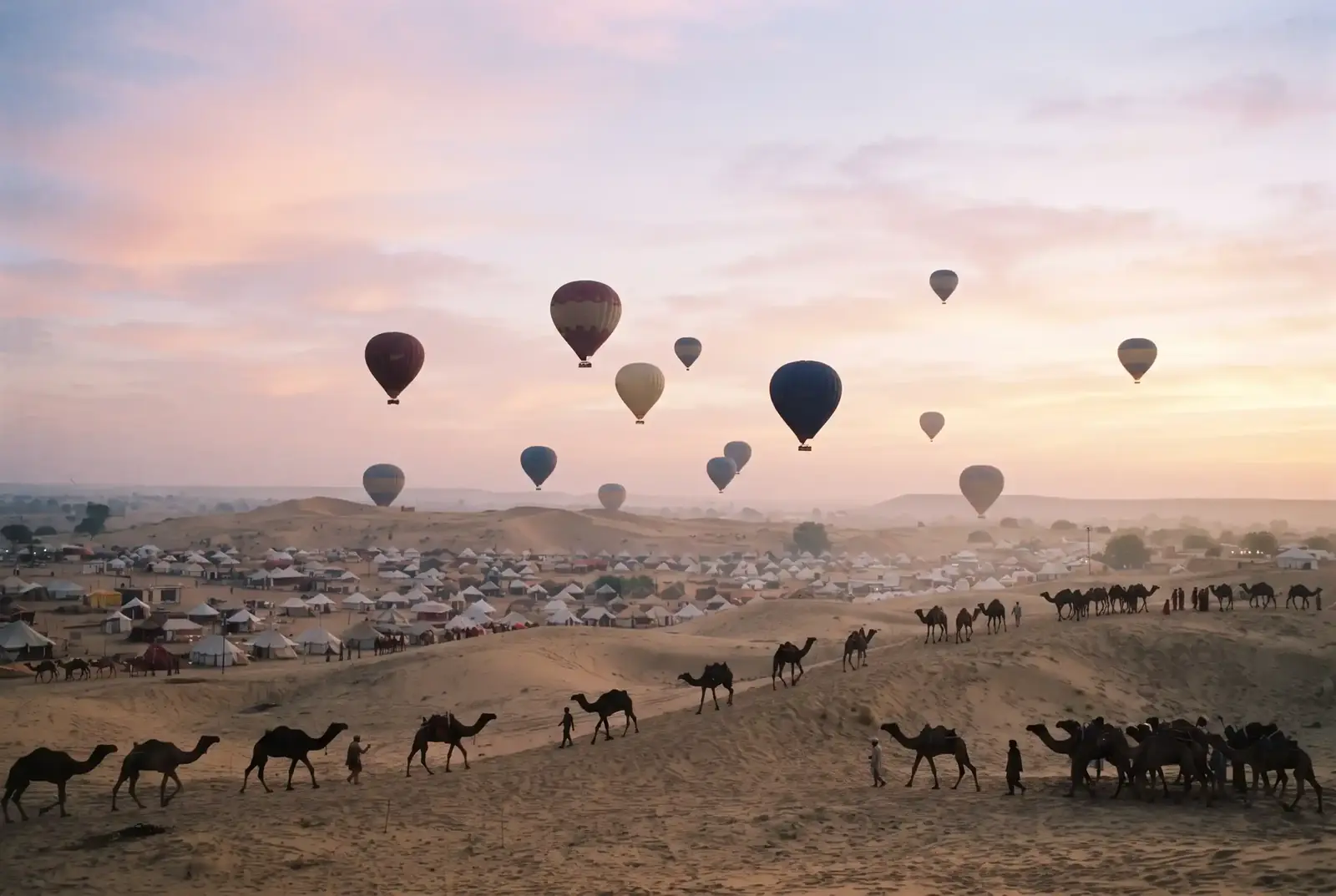
What to see and do
- The livestock grounds — the heart of the fair, where camels and horses are traded, decorated and paraded. Go at dawn for the light and the working atmosphere.
- Competitions and races — camel races, the famous moustache and turban contests, and a light-hearted tug-of-war between locals and visitors.
- Dawn hot-air ballooning — balloons rising over the dunes at first light are a signature image of the fair.
- Kartik Purnima bathing — pilgrims bathe in the holy Pushkar Lake at dawn on the full moon; watch respectfully from a distance rather than intruding.
- Temples — the Brahma Temple, one of very few dedicated to Brahma, and the hilltop Savitri Temple reached by ropeway for a view over the town.
- Evenings — folk music, dance and puppet theatre on open stages, and stalls of leatherwork, mirrorwork textiles, silver jewellery and pottery.
Attending respectfully and safely
This is a religious event as much as a spectacle, and a little care goes a long way. Always ask before photographing people, especially pilgrims bathing or praying, and accept a no gracefully. Dress modestly — covered shoulders and knees — particularly around the lake and temples, and remove shoes where required. Pushkar is a holy town where meat and alcohol are traditionally avoided; respect that in and around the sacred areas. If you are offered a “blessing” and a flower at the ghats by someone who then demands a large donation, that is a known scam aimed at visitors — a polite, firm decline is fine.
For your own comfort and safety: carry water and sun protection for the dusty, shadeless fairgrounds, keep valuables secure in the crowds, agree camel-ride prices before you climb on, and treat the animals gently. Book accommodation well in advance — rooms and tented camps fill months ahead for the fair dates.
Getting there
The usual approach is to fly into Jaipur and drive the roughly 140 km (about three hours) to Pushkar, often via Ajmer. Many visitors combine the fair with a wider Rajasthan itinerary taking in Jaipur, Jodhpur or Udaipur. Because the fair is the peak event of the region’s year, arrange transport and stays early and build in buffer time around the exact dates in case the programme shifts.
Planning a longer India trip around it? See our destination guides to the ruins of Hampi and the best time to visit Leh Ladakh, and sort your rail legs with our guide to checking train seat availability.
Frequently asked questions
When is the Pushkar Camel Fair 2026?
The main fair runs roughly 17–24 November 2026, climaxing with Kartik Purnima and the ceremonial bathing around 24 November. Livestock trading begins in the week before the cultural programme. Confirm the exact schedule, which the local administration sets each year.
What happens at the Pushkar Fair?
It combines a camel and horse market with religious and cultural events: camel races, moustache and turban contests, dawn hot-air ballooning, folk music and dance, craft stalls, and the sacred Kartik Purnima bathing in Pushkar Lake.
How do I reach Pushkar?
Fly into Jaipur and drive about 140 km (roughly three hours) to Pushkar, often via Ajmer. Many travellers combine the fair with a wider Rajasthan itinerary. Book transport and accommodation well ahead, as the fair is the region’s peak event.
Is it respectful to photograph pilgrims at the fair?
Always ask first, especially around people bathing or praying at the lake, and accept a refusal gracefully. Dress modestly near the temples and ghats, and remember Pushkar is a holy town where meat and alcohol are traditionally avoided.
Are there scams to watch for in Pushkar?
A known one targets visitors at the ghats with an unsolicited “blessing” and flower, followed by a demand for a large donation. A polite, firm decline is fine. Also agree camel-ride prices before you start and keep valuables secure in crowds.