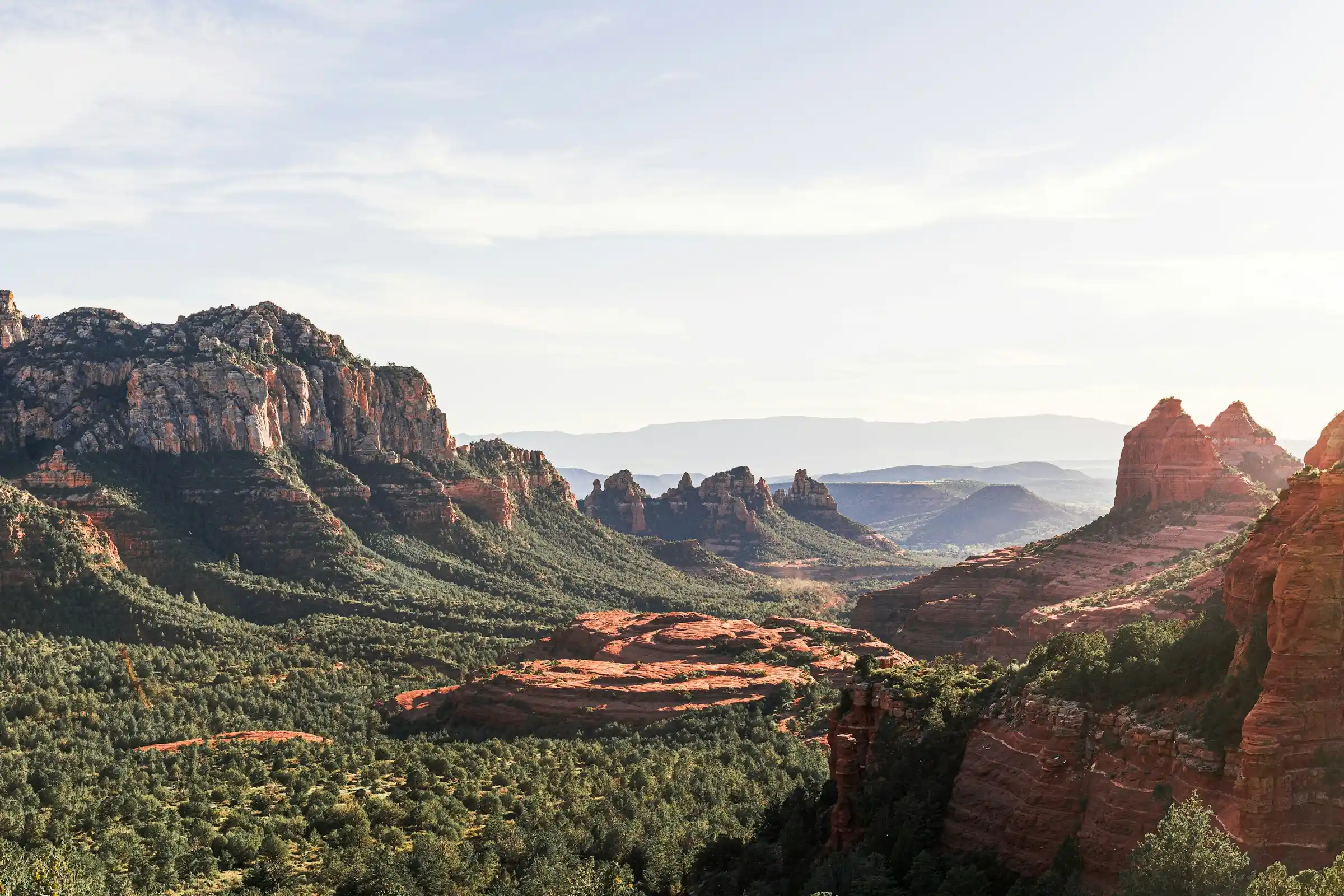
In Sedona the hard part is never finding something to do — it is parking near it. The red rocks are laced with world-class hikes, four recognised energy vortexes and slot canyons most day-trippers never find, all packed into a town you can cross in 15 minutes. Get the logistics right and it opens up fast.
This is a tested, hour-by-hour plan for the best things to do in Sedona over three days, ordered to stay ahead of the crowds. Every hike comes with an honest difficulty rating and exactly where to park — or which free shuttle to take instead, because half the famous trailheads fill before 9am.
Table of Contents
- Before You Go: Red Rock Pass, Parking and the Free Shuttle
- Day 1: Vortexes, an Iconic Chapel and Sunset
- Day 2: The Big Hikes — Devil’s Bridge, Cathedral Rock and Soldier Pass
- Day 3: Canyons, Water and Scenic Drives
- Things to Do in Sedona Without Hiking
- Things to Do in Sedona at Night
- Sedona With Kids and on a Budget
- Hot Air Balloons and Other Splurges
- Things to Do Near Sedona
- How Many Days Do You Need in Sedona?
- Frequently Asked Questions
Before You Go: Red Rock Pass, Parking and the Free Shuttle
Almost every trailhead sits on Coconino National Forest land, so to park for more than 15 minutes you need a Red Rock Pass — $5 a day, $15 a week, or $20 a year, sold at trailhead machines, the Visitor Center and on Recreation.gov. If you already hold an America the Beautiful pass it covers you, which pays off fast if you are also seeing the Grand Canyon on this trip.
The single best move is the free Sedona Shuttle. It runs Thursday to Sunday to the five trailheads whose lots fill first — Cathedral Rock, Soldier Pass, Little Horse, and Dry Creek Vista and Mescal (both gateways to Devil’s Bridge). No reservation, no Red Rock Pass needed when you ride it, and no circling a full lot at sunrise. Base yourself in West Sedona or Uptown to reach the Park & Rides quickly, and pack layers and more water than you think — the desert swings hot to cold in a day.
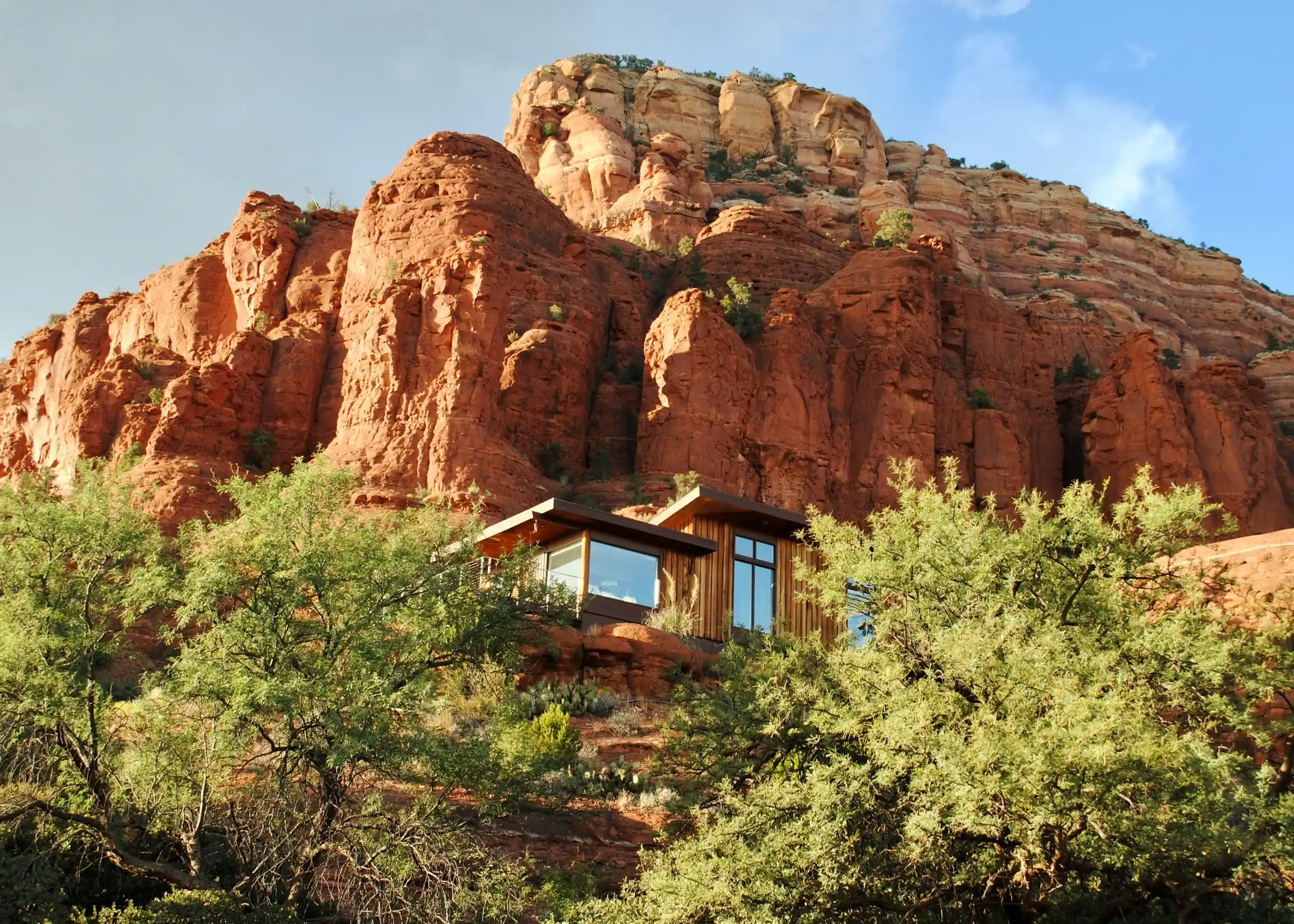
When to Visit Sedona
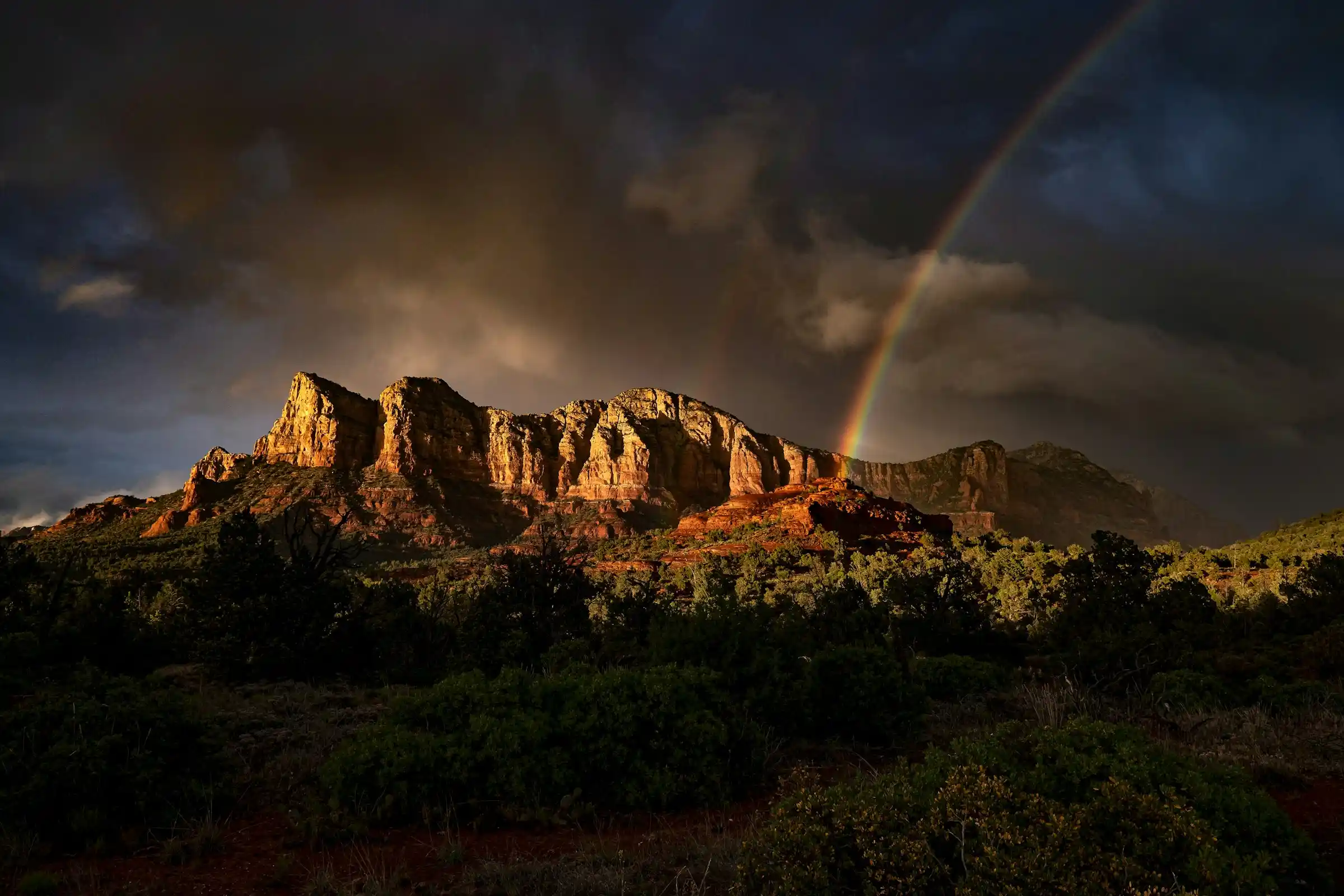
Spring (March–May) and October are peak for a reason: mild days, but the lots fill by 9am and prices climb. Late October brings gold cottonwoods to Oak Creek Canyon. November through February is the quiet season — cold mornings, occasional snow dusting the red rocks, and trails you can have to yourself. July and August are hot, but the afternoon monsoon storms deliver dramatic light and the odd rainbow.
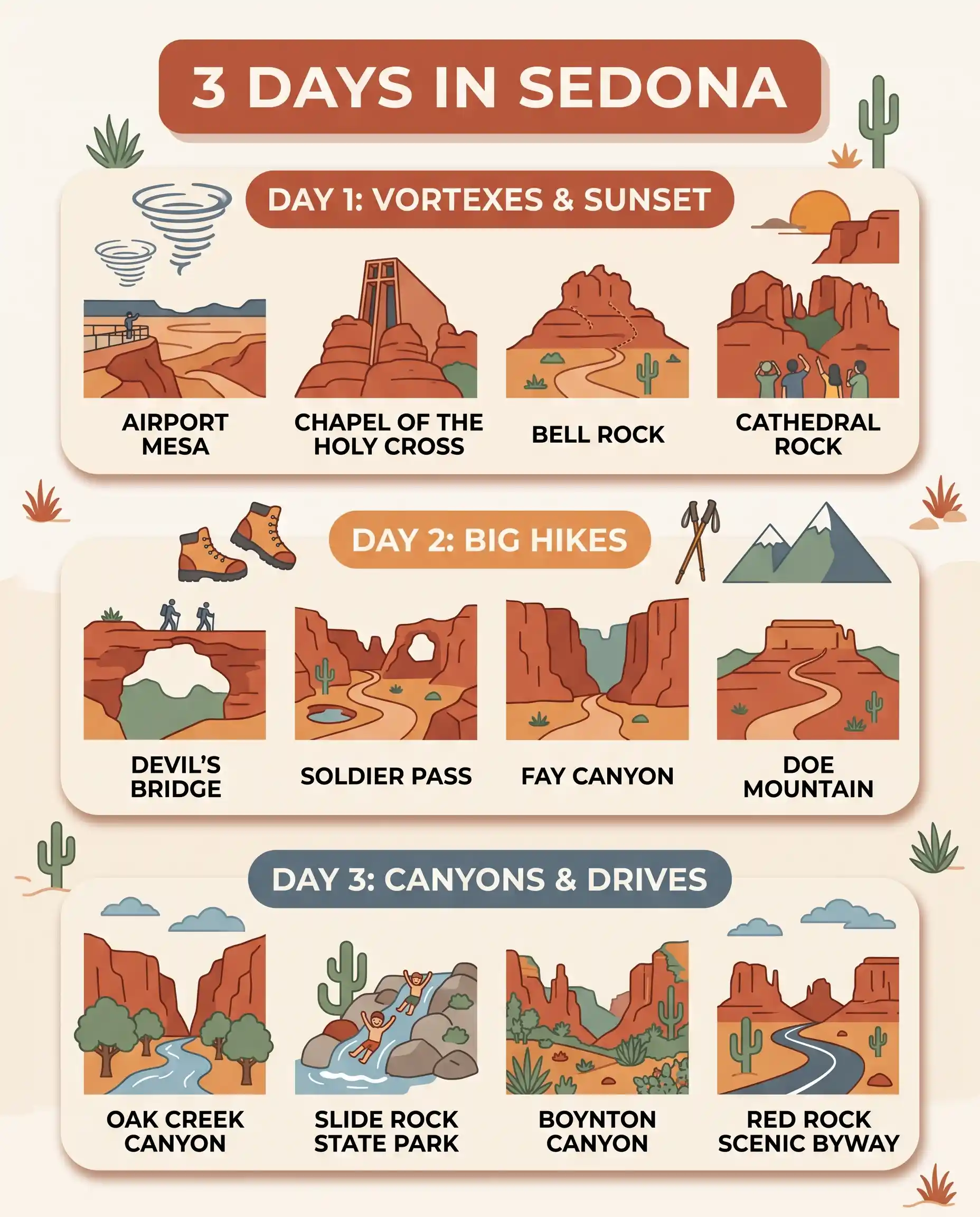
Day 1: Vortexes, an Iconic Chapel and Sunset
Day one keeps the hiking light and covers Sedona’s signature sights, two of its four vortexes, and the best sunset in town.
Airport Mesa Vortex and Overlook
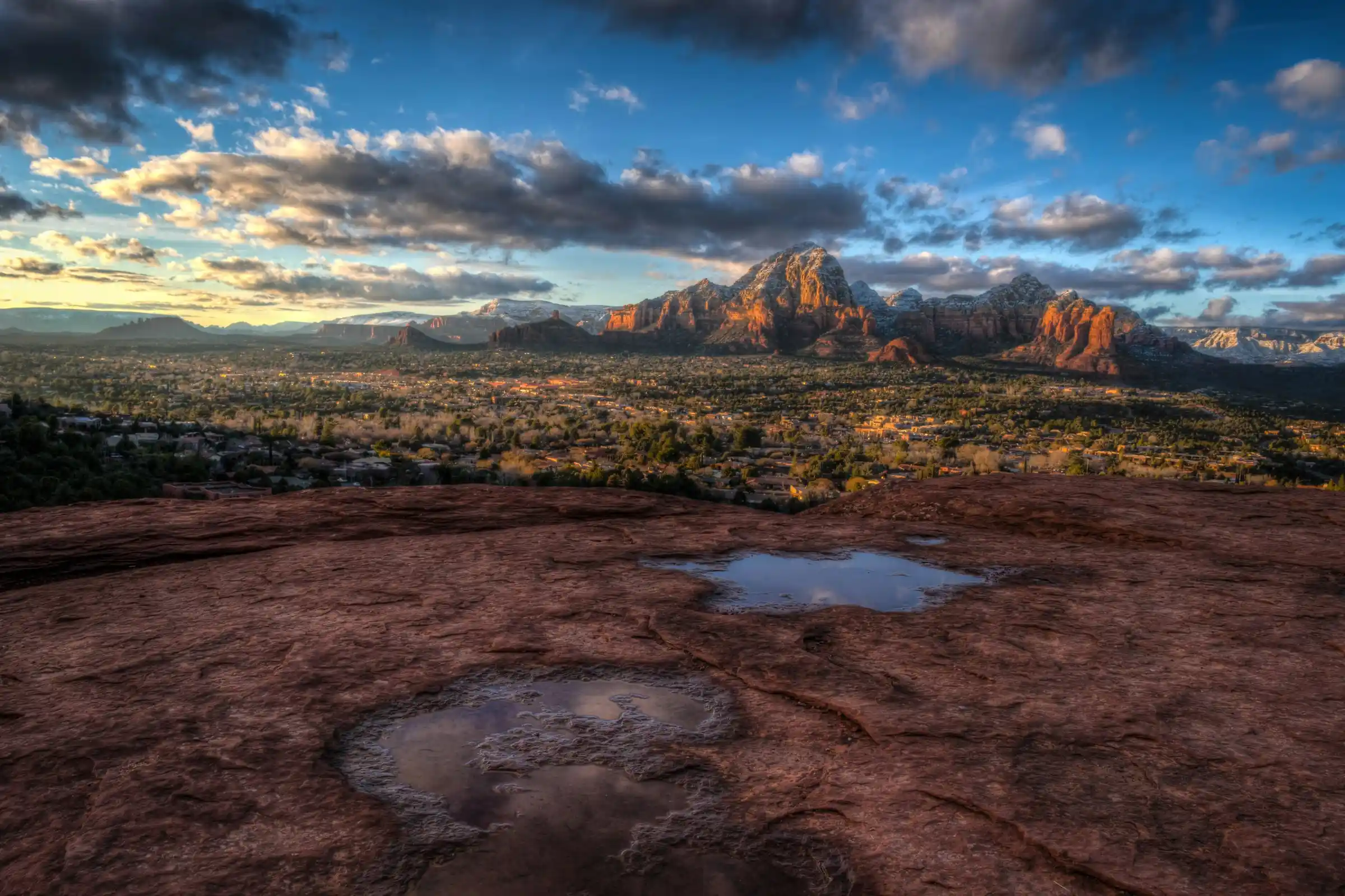
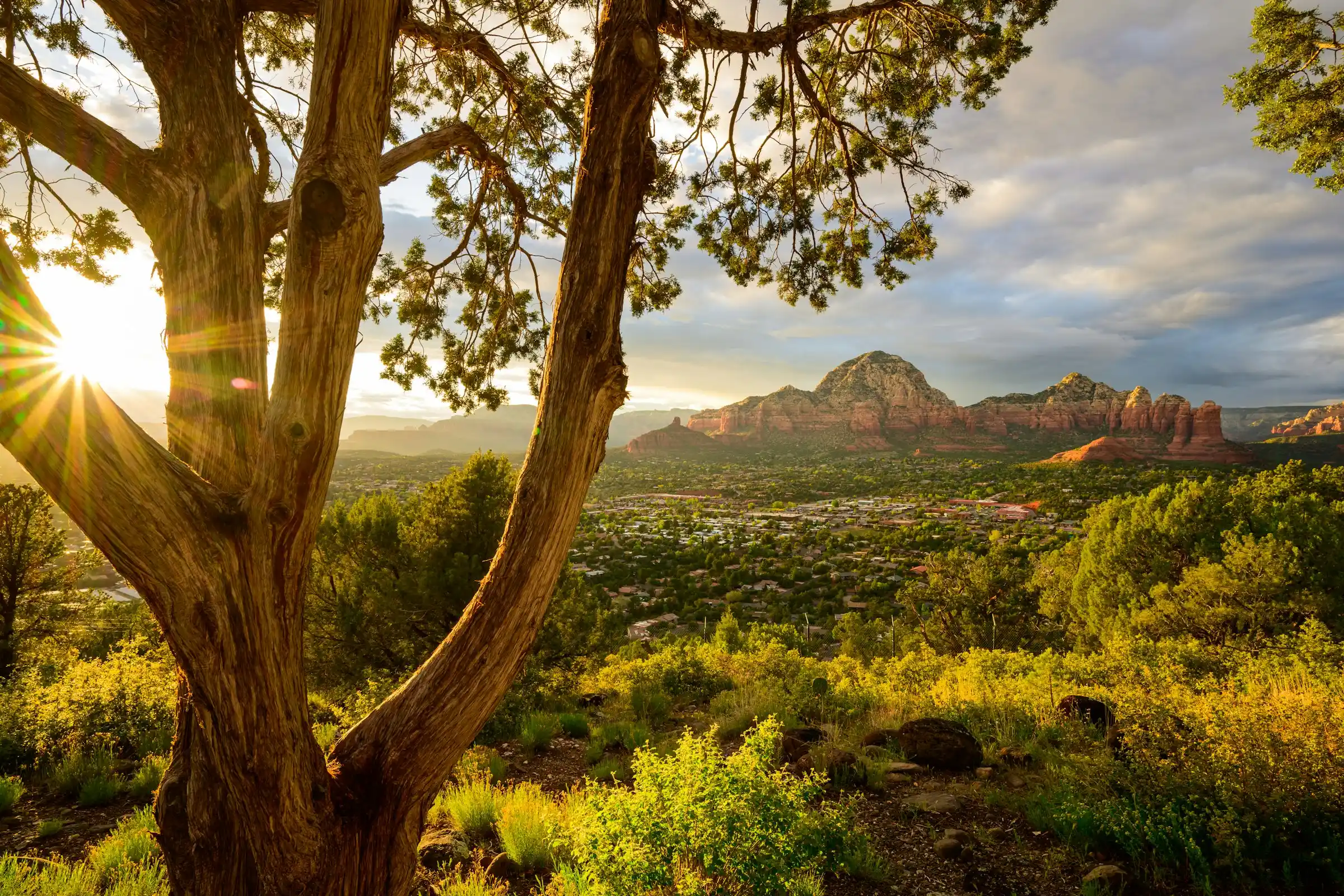
Difficulty: easy. Start at the Airport Mesa saddle, a short but steep 0.2-mile scramble from the small pull-off on Airport Road to one of Sedona’s most accessible vortexes and a 360-degree view. Come back at the end of the day: the paid lot at the Sedona Airport Overlook, a little further up the hill, is the town’s premier sunset spot. Both lots are tiny — arrive early or rideshare.
Chapel of the Holy Cross
Difficulty: easy. A modernist chapel built directly into the red rock buttes, with a short paved uphill walk and no admission charge. Go early; the small lot backs up onto the road by mid-morning. It is one of the few must-see things to do in Sedona without hiking.
Bell Rock and Courthouse Butte Loop
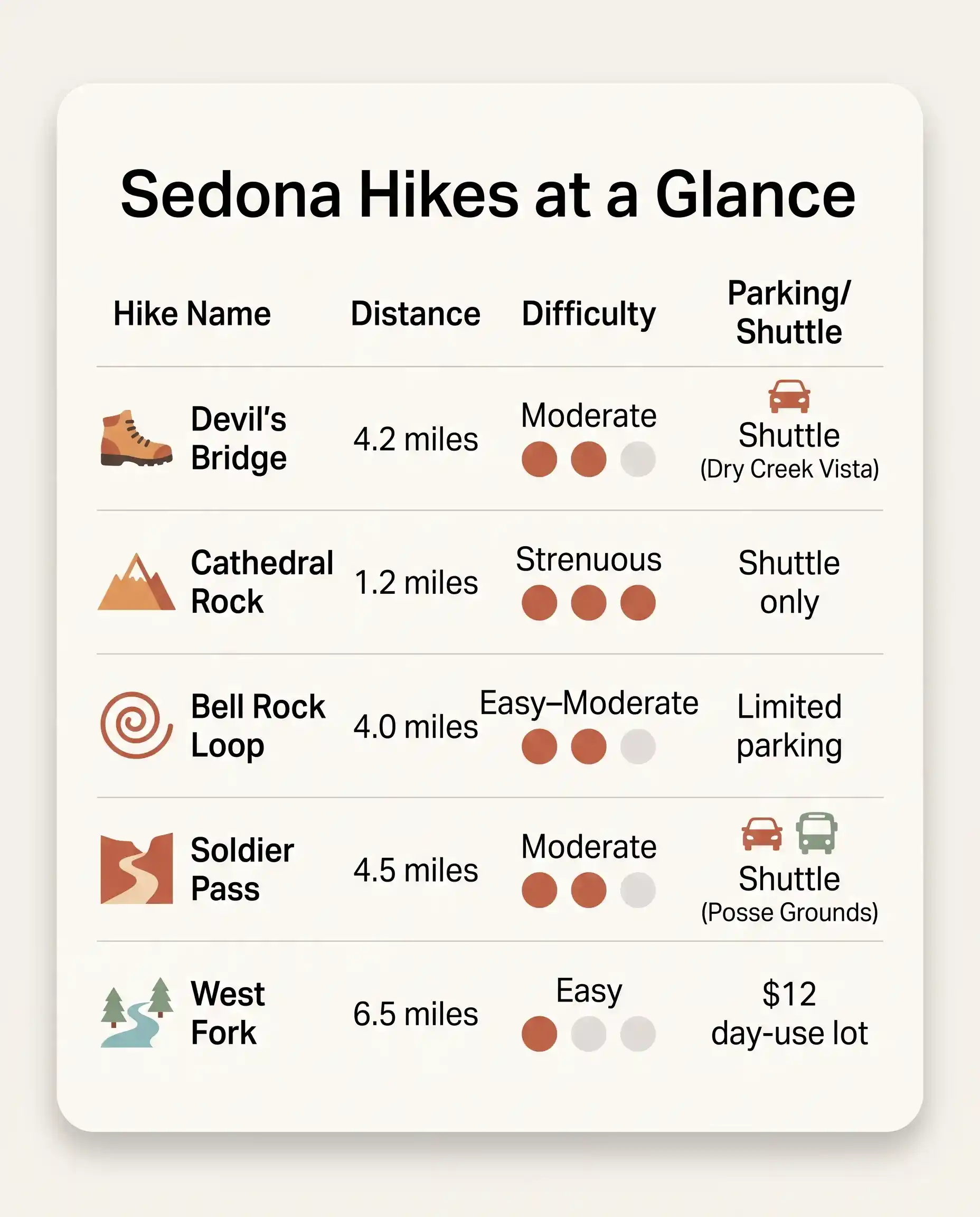
Difficulty: easy to moderate. A mostly flat 4-mile loop around two of Sedona’s most photogenic formations, with an optional scramble up Bell Rock’s lower ledges — itself a vortex site. Park at the Bell Rock or Little Horse trailheads, or take the shuttle to Little Horse on a busy day.
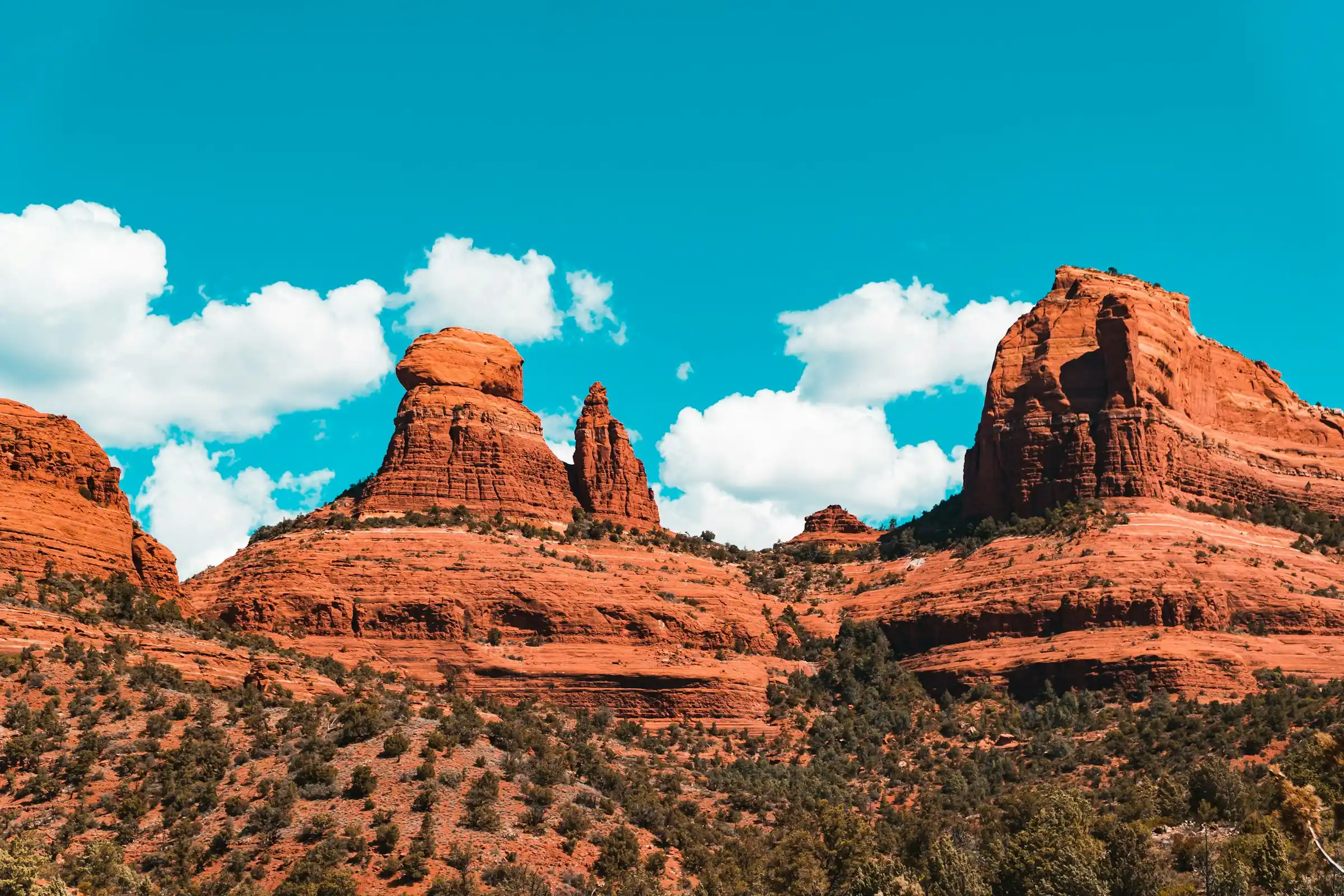
Tlaquepaque and Uptown Sedona
Wind down in the Tlaquepaque Arts & Shopping Village, a shaded, Spanish-colonial-style courtyard of galleries and restaurants, then walk Uptown for dinner. This is the low-effort, high-reward half of the day and a good call if the heat has won.
Day 2: The Big Hikes — Devil’s Bridge, Cathedral Rock and Soldier Pass
Day two is the reason most people come. Start at first light — these are the trailheads that fill earliest, and the ones the shuttle exists to solve.
Devil’s Bridge
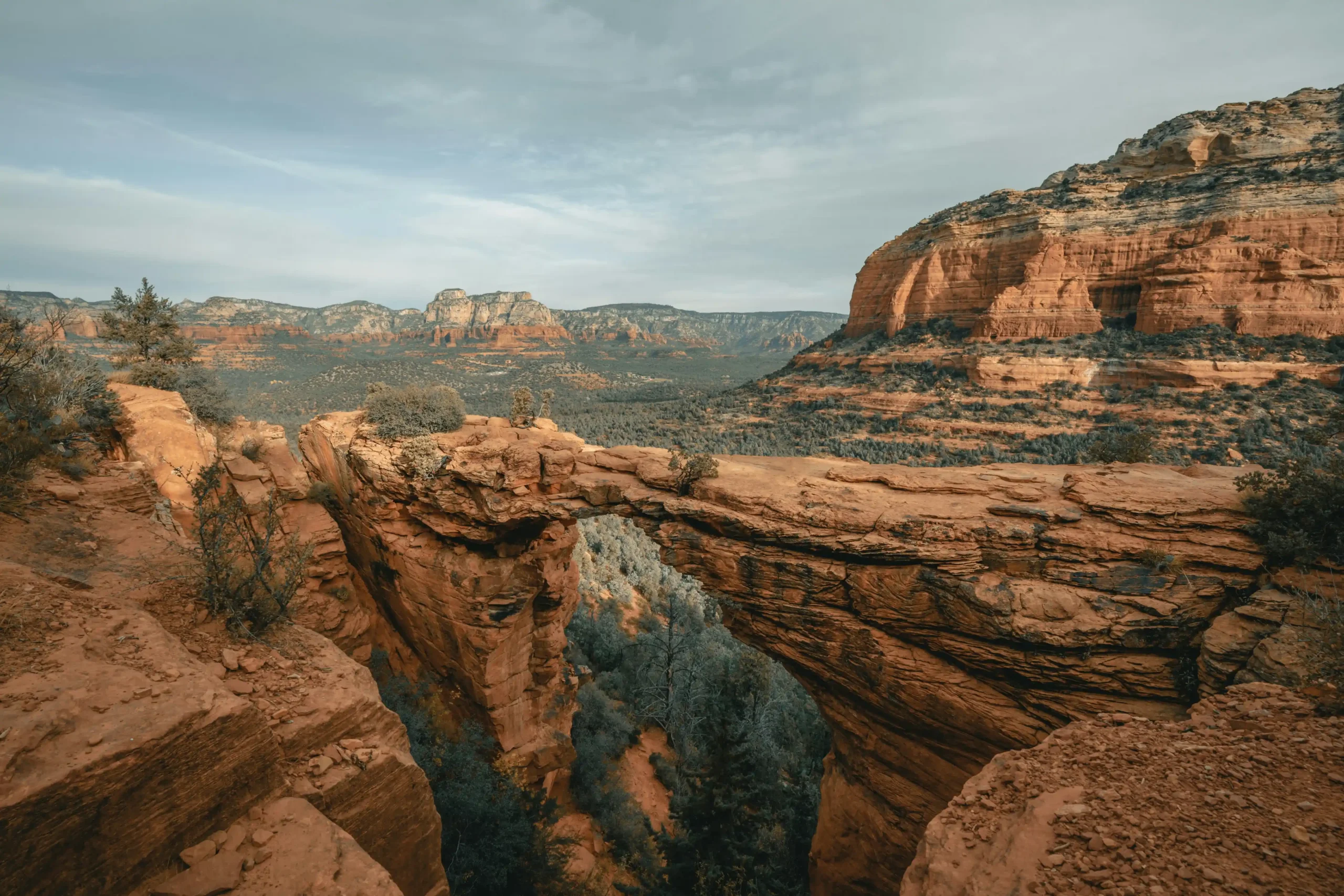
Difficulty: moderate. Sedona’s largest natural sandstone arch, and its most-photographed hike. From the Dry Creek Vista trailhead it is roughly 4.2 miles round trip via the Chuck Wagon Trail, with a short rock staircase and an exposed final ledge to reach the arch itself. The rough road to the closer trailhead needs a high-clearance 4×4 — most people take the free shuttle to Dry Creek Vista instead. Go at sunrise to beat both the heat and the queue for the photo.
Cathedral Rock Trail
Difficulty: strenuous for its length. Just 1.2 miles round trip but with a steep 600-foot climb and a real scramble up a slickrock crevice using hands and feet. The payoff — and the vortex — is the saddle between the spires. The trailhead lot is one of the smallest and first to fill, so the shuttle from the North SR 179 Park & Ride is the sane option.
Soldier Pass: Seven Sacred Pools, the Sinkhole and the Cave
Difficulty: moderate. The best value in Sedona hiking: a single trail links the Seven Sacred Pools, the gaping Devil’s Kitchen sinkhole, and the hidden Soldier Pass Cave, a photogenic arched cavern up a short spur most people walk straight past. The road gate opens at 8am and the lot is minute — take the Soldier Pass shuttle from Posse Grounds.
Hidden Spot: the Birthing Cave
Difficulty: easy. An unmarked but easy 2-mile round trip in Long Canyon leads to a smooth, womb-shaped hollow in the cliff with a framed view back across the valley. It is on no official sign and worth the small effort to find.
Day 3: Canyons, Water and Scenic Drives
Day three trades red-rock climbs for green canyons, running water and the drives that need no hiking at all.
Oak Creek Canyon and the West Fork Trail
Difficulty: easy. Drive the SR 89A switchbacks up Oak Creek Canyon to the West Fork Trail — a shaded 6.5-mile round trip with a dozen creek crossings and the finest fall color in the region come late October. Note the $12 day-use fee here is separate from the Red Rock Pass.
Slide Rock State Park
Difficulty: easy. A natural sandstone water chute in Oak Creek that doubles as the area’s best family swimming hole. It is a state park with its own entry fee, and it gets packed by midday in summer — go early or off-season.
Red Rock Scenic Byway and a Jeep Tour
If your legs are done, the SR 179 Red Rock Scenic Byway strings the best formations together from the comfort of your car. For the famous off-road version, a Pink Jeep Broken Arrow tour climbs slickrock terrain no rental car should attempt.
Boynton Canyon and the Subway Cave
Difficulty: moderate. The fourth major vortex sits at the mouth of Boynton Canyon; a short unofficial spur off the main trail climbs to the Subway Cave, a curved rock tunnel with ancient dwellings tucked beside it. A quieter, more rewarding close than the marquee hikes.
Things to Do in Sedona Without Hiking
You can see the best of Sedona from a car seat. Drive the Red Rock Scenic Byway (SR 179) and Oak Creek Canyon (SR 89A), visit the Chapel of the Holy Cross, browse Tlaquepaque, and taste local wine in nearby Page Springs and Cottonwood. For a splurge, a sunrise hot air balloon or a Pink Jeep tour delivers the scenery with none of the climbing.
Things to Do in Sedona at Night
Sedona is a certified International Dark Sky Community, so the show does not stop at sunset. Book a guided night-sky stargazing tour with telescopes, or simply drive to an overlook after dark — with almost no light pollution, the Milky Way is visible to the naked eye on clear nights.
Sedona With Kids and on a Budget
Families do well here: Slide Rock for swimming, the flat Bell Rock loop, and the free Chapel and roadside overlooks. Many of the best free things to do in Sedona — the vortexes, the scenic byways, the sunset views — cost nothing beyond the parking pass. Sketch out costs first with our travel budget calculator, and if you want the day mapped hour by hour, the itinerary builder turns this guide into a schedule. If you are chasing more no-cost sightseeing, few US cities beat the capital for free stuff to do in DC, where every major museum is free.
Hot Air Balloons and Other Splurges
A sunrise hot air balloon ride over the red rocks is Sedona’s signature splurge — only a couple of FAA-permitted operators fly here, so book well ahead. Helicopter tours and the Pink Jeep Broken Arrow off-road trip round out the big-ticket options, all best done in the calm of early morning.
Things to Do Near Sedona
Sedona is a superb base for day trips. The Grand Canyon South Rim is about two hours north; the copper-mining ghost town of Jerome is 45 minutes; and the cliff dwellings at Montezuma Castle are a half-hour south. Most visitors fly into Phoenix Sky Harbor (about two hours away) or Flagstaff; use our airport arrival calculator to time the drive back for your flight. If you would rather trade desert for forest, our guide to the best things to do in Gatlinburg plans a mountain trip the same way.
How Many Days Do You Need in Sedona?
Three days is the sweet spot: one for the vortexes and sights, one for the big hikes, one for canyons and drives. With two days, drop Day 3 and pick one canyon. With four or more, add the Grand Canyon or Antelope Canyon as a full-day trip.
Frequently Asked Questions
What is the number one thing to do in Sedona?
Hike to a vortex viewpoint at sunrise. Cathedral Rock and Devil’s Bridge are the icons, but Airport Mesa gives you a vortex and a 360-degree view for a fraction of the effort.
Do you need a Red Rock Pass in Sedona?
Yes, to park at forest trailheads for more than 15 minutes. It is $5 a day, and an America the Beautiful federal parks pass covers it. You do not need one if you ride the free Sedona Shuttle to the trailhead.
What are the best free things to do in Sedona?
The four vortexes, the Chapel of the Holy Cross, the Red Rock Scenic Byway and Oak Creek Canyon drives, and every sunset overlook are all free — you only pay to park. The Sedona Shuttle to the main trailheads is free too.
What are the best things to do in Sedona without hiking?
Drive the Red Rock Scenic Byway and Oak Creek Canyon, visit the Chapel of the Holy Cross, shop and eat at Tlaquepaque, take a hot air balloon or Pink Jeep tour, and taste wine in Page Springs.
What are the Sedona vortexes and where are they?
Vortexes are sites said to have concentrated energy. The four best known are Airport Mesa, Bell Rock, Cathedral Rock and Boynton Canyon — all reachable on short-to-moderate hikes covered in this itinerary.
What are the best things to do in Sedona at night?
Sedona is a Dark Sky Community, so stargazing is the headline: join a night-sky telescope tour or drive to a dark overlook to see the Milky Way. Sunset at the Airport Mesa Overlook is the natural warm-up.
Is Sedona good for families?
Very. Slide Rock State Park, the easy Bell Rock loop, the Chapel and the scenic drives all suit kids, and a jeep tour is a hit with older children.
What is the best time to visit Sedona?
Spring and October have the best weather but the biggest crowds; late October adds fall color in Oak Creek Canyon. November to February is quiet and cool, with the occasional snow-dusted red rock — the best time for empty trails.