Why travel solo?
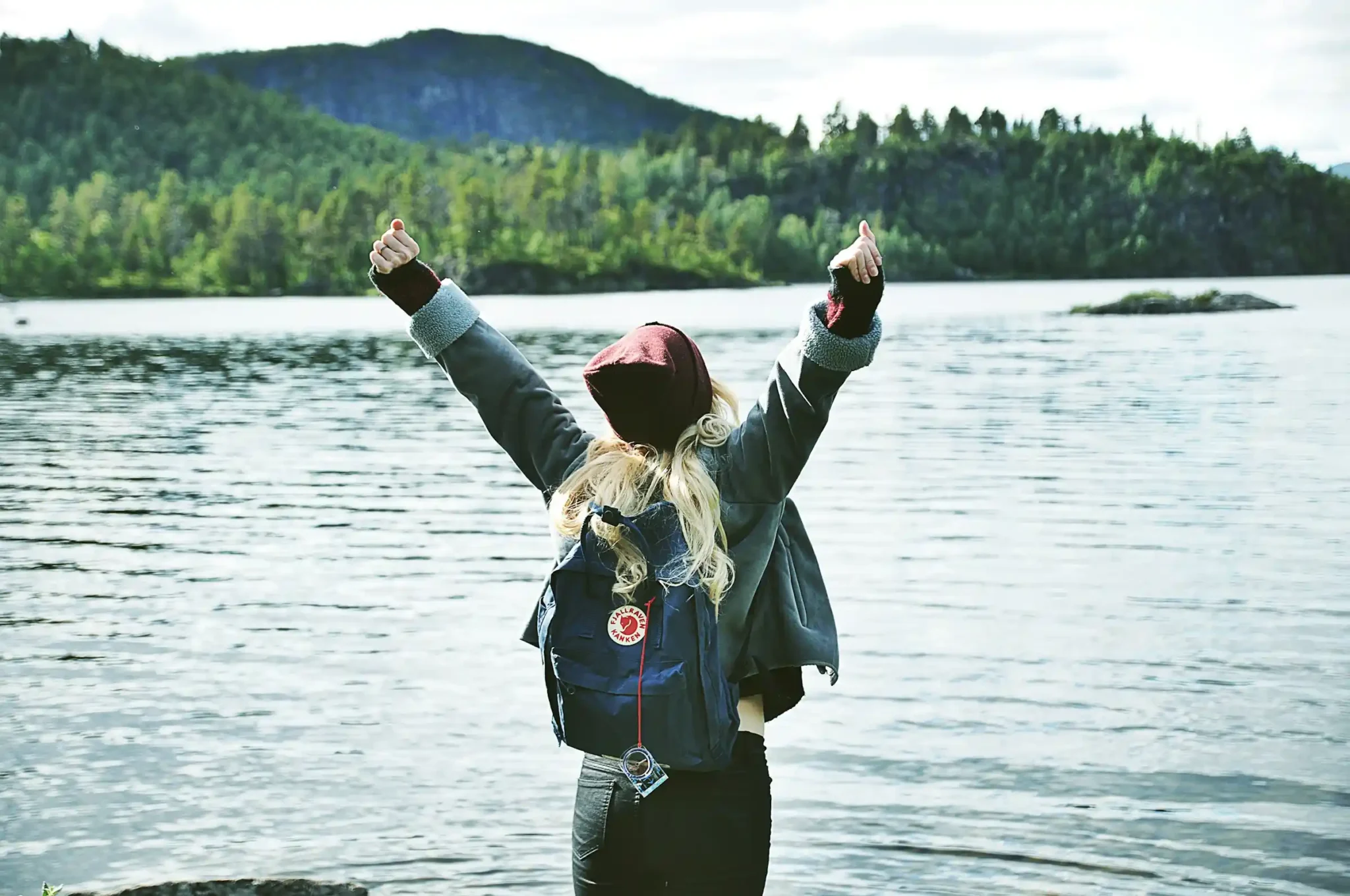
There is a version of travel you only get when no one else is deciding where to eat, when to leave, or how long to sit on a park bench watching strangers go by. Solo travel strips away the social choreography and leaves you with the raw experience – your pace, your curiosity, your mistakes. Pairing solo travel with affordable travel destinations keeps costs manageable when there is no one to split with.
This is not a personality test. Introverts, extroverts, nervous first-timers, and people who have been putting it off for years all travel alone and come back glad they did. What follows is a practical guide with tips for solo travel that actually matter – the logistics, the safety decisions, the social mechanics, and the things nobody warns you about.
Start with a short trip close to home
Your first solo trip should not be a three-week backpacking circuit through Southeast Asia. Start with a weekend in a city two or three hours from home – somewhere you can reach cheaply, where you speak the language, and where getting things wrong carries low stakes.
The point is not the destination. The point is learning how you operate alone: how you make decisions without a committee, how you handle boredom, how you feel eating dinner by yourself for the first time. A solo weekend in a familiar country teaches you all of this without the added pressure of foreign currency, jet lag, or language barriers.
A good first test: Take a solo day trip before you commit to an overnight. Visit a town you have never been to, navigate it without asking anyone you know for help, eat a meal alone, and come home. If that felt fine – and it almost always does – you are ready for an overnight trip.
Planning your first solo trip
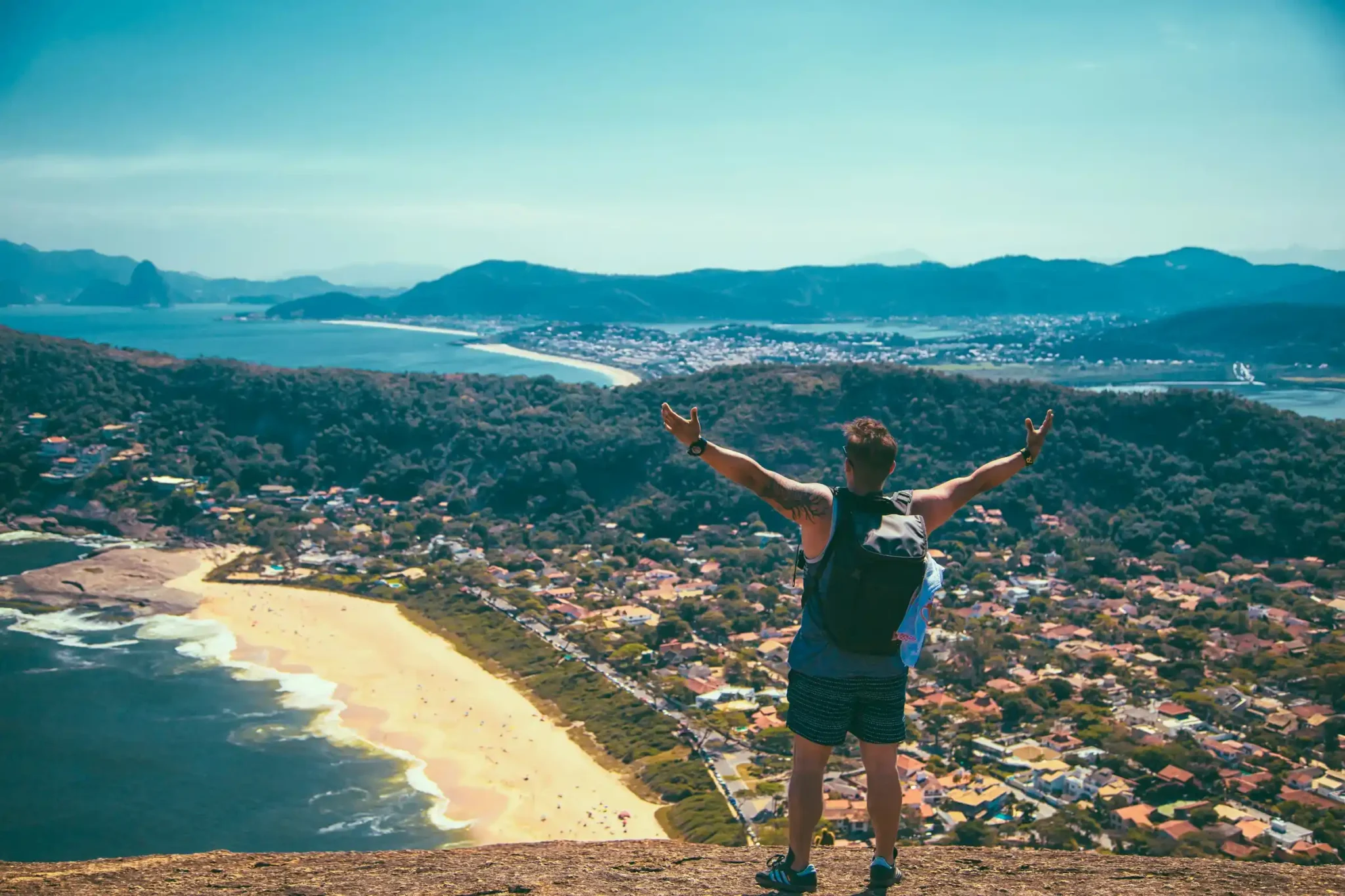
Solo trip planning is different from group planning because every decision is yours. That sounds freeing until you realize it also means every logistical failure is yours. A few principles that help:
Book accommodation in advance for the first night
Experienced solo travelers sometimes wing it, but your first trip is not the time. Arrive knowing exactly where you are sleeping tonight. Book somewhere central, well-reviewed, and easy to find from the airport or train station. Write the address and phone number on paper – not just in your phone – in case your battery dies on arrival.
Over-plan day one, under-plan everything else
Arrival day is when anxiety peaks. Have a clear plan: how you get from the airport to your accommodation, where you will eat your first meal, one thing to do that evening. After day one, loosen up. Leave half your days unscheduled so you can follow recommendations from other travelers or spend an extra hour somewhere you like.
Research the practical stuff, not just the attractions
Before you leave, know the answers to: How do I get from the airport to the city? Is tap water safe? Do I need a local SIM card or will my roaming work? What is the tipping culture? Which neighborhoods should I avoid after dark? These are the questions that reduce friction, not “Top 10 Instagram spots.”
Packing smart for a solo trip
When you travel alone, you carry everything yourself. There is no partner to hold your bag while you use the bathroom, no friend to watch your suitcase at the train station. Pack light enough to move through a city without stopping to rest every two blocks.
The one-bag rule: If you can fit everything into a single carry-on backpack (40-45 litres), do it. You save time at baggage claim, money on checked bag fees, and mental energy tracking a second piece of luggage through hostels and buses.
Solo packing essentials most people forget
- A doorstop or portable door lock – cheap and effective room security
- A headlamp – dorm rooms, late arrivals, power outages
- Photocopies of your passport and insurance – stored separately from the originals
- A reusable water bottle with a filter – saves money, avoids plastic
- A small combination padlock – for hostel lockers and zipping bags shut on buses
- Earplugs and an eye mask – essential for shared rooms, noisy streets, and red-eye flights
Staying safe while traveling alone
Safety is the number one concern people raise about solo travel, and it deserves a serious answer – not “just be confident” or “trust your instincts.” Here are specific things that reduce risk.
Share your location with someone back home
Use Google Maps or WhatsApp location sharing to give a trusted person real-time access to where you are. Update them when you change cities. This is not paranoia – it is a basic safety layer that costs nothing and could matter enormously if something goes wrong.
Research your destination before you arrive
Check your government’s travel advisories. Look at the Global Peace Index. Read recent traveler forums – not articles from 2018 – for current ground-level safety information. Some cities are perfectly safe in the tourist center but have neighborhoods you should avoid after dark. Know which ones before you arrive.
Keep valuables distributed, not centralized
Do not keep your passport, all your cash, and your cards in the same bag. Split them across a money belt, your daypack, and your accommodation safe. If one gets stolen, you still have backups. Carry a photocopy of your passport’s ID page in a separate pocket.
Trust discomfort, not just danger
You do not need to see a weapon to leave a situation. If a street feels wrong, a person’s attention feels too focused, or a deal sounds too good – walk away. The social pressure to be polite is the single biggest safety risk solo travelers face. Politeness is optional. Your safety is not.
Safety tips for women traveling solo
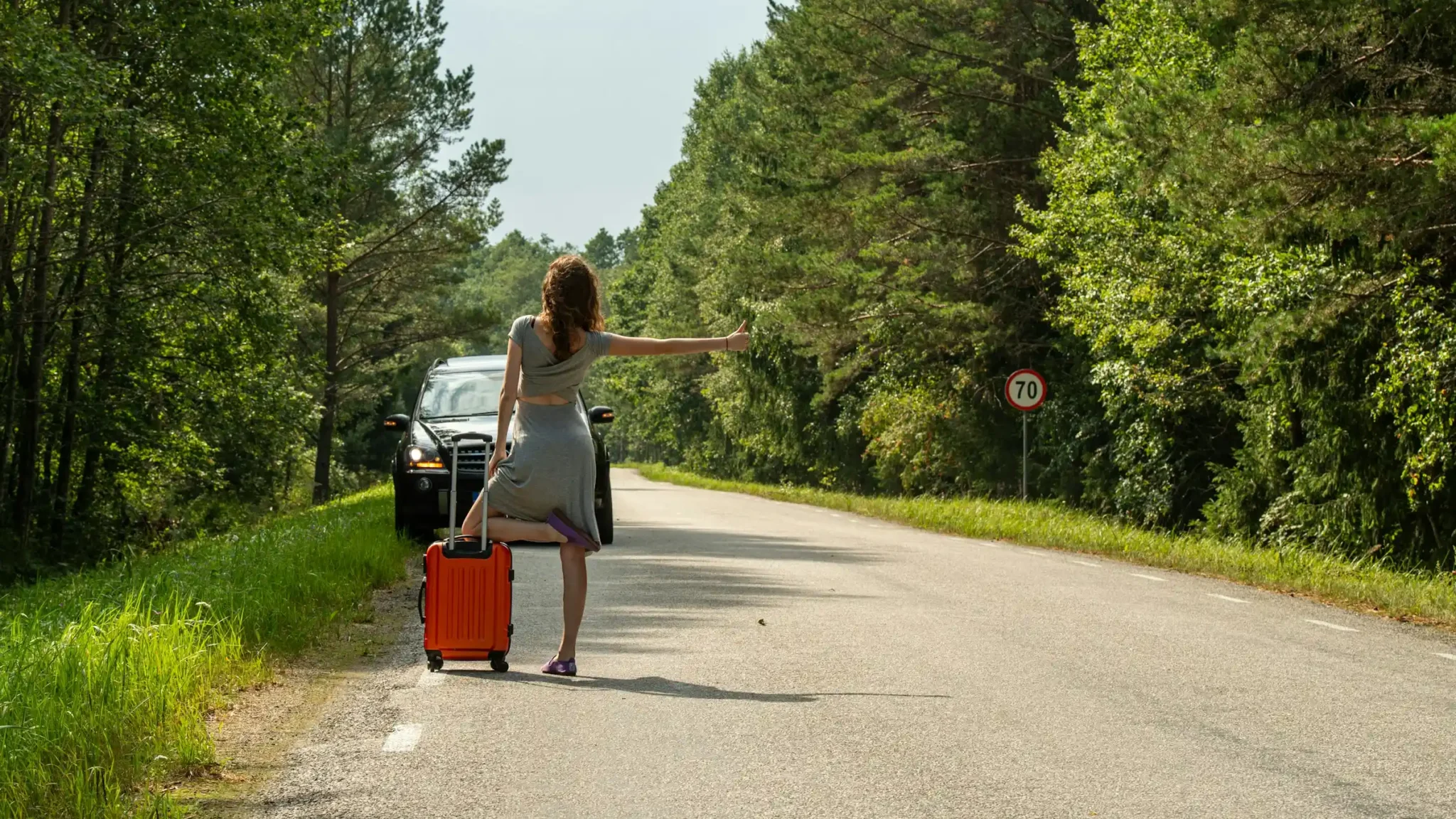
Everything above applies regardless of gender, but women traveling alone face additional considerations that deserve direct, specific advice – not vague reassurance.
Accommodation matters more
Book places with 24-hour reception or front desk staff. Read recent reviews from other solo female travelers specifically. Female-only dorm rooms exist in most major hostel chains and are worth choosing, especially in your first few trips. A hotel with a lobby where staff can see who enters is safer than a remote Airbnb accessed by lockbox.
Transportation choices
Use rideshare apps with tracked routes over unmarked taxis. Share your ride details with someone. In countries where women rarely take public transport after dark, follow that local norm – it exists for a reason. Pre-book airport transfers for late-night arrivals rather than negotiating with taxi drivers at 2 AM.
Dress and behaviour research
This is not about restricting yourself – it is about reading the room. In conservative regions, dressing to local norms reduces unwanted attention and shows cultural respect. Pack a scarf that doubles as a head covering, a shawl for temples, and lightweight long sleeves for countries where bare shoulders draw stares.
The “partner” strategy
Some solo female travelers mention a partner or husband waiting at the hotel when dealing with persistent attention. Others wear a ring. These are practical tools, not feminist compromises. Use whatever gets you out of an uncomfortable situation fastest.
Managing money on a solo trip
Solo travel has one financial disadvantage: you cannot split rooms, taxis, or meals. But it has a financial advantage too – nobody is dragging you into expensive restaurants or last-minute excursions you did not want. Choosing destinations with free attractions helps too – a city like Washington DC offers plenty of free stuff to do that keeps a solo budget low.
Solo budget strategies that actually work
- Stay in hostels even if you are not 20. Private rooms in hostels are often cheaper than budget hotels and give you access to kitchens and common areas.
- Cook one meal a day. A supermarket breakfast or a self-cooked dinner saves $10-15 daily.
- Use free walking tours. Tip-based tours run in nearly every major city. You set the price based on quality.
- Get a no-foreign-transaction-fee card before you leave. Wise, Revolut, and Charles Schwab are popular with solo travelers for a reason.
- Negotiate the single supplement. Some tour operators waive it during low season or will pair you with another solo traveler.
Eating and socializing alone
Solo dining terrifies more first-time solo travelers than safety does. Here is the truth: nobody in a restaurant is thinking about you. They are thinking about their own food.
How to eat alone comfortably
Sit at the bar or counter. Bar seating is designed for single diners. You can watch the kitchen, chat with the bartender, and you do not feel like you are occupying a table meant for two. Many restaurants reserve their best conversations for bar patrons.
Eat lunch out, cook dinner in. Restaurants are busier and more anonymous at lunch. You blend in more easily, prices are lower, and you save the evening for whatever you want – cooking at the hostel, grabbing street food, or eating in your room without guilt.
Bring a book or journal. Not to hide behind – to give your hands and eyes something to do between courses. A solo diner reading looks intentional. A solo diner staring at nothing looks like they got stood up. (They did not. But the book helps with your own comfort, not anyone else’s perception.)
Meeting people on the road
Solo does not mean isolated. Most solo travelers meet more people than group travelers do, because they are approachable and available.
- Hostel common areas: Sit in the kitchen or lounge at 6 PM when everyone is figuring out dinner. “Want to grab food?” is the universal hostel icebreaker.
- Free walking tours: 2-3 hours of walking with the same group produces natural conversation.
- Day tours and activities: Cooking classes, diving courses, and group hikes attract other solo travelers specifically because they offer built-in social structure.
- Apps: Meetup, Couchsurfing Hangouts, and Bumble BFF all have travel-specific functions for meeting locals and travelers.
One piece of advice from experienced solo travelers: on a group tour, do not bond with the first people you meet. Wait two or three days. The people you naturally keep gravitating toward are the ones worth spending time with.
Solo travel tips for introverts
Introversion and solo travel are not opposites – they are a natural fit. The entire point of solo travel is controlling your own schedule, which includes controlling how much social interaction you get.
Choose accommodation that gives you space. A private room in a guesthouse is better than a 12-bed dorm if you need downtime to recharge. You can still use the common areas when you feel social and retreat when you do not.
Build in recovery time. If you spend a full day sightseeing and talking to people, block the next morning for reading, journaling, or sitting in a café doing nothing. Do not schedule back-to-back social activities and then wonder why you are exhausted by day four.
Use structured activities instead of open socializing. A guided museum tour, a cooking class, or a group hike gives you something to talk about beyond small talk. Introverts tend to prefer conversations with a topic over conversations about nothing, and activities provide that automatically.
Solo travel is the introvert’s permission slip. At home, turning down a dinner invitation feels rude. On the road, nobody knows your plans or expects you to have any. You can eat alone, spend three hours in a bookshop, or skip the party and go to bed at 9 PM, and no one will notice or care. That freedom is the whole point.
Traveling internationally alone for the first time
Domestic solo travel and international solo travel are different experiences. Crossing a border adds layers: visas, language, currency, different emergency numbers, time zones, and the reality that you are farther from home if something goes wrong.
Start with countries that are easy for solo travelers
Portugal, Japan, New Zealand, Canada, and Thailand consistently rank among the safest and most solo-friendly destinations. They have reliable public transport, widespread English, strong tourism infrastructure, and large solo traveler communities. Save the adventurous destinations for your third or fourth trip, not your first.
Get travel insurance – this is non-negotiable
When you travel with someone else, they can help you get to a hospital, deal with a stolen wallet, or change your flights. Alone, you need a backup system, and travel insurance is it. Make sure your policy covers medical evacuation, trip interruption, and personal liability. Carry your policy number on paper and in your phone.
Download offline tools before you leave
Your phone is your lifeline as a solo traveler. Before you depart, download offline maps (Google Maps or Maps.me), a translation app with offline language packs (Google Translate), your boarding passes, accommodation confirmations, and a copy of your passport. Assume you will lose signal at some point and prepare for it.
Learn five phrases in the local language
Hello, thank you, excuse me, how much, and where is the bathroom. These five phrases cover 80% of daily interactions and signal a minimum of effort that locals genuinely appreciate. You do not need fluency. You need respect.
Common mistakes first-time solo travelers make
Over-packing. You will wear the same three outfits on rotation. Accept it now and save your back.
Over-scheduling. Trying to see everything in a city produces exhaustion, not memories. Pick two or three things per day and leave time for the unexpected – the street market you stumble into, the local who invites you for tea, the afternoon nap that saves your evening.
Not telling anyone where you are. Independence does not mean secrecy. Share your itinerary with at least one person back home and check in regularly.
Saying yes to everything. Solo travel advice often emphasizes saying yes. That is fine for activities. It is not fine for people who make you uncomfortable, situations that feel off, or financial decisions that exceed your budget. “No” is a complete sentence in every language.
Comparing your trip to social media. Someone else’s curated highlight reel is not your benchmark. A solo trip where you read books in cafés, took naps, and walked around aimlessly is a successful trip if you enjoyed it.
Skipping the quiet moments. The best solo travel memories are rarely the postcard-worthy ones. They are the sunset you watched from a random bench, the coffee you drank slowly because nobody was waiting, the conversation with the hostel receptionist at midnight. Leave room for those.
Frequently asked questions
Is solo travel safe?
Yes, with preparation. Millions of people travel alone every year across every continent. The key is choosing your destinations wisely, sharing your location, and trusting your instincts when something feels wrong. Solo travel in well-touristed areas of Europe, Southeast Asia, Japan, and the Americas carries comparable risk to daily life at home.
What is the best destination for a first solo trip?
Start somewhere with strong public transport, widespread English, and a well-established tourist infrastructure. Portugal, Japan, Thailand, the Netherlands, and New Zealand are all popular first-time choices. The best destination is one you are genuinely curious about – motivation makes everything easier.
How do I deal with loneliness while traveling alone?
Loneliness is normal and temporary. It usually hits hardest on day two or three, then fades as you build a routine. Hostels, group tours, and apps like Meetup and Couchsurfing create social opportunities when you want them. If loneliness persists, call someone from home – hearing a familiar voice resets your emotional baseline faster than anything else.
How much does a solo trip cost compared to traveling with others?
Accommodation is the main extra cost since you cannot split a room. Budget roughly 30-50% more for lodging. But solo travelers often spend less overall because they eat more cheaply, skip expensive group activities, and do not get pulled into impulse purchases by companions. A week-long solo trip in Southeast Asia can cost under $500 including flights from the Gulf; a European city trip runs $800-1,200.
Should I book a tour or travel independently?
For your first trip, consider a hybrid: travel independently but book one or two organized day tours or activities. This gives you the freedom of solo travel with built-in social moments and local knowledge. As you gain confidence, you will naturally lean toward whichever style suits you better.