Introduction
Siquijor Island has a double reputation. To most Filipinos it is the island of witches, faith healers and love potions, a place mainland families half-jokingly warn you about. To travellers who actually make the ferry crossing, it is one of the calmest, cheapest and most rewarding islands in the Visayas: a 72-kilometre coastal loop strung with turquoise waterfalls, white-sand beaches you can have to yourself, a four-century-old tree, and one of the oldest convents in the Philippines. Both reputations are true, and the gap between them is exactly why Siquijor is worth your time.
This is a practical, honest guide to Siquijor: the folklore that made it famous, the best things to do around the island, exactly how to get there by ferry, what everything costs, when to go, and how to plan a two or three day trip without wasting a minute of it.
Table of Contents
Siquijor’s folk-healing tradition and mystical reputation
Understanding this tradition is part of understanding Siquijor, so it is worth explaining what it actually is. Spanish colonisers called the island Isla del Fuego, the Island of Fire, after the eerie glow of swarming fireflies in its molave trees. Over the centuries the island gained a nationwide reputation for the supernatural, and today it is widely associated with its mananambal, traditional folk healers who prepare herbal remedies, and with local legends of sorcery and barang up in the hills. Those legends are folklore, and this section describes the culture around them rather than endorsing any belief or practice.
In reality the living tradition centres on herbal folk medicine and faith healing, not curses. Each year during Holy Week, healers gather for the Folk Healing Festival and perform the pangalap (or tang-alap): across the seven Fridays of Lent they collect herbs, roots, tree bark and stones from the mountains and rivers, then on Black Saturday simmer them in coconut oil to make traditional balms and oils. Visitors can watch the ritual, meet the healers, and buy a herbal blend or a bracelet as a cultural souvenir. These remedies are part of local heritage and belief, not proven medical treatments, and they are no substitute for professional healthcare.
Day to day, none of this feels sinister, and there is nothing to be wary of. Siquijor is one of the safest and most relaxed islands in the country, and its people are warm and welcoming. Treat the tradition as the living cultural heritage it is, be respectful if you meet a healer, and you will come away seeing the island’s “witchcraft” reputation for what it really is: centuries of folk medicine and storytelling that make Siquijor unlike anywhere else in the Philippines.
The best things to do in Siquijor
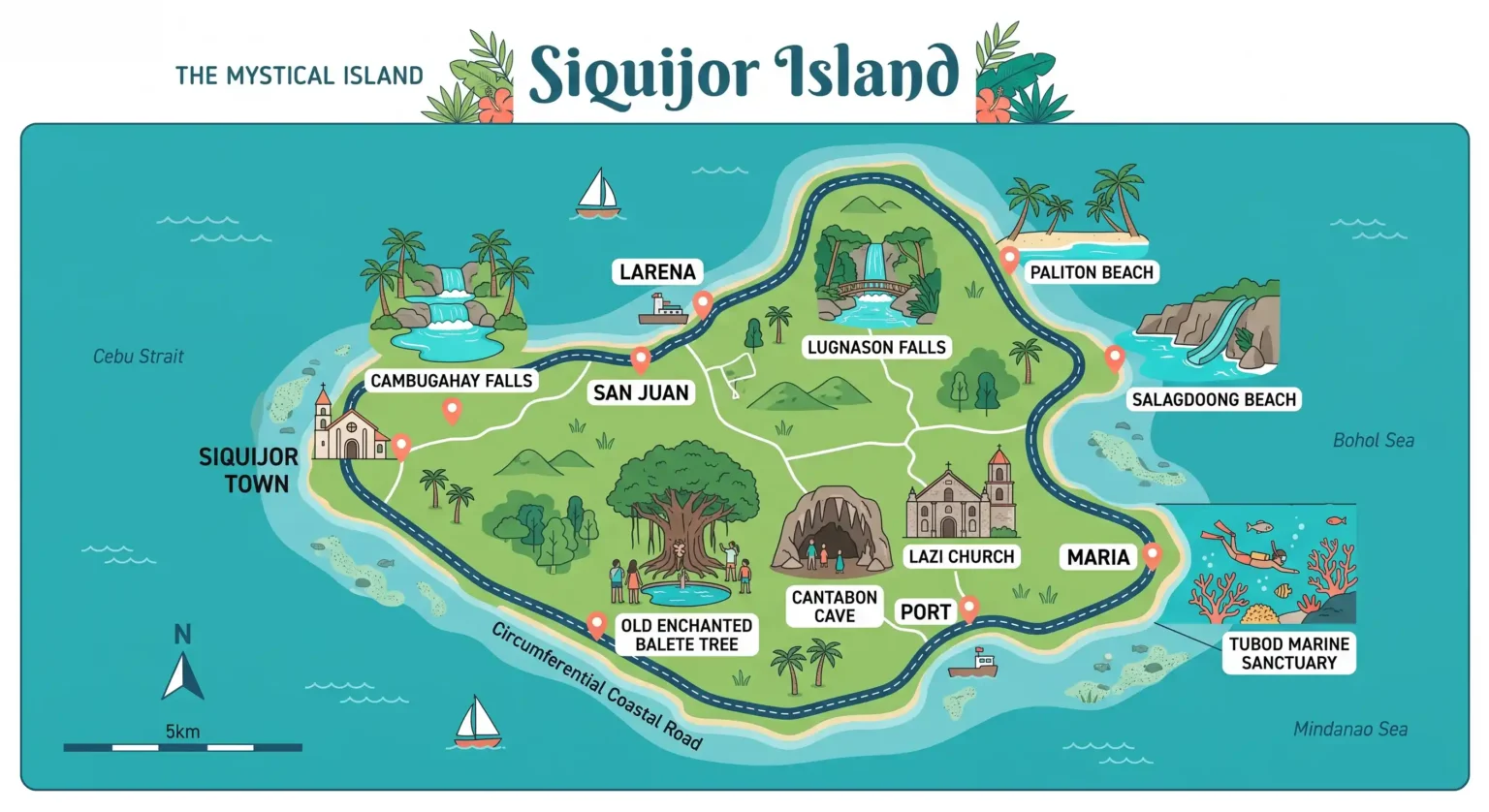
Almost everything worth seeing sits on or just off the circumferential road that rings the island, so you can tackle the highlights as a single loop. These are the ones worth your time, with the real entrance fees.
Cambugahay Falls
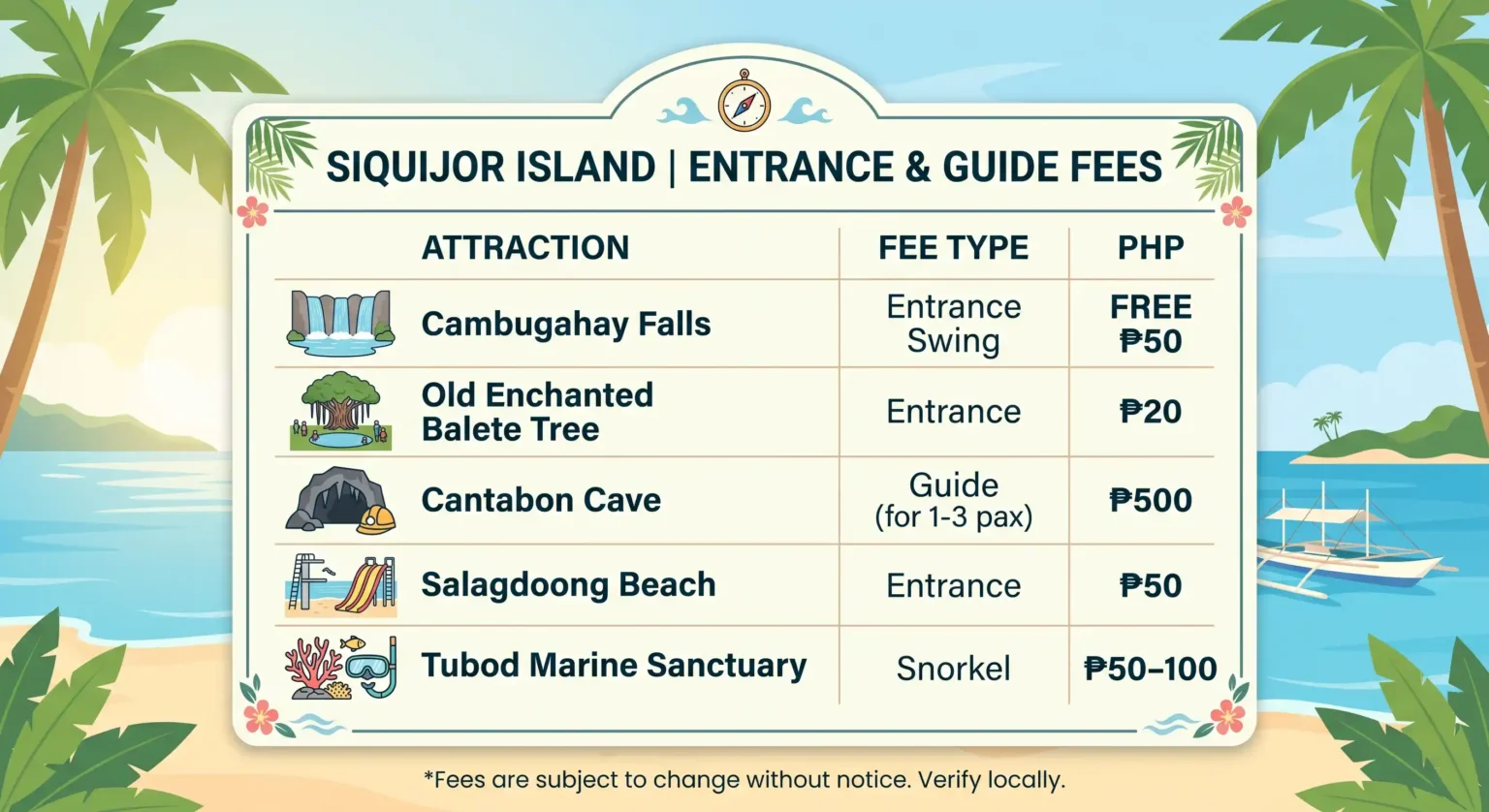
The island’s signature attraction: three tiers of turquoise pools fed by a spring-blue river, in the town of Lazi. Entry is free; you pay around 20 pesos to park, and 50 pesos per go on the rope swings and bamboo rafts that local kids operate over the deepest pool. It is a steep 135-step walk down from the road. Arrive at opening, around 8am, because by mid-morning the first pool fills with tour groups and the swing queue gets long. Walk five minutes upstream and you will often have the higher pools to yourself.
Lugnason Falls
A smaller, quieter waterfall near San Juan with a single rope swing and a deep green plunge pool, usually free to enter. It rarely gets crowded and makes a good late-afternoon stop, or a calmer alternative if Cambugahay is heaving.
Paliton Beach
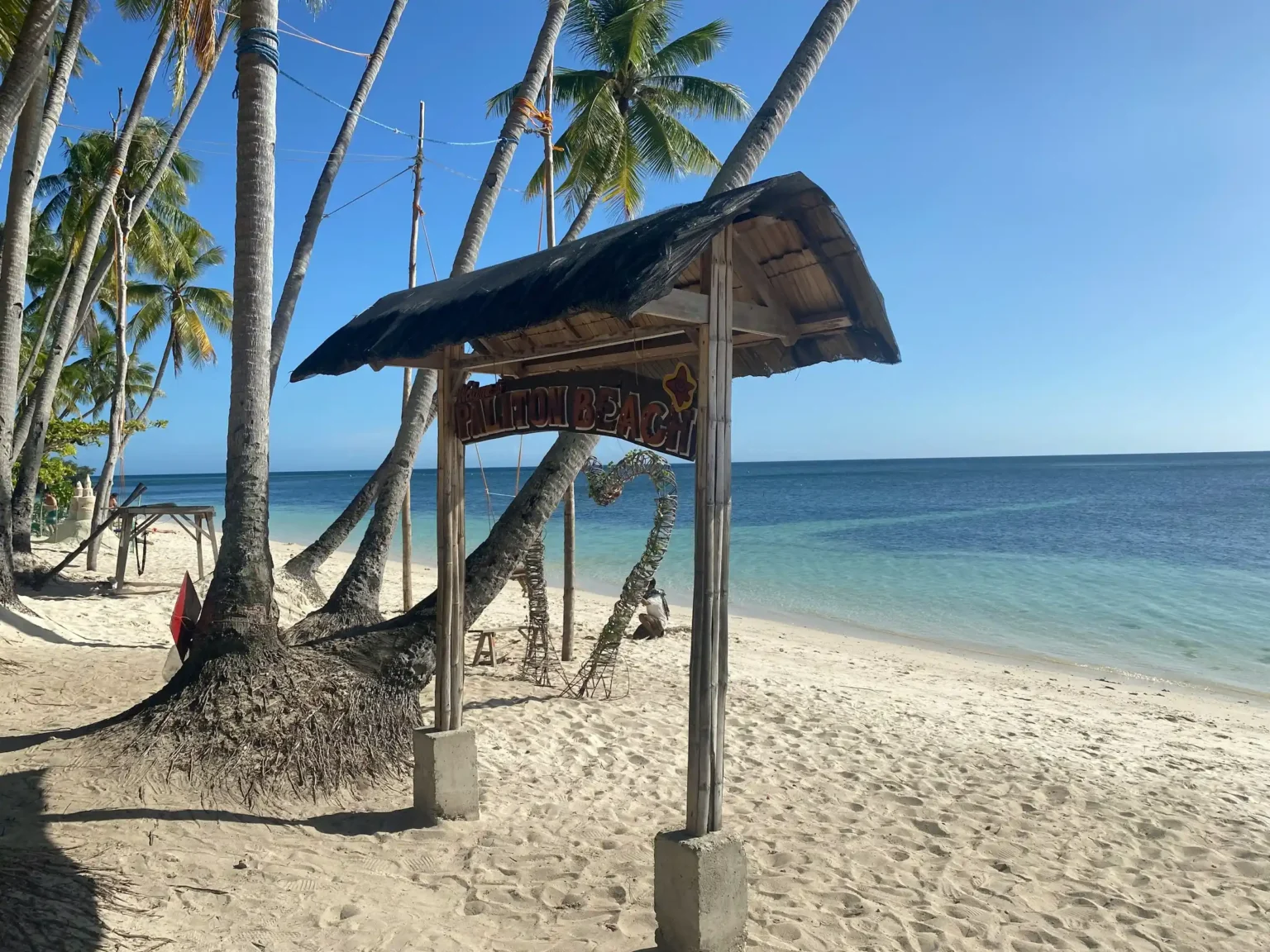
The best free beach on the island and the classic sunset spot: a curve of white sand and palms on the west coast at San Juan, sometimes called Siquijor’s “Little Boracay.” There is usually no entrance fee, and parking behind the beach is free or a token 20 pesos. Come for sunset, when the sky lights up over the water and the crowds are thin. The swimming is best at higher tide.
Salagdoong Beach
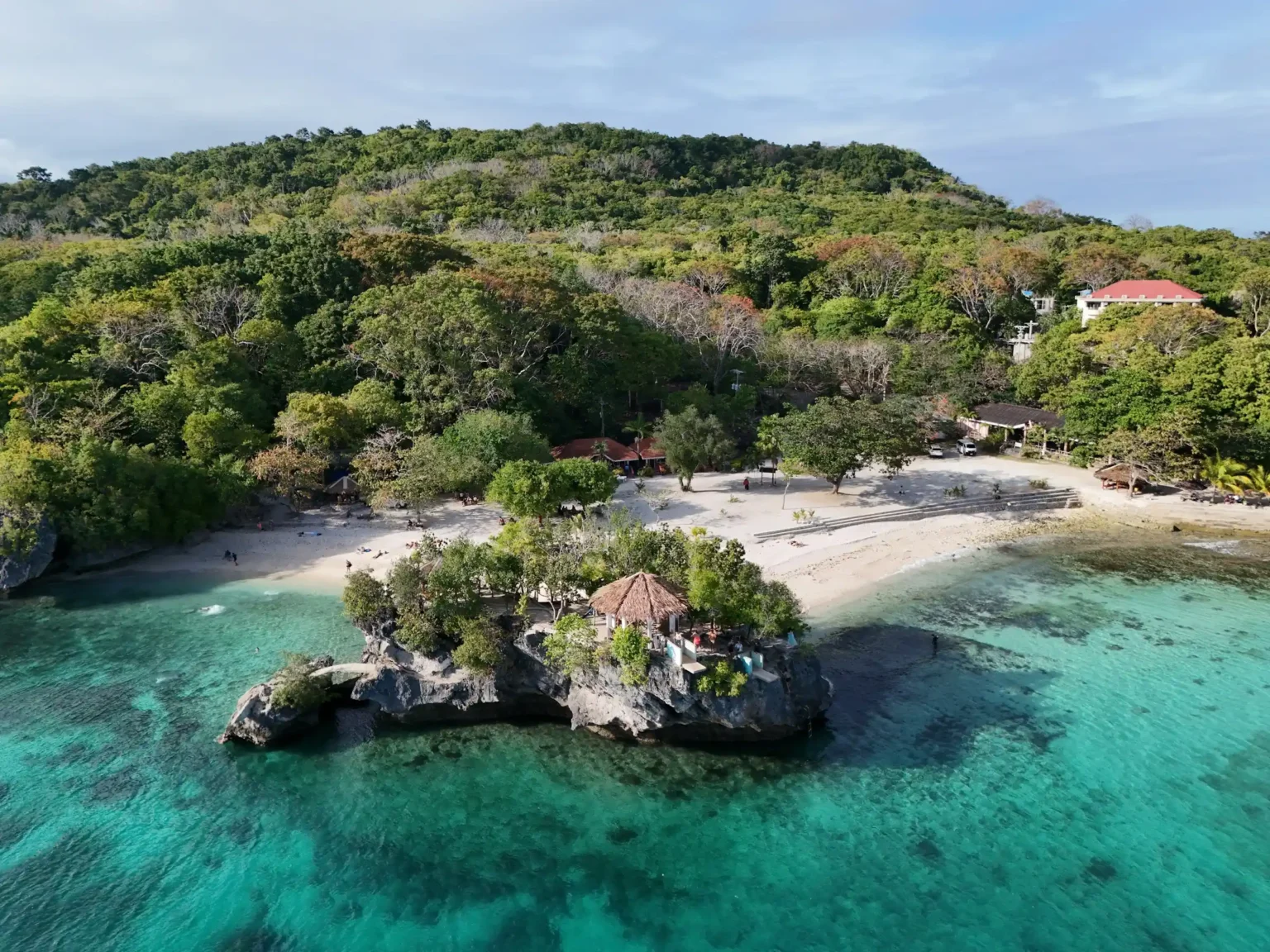
On the east coast near Maria, reached through a shaded man-made forest, Salagdoong is the island’s cliff-jumping beach: two platforms, roughly 5 and 10 metres, over deep blue-green water. Entrance is about 50 pesos, plus parking (around 20 pesos for a scooter). Only jump at high tide and check the water below first, as the base is rocky. The cove itself is small but genuinely beautiful.
The Old Enchanted Balete Tree
A roughly 400-year-old balete (strangler fig) near Lazi, tangled and enormous, and central to the island’s spirit lore. A cool spring flows from its base into a shallow pool stocked with fish that nibble your feet, a natural fish spa. Entry is about 20 pesos, fish spa included. It is a quick stop, more atmospheric than scenic, and it pairs naturally with Cambugahay and Lazi church nearby.
Cantabon Cave
For a bit of adventure, Cantabon is an 800-metre limestone cave in the island’s interior, waded and scrambled through with a mandatory local guide who supplies a helmet and headlamp. Expect to get wet and muddy, and to see live stalactites, stalagmites and a small underground pool. The guide fee is about 500 pesos for up to three people, then 50 pesos per extra person. Wear shoes you do not mind soaking.
Lazi Church and the San Isidro Labrador Convent
Facing each other in Lazi are the 19th-century San Isidro Labrador Church and its convent, a declared National Cultural Treasure and one of the oldest and largest convents in the Philippines. The Augustinian Recollects built the convent between 1887 and 1891, partly as a rest house for ailing priests, from coral stone and hardwood. Entry is free; it is a genuinely important piece of Spanish-colonial heritage and only a few minutes from Cambugahay Falls.
Snorkelling at Tubod Marine Sanctuary
The easiest good snorkelling on the island is at Tubod Marine Sanctuary on the San Juan coast, in front of the Coco Grove resort. A protected reef starts close to shore, with healthy coral and reef fish. The sanctuary fee is roughly 50 to 100 pesos, and you can rent a mask and fins on site. Enter at higher tide, as the reef flat is shallow at low water. For a wilder reef with reef sharks and turtles, Tulapos Marine Sanctuary on the north-east coast is worth the guided swim.
How to get to Siquijor
There is no airport on Siquijor, so every route ends with a ferry. The nearest airport is in Dumaguete (Sibulan), a short flight from Manila or Cebu, and Dumaguete is by far the easiest gateway.
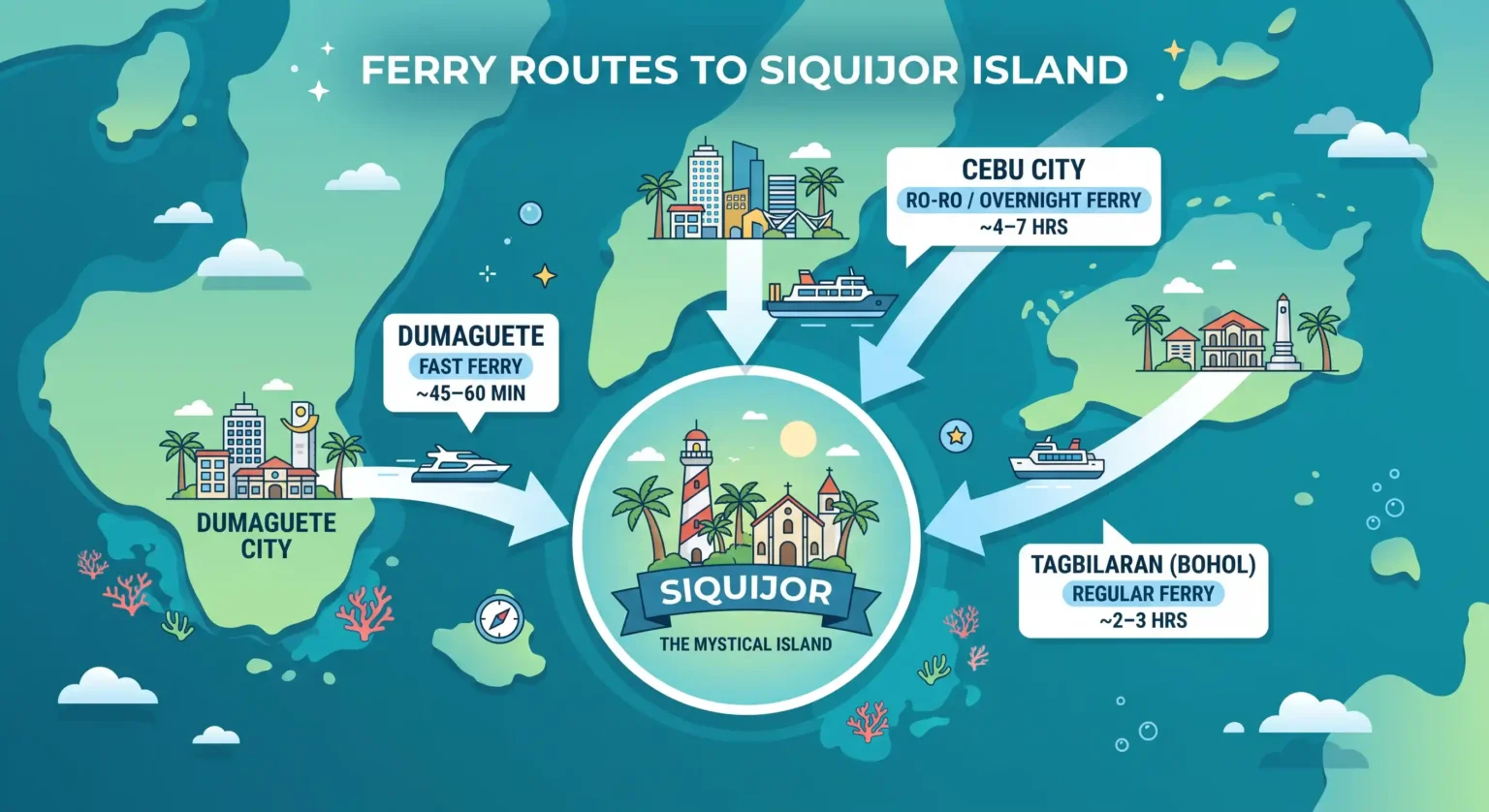
From Dumaguete (the main route). Fast ferries cross from Dumaguete port to Siquijor in about 45 minutes to an hour. OceanJet runs several fast-craft trips a day, roughly 455 to 750 pesos depending on class, arriving at Siquijor Town Port. Montenegro Lines runs a slower RoRo ferry that is cheaper (around 280 pesos) and carries motorbikes and cars. Book OceanJet in advance online in peak season; off-season you can usually buy at the pier.
From Cebu. Either take a direct long-haul ferry, or the common overland-plus-ferry combo: bus down to Liloan/Santander in southern Cebu, short ferry to Sibulan or Dumaguete, then the Dumaguete ferry to Siquijor. Direct sailings from Cebu City take around 4 to 7 hours.
From Bohol (Panglao/Tagbilaran). Direct ferries connect Tagbilaran with Siquijor in roughly 2 to 3 hours, though schedules are less frequent, so check sailings before you commit.
Two things to note. Siquijor has two ports: Siquijor Town Port (OceanJet, Montenegro) and Larena Port further north (Lite Ferries, Aleson and others), so check which one your ticket uses. And since February 2026 the island charges a small environmental fee, around 50 pesos, usually collected when you leave. Because sailings shift with the season and the weather, it is worth confirming whether travel insurance is worth it if you have tight onward flights out of Dumaguete or Cebu.
Getting around Siquijor
Rent a scooter. The whole island is a single, well-paved coastal loop of about 72 kilometres that you can drive in a couple of hours without stops, and a scooter is how nearly everyone gets around. Expect to pay 300 to 400 pesos a day, with rental shops right at the port and in San Juan. Bring an international driving permit, wear the helmet, and fill up in one of the main towns as fuel stations are sparse on the quieter stretches.
If you do not ride, you can hire a tricycle for a half or full-day island tour (negotiate roughly 1,500 to 2,500 pesos for the day), or arrange a car with driver through your accommodation. Public multicabs exist but run on their own schedule and will slow you down.
Best time to visit Siquijor
The dry season runs roughly November to May, and that is when to go. The sweet spots are February and March, with dry weather, calm seas and manageable crowds. November is the other quiet window, right as the dry season begins and before the December holidays.
Two periods to approach with care. Holy Week (the run-up to Easter, usually late March or April) is when the Folk Healing Festival happens, so it is the one time the folklore is on full display, but the island books out and prices climb, so reserve early if that is your reason for coming. The wet season, June to October, brings heavier rain and the risk of typhoons that can cancel ferries; it is greener and cheaper but less reliable. Whenever you come, the sea is warm enough to swim year-round.
Where to stay in Siquijor
Most visitors base themselves in San Juan on the west coast, and it is the right call: it has the best sunset beaches, the widest choice of restaurants and bars, easy access to Tubod’s snorkelling, and it is central for day loops around the island. Within San Juan you can choose lively spots near the main road and beach bars, or quieter hillside and beachfront places a little out of town.
The other towns each have a different feel: Siquijor Town near the main port is convenient for a first or last night; Larena is a quieter northern hub; Lazi and Maria in the south-east put you closest to Cambugahay, Salagdoong and the heritage sites but further from the nightlife. Accommodation runs from backpacker hostels and beachfront glamping to a handful of mid-range resorts, and it is cheap by Philippine standards, but the best-value places fill up fast in high season, so book ahead. Our packing list generator can build you a list for a scooter-and-beach island trip.
A 2 to 3 day Siquijor itinerary
Two full days is enough to see the island’s highlights; three lets you slow down. Here is a loop that works from a San Juan base.
- Day 1 (south loop): ride to Cambugahay Falls early, before the crowds, then the Old Enchanted Balete Tree and Lazi church and convent nearby. Continue east to Salagdoong Beach for cliff jumping and lunch. Back to San Juan for sunset at Paliton Beach.
- Day 2 (water and caves): morning snorkelling at Tubod Marine Sanctuary, then Cantabon Cave in the interior for an hour or two underground. Afternoon at Lugnason Falls, then dinner and drinks along the San Juan strip.
- Day 3 (optional, slow): a full circuit of the coastal road stopping wherever you like, the northern beaches and Tulapos Marine Sanctuary, a healer or herbalist visit, or simply a beach day. Fly-out travellers can take an afternoon ferry back to Dumaguete.
Conclusion
Siquijor rewards the small effort it takes to reach it. You get turquoise waterfalls, empty white-sand beaches, a genuine piece of colonial heritage and a living folk-healing culture, all on one relaxed island that still costs a fraction of the Philippines’ headline destinations. Rent a scooter, ride the loop, go to Cambugahay at opening, catch the sunset at Paliton, and give the island’s healers the respect their tradition deserves. Do that, and the island of magic will feel less like a superstition and more like the most quietly memorable stop of your trip. For another island that repays the journey, see our Bora Bora travel guide.
Frequently asked questions
Is Siquijor worth visiting?
Yes. Siquijor offers turquoise waterfalls, quiet white-sand beaches, a cliff-jumping cove, caves, colonial heritage and a unique folk-healing culture, all on one small, affordable and very safe island. It is less developed and far less crowded than Boracay or Palawan, which is exactly its appeal.
How do you get to Siquijor?
There is no airport, so you arrive by ferry. The easiest route is to fly to Dumaguete, then take a fast ferry (about 45 to 60 minutes) to Siquijor. Ferries also run from Cebu and Bohol, taking roughly 2 to 7 hours depending on the route.
Is Siquijor really about witchcraft?
The reputation is real but widely misunderstood. Siquijor’s living tradition is folk healing, its mananambal preparing herbal remedies celebrated each Holy Week at the Folk Healing Festival. The “witchcraft” is largely folklore. Day to day the island is calm, welcoming and one of the safest in the Philippines.
How many days do you need in Siquijor?
Two to three days is ideal. Two full days cover the main waterfalls, beaches, the cave and the heritage sites on the coastal loop, while a third day lets you slow down, snorkel more, or visit a healer without rushing the island’s relaxed pace.
Do you need a scooter in Siquijor?
It is the easiest way to explore. The island is a single 72-kilometre coastal loop, and a scooter (300 to 400 pesos a day) reaches every sight at your own pace. If you do not ride, hire a tricycle or a car with driver for a full-day island tour instead.