Bali is sometimes called the Island of a Thousand Temples, and the real number is far higher — there are tens of thousands of pura across the island, from grand sea temples on the cliffs to the small family shrine in every home. For a first-time visitor the question is not whether to see a temple, but which ones are worth the drive. This guide covers the twelve that most reward the trip, grouped by region so you can plan a sensible route, with honest notes on crowds, fees, sunset timing, and the dress code that applies at every one of them.
The dress code: what every temple expects
A Balinese temple is an active place of worship, not a museum, and the dress code is enforced at the gate. To enter you must wear a sarong (a cloth wrapped around the waist that covers your knees) and usually a sash (selendang) tied around the waist. Shoulders should be covered too. At the major temples a sarong is included in the ticket price or rented for a small deposit, so you do not need to buy one in advance, though bringing your own is more hygienic and saves time in the queue.
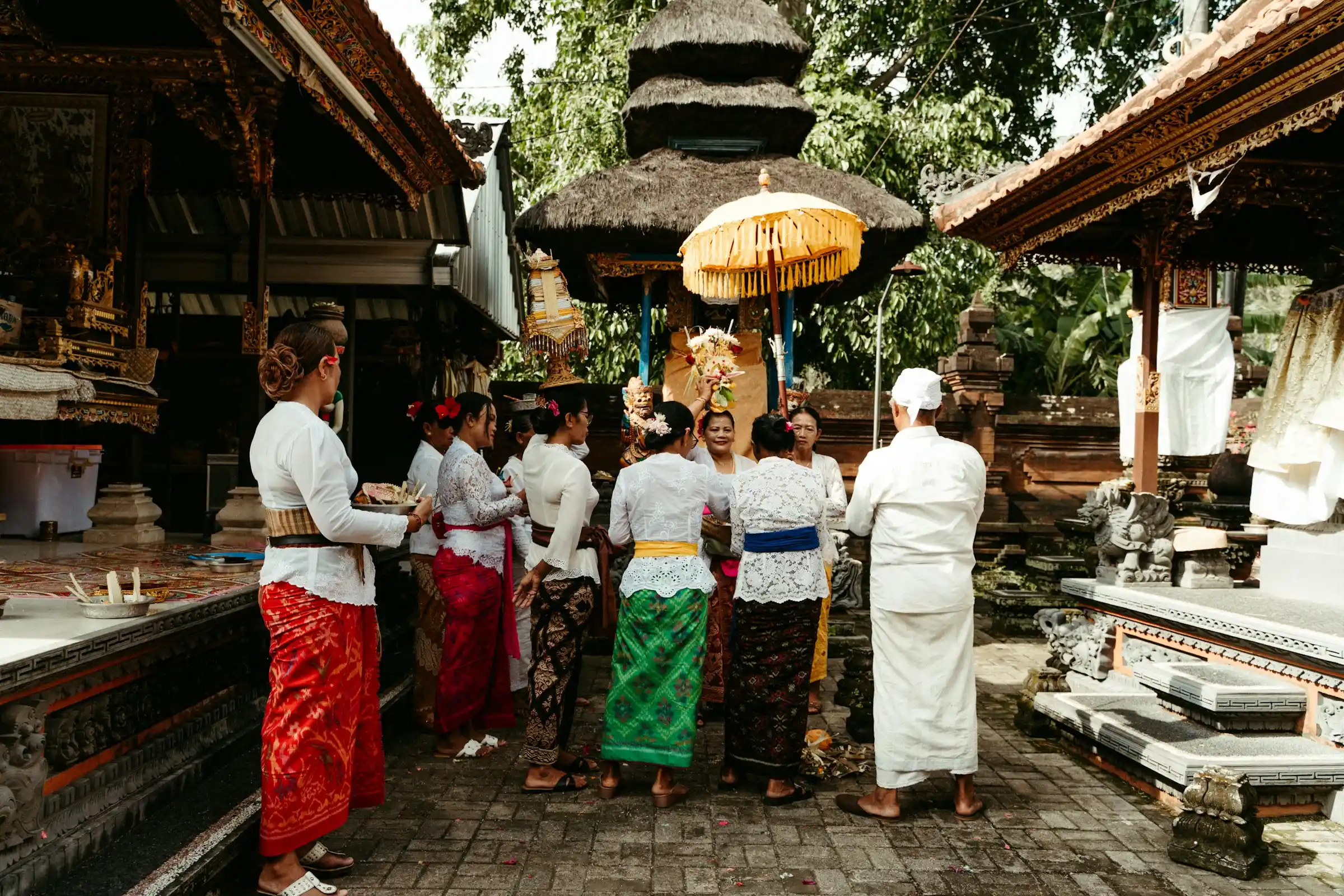
Two other rules are worth knowing. Menstruating women are traditionally asked not to enter the temple’s inner courtyards — this is a religious rule posted at most entrances, not a tourist regulation. And you should never climb on or pose disrespectfully in front of shrines and offerings. The daily canang sari offerings you will see on the ground are sacred; step around them.
South Bali and the Bukit Peninsula
Uluwatu Temple (Pura Luhur Uluwatu)
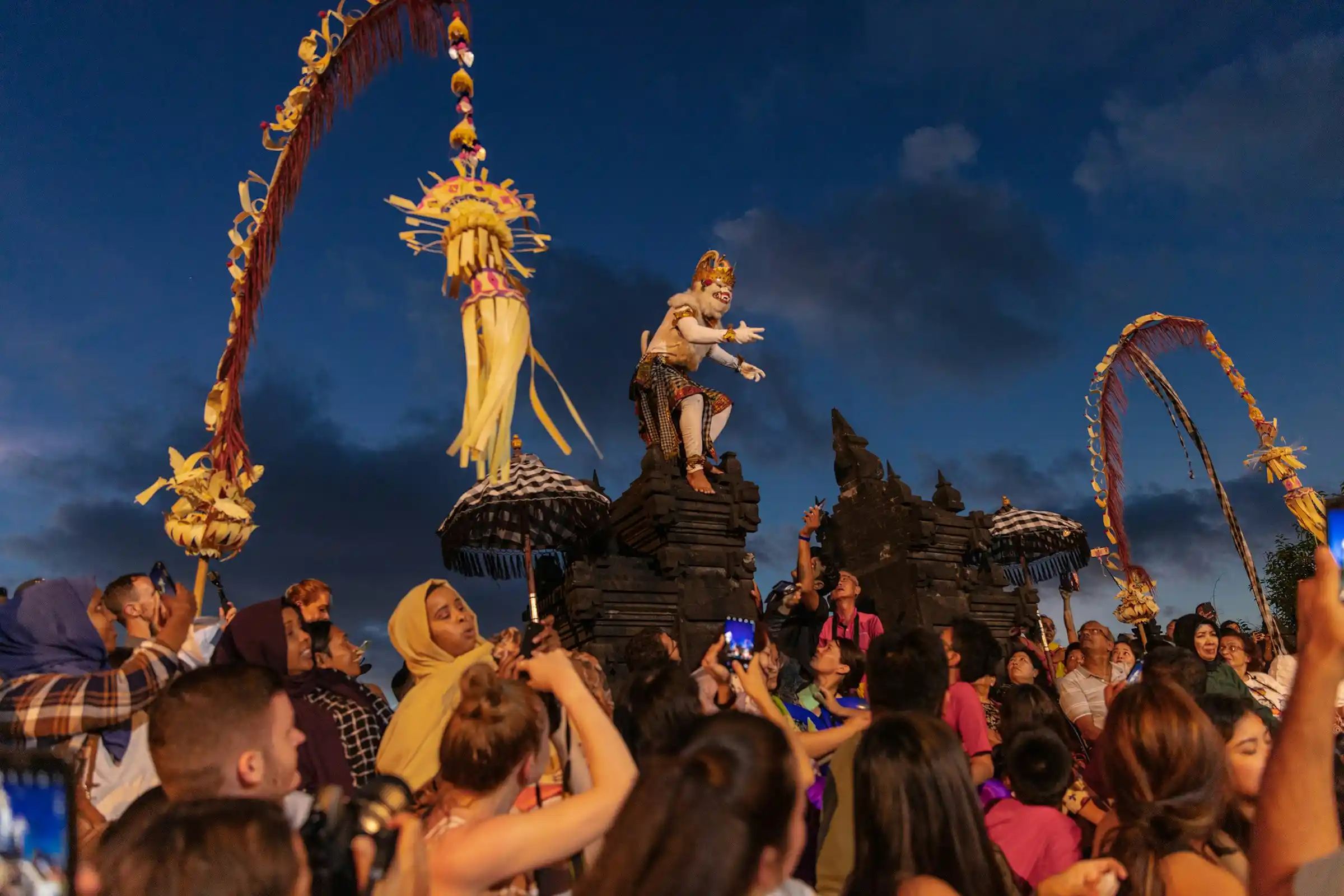
Uluwatu is the one to see if you see only one. The temple sits on a cliff about 70 metres above the Indian Ocean on the southwestern tip of the Bukit Peninsula, and it is one of Bali’s six sad kahyangan — the key directional temples that protect the island. Most people come for the late afternoon: the sunset here is the best temple view in Bali, and the nightly Kecak fire dance in the clifftop amphitheatre starts around 6 p.m. and finishes as the sun goes down. Watch your belongings — the resident macaques are notorious for snatching sunglasses and phones and trading them back for fruit. Full details are in our guide to Uluwatu Temple and the Kecak dance, and if you are coming from the main tourist areas, see how to get to Uluwatu.
Entry: around IDR 50,000 per adult, sarong included. Best time: 5 p.m. for sunset and the dance.
The west coast: sea temples at sunset
Tanah Lot
Tanah Lot is the postcard: a small temple perched on a wave-battered rock just offshore, framed by the sunset. It is in Tabanan regency, about 45 minutes northwest of Canggu. At low tide you can walk across the causeway to the base of the rock (you cannot enter the temple itself, which is reserved for worshippers); at high tide it is cut off and best admired from the clifftop paths. It is one of Bali’s most crowded sights at sunset, so arrive by late afternoon to find a good spot. Our Tanah Lot guide covers the tide timing in detail.
Entry: around IDR 75,000 per adult. Best time: check the tide table, then aim for the hour before sunset.
Taman Ayun
Halfway between Tanah Lot and Ubud, in Mengwi, Taman Ayun is a royal temple surrounded by a wide moat and formal gardens. It is part of the UNESCO-listed Subak cultural landscape and makes a calm, uncrowded stop — you admire the multi-tiered meru shrines from the garden paths rather than entering the inner sanctum. Pair it with Tanah Lot on a half-day loop.
Around Ubud: cave shrines and holy springs
Ubud, in the island’s cultural heartland, is the best base for temple-hopping. Four of the most rewarding sites are within an hour’s drive.
Goa Gajah (Elephant Cave)
Just southeast of Ubud at Bedulu, Goa Gajah is a 9th-to-11th-century site whose cave mouth is carved into a menacing face you step through to enter. Inside are small shrines; outside are ancient bathing pools fed by stone spouts, discovered only in the 1950s. It is compact, shaded, and easy to combine with the rice terraces at Tegalalang. See our Goa Gajah visitor guide for the layout and timing.
Tirta Empul
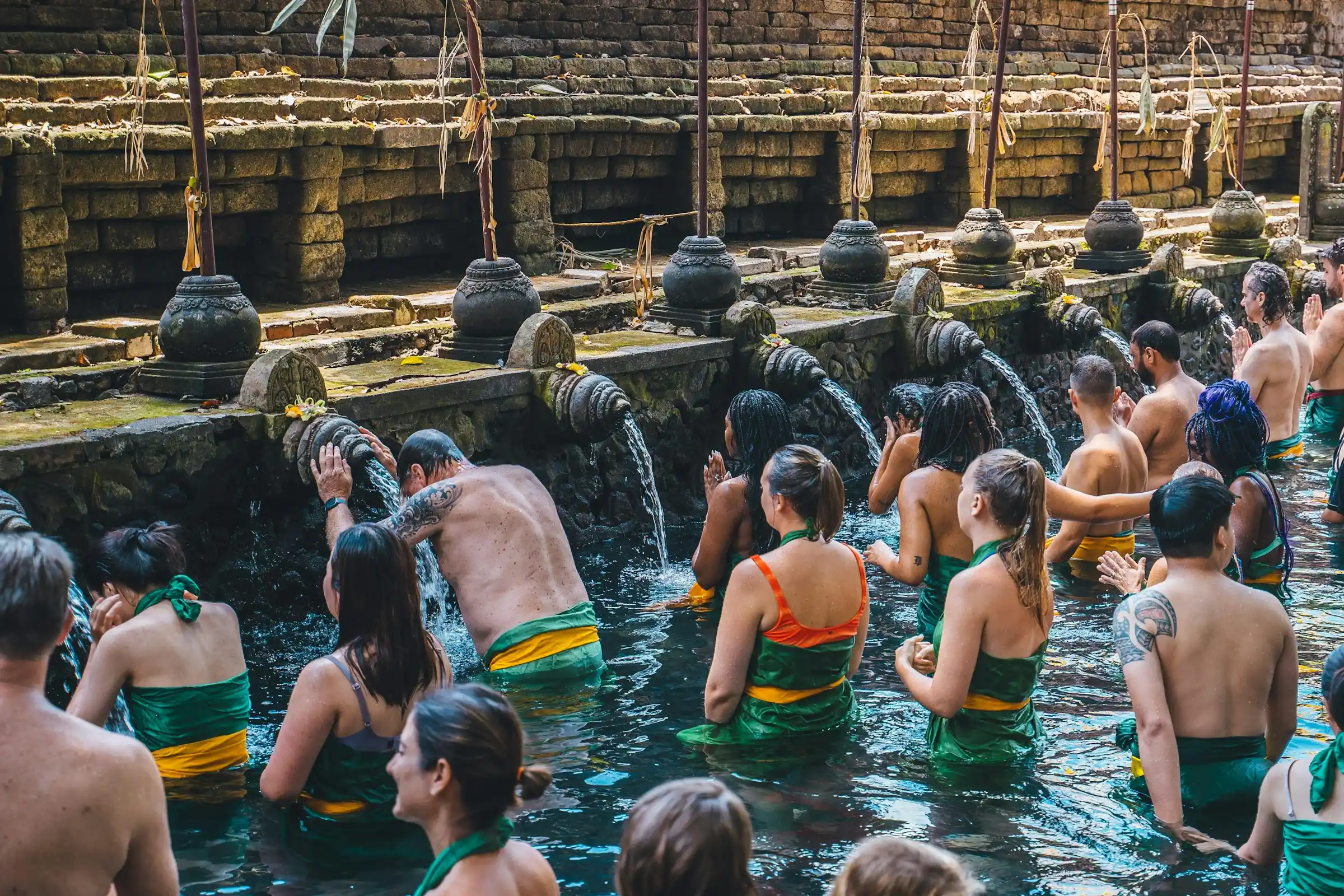
At Tampaksiring, north of Ubud, Tirta Empul is the island’s most famous water temple. Balinese Hindus come to bathe in its spring-fed pools in a purification ritual called melukat, moving along a line of carved spouts. Visitors can take part respectfully — bring a change of clothes and a dedicated sarong for the water. It is beautiful but busy; go at opening time (8 a.m.) to beat the tour buses.
Gunung Kawi Sebatu
A short drive from Tirta Empul, Gunung Kawi Sebatu is a garden water temple with koi ponds and purification pools that sees a fraction of the crowds. If Tirta Empul feels overwhelming, this is the quieter alternative for the same spring-temple experience. (Do not confuse it with Gunung Kawi in Tampaksiring, the rock-cut royal tombs nearby — a different, equally worthwhile site.) Our Gunung Kawi Sebatu guide explains the difference and how to visit both.
Saraswati Temple (Pura Taman Saraswati)
Right in central Ubud, a few steps from the royal palace, the Saraswati Temple is fronted by a long lotus pond and dedicated to the goddess of learning and the arts. Entry to the courtyard is free, and in the evening the forecourt hosts traditional dance performances. It is the easiest temple in this guide to reach — you can walk to it — and lovely in the morning before the lotus closes.
The highlands and the east
Ulun Danu Beratan
In the cool Bedugul highlands, about 90 minutes north of Ubud, Ulun Danu Beratan appears to float on Lake Bratan when the water is high. It is the temple on the 50,000-rupiah banknote and one of Bali’s most photographed. The mountain air is noticeably cooler and often misty, so bring a light layer. The gardens are extensive and the setting serene — a complete change of mood from the coastal temples.
Lempuyang (the Gates of Heaven)
In the far east, Pura Penataran Agung Lempuyang is home to the split gate that frames Mount Agung in the “Gates of Heaven” photo seen all over social media. Be ready for the reality: there is often a long queue (sometimes two to three hours) for the shot, and the mirror-like reflection in the photos is created by a staff member holding a phone with a reflective surface under the lens — there is no pool. It remains a striking spot, and the full temple complex climbs the slope above. Go early, and treat it as a working temple, not just a photo stop.
Besakih (the Mother Temple)
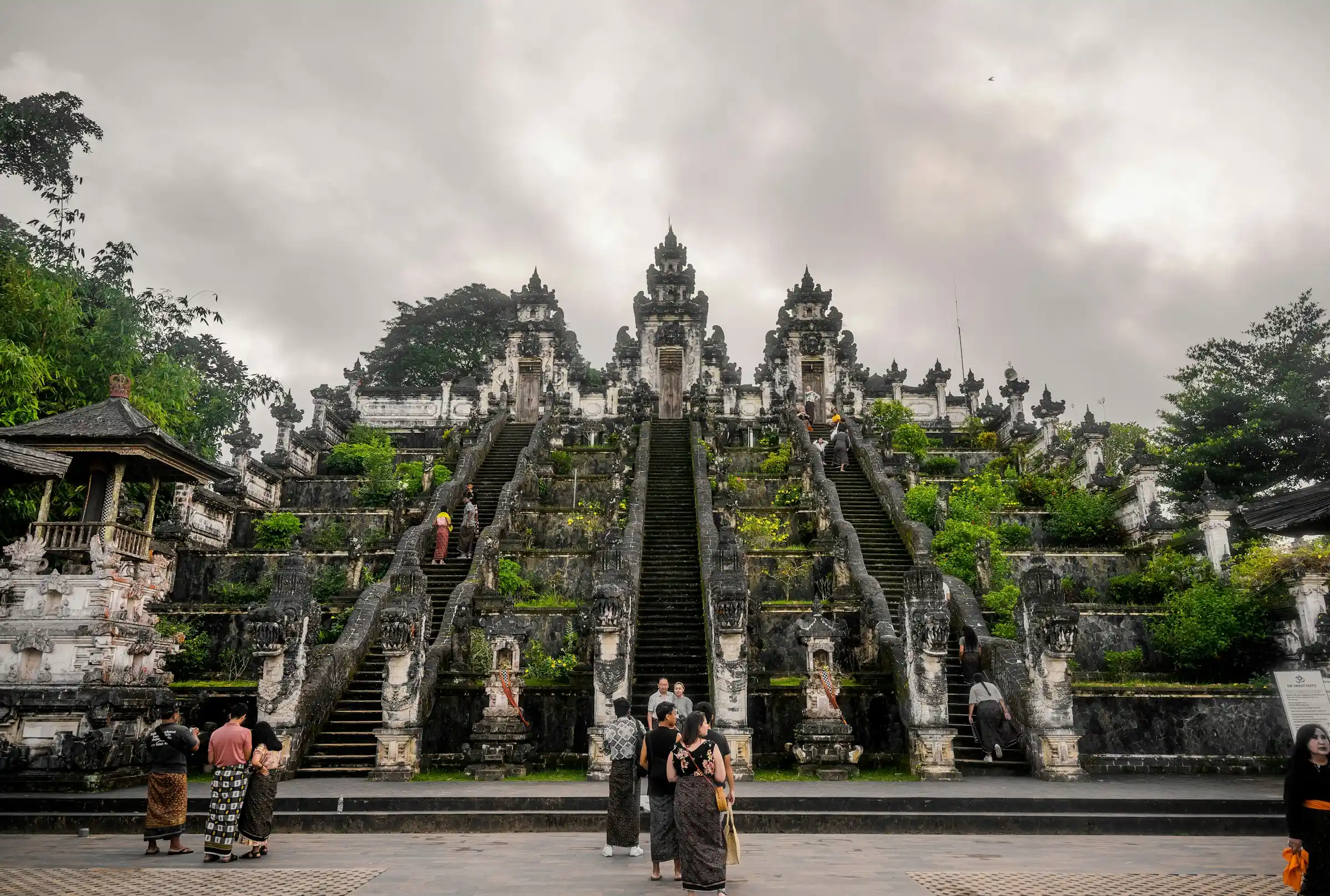
On the slopes of Mount Agung, Besakih is the largest and holiest temple complex in Bali — a sprawl of more than twenty temples that has been the island’s spiritual centre for over a thousand years. A major redevelopment completed in recent years added a visitor centre, and access now generally includes a mandatory guide and a shuttle buggy up to the complex, which has pushed the cost up. It is a long drive from the south (over two hours), so it suits a full-day trip, often combined with the east Bali route. Check current ticketing before you go, as the arrangements have changed.
Entrance fees at a glance
Prices are set locally and change often, so treat these as a guide and confirm at the gate. Most include sarong rental.
| Temple | Region | Approx. adult entry |
|---|---|---|
| Uluwatu | Bukit Peninsula | IDR 50,000 |
| Kecak dance (Uluwatu) | Bukit Peninsula | IDR 150,000 |
| Tanah Lot | Tabanan | IDR 75,000 |
| Taman Ayun | Mengwi | IDR 30,000 |
| Goa Gajah | Near Ubud | IDR 50,000 |
| Tirta Empul | Tampaksiring | IDR 75,000 |
| Gunung Kawi Sebatu | Near Tegallalang | IDR 25,000–50,000 |
| Saraswati (Ubud) | Central Ubud | Free |
| Ulun Danu Beratan | Bedugul | IDR 75,000 |
| Lempuyang | East Bali | IDR 10,000 + photo/shuttle fees |
| Besakih | Mount Agung | IDR 150,000 (incl. guide/buggy) |
How to fit them into a trip
You cannot sensibly see all twelve without a week of driving, and you would not want to — temple fatigue is real. A better plan is to pick by region and pair sites that are close together:
- A south-coast afternoon: Uluwatu for sunset and the Kecak dance, with lunch at a Bukit beach club beforehand.
- A west-coast sunset loop: Taman Ayun, then Tanah Lot timed to the tide and the sunset.
- An Ubud day: Goa Gajah, Tirta Empul and Gunung Kawi Sebatu in the morning, Saraswati in the evening for the dance.
- A highland or east day trip: Ulun Danu Beratan in the north, or Lempuyang and Besakih in the east — each is a full day from the south.
Getting between them almost always means a car and driver, a ride-hailing app, or a scooter. To compare what a taxi, Grab, Gojek or Bluebird will cost for each leg, use our taxi and ride-share fare estimator, which has Bali built in. For the rest of your planning, the travel budget calculator and our tap water safety checker are worth a look before you go, and if you are extending the trip, see our guide to Kuta Beach.
Frequently asked questions
What is the most famous temple in Bali?
Uluwatu and Tanah Lot are the two best known, both sea temples famous for their sunsets. Besakih, on the slopes of Mount Agung, is the largest and holiest, known as the Mother Temple. For a first visit, Uluwatu offers the most memorable combination of setting, sunset and the evening Kecak fire dance.
What should I wear to a Balinese temple?
You must cover your knees and shoulders and wear a sarong, usually with a sash around the waist. Major temples provide or rent a sarong, often included in the ticket. Avoid tight or revealing clothing. Menstruating women are traditionally asked not to enter the inner courtyards, a religious rule posted at the entrance.
How many temples should I visit in Bali?
Two or three well-chosen temples over a week is plenty for most visitors. Pick by region so you are not crossing the island repeatedly: a south-coast sunset at Uluwatu, a morning of water temples around Ubud, and one highland or east Bali day trip covers the highlights without temple fatigue.
Can tourists enter Bali temples?
Yes, visitors are welcome in the outer and middle courtyards of most temples as long as they are properly dressed and respectful. The innermost sanctum is usually reserved for worshippers, and some sites close to tourists during major ceremonies. At sea temples like Tanah Lot you view the shrine from outside rather than entering it.
Is the Gates of Heaven photo at Lempuyang real?
The gate is real, but the mirror-like reflection is not a pool of water. A staff member holds a phone with a reflective surface below the camera lens to create the effect. Expect a long queue, sometimes two to three hours, for the photo. The temple itself is a genuine and striking site worth visiting beyond the picture.