Most visitors to Bali’s water temples head straight for Tirta Empul, and find it packed with tour groups by mid-morning. A few kilometres away, Gunung Kawi Sebatu offers almost the same thing — spring-fed purification pools, koi ponds and tiered shrines in a garden setting — with a fraction of the crowds. If you want the holy-water temple experience without the queues, this is the one to choose. Here is what it is, how it differs from the other sites that share its name, and how to visit.
What Gunung Kawi Sebatu is
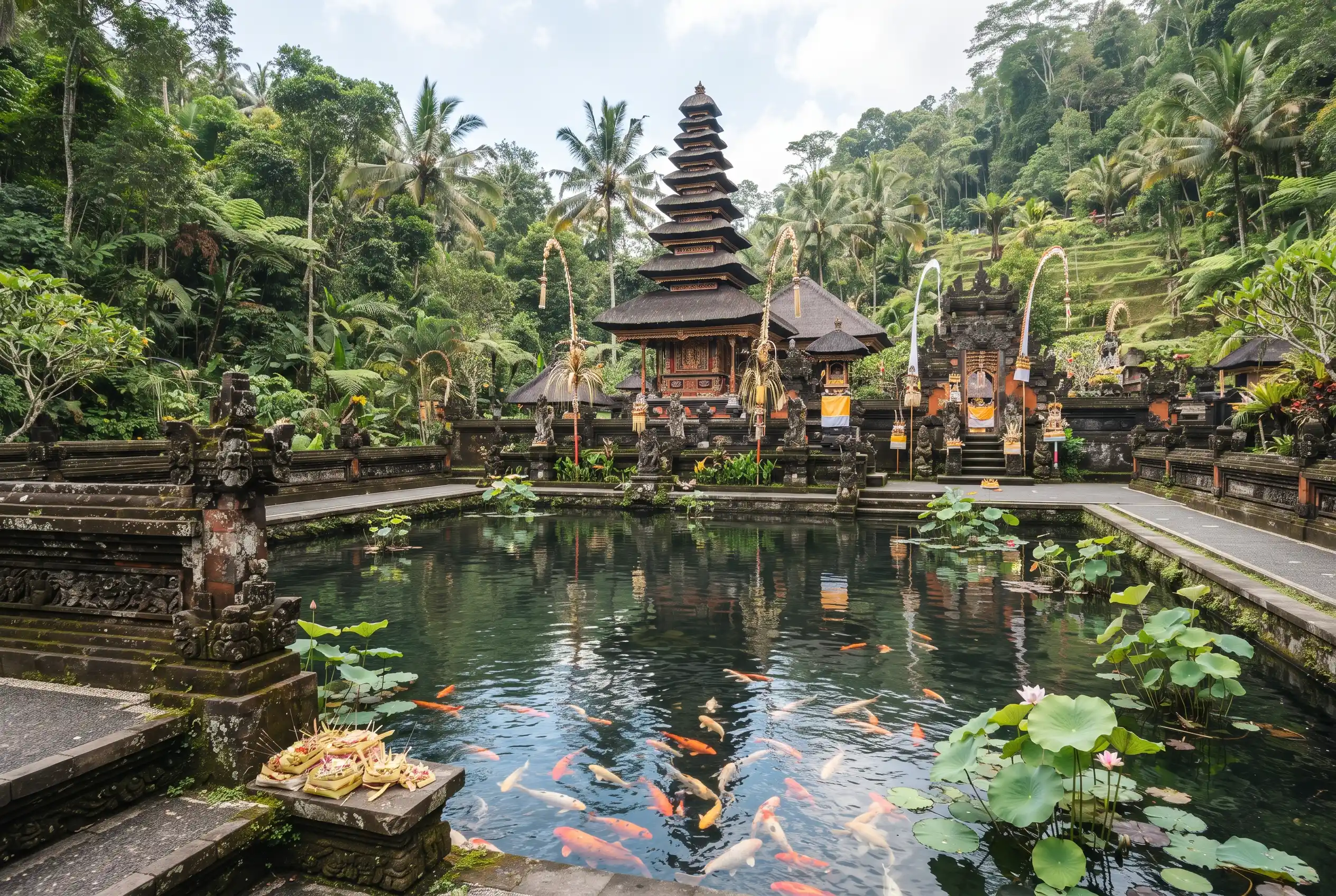
Pura Gunung Kawi Sebatu is a water temple in the village of Sebatu, in the hills north of Ubud near Tegallalang. Spring water rises within the temple and feeds a series of clear pools and ponds, with a bathing area used for melukat, the Balinese purification ritual. The grounds are compact and beautifully kept: lotus and koi ponds, moss-covered stone, and small shrines backed by jungle. It is a working temple with a steady trickle of local worshippers rather than a tourist crush, so the mood is calm.
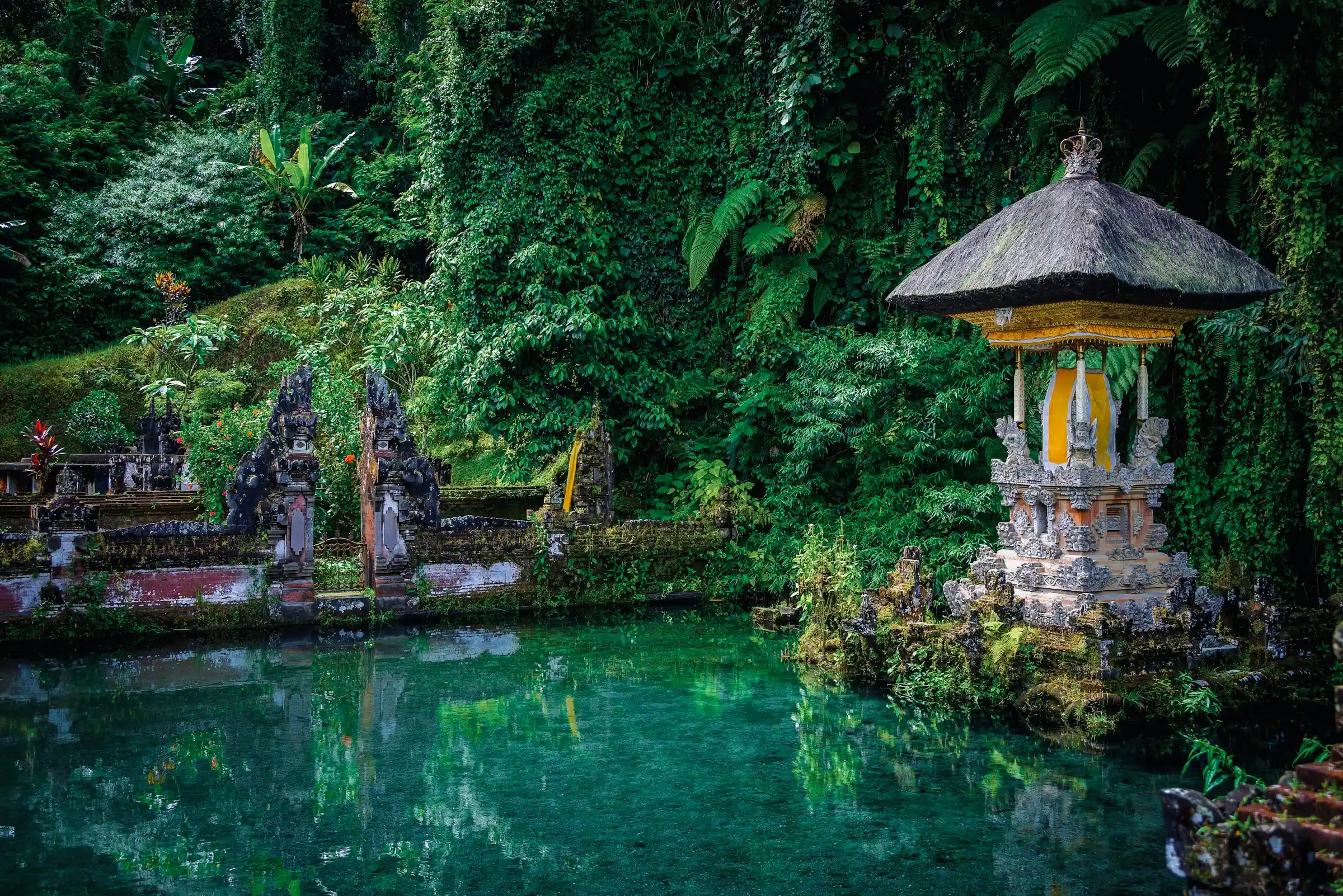
Clearing up the name confusion
Three different places near Ubud carry similar names, and it is easy to end up at the wrong one:
- Gunung Kawi Sebatu (this one) — the garden water temple in Sebatu village, with the purification pools.
- Gunung Kawi (Tampaksiring) — a separate, dramatic site a short drive away where huge shrines are carved directly into a rock cliff beside a river valley, reached down a long staircase through rice terraces. These are 11th-century royal memorials, not a water temple.
- Tirta Empul — the famous, crowded holy-spring temple, also near Tampaksiring.
All three are within about 20 minutes of each other, so you can comfortably combine the quiet water temple at Sebatu with the carved shrines at Tampaksiring in a single morning. Read our complete Bali temples guide for how they fit into a wider route.
The purification ritual (melukat)
Melukat is a cleansing ritual in which you bathe and move along a line of water spouts, pausing to pray and let the spring water run over your head. Visitors are welcome to take part respectfully, and it is a quieter, less self-conscious experience here than at Tirta Empul. If you want to bathe:
- Wear or bring a sarong to enter the water (a separate wet one, not your dry temple sarong).
- Bring a change of clothes and a towel.
- Follow the spouts in order and watch what local worshippers do.
- Keep phones and cameras away from the bathing area unless photography is clearly permitted.
If you only want to look, that is fine too — the gardens are worth the visit on their own.
How to visit
Getting there: Sebatu is about 30 to 40 minutes north of central Ubud by car or scooter, past the Tegallalang rice terraces. There is no public transport; use a ride-hailing app, a private driver, or a scooter. To estimate the fare from Ubud or elsewhere, our taxi and ride-share fare estimator has Bali rates.
Entry: a modest donation of roughly IDR 25,000 to 50,000, with sarong available at the entrance. Best time: early morning, both for the light and to have the pools to yourself before any tour groups arrive. Allow 45 minutes to an hour.
Dress: the usual temple rules — covered shoulders and knees, sarong and sash. If you plan to bathe, pack accordingly.
Frequently asked questions
What is the difference between Gunung Kawi Sebatu and Tirta Empul?
Both are water temples near Ubud with spring-fed purification pools. Tirta Empul is the larger and far more famous of the two and is often very crowded with tour groups. Gunung Kawi Sebatu, a few kilometres away in Sebatu village, offers a similar experience in a quieter garden setting with a fraction of the visitors.
Is Gunung Kawi Sebatu the same as Gunung Kawi in Tampaksiring?
No. Gunung Kawi Sebatu is a garden water temple with purification pools. Gunung Kawi in Tampaksiring is a separate site a short drive away where large shrines are carved into a rock cliff beside a river valley, reached by a staircase through rice terraces. They share a name but are different places, and both are worth visiting.
Can tourists do the melukat purification ritual?
Yes, visitors are welcome to bathe respectfully. Wear a wet sarong in the water, bring a change of clothes and a towel, follow the spouts in order, and watch what local worshippers do. If you prefer only to look, the gardens and ponds are worth the visit on their own.
How much does Gunung Kawi Sebatu cost?
Entry is a modest donation of roughly IDR 25,000 to 50,000, with a sarong available at the entrance. Prices are set locally and can change, so confirm at the gate. It is far cheaper and quieter than the better-known water temples nearby.