Thai culture is one of the easiest in Asia to enjoy and one of the easiest to get wrong without meaning to. Thailand welcomes more than 35 million visitors a year, yet a few of its deepest customs stay invisible to outsiders until the moment you break one. This guide explains what Thai culture is built on, how Buddhism shapes daily life, the meaning of the wai, how to behave at temples, and the social and dining habits that will mark you out as a respectful guest rather than a careless tourist.
The three pillars: nation, religion, monarchy
Thai identity rests on three ideas that Thai people refer to constantly: the nation, the religion, and the monarchy. The three colours of the Thai flag stand for exactly these. Understanding them explains almost every custom you will meet. Buddhism sets the moral and daily rhythm, the monarchy is held in genuine reverence (and is protected by strict law), and a shared sense of being Thai, often called Thainess, ties the two together. Thailand was never colonised by a European power, and that unbroken history is a real source of national pride.
Buddhism in everyday life
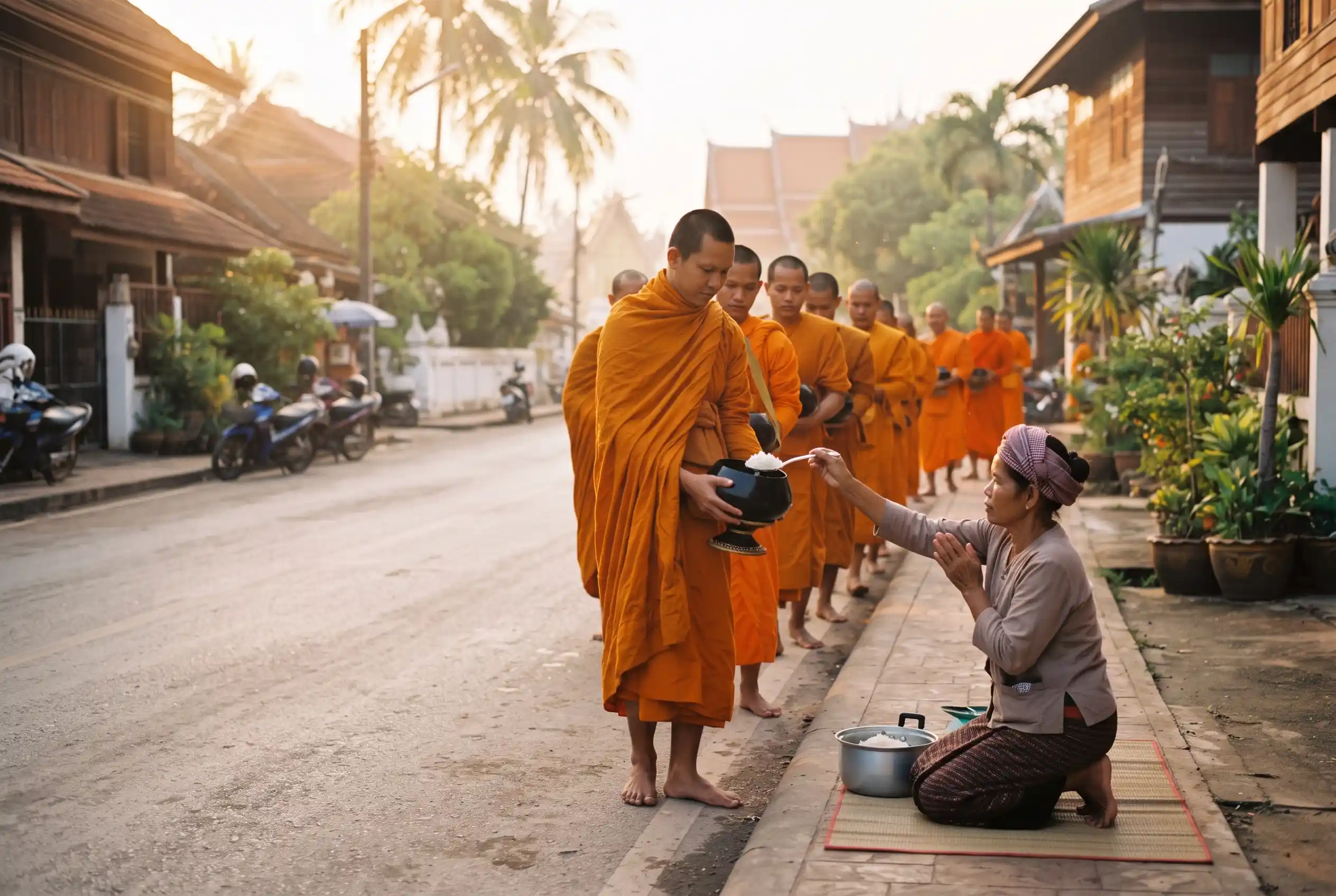
About 93 percent of Thai people follow Theravada Buddhism, and its presence is constant rather than reserved for special days. Spirit houses sit outside homes, shops, and even skyscrapers, with daily offerings of flowers, incense, and sometimes a bottle of strawberry soda. Orange robed monks collect alms on foot at dawn, and many Thai men still ordain as monks for a short period at least once in their lives. You do not need to be Buddhist to take part respectfully. If you receive a blessing or watch an alms round, stand quietly, keep your head lower than the monk where you can, and do not point your feet or your camera flash at anyone praying.
One rule matters more than any other for travellers: women should never touch a monk or hand anything directly to one. If a woman needs to give something to a monk, she places it down or passes it through a man or a cloth the monk provides.
The wai: how Thai people greet
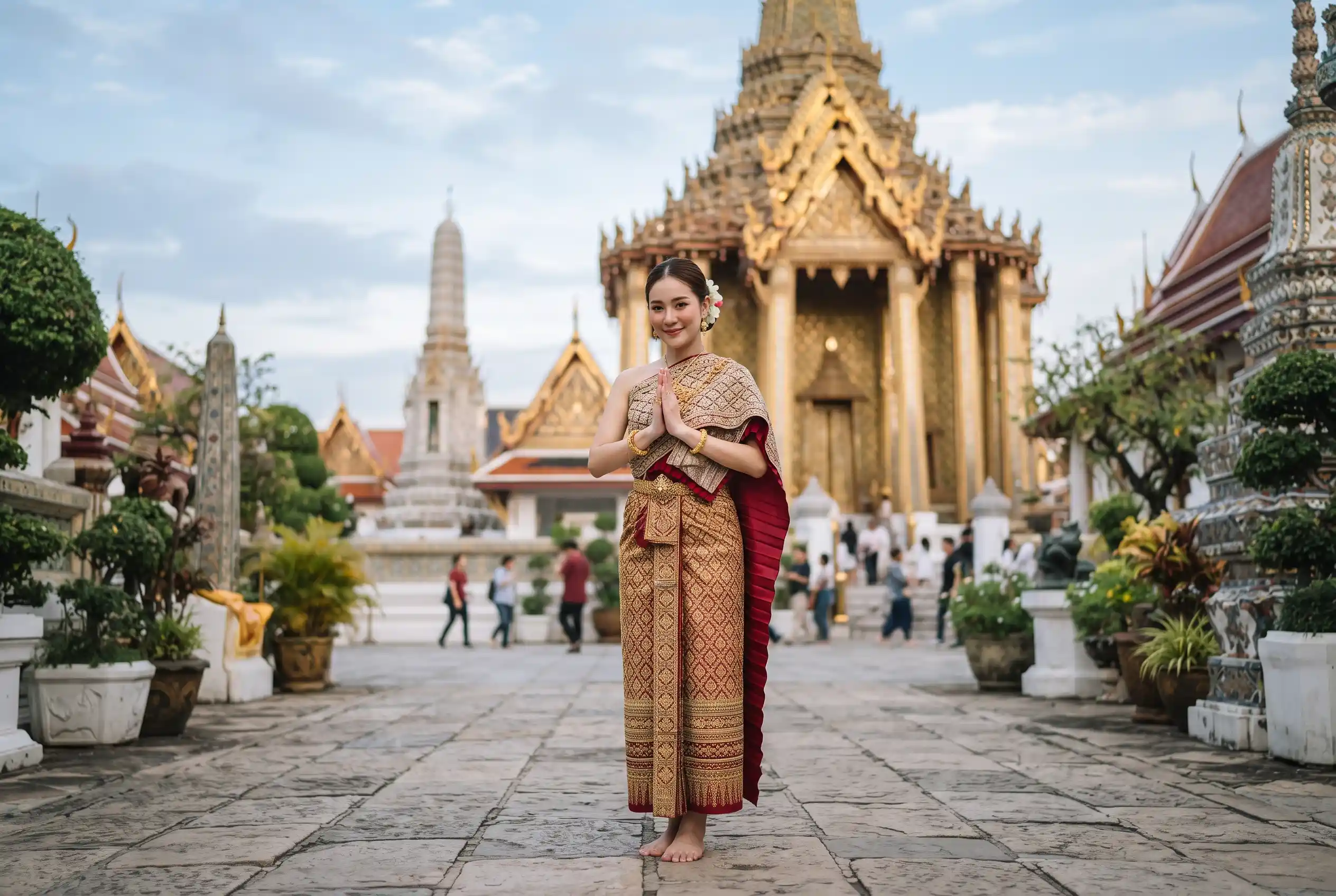
The wai is the palms together, slight bow greeting you will see everywhere. It is a greeting, a thank you, and a sign of respect all at once. The higher the hands and the lower the head, the more respect is shown. As a visitor you are not expected to start a wai with service staff or children, and you never need to wai someone younger than you. The safe approach is simple: if someone wais you first, return it with your hands at chest or chin height and a small nod. Returning a shopkeeper’s wai with a cheerful handshake or a hug will feel odd to them, so mirror what you are given.
Temple etiquette that actually matters
Temples, called wat, are active places of worship, not photo backdrops. The dress code is strict and enforced at major sites such as the Grand Palace and Wat Pho in Bangkok. Shoulders and knees must be covered, for men and women alike. Bring a light scarf or a sarong you can wrap over shorts, because rental cover ups at the gate are not always available and often cost extra. The same instinct for covering up applies at temples across the region, which we cover in our guide to visiting Bali’s temples.
Inside a temple, remember a short list that solves almost every situation. Remove your shoes before entering any building that holds a Buddha image. Never climb on a Buddha statue or turn your back to one for a photo. Sit with your feet tucked behind you rather than pointing at the altar, because the feet are considered the lowest and least clean part of the body. Keep your voice down, and switch your phone to silent.
Buddha images are sacred objects, not souvenirs or decoration. Thai law treats them as such, and taking a large Buddha head or statue out of the country without a licence from the Department of Fine Arts can lead to serious trouble at the airport. Tattoos of the Buddha on the lower body are also considered offensive.
Social customs: face, kreng jai, and sanuk
Three words unlock how Thai people handle one another. The first is the idea of face, meaning public dignity. Raising your voice, showing open anger, or making someone look foolish in front of others is seen as a loss of control and causes everyone present to lose face, including you. A calm smile and a quiet word get results that shouting never will.
The second is kreng jai, a reluctance to impose on others or cause them trouble. It is why a Thai person may say yes to avoid disappointing you, or avoid giving bad news directly. The third is sanuk, the belief that life and work should contain fun. You will notice it in the easy humour of markets and kitchens. A related phrase, mai pen rai, roughly means never mind or no worries, and it is the local answer to most small setbacks. Mirror that lightness and travel gets smoother.
One subject is never treated lightly: the monarchy. Speaking critically of the king or the royal family is both deeply offensive and illegal under strict lese majeste laws. Stand when the royal anthem plays in cinemas, and treat coins and banknotes carefully, since they carry the king’s image and stepping on them to stop a rolling note is taken badly.
Festivals that reveal Thai culture
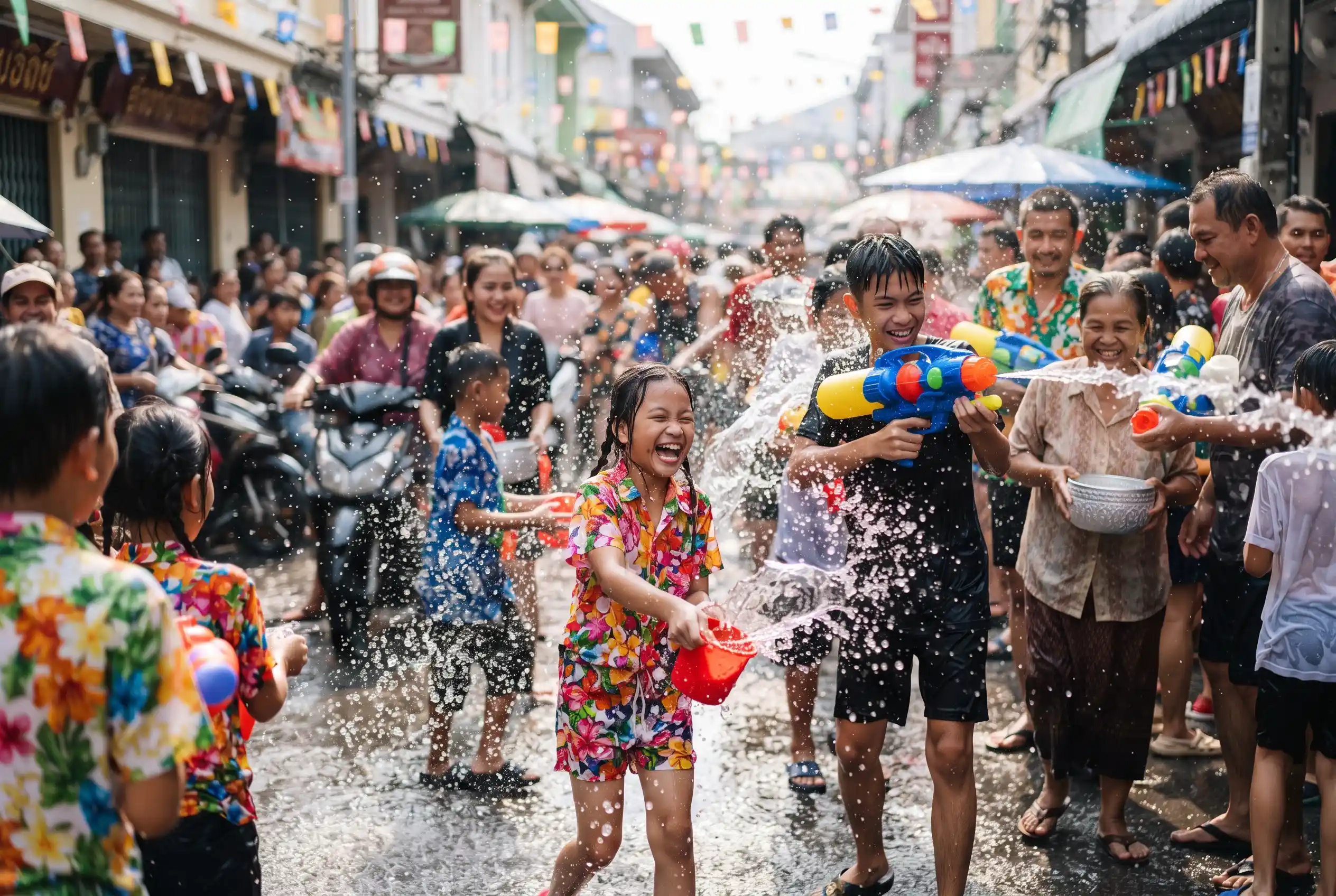
Thai festivals are the clearest window into the culture, and two are worth planning a trip around. Songkran, the Thai new year in mid April, began as a gentle ritual of pouring water over Buddha images and the hands of elders, and has grown into the world’s biggest water fight across Chiang Mai, Bangkok, and beyond. Loy Krathong, on the full moon of the twelfth lunar month, usually November, sees people float small decorated baskets of flowers and candles on rivers and ponds to release bad luck. In the north it overlaps with Yi Peng, when thousands of paper lanterns rise into the sky over Chiang Mai. These are religious events first and parties second, so join in with respect.
Food culture and table manners
Eating in Thailand is social and shared. Dishes arrive together in the middle of the table, and everyone takes small amounts onto their own plate of rice rather than loading up at once. The fork is used to push food onto the spoon, and the spoon does the eating. Chopsticks are reserved mainly for noodle dishes. It is polite to leave a little food on your plate to show you were well fed, and to let a Thai host or the eldest person begin first.
Street food is the heart of the national diet, not a lesser option, and some of the best meals in the country cost a dollar or two. If you are nervous about what is safe to drink alongside it, our tap water safety checker covers Thailand and most other countries.
Tipping and money etiquette
Thailand is not a strong tipping culture, which surprises some visitors. Rounding up a taxi fare or leaving the loose change from a restaurant bill is normal and appreciated, but there is no expectation of 15 or 20 percent. Smarter hotels and restaurants often add a 10 percent service charge, in which case nothing more is needed. For a country by country breakdown you can use our global tipping calculator before you go.
Quick cultural dos and don’ts
- Do dress modestly at temples and royal sites, with shoulders and knees covered.
- Do return a wai with your hands at chest height and a small nod.
- Do take your shoes off before entering homes and temple buildings.
- Do keep calm and smile when something goes wrong.
- Don’t touch anyone’s head, the most sacred part of the body, even a child’s.
- Don’t point your feet at people, Buddha images, or photos of the king.
- Don’t say anything negative about the monarchy.
- Don’t lose your temper in public or raise your voice to staff.
For a wider picture of the region and when to go, see our guides to Phi Phi Island and the monsoon season in neighbouring Vietnam. If you want to understand the Buddhist architecture you will keep meeting across Southeast Asia, the Tourism Authority of Thailand and the UNESCO listing for the historic city of Ayutthaya are both good next reads.
Frequently asked questions
What is Thai culture known for?
Thai culture is known for Theravada Buddhism, deep respect for the monarchy, the palms together wai greeting, ornate temples, a famous street food scene, and a relaxed outlook summed up by the words sanuk (fun) and mai pen rai (no worries). Festivals like Songkran and Loy Krathong are among its best known expressions.
What should tourists not do in Thailand?
Do not touch anyone’s head, point your feet at people or Buddha images, show disrespect to the monarchy, lose your temper in public, or wear revealing clothing at temples. Women must not touch monks. Treat Buddha images and Thai banknotes, which carry the king’s image, with care.
How do you show respect in Thailand?
Show respect by returning the wai when it is offered, dressing modestly at sacred sites, removing your shoes indoors, keeping your voice calm, and letting elders or hosts lead. A quiet, smiling manner is read as good character across Thailand.
Is Thailand a Buddhist country?
Yes. About 93 percent of Thai people follow Theravada Buddhism, and it shapes daily life through temples, alms rounds, spirit houses, and festivals. There are also Muslim, Christian, and Hindu communities, with Islam most common in the far south.
What are the main traditions in Thailand?
Core traditions include the wai greeting, temple worship and merit making, short term ordination as a monk, Songkran water blessings for the Thai new year, and floating krathong baskets during Loy Krathong. Shared meals and respect for elders and the monarchy run through all of them.