The Sigiriya Rock Fortress rises almost 200 metres straight out of the central Sri Lankan plain, and for a few years in the 5th century it was the royal capital of a king who had every reason to want a palace no one could reach. Today it is the most famous single sight in the country, known for its gravity defying location, its ancient frescoes of court maidens, the polished mirror wall, and the giant lion’s paws that guard the final climb. This guide covers the history, what you see on the way up, the climb itself, tickets and hours, and the best time to go.
The story of King Kashyapa
Sigiriya’s history is a palace drama. Around 477 AD, Prince Kashyapa seized the throne of Anuradhapura from his father, King Dhatusena, and had him killed. Fearing revenge from his half brother Moggallana, the rightful heir who had fled to India, Kashyapa moved his capital to this isolated rock and spent years turning it into a fortified royal city. He built a palace on the summit, laid out water gardens at the base, and decorated the rock face with paintings. When Moggallana finally returned with an army around 495 AD, Kashyapa came down to fight on the plain, was defeated, and took his own life. After that the site became a Buddhist monastery for several centuries before being abandoned to the jungle. UNESCO added Sigiriya to the World Heritage list in 1982.
The gardens at the base
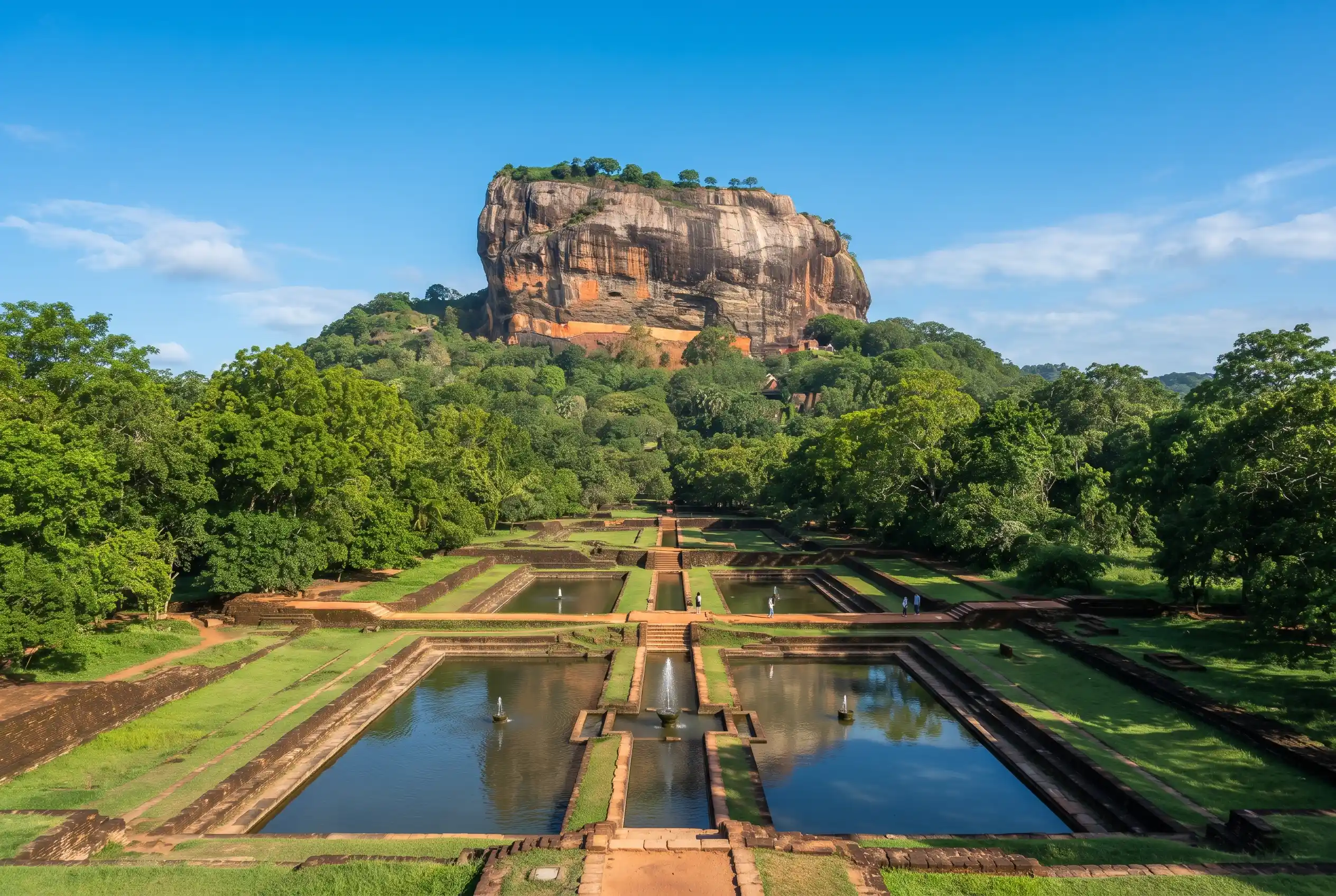
The visit begins long before the climb. The western approach runs through one of the oldest landscaped gardens in the world, with symmetrical water gardens, fountains that still work in the wet season using 1,500 year old hydraulics, and a boulder garden of huge rocks that once held pavilions. Give this part real time rather than rushing to the steps, because the layout is a large part of what makes Sigiriya a World Heritage Site rather than just a viewpoint.
The frescoes and the mirror wall
About halfway up, a metal spiral staircase leads to a sheltered pocket in the rock face that holds the famous Sigiriya frescoes: painted women, often called the Sigiriya maidens or apsaras, their colours still rich after 1,500 years. Historians think as many as 500 once covered the rock. Around 22 survive today. Photography is not allowed in the fresco pocket, so enjoy them with your eyes.
Just beyond is the mirror wall, a parapet once polished so smooth that the king could see his reflection in it. For centuries, visitors scratched verses and comments into it, and these graffiti, some more than a thousand years old, are now studied as early Sinhala writing. You are asked not to touch it, as the surface is fragile.
The Lion Gate and the summit
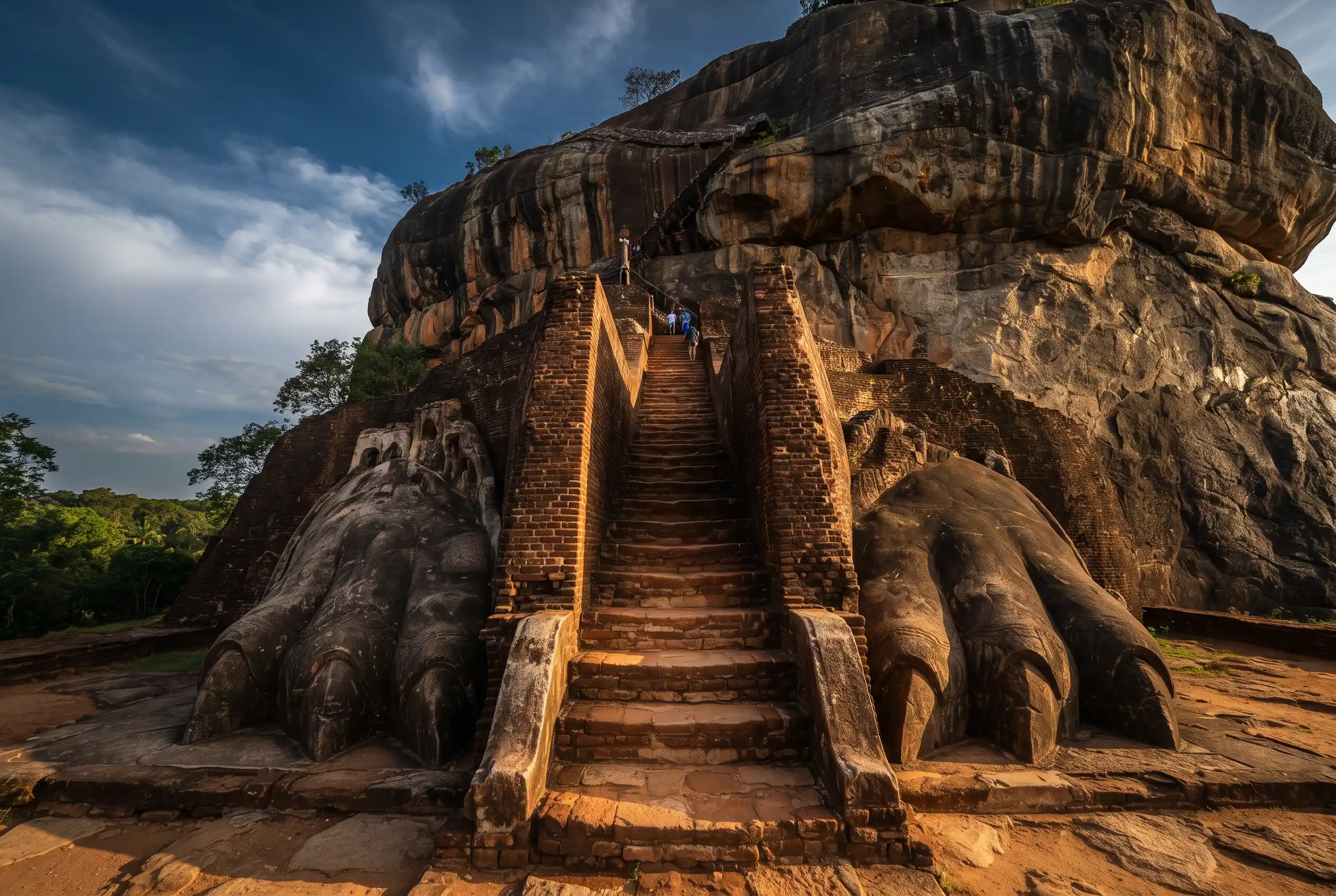
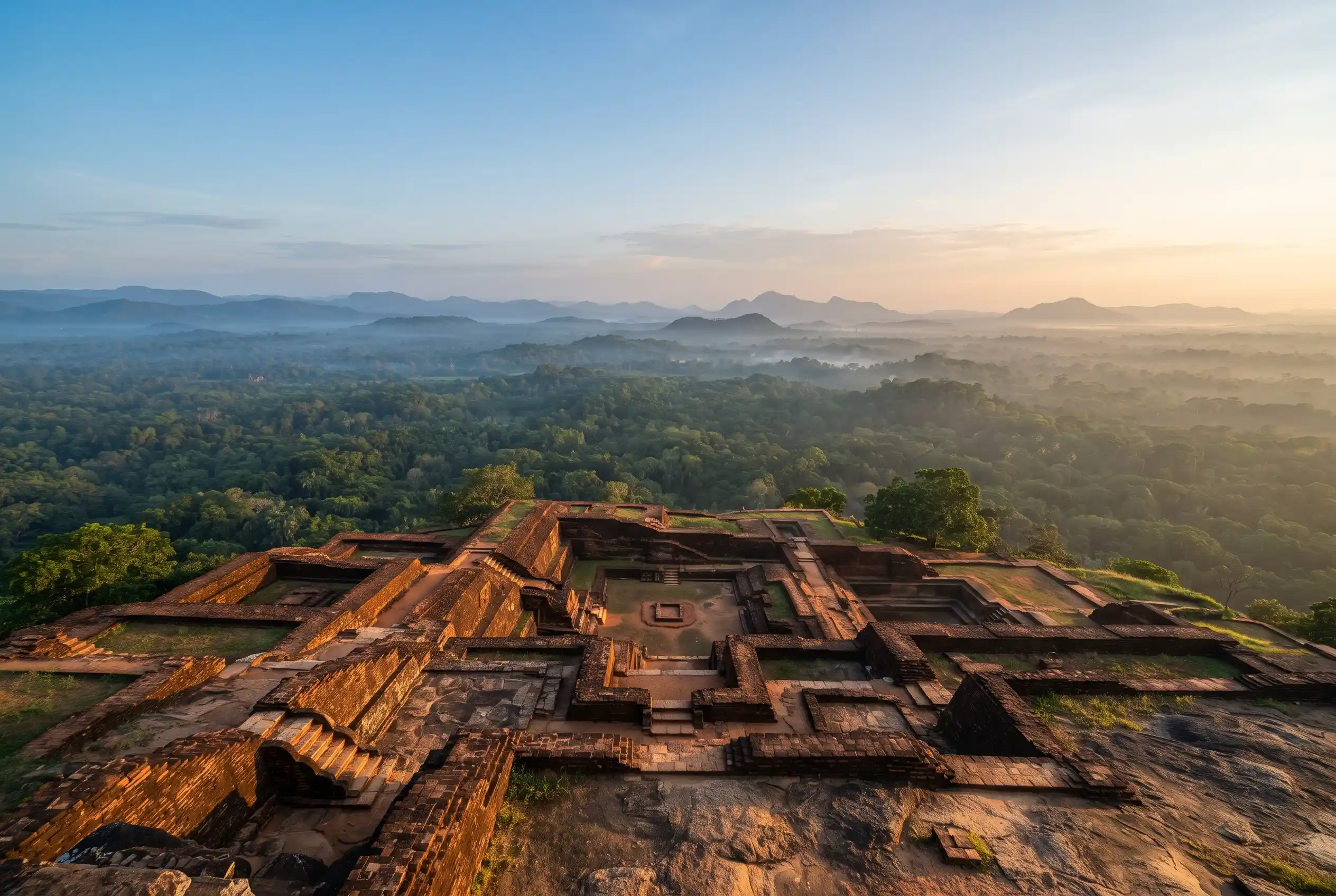
The rock gets its name, Sinhagiri or Lion Rock, from the enormous lion that once framed the final staircase. Today two giant carved paws remain on either side of the steps, and in Kashyapa’s time climbers walked up into the mouth of a brick and plaster lion. From here a series of steep stairways, some bolted to the rock face, lead to the flat summit. At the top are the foundations of the royal palace, cisterns cut into the rock, and a bathing pool, spread across a surprisingly large area with a full 360 degree view over the jungle. The neighbouring Pidurangala Rock, visible to the north, is where many people climb for the classic photo of Sigiriya itself.
The climb: what to expect
The ascent is around 1,200 steps and about 200 metres of height gain. Most people take 1.5 to 3 hours for the full round trip, including time at the frescoes and the summit. It is not a technical climb, but the metal staircases are exposed and can feel airy, and the stone bakes in the sun. A few practical notes: hornets occasionally nest near the upper stairs and signs ask for quiet in those sections, go slowly and do not disturb them. Wear proper shoes, carry water, and use sun protection. Our packing list tool is a quick way to make sure the sun hat and water bottle make it into your bag.
Tickets, hours, and getting there
The entrance fee for foreign adults is around 30 US dollars, paid in rupees at the gate, and the ticket includes the small but good museum near the entrance. The site opens at 7 am, with last entry in the late afternoon, so an early start beats both the heat and the tour buses. Sigiriya sits in the Cultural Triangle, about 24 km from Dambulla and within easy reach of Kandy and Colombo by car. Most travellers pair it with the Dambulla Cave Temple, climbing Sigiriya at dawn and visiting the caves later in the day.
Best time to visit
Aim for the drier months of May to September, and for the first entry slot at 7 am whatever the season. Early morning gives you cooler stone, softer light on the frescoes, and a summit that is not yet crowded. Allow half a day in total with the gardens and museum. For official details, see the UNESCO listing for the Ancient City of Sigiriya and the Sri Lanka Tourism board. If you are mapping out the wider island, remember the climb is strenuous, so check the tap water safety guide and stay well hydrated.
Frequently asked questions
How many steps to climb Sigiriya?
The climb is roughly 1,200 steps and about 200 metres of height gain. Most visitors take 1.5 to 3 hours for the round trip, including stops at the frescoes and the summit palace ruins.
How much is the Sigiriya entrance fee?
The ticket for foreign adults is around 30 US dollars, paid in Sri Lankan rupees at the gate, and it includes the on site museum. Bring cash, as card payment is not always available.
Who built Sigiriya and why?
King Kashyapa built Sigiriya in the late 5th century AD as a fortified royal capital after seizing the throne and killing his father. He chose the isolated rock for safety from his rival half brother Moggallana. After Kashyapa’s death the site became a Buddhist monastery.
What is the best time to climb Sigiriya?
Arrive for the 7 am opening, especially from May to September. Early morning means cooler rock, better light on the frescoes, and far fewer crowds than the middle of the day when tour buses arrive.
Is Sigiriya or Pidurangala better?
They offer different things. Sigiriya has the history, gardens, frescoes, and palace ruins. The neighbouring Pidurangala Rock is a cheaper, rougher climb that gives the best view of Sigiriya itself. Many travellers do both, Sigiriya for the site and Pidurangala for the photo.