Bangkok was once a city of canals, and its floating markets are the last living echo of that. Vendors in wooden boats sell fruit, noodles, and grilled seafood from the water, and a visit is one of the most photogenic half days you can have near the city. The catch is that the markets are very different from one another, and the most famous is also the most touristy. This guide explains what each of the main floating markets is like, how to reach them, and how to pick the one that fits your trip.
What a floating market is
A floating market is simply a market held on a canal, or khlong, where traders sell from boats or from stalls along the water’s edge, and customers browse from the bank or from a hired paddle boat. They date from the time when the canals were Bangkok’s main roads. Most of the markets now run mainly at weekends and mornings, so timing your visit matters as much as choosing which one to see.
Damnoen Saduak: the famous one
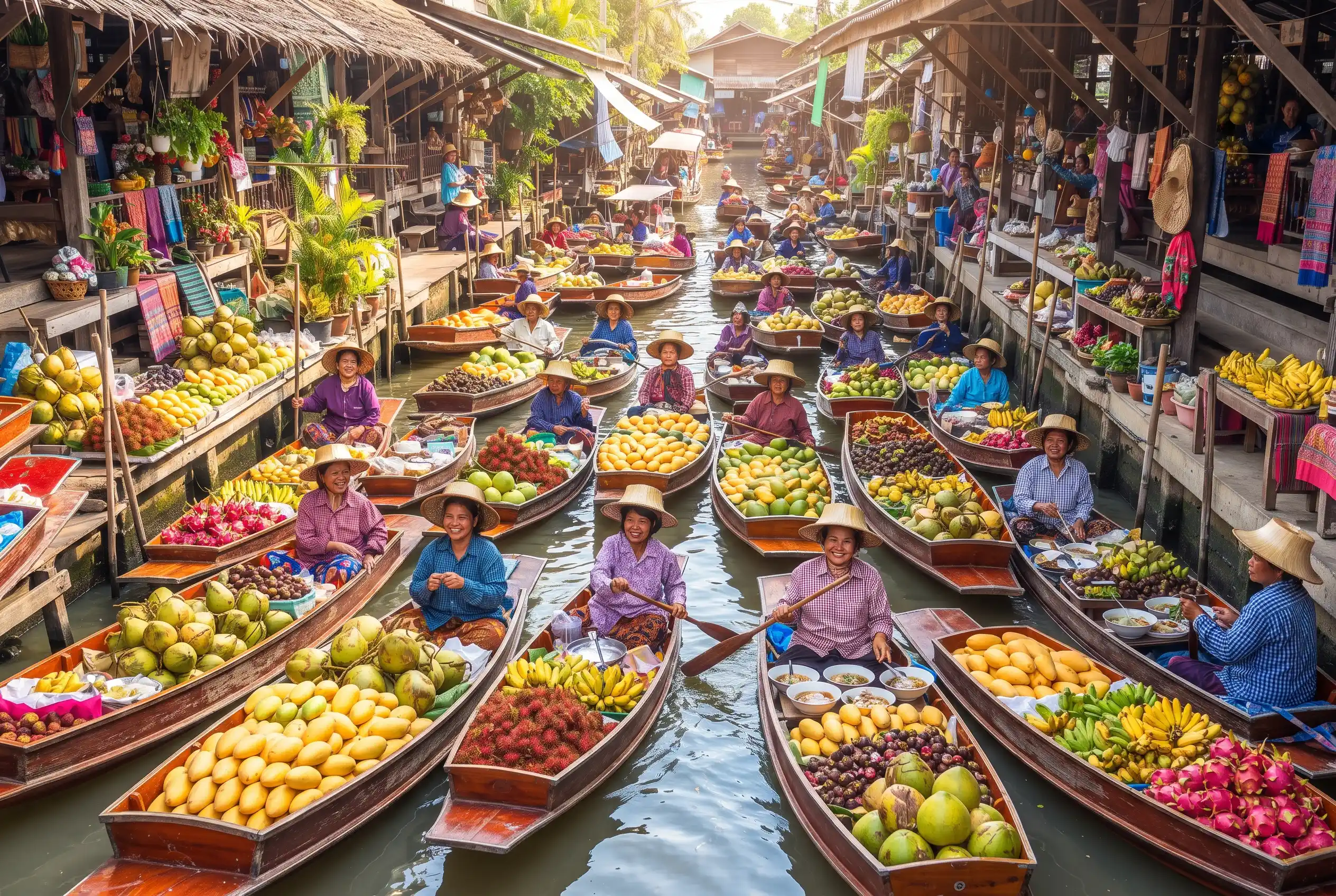
Damnoen Saduak, about 100 km southwest of Bangkok in Ratchaburi, is the market from the postcards: narrow canals packed with boats piled high with tropical fruit and vendors in straw hats. It is the biggest and most colourful, and also the most commercial and crowded, with prices to match. To enjoy it, arrive as early as you can, ideally by 7 to 8 am, before the tour buses, and be ready to haggle. A paddled boat tour of the canals costs extra and is the classic way to see it.
Amphawa: the local favourite
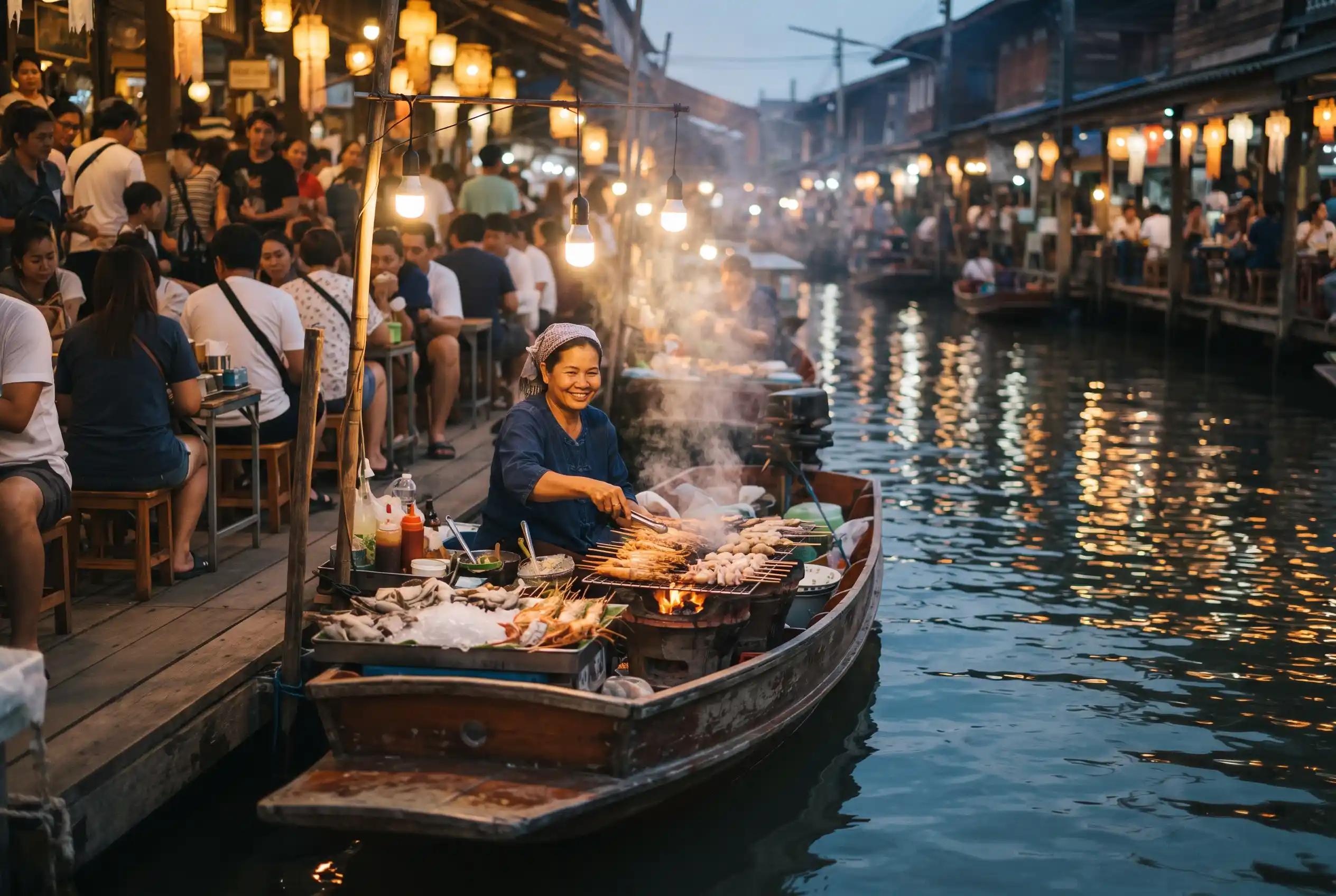
Amphawa, around 50 km from the city in Samut Songkhram, is where Thai visitors go, and it has a very different feel. It runs mainly on Friday, Saturday, and Sunday afternoons into the evening, and the draw is food, especially seafood grilled on boats and eaten on the steps by the canal. After dark you can take a boat tour to watch fireflies in the riverside trees. It is more relaxed and more authentic than Damnoen Saduak, and it pairs well with the nearby Maeklong railway market, where stalls pack up each time a train passes through.
Taling Chan and Khlong Lat Mayom: close to the city
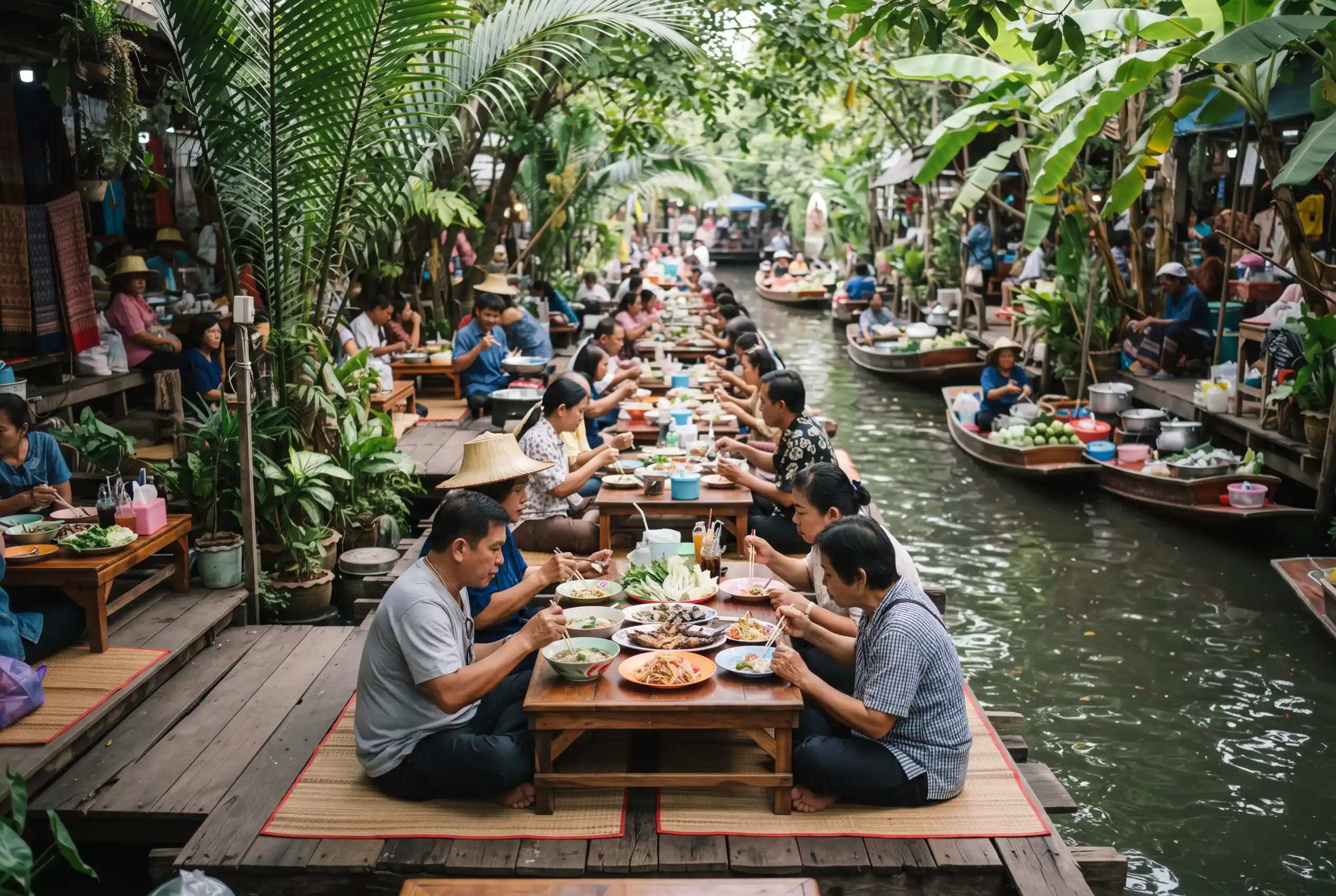
If you do not want to travel far, two small local markets sit inside Bangkok itself and open at weekends. Taling Chan is a friendly market where you eat fresh seafood on floating platforms over the canal and can take a short canal boat tour. Khlong Lat Mayom, nearby, is a food lover’s market with excellent local dishes and far fewer foreign visitors. The two are close enough to combine in one easy morning by taxi or Grab from central Bangkok.
Bang Nam Phueng: the green lung
Bang Nam Phueng is a weekend market on Bang Krachao, the forested loop in the river known as Bangkok’s green lung. It is low key and local, set among trees and best combined with cycling the quiet raised paths of the area. It is the choice for travellers who want nature and a slow pace rather than the busy canal scene.
How to choose
If you want the iconic photo and do not mind crowds, go to Damnoen Saduak, early. If you want food, atmosphere, and fireflies with Thai visitors, choose Amphawa on a weekend afternoon. If you have limited time and want to stay near the city, Taling Chan or Khlong Lat Mayom are the easy picks. For nature and cycling, Bang Nam Phueng wins. Many travellers combine Damnoen Saduak, Amphawa, and the Maeklong railway market into one long day trip.
How to get there and tips
Damnoen Saduak and Amphawa are reached by organised tour or by minivan from Bangkok’s Southern Bus Terminal, and a tour is often the simplest way to combine them with the railway market. Taling Chan, Khlong Lat Mayom, and Bang Nam Phueng are close enough to reach by taxi or ride hailing from the centre. To estimate a fair fare before you set off, use our taxi fare estimator. Carry cash in small notes, as the markets are cash only, and go early whatever you choose, because most wind down by early afternoon.
For getting around the city between market trips, see our guide to Bangkok public transport. To understand the customs around markets and temples you will pass, our guide to Thai culture and traditions is a useful read, and if you are heading to the islands afterwards, see Phi Phi Island. For official information, see the Tourism Authority of Thailand.
Frequently asked questions
Which is the best floating market in Bangkok?
It depends on what you want. Damnoen Saduak is the most famous and photogenic but touristy, Amphawa is the local favourite for food and fireflies, and Taling Chan or Khlong Lat Mayom are easy, authentic markets close to the city centre.
What time do Bangkok floating markets open?
Most open early and wind down by early afternoon, so morning is best. Damnoen Saduak is busiest from about 7 to 11 am. Amphawa is an exception, running Friday to Sunday afternoons into the evening. Go as early as you can elsewhere.
Is Damnoen Saduak worth it?
Yes, if you arrive early and accept that it is commercial. It is the biggest and most colourful market and delivers the classic image. If you prefer something more local and less crowded, Amphawa or the markets inside Bangkok are better choices.
How do I get to the floating markets from Bangkok?
Damnoen Saduak and Amphawa are reached by tour or minivan from the Southern Bus Terminal. Taling Chan, Khlong Lat Mayom, and Bang Nam Phueng are close enough to reach by taxi or ride hailing. A tour is the easiest way to combine several in one day.
Are the floating markets open every day?
Not all. Damnoen Saduak runs daily, but Amphawa is weekends only, from Friday to Sunday, and Taling Chan, Khlong Lat Mayom, and Bang Nam Phueng are weekend markets. Check the days before you plan a trip.