Few trees are as instantly recognisable as the baobab, and nowhere wears them quite like Madagascar. With their vast, bottle shaped trunks and stubby branches that look like roots clawing at the sky, these giants have become the symbol of the island. The baobab tree in Madagascar is more than a photo stop: it is the national tree, a living water tank that can be over 800 years old, and the centre of local legend. This guide covers where to see them, starting with the famous Avenue of the Baobabs, along with the facts, the myths, and the quiet threat now hanging over them.
What makes Madagascar’s baobabs special
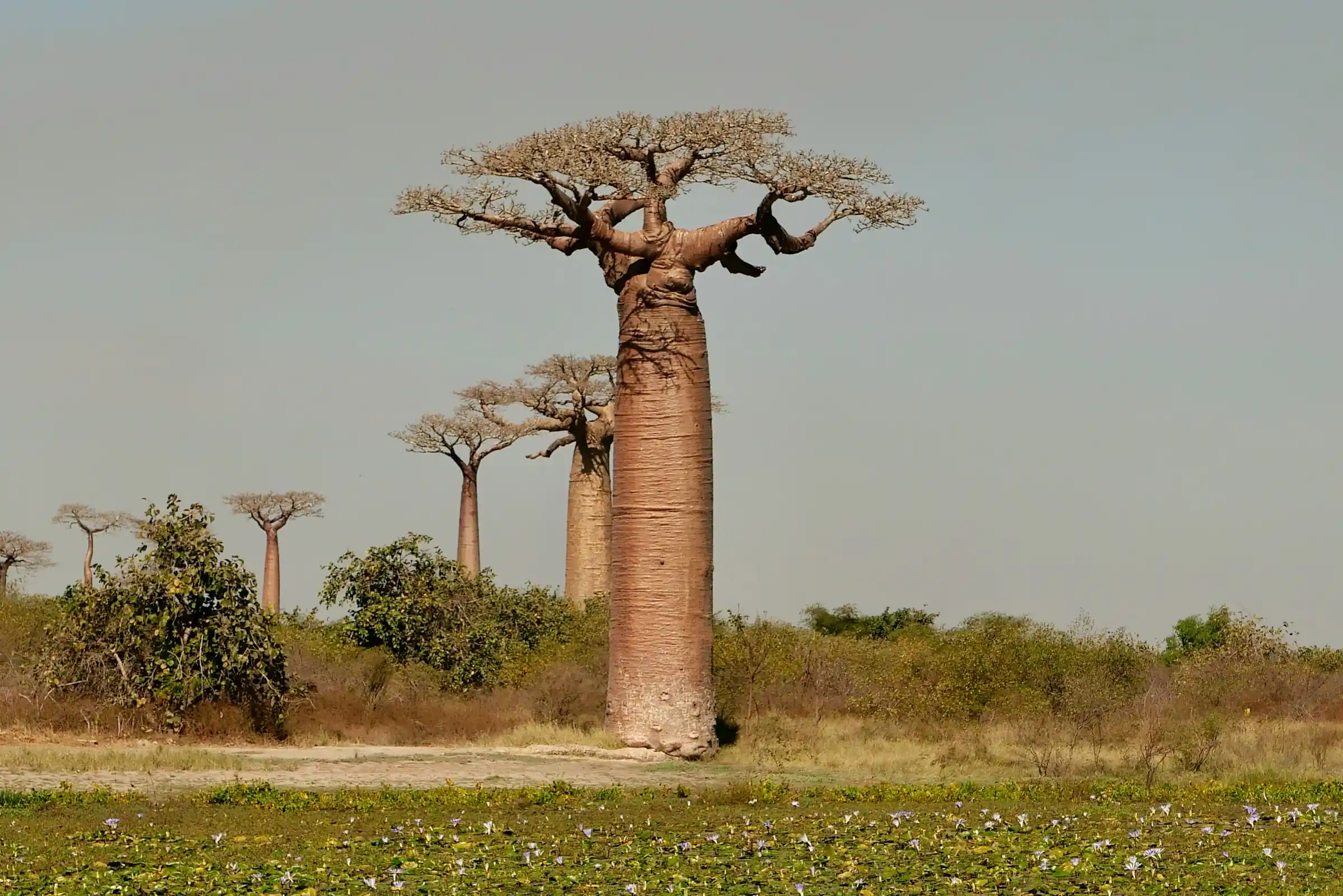
Of the nine baobab species in the world, six grow only in Madagascar, which is why the island is the true home of the tree. The star of them all is Grandidier’s baobab, Adansonia grandidieri, the tall, smooth trunked giant that lines the famous avenue. These are the largest baobabs on earth, reaching around 30 metres tall with trunks wider than a bus, and the oldest living examples are thought to be more than 800 years old.
What lets them survive the long dry season is their trunk, which works like a giant water store, holding many thousands of litres. That swollen shape, combined with the bare crown in the dry months, gives the baobab its famous upside down look, as though it were planted with its roots in the air. Madagascar’s mix of unusual, isolated species puts it in the same bracket as other island wonders such as the dragon blood trees we cover in our guide to Socotra Island.
Where to see baobabs in Madagascar
Many travellers assume there is only one place to see them, but baobabs dot much of the west and south of the island. These are the most accessible and rewarding spots.
The Avenue of the Baobabs, Morondava
The Avenue of the Baobabs, or Allee des Baobabs, is the shot everyone comes for: a dirt road on the west coast framed by dozens of ancient Grandidier’s baobabs standing shoulder to shoulder. It sits about a 45 minute drive from the seaside town of Morondava, there is only a small parking fee rather than an entrance ticket, and it is the single most accessible place to stand beneath the giants. The trees are all that remain of a forest cleared long ago, which is why they now rise so dramatically from open ground. It is so striking that it is being considered as the country’s first official natural monument.
The Lovers’ Baobabs
A short drive from the main avenue stand the Baobab Amoureux, the Lovers’ Baobabs, two trees that have grown twisted around each other over the centuries. Local legend ties them to a couple who were forbidden to marry, and they are an easy and quieter add on to an avenue visit.
Ifaty and the Reniala spiny forest
In the far south, near the town of Toliara, the spiny forest around Ifaty is home to the squat, bottle shaped baobabs of a different species, set among strange thorny plants found nowhere else. The small Reniala reserve makes them easy to walk among, and it is the best option for travellers exploring the south rather than the Morondava coast.
Further afield
Baobabs appear along much of the west coast and in parks such as Ankarafantsika in the north, while the far north around Diego Suarez has its own distinct species. These take more time and planning to reach, so most first time visitors concentrate on the Morondava avenue or the Ifaty forest.
Baobab tree facts worth knowing
- The baobab is the national tree of Madagascar, and six of the world’s nine species are found only there.
- The largest, Grandidier’s baobab, can top 30 metres and live well beyond 800 years.
- The trunk stores water through the dry season, which is how the tree survives months without rain.
- The fruit, sometimes called monkey bread, has a tangy pulp rich in vitamin C that is made into drinks and sold as a superfood.
- Local people use almost every part: the seeds as a snack, the pulp for a refreshing drink, and the bark for rope and roofing.
The legends and the tree of life
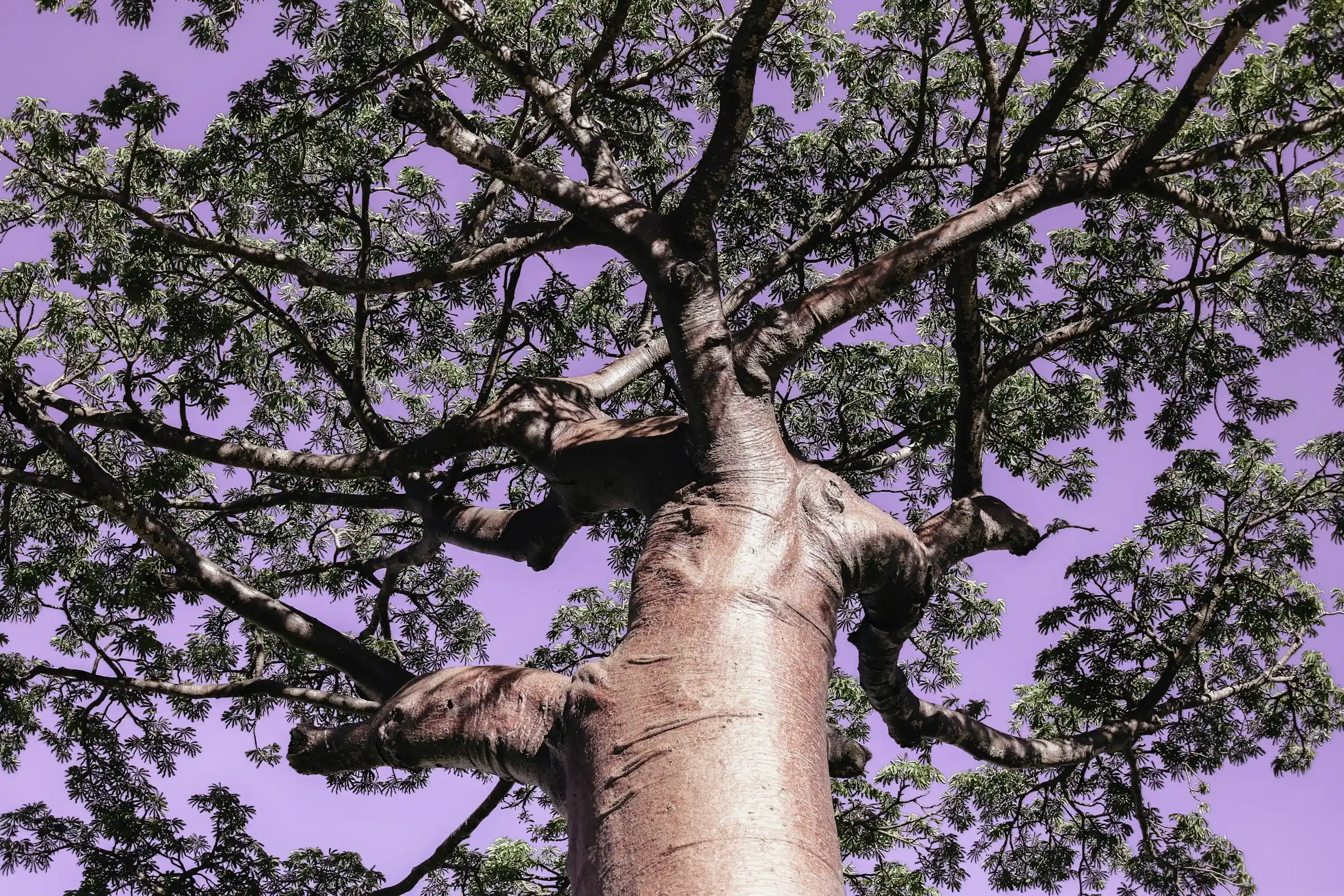
The baobab’s strange shape has fed stories for centuries. The best known is the upside down tree legend: sailors and local tellings alike describe gods planting the baobab the wrong way up as a punishment, leaving its roots waving in the air. Across Africa and Madagascar the baobab is also called the tree of life, both for the water it holds and for the shelter, food, and medicine it has given people for generations. Many individual trees are considered sacred, serving as meeting places and as sites for offerings to the ancestors, and some hollow trunks have been used as stores or even burial places.
Best time to visit and how to get there
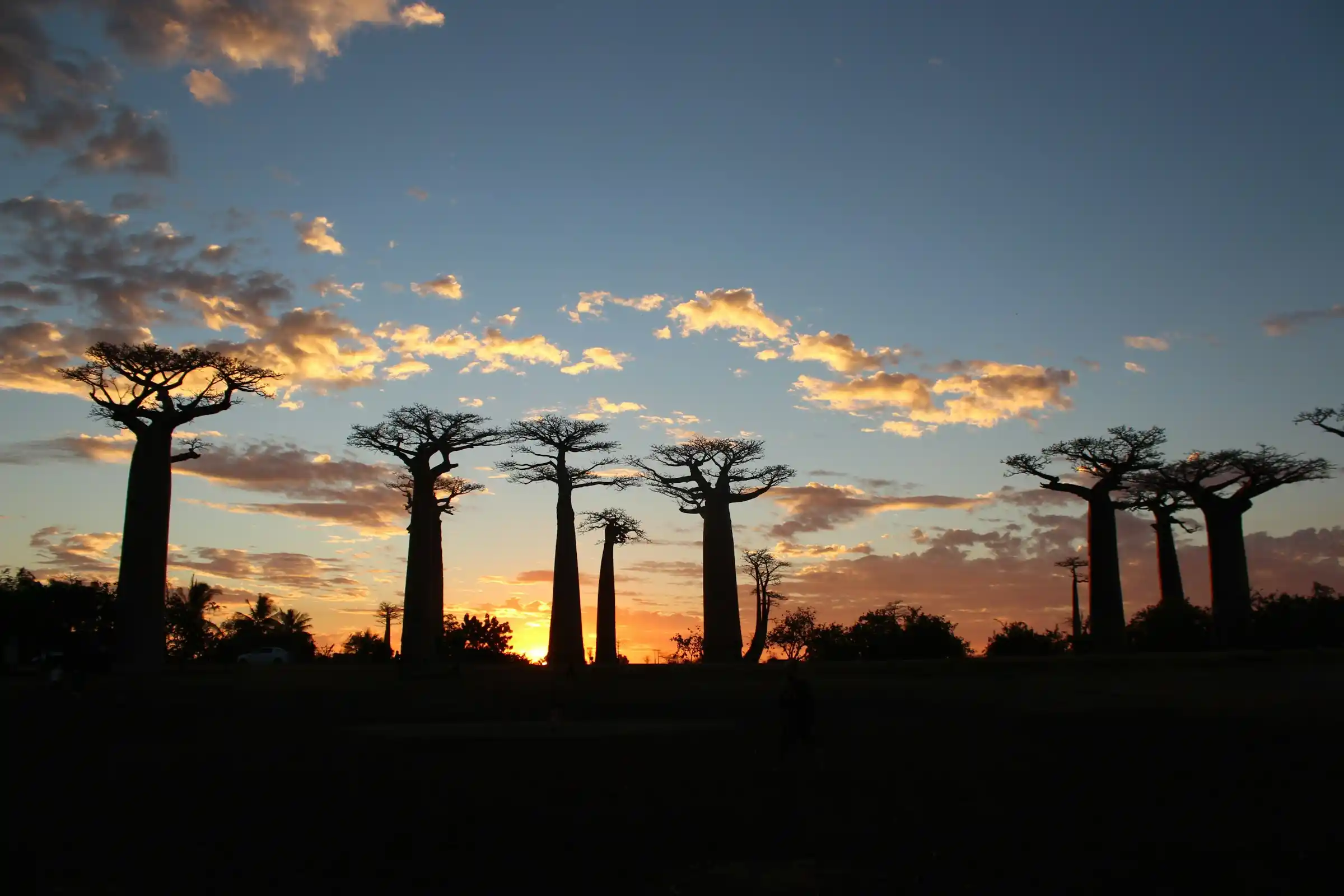
The dry season, from around April to November, is the time to go. The roads to the west coast are far easier then, and the skies are clear for photographs. Avoid the wet months from December to March, when rain can cut off the dirt tracks. For the avenue itself, sunrise and sunset are the magic hours, when low light turns the trunks a deep red and the crowds thin out. Sunrise is usually the quietest.
Most trips start with a flight from the capital, Antananarivo, to Morondava, from where the avenue is a short drive. Madagascar is a large, slow country to travel, so build in buffer time and pack for dusty roads and strong sun. Our packing list generator can put together a list for a trip like this. If you are pairing Madagascar with time elsewhere in the Indian Ocean, our guide to the best beaches in Zanzibar covers the nearest classic beach stop.
The baobabs are under threat
These giants are not as safe as they look. Grandidier’s baobab is listed as endangered, and the forests that once surrounded trees like those on the avenue have largely been cleared for farming, with fire and erosion adding to the pressure. Researchers have also recorded some of the oldest baobabs dying in recent years, a worrying trend linked to a changing climate. Conservation groups are now working to protect the avenue and the trees around it so they survive for the centuries to come. Visiting responsibly, paying local fees, and using local guides all help. For the science behind the species, see the reference on Adansonia grandidieri and its IUCN Red List assessment.
Frequently asked questions
Where can you see baobab trees in Madagascar?
The most famous and accessible spot is the Avenue of the Baobabs, about 45 minutes from Morondava on the west coast. Others include the Lovers’ Baobabs nearby, the spiny forest at Ifaty near Toliara in the south, and parks such as Ankarafantsika in the north.
Why are baobabs special to Madagascar?
The baobab is the national tree, and six of the world’s nine species grow only in Madagascar. Grandidier’s baobab, the giant seen on the avenue, is the largest and can live more than 800 years, storing water in its huge trunk.
Why does the baobab look upside down?
Its stubby, bare branches resemble roots reaching into the sky, especially in the dry season. Legend says the gods planted the tree upside down as a punishment, which is how it earned the upside down tree nickname.
When is the best time to visit the Avenue of the Baobabs?
Come in the dry season, roughly April to November, when the roads are passable and the skies are clear. Sunrise and sunset are the best hours, when the light turns the trunks red. Sunrise is usually the quietest time.
How old are the baobabs in Madagascar?
Many of the large trees on the avenue are thought to be over 800 years old, and baobabs in general are among the longest lived trees on earth. Their age and slow growth are part of why losing them to clearance and climate change is so serious.
Is the baobab fruit edible?
Yes. The hard shelled fruit holds a tangy, dry pulp that is high in vitamin C. Locals eat the seeds as a snack and mix the pulp into refreshing drinks, and it is now sold worldwide as a baobab superfood powder.