Introduction
Zanzibar has more than 25 named beaches spread across the island, and they are not interchangeable. The east coast has powdery white sand and dramatic tidal flats. The north has warm, calm water with almost no tide change. The west has sunsets and Stone Town within walking distance. Picking the wrong beach for your trip style is the most common mistake visitors make.
This guide covers the beaches worth your time, what each one is actually like, who it suits, and what to know before you go. No filler, no “paradise awaits” — just the information you need to choose.
Table of Contents
Zanzibar beach map: east vs north vs west
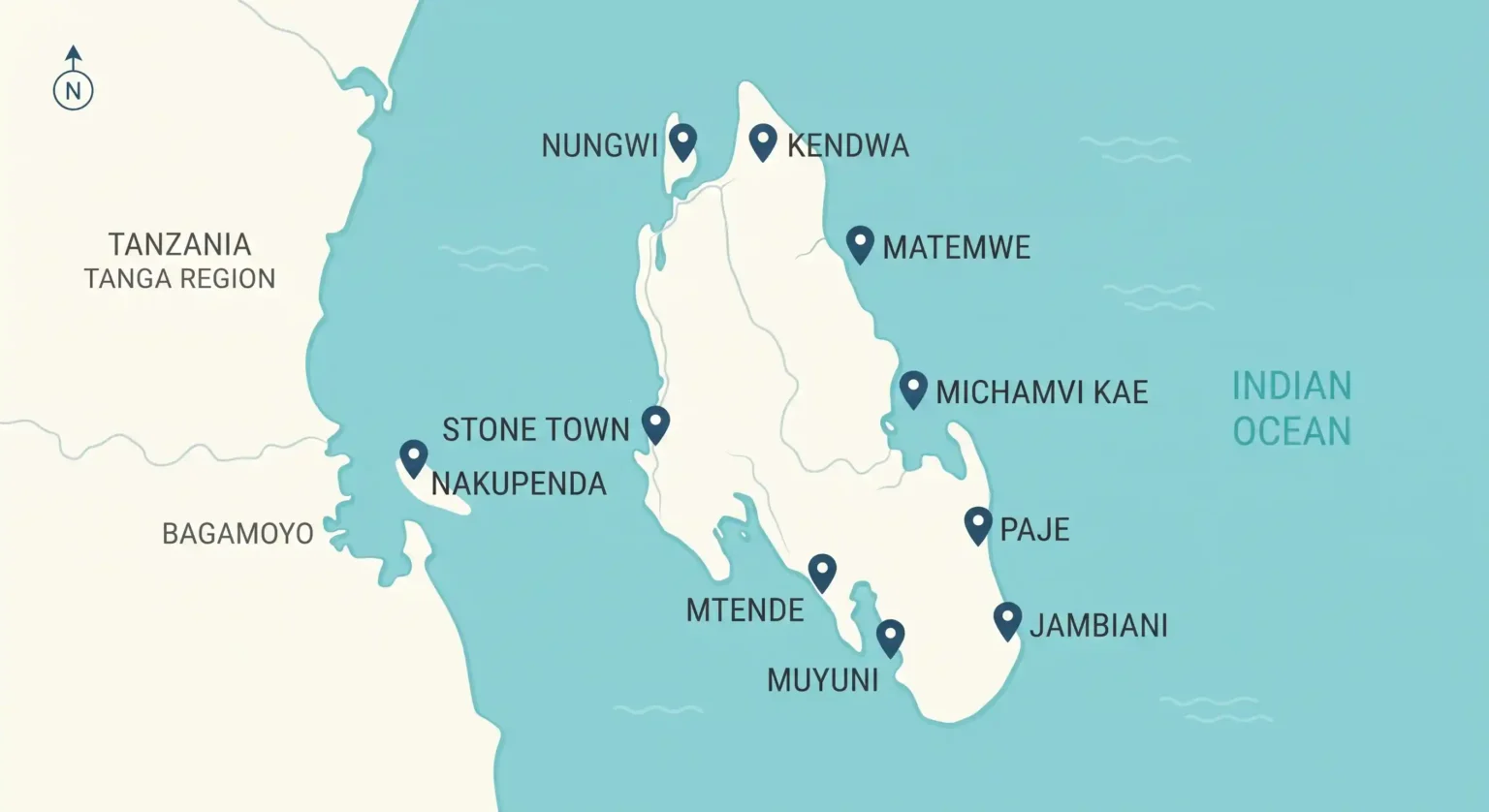
Understanding Zanzibar’s coastline saves you from booking the wrong beach. The island splits into three zones:
- North coast (Nungwi, Kendwa): Minimal tide change, warm water all day, bars and nightlife. Best for swimming at any hour and for people who want activity nearby.
- East coast (Paje, Jambiani, Matemwe, Michamvi): Dramatic tides that expose sandbars and seaweed farms. Beautiful at high tide, but the water retreats hundreds of metres at low tide. Best for kitesurfing, long walks, and a quieter pace.
- West coast and islands (Stone Town, Nakupenda): Calm water, sunsets, proximity to Stone Town. Best for day trips, culture, and short stays.
- South coast (Mtende, Muyuni): Remote, undeveloped, rough roads. Best for solitude and untouched shoreline.
Nungwi Beach
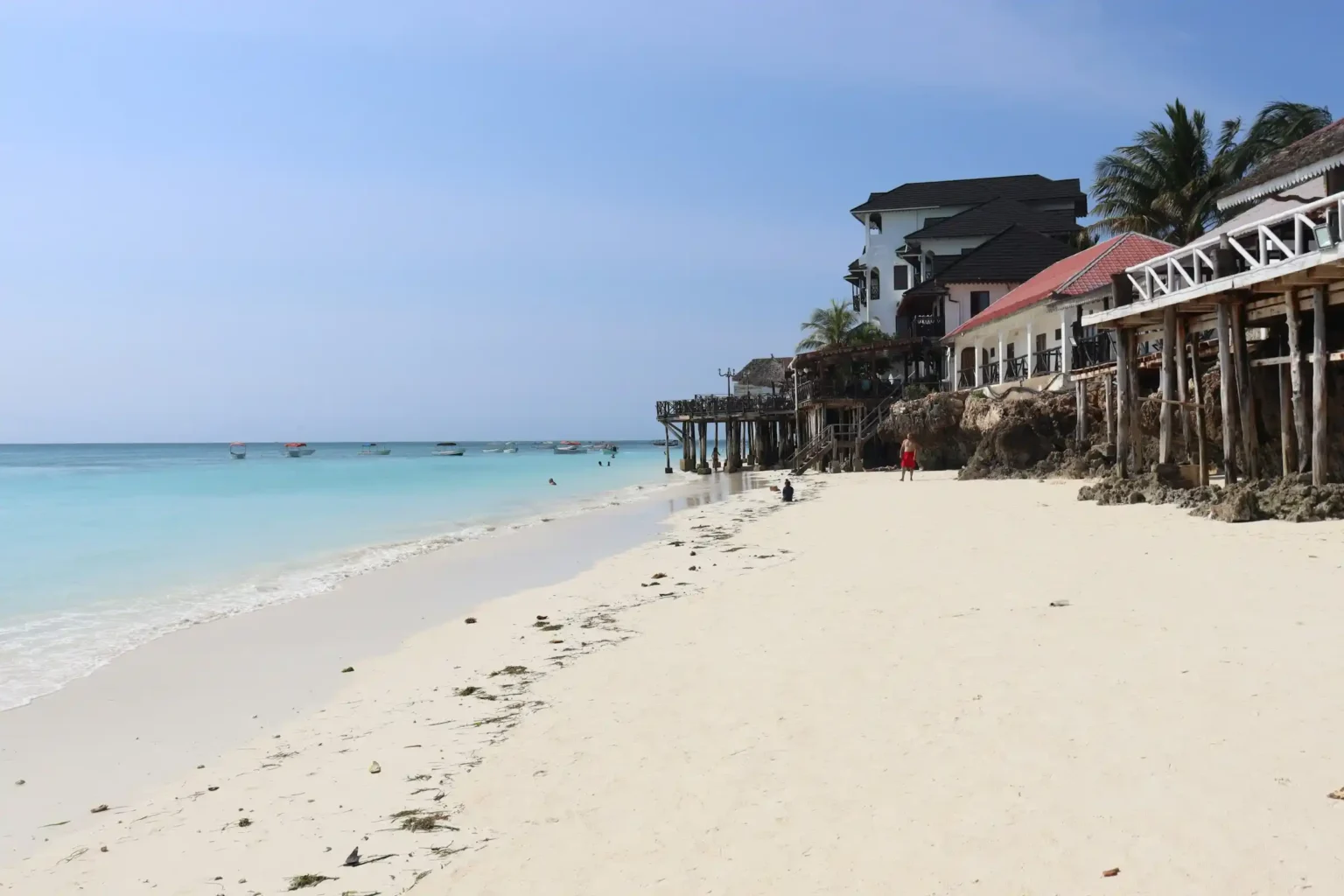
Nungwi sits at the northern tip of Zanzibar and is the island’s most popular beach for a reason: the tide barely shifts here. While eastern beaches lose their water for hours, Nungwi stays swimmable all day. The sand is white, the water is warm and clear, and traditional dhow boats line the shore.
The village behind the beach has restaurants, bars, and dive shops. Full moon parties draw crowds, and the strip between Nungwi and Kendwa fills up during peak season (July to September and December to January). If you want to swim whenever you feel like it and have nightlife within walking distance, this is your beach. If you want quiet, look elsewhere.
Best for: Swimming at any tide, nightlife, dive trips to Mnemba Atoll.
Watch out for: Beach vendors, crowded high season, noise from nearby bars at night.
Kendwa Beach
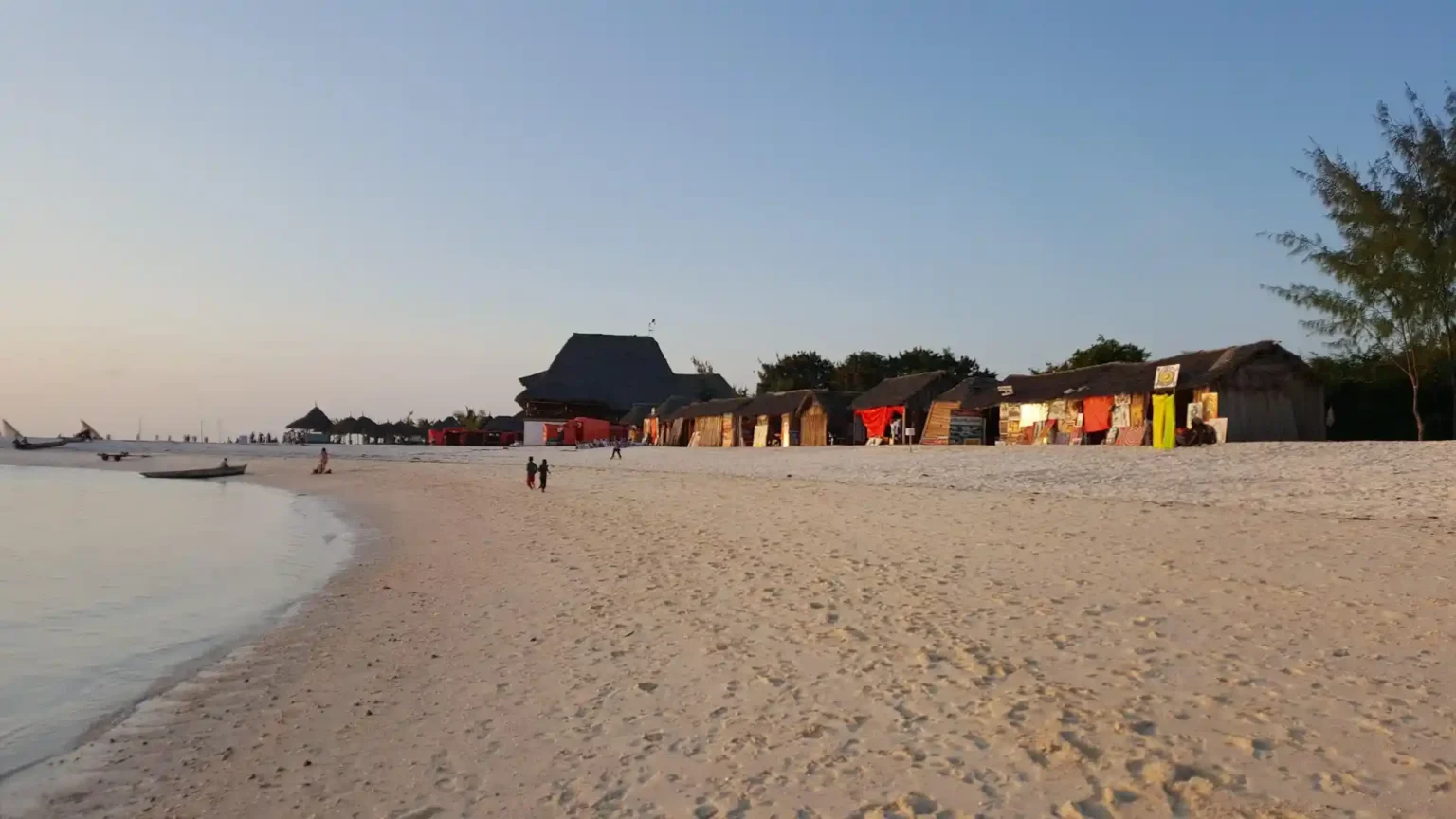
Kendwa is 3 kilometres south of Nungwi on the same stretch of coastline and shares the same advantage: almost no tidal change. The beach is wider and less built-up than Nungwi, with a handful of resorts set back behind the treeline rather than stacked along the waterfront.
It hosts the famous Kendwa Rocks full moon party, which pulls in crowds from across the island. Outside of those nights, the beach is calmer and more spread out than Nungwi. The sunsets here face due west, making it one of the best spots on the island for evening light over the water.
Best for: Couples, sunset views, full moon parties.
Watch out for: Limited restaurant options outside resort dining, no ATMs nearby.
Paje Beach
Paje is the kitesurfing capital of East Africa. The east coast trade winds blow consistently from June to September and again from December to February, turning the shallow tidal flats into a natural riding area. Even if you have never tried kitesurfing, the schools here are experienced with beginners and the flat water is forgiving.
At high tide, the beach is a long ribbon of white sand with turquoise water perfect for swimming. At low tide, the ocean retreats and exposes a vast sandbar dotted with seaweed farmers at work — a striking sight but not ideal for a spontaneous swim. The village has a growing strip of beach bars, cafes, and backpacker hostels that give it a relaxed, social atmosphere without the noise of Nungwi.
Best for: Kitesurfing, backpackers, beach bar culture.
Watch out for: Extreme low tides make swimming impossible for several hours each day. Plan around the tide chart.
Nakupenda Beach
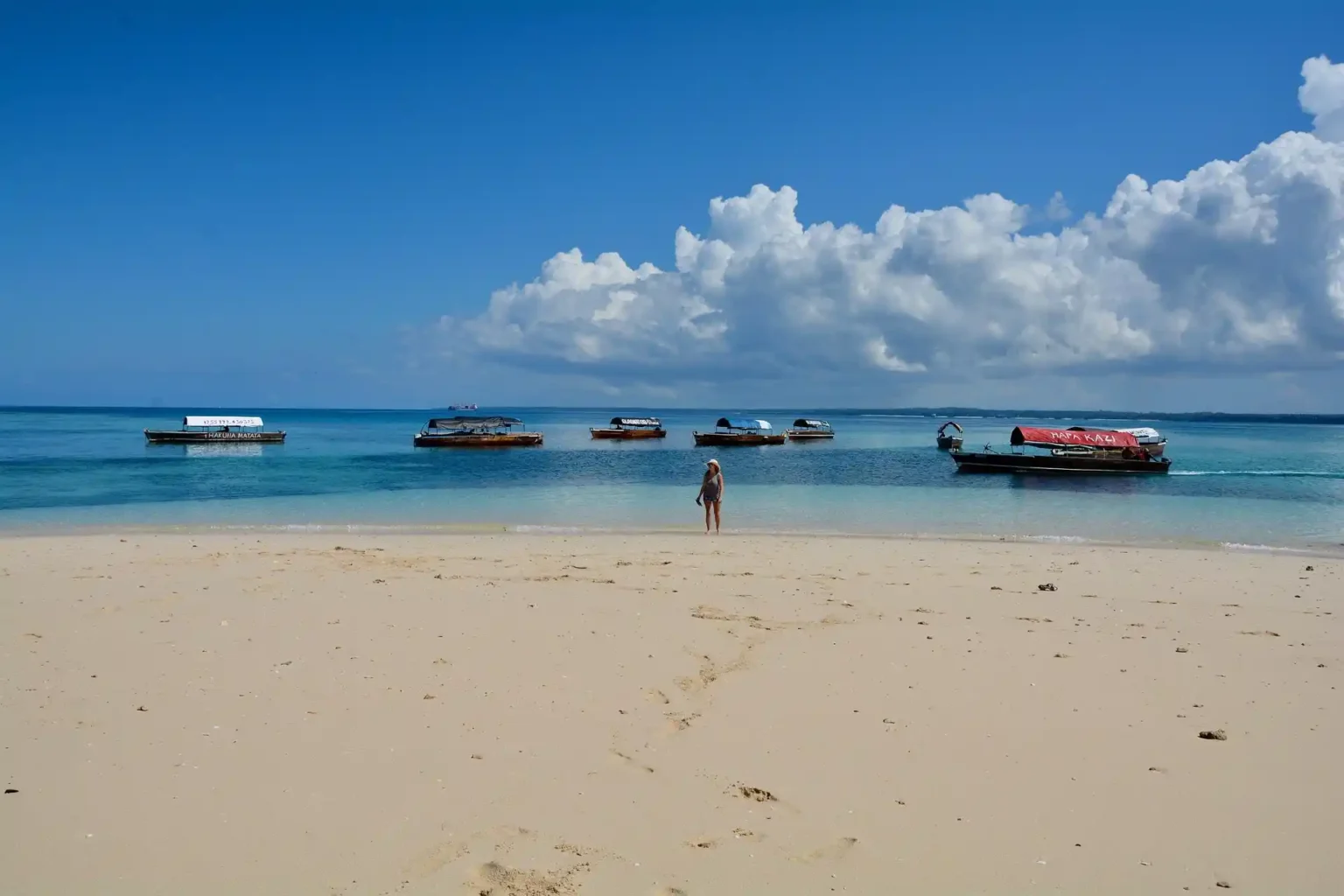
Nakupenda is not a beach in the traditional sense — it is a sandbank that appears at low tide in the channel between Stone Town and Changuu (Prison) Island. Tour boats bring visitors here for a few hours of standing in knee-deep turquoise water on a strip of pure white sand with no land in sight. The name means “I love you” in Swahili.
It is a half-day trip from Stone Town, usually combined with snorkelling and a visit to Prison Island to see the giant Aldabra tortoises. The sandbank is busiest around midday when most tour boats arrive at once. Going early or late in the low-tide window gives you more space. Bring your own snorkelling gear if you can — rental quality varies.
Best for: Photography, half-day boat trips from Stone Town, snorkelling.
Watch out for: Only accessible at low tide. Tour boats can make it feel crowded. No shade — bring sun protection.
Mtende Beach
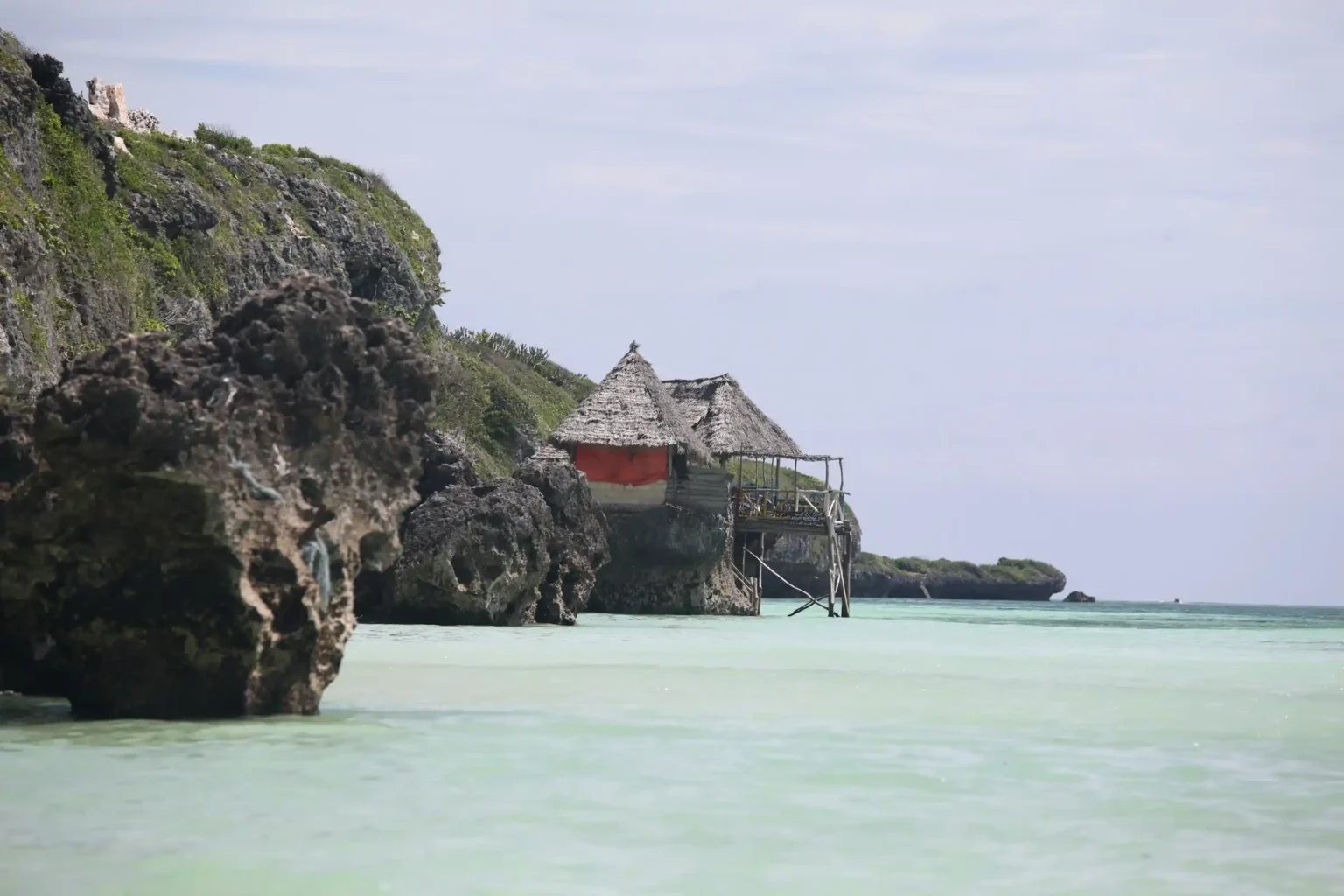
Mtende is on the southeast tip of Zanzibar, past Jambiani, where the road gets rough and most tourists stop coming. The beach is long, empty, and backed by bush rather than hotels. There are very few places to stay and almost no restaurants, which is exactly the point.
The water is shallow for a long way out, the tide change is extreme, and the beach has patches of natural rock and coral. It is not a resort beach. It is a beach for people who want to walk for an hour without seeing another tourist, watch local fishermen work, and feel like they have found something that most visitors miss.
Best for: Solitude, photography, escaping the tourist trail.
Watch out for: Very limited accommodation, rough road access, strong tides.
Muyuni Beach
Muyuni sits on Zanzibar’s southern coast between Jambiani and Mtende. It is one of the least developed beaches on the island, known mostly for the Muyuni Beach Resort and the conservation projects (turtle nesting and mangrove restoration) run in the area.
The sand is white, the water is shallow, and the coastline curves gently with coconut palms providing natural shade. Like most of the south, the tide change is significant and the infrastructure is minimal. If Jambiani feels too busy (it is not busy), Muyuni is the next step quieter.
Best for: Eco-tourism, turtle watching, complete quiet.
Watch out for: Very few dining options, need a car or scooter to get anywhere.
Jambiani Beach
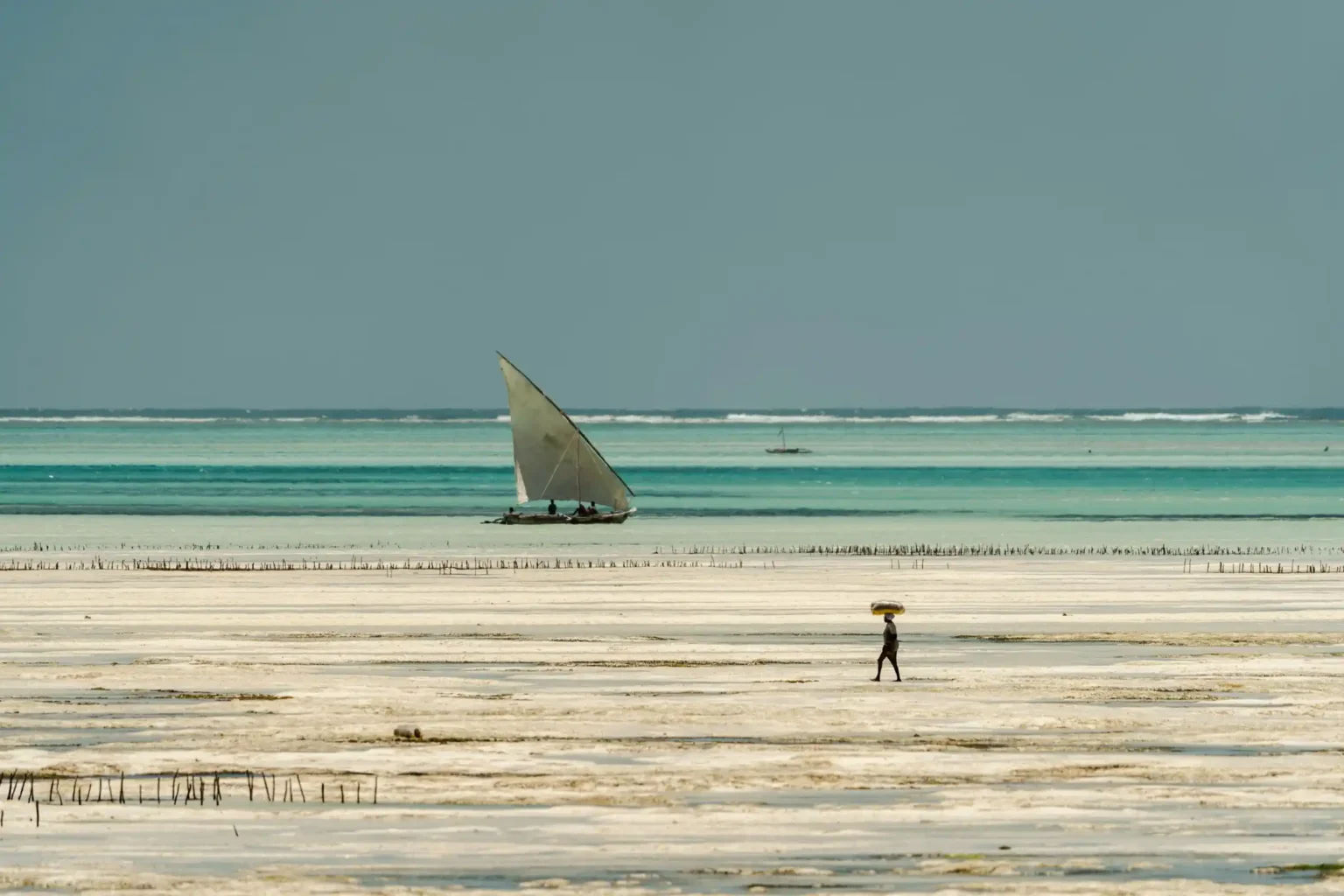
Jambiani is a long, thin village stretched along the southeast coast, and the beach matches: it goes on for kilometres. The main draw is the seaweed farming. At low tide, local women work the shallow flats harvesting seaweed, and several community projects let visitors join in and learn the process. It is one of the most authentic cultural experiences on the island.
The beach itself is beautiful at high tide — white sand, turquoise water, very few people. At low tide, the water is gone and the exposed flats dominate. Accommodation ranges from backpacker guesthouses to a handful of mid-range boutique hotels. It is quieter than Paje, which is just 10 minutes north by car, and significantly cheaper.
Best for: Cultural experiences, budget stays, long walks.
Watch out for: Tidal extremes, seaweed on the beach at certain times of year.
Michamvi Kae (Kae Funk Beach)
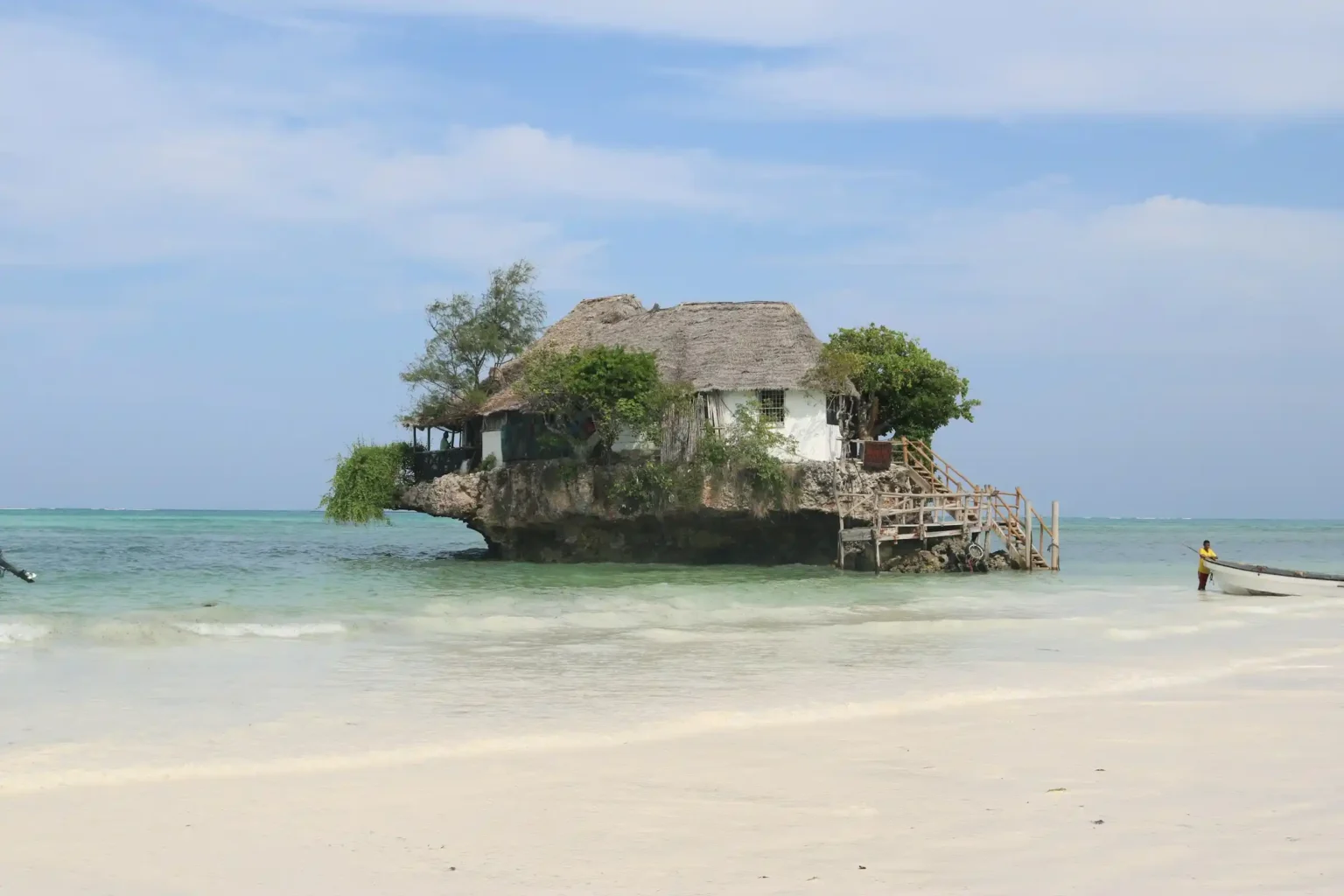
Michamvi is a narrow peninsula on the central east coast, separating the open ocean from Chwaka Bay. The tip of the peninsula, known locally as Kae Funk Beach after the bar that made it popular, has a unique position: you get sunrise over the ocean on one side and sunset over the mangrove bay on the other, all within a few minutes’ walk.
The beach is small and the options are limited — a couple of hotels and the Kae Funk bar — but the location is genuinely unusual. At high tide the water is good for swimming. At low tide it is better for walking the exposed reef flats or kayaking into Chwaka Bay’s mangroves.
Best for: Sunrise and sunset from one spot, mangrove kayaking, a unique setting.
Watch out for: Small beach, limited accommodation, can feel isolated.
Matemwe Beach
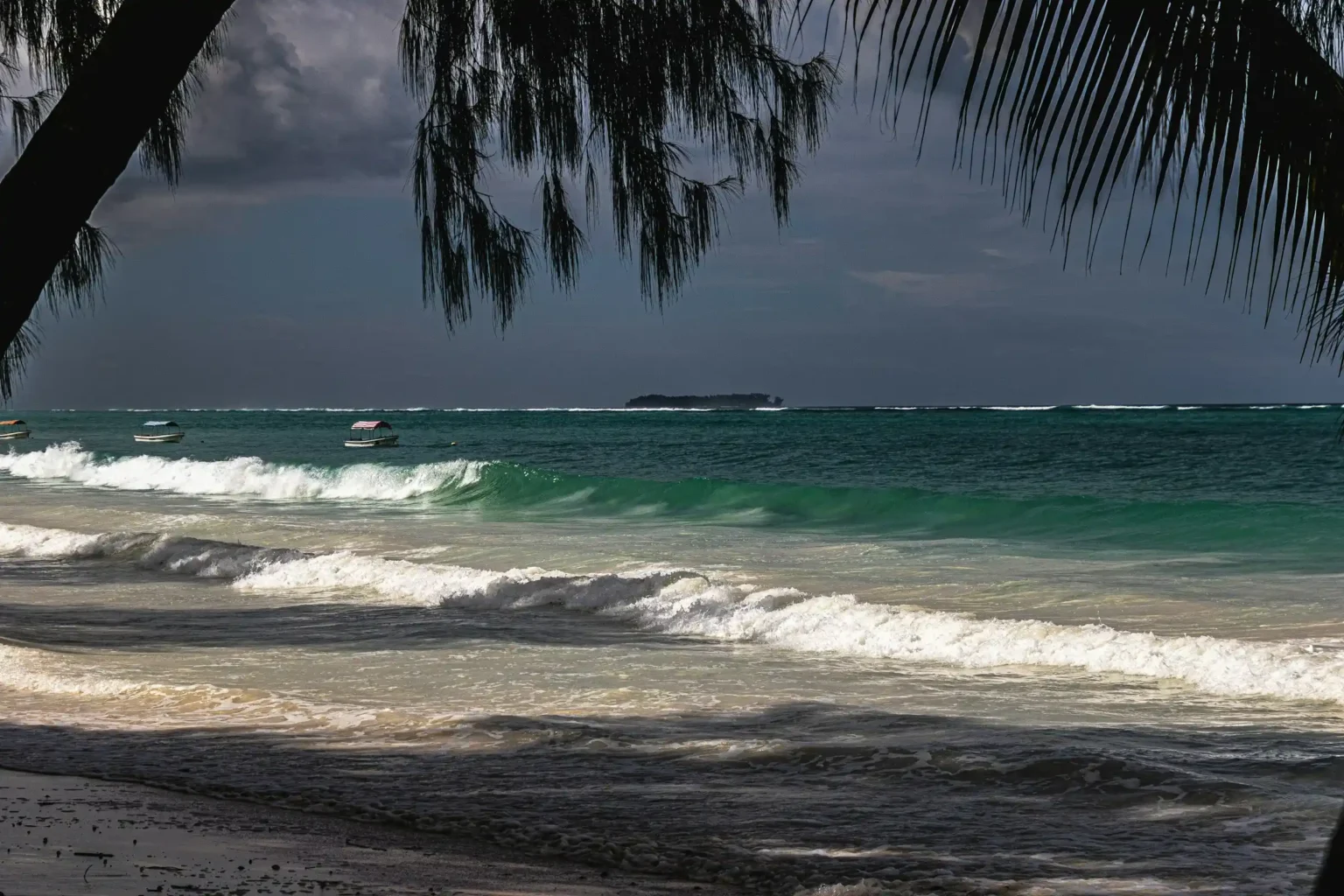
Matemwe runs along the northeast coast, directly facing Mnemba Island — one of the best dive and snorkel sites in the Indian Ocean. The beach is long, quiet, and lined with a handful of upscale lodges mixed with simpler guesthouses. It feels removed from the rest of the island, partly because the road in is slow and bumpy.
Like most east coast beaches, the tide change is significant. At high tide the swimming is excellent. At low tide, local fishermen push their boats out across the exposed flats to reach deeper water. Matemwe is the main departure point for boat trips to Mnemba Atoll, where the coral is pristine and the marine life includes dolphins, turtles, and whale sharks in season.
Best for: Diving and snorkelling at Mnemba, upscale quiet stays.
Watch out for: Strong tides, rough access road, limited nightlife.
Stone Town Beach
Stone Town does not have a beach in the resort sense, but the waterfront is where the island’s history, food, and energy concentrate. The stretch along Forodhani Gardens fills up every evening with a street food market — Zanzibar pizza, grilled octopus, sugarcane juice, and skewered seafood — and dhow boats line the harbour.
You would not come here to sunbathe. You come here to explore the narrow alleys of the UNESCO World Heritage old town, visit the spice markets, see the former slave market at the Anglican Cathedral, and book boat trips to Nakupenda sandbank or Prison Island. Most visitors split their time: a couple of nights in Stone Town for culture, then move to a beach on the north or east coast.
Best for: History, food, culture, boat trip departures.
Watch out for: Not a swimming beach, alleys are easy to get lost in, some touts near the port.
Best time for Zanzibar beaches
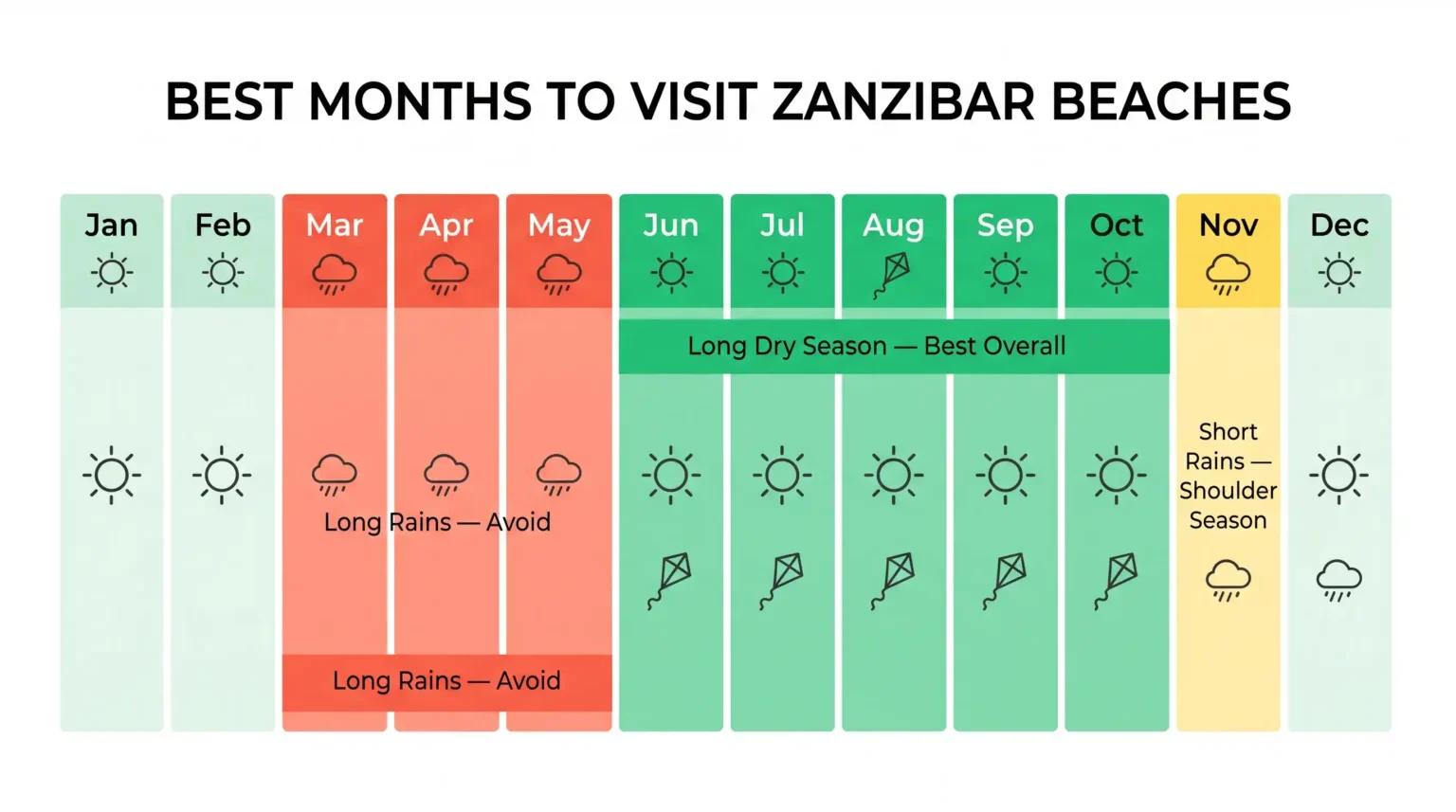
Zanzibar has two dry seasons and two wet seasons:
- June to October (long dry season): The best window. Low humidity, almost no rain, and consistent trade winds for kitesurfing. July and August are peak tourist months.
- December to February (short dry season): Hot, sunny, and busy over Christmas and New Year. Good for swimming but more humid than the long dry.
- March to May (long rains): Heavy daily rainfall, high humidity, some hotels close. Cheapest time to visit but beach days are unpredictable.
- November (short rains): Brief afternoon showers. The island is green and quiet. A reasonable shoulder-season gamble.
For kitesurfing at Paje, the wind seasons are June to September and December to February. For diving at Mnemba, visibility peaks from October to March.
Practical tips
- Check the tide chart. On east coast beaches, the difference between high and low tide is the difference between a perfect swim and a 500-metre walk to ankle-deep water. Download a tide app before you go.
- Rent a scooter. Beaches are spread across the island and taxis are expensive. A scooter costs around $10 to $15 per day and lets you beach-hop on your schedule.
- Zanzibar uses the Tanzanian shilling, but US dollars are widely accepted at hotels and tour operators. ATMs exist in Stone Town and Nungwi but are unreliable elsewhere — carry cash.
- Zanzibar is a semi-autonomous region of Tanzania. You need a Tanzanian visa, which most nationalities can get on arrival at the airport. Check the visa requirement checker for your passport before flying.
- Tap water is not safe to drink. Use the tap water safety checker for details. Bottled water is cheap and available everywhere.
- Sun protection is non-negotiable. Zanzibar is 6 degrees south of the equator. Use the packing list generator to make sure you do not forget reef-safe sunscreen, a rash guard, and a hat.
- Respect local culture. Zanzibar is predominantly Muslim. Cover shoulders and knees when walking through villages and Stone Town. Swimwear is fine on the beach but not in town.
Conclusion
Zanzibar’s beaches are spread across four distinct coastlines, and each one delivers a different trip. The north coast — Nungwi and Kendwa — is the safe bet for first-time visitors who want reliable swimming and easy access to restaurants. The east coast — Paje, Jambiani, Matemwe — rewards people willing to plan around the tides with emptier sand, better kitesurfing, and lower prices. The south is for explorers. Stone Town is for everyone, at least for a night or two.
Pick your coast, check the tide chart, and build the rest around it. For more island guides, see our Bora Bora travel guide, our Fernando de Noronha guide, or our roundup of secret places in the world untouched by tourism.
Frequently asked questions
What is the best beach in Zanzibar?
It depends on what you want. Nungwi is the best all-round beach for swimming at any tide. Paje is the best for kitesurfing. Kendwa has the best sunsets. Nakupenda is the most photogenic. Matemwe is the best for diving access to Mnemba Atoll. There is no single best — the right beach depends on your trip style.
Which Zanzibar beach has the least tidal change?
Nungwi and Kendwa on the north coast have the least tidal change. You can swim at any time of day without worrying about the water retreating. Every east coast beach has dramatic tides that expose the seabed for hours.
Is Zanzibar good for kitesurfing?
Zanzibar is one of the best kitesurfing destinations in the world. Paje Beach on the east coast is the main spot, with consistent trade winds from June to September and again from December to February. The shallow, flat water at low tide is ideal for beginners.
How do I get to Nakupenda Beach?
Nakupenda is a sandbank that appears at low tide in the channel off Stone Town. You reach it by boat, usually as part of a half-day tour that also visits Prison Island. Tours depart from the Stone Town waterfront and cost around $25 to $40 per person.
Is it safe to swim on Zanzibar beaches?
Yes. The lagoon-like waters on most beaches are calm and warm year-round. The main hazard is sea urchins on exposed reef at low tide on the east coast — wear reef shoes if you plan to walk the tidal flats. Currents are generally mild but can pick up off the northern tip near Nungwi.
What is the best time to visit Zanzibar beaches?
June to October is the long dry season and the best overall window: low humidity, minimal rain, and good trade winds. December to February is the short dry season and also excellent. Avoid March to May if you want reliable beach weather.
Do I need a visa for Zanzibar?
Zanzibar is part of Tanzania, so you need a Tanzanian visa. Most nationalities can buy a visa on arrival at Abeid Amani Karume International Airport for $50. Some nationalities require a pre-arranged visa. Check your requirements with the visa checker tool.
Where is Zanzibar?
Zanzibar is an archipelago off the east coast of Tanzania in the Indian Ocean, about 35 kilometres from the mainland. The main island, Unguja, is where all the beaches in this guide are located. Flights arrive at Abeid Amani Karume International Airport near Stone Town, or you can take a ferry from Dar es Salaam.