Iguazu Falls, straddling the border of Argentina and Brazil, is the largest waterfall system in the world, a two-and-a-half kilometre wall of water crashing through the rainforest. It is spectacular at any time, but the season you choose changes the water level, the weather, and the crowds. This guide explains the best time to visit Iguazu Falls, month by month, and helps you decide which side of the falls to see.
When is the best time to visit Iguazu Falls?
The best time to visit Iguazu Falls is the shoulder months, roughly March to May and August to October. In this window the weather is warm but not stifling, the rainforest is green, the water flow is strong without the flood risk of peak summer, and the crowds are thinner than in the holiday periods. Spring and autumn give you the most reliable all-round experience.
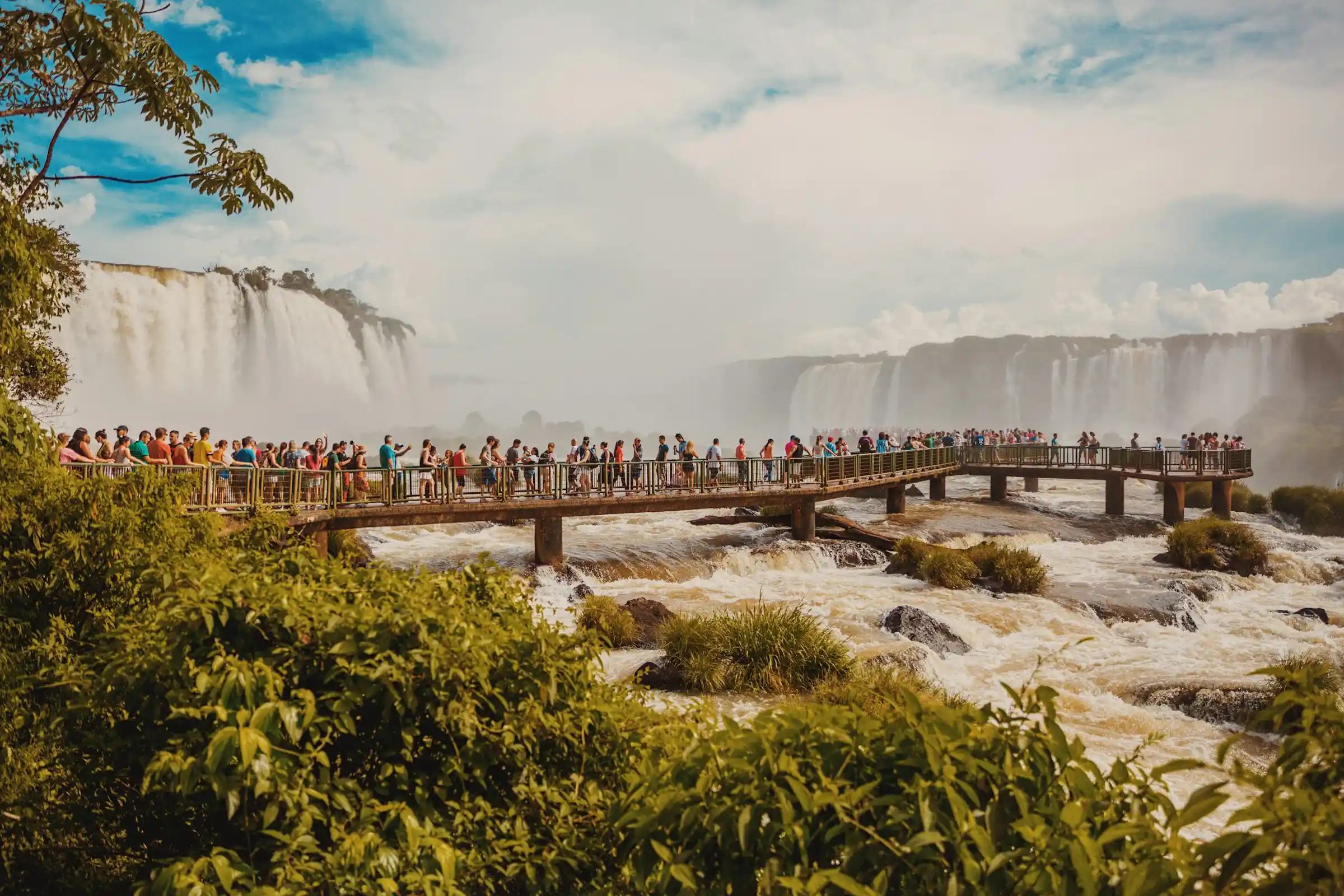
Iguazu season by season
Summer, December to February, is hot, humid, and the wettest season, so the falls thunder at their fullest, but heavy rain can occasionally close walkways and the heat is intense. Autumn, March to May, brings pleasant temperatures and good flow. Winter, June to August, is mild and dry, comfortable for walking, though water levels can be lower late in the dry spell. Spring, September to November, warms up again with fresh green growth. Water levels vary year to year, so there is no bad season, only trade-offs.
| Season | Months | Conditions |
|---|---|---|
| Summer | December–February | Hot, humid and wettest; highest water flow, walkways can occasionally close |
| Autumn | March–May | Pleasant temperatures and good flow; one of the best windows |
| Winter | June–August | Mild and dry; water can be lower late in the dry spell |
| Spring | September–November | Warming up, fresh green growth; August–October is a best window |
Which side is better, Argentina or Brazil
The two countries offer different experiences, and many travellers do both. The Argentine side has about 80 percent of the falls and a network of walkways that take you right into the spray, including the thundering Devil’s Throat. Plan a full day here. The Brazilian side is smaller but gives the great panoramic view of the whole system from across the gorge, and takes about half a day. If you can, see Brazil for the panorama and Argentina for the immersion.
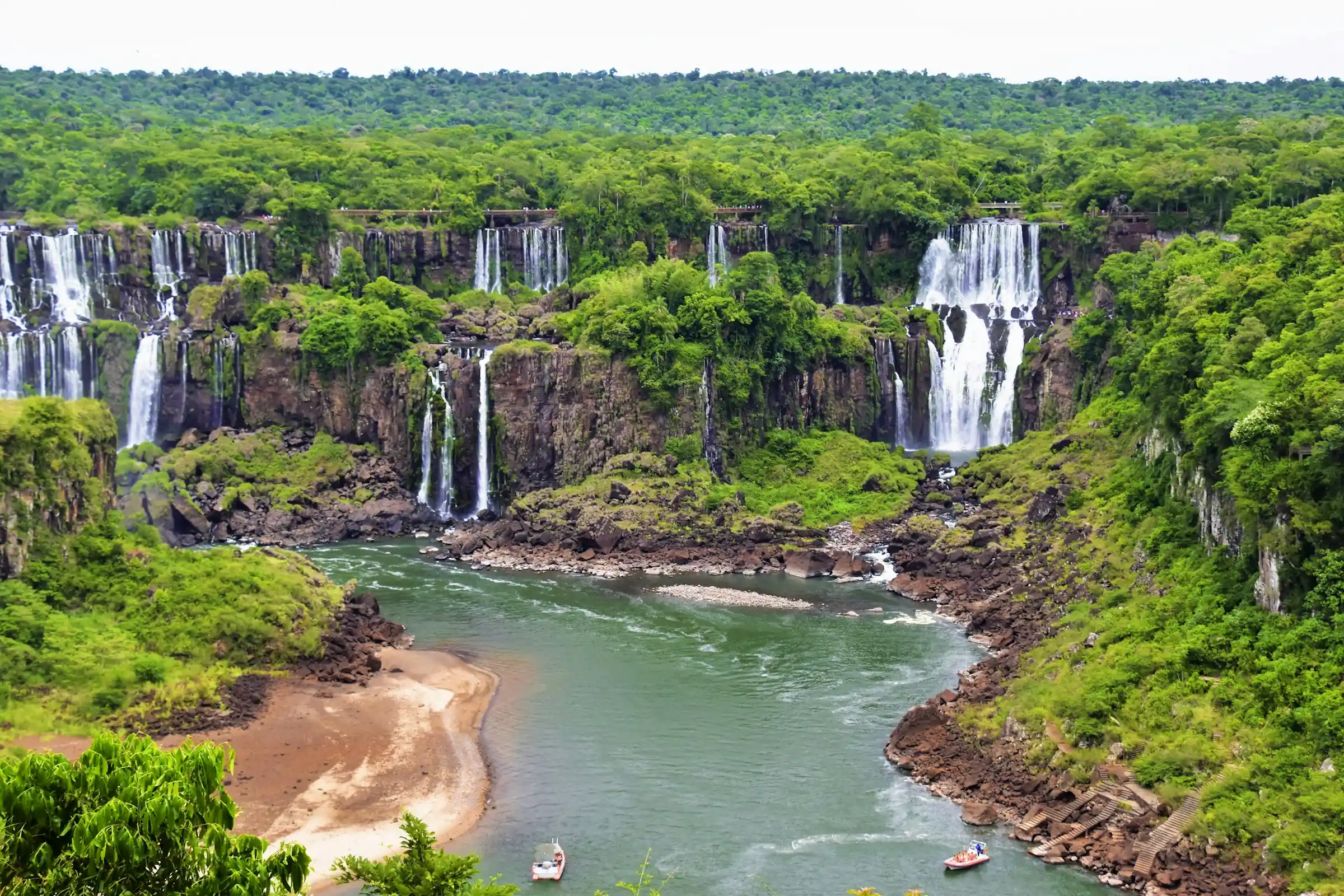
| Argentine side | Brazilian side | |
|---|---|---|
| Share of the falls | About 80 percent | Smaller share |
| Highlight | Walkways into the spray and the Devil’s Throat | Panoramic view of the whole system |
| Time needed | A full day | About half a day |
Getting there
Each side has its own airport and town: Puerto Iguazu in Argentina and Foz do Iguacu in Brazil, both well connected by air to Buenos Aires and Sao Paulo. The two towns are a short drive apart across the border, so you can base on one side and visit the other, but check whether your nationality needs a visa for the country you are crossing into. Both national parks have buses, trails, and boat trips to the base of the falls.
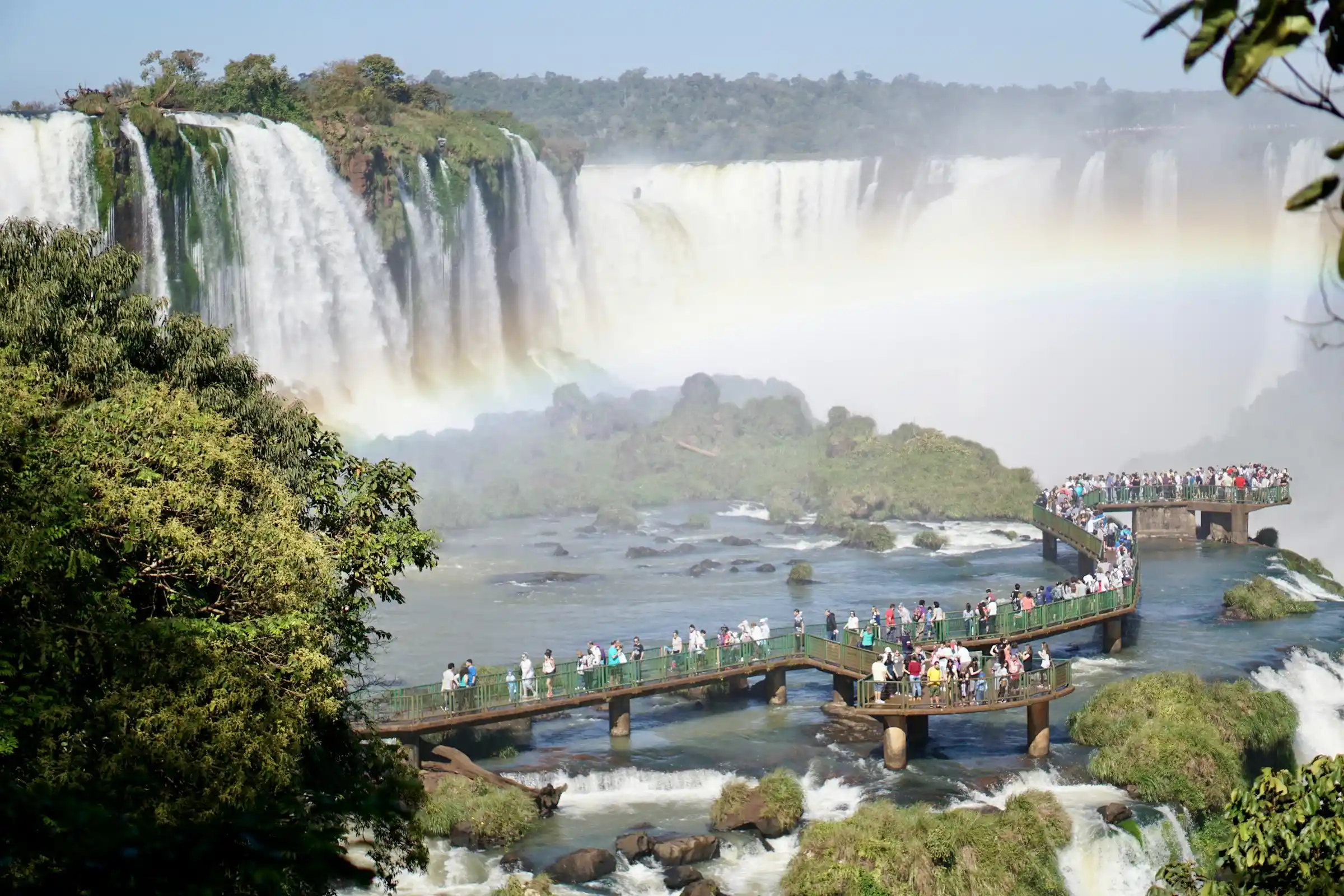
Tips for your visit
Wear light, quick-drying clothes and expect to get wet from the spray and the boat rides. Bring a waterproof cover for your phone and camera. Go early to beat the tour buses to the Devil’s Throat, and allow two days to cover both sides at a relaxed pace. Iguazu pairs well with a wider South America trip, and if you are planning around the seasons, see our guide to the best places to travel in December. The packing list generator can prepare you for the humidity and spray.
Frequently asked questions
What is the best month to visit Iguazu Falls?
March to May and August to October are the best, with warm but comfortable weather, strong water flow, green rainforest, and fewer crowds than the summer holidays. These shoulder months give the best all-round experience.
Which side of Iguazu Falls is better?
The Argentine side has most of the falls and close-up walkways including the Devil’s Throat, needing a full day. The Brazilian side offers the panoramic view in about half a day. Seeing both is ideal.
When is the water highest at Iguazu?
The summer rainy season, December to February, brings the highest water flow, when the falls are at their most powerful. Heavy rain can occasionally close walkways, and levels vary from year to year.
How many days do you need at Iguazu Falls?
Two days is ideal, one for the Argentine side and its walkways, and half a day for the Brazilian panorama, with time for a boat trip. One full day is enough if you only see the Argentine side.
Do you need a visa to see both sides of Iguazu?
It depends on your nationality. Crossing between Argentina and Brazil at Iguazu may require a visa for one country or the other, so check the entry rules for both before you travel and plan your base accordingly.
Is Iguazu Falls worth visiting?
Absolutely. It is the largest waterfall system in the world, set in lush rainforest with wildlife and walkways that bring you right to the water. Many visitors rate it above Niagara and Victoria Falls.
How long to stay and what to pack
Iguazu rewards at least two days so you can take in both the Argentine and Brazilian sides, which offer completely different perspectives — the Argentine park puts you among and above the cascades on its walkways and the Devil’s Throat, while the Brazilian side gives the panoramic wide view across the whole falls. A full day on each, with time for the walkways and a boat trip beneath the spray, is a comfortable pace that avoids rushing either park.
You will get wet, so pack accordingly: a waterproof jacket, quick-dry clothing, and a dry bag or waterproof case for your phone and camera, especially if you take the boat ride into the base of the falls. Sun protection and insect repellent matter in the subtropical heat, and sturdy shoes help on the walkways. Keep an eye on your food around the coatis — the racoon-like animals that patrol the paths and will snatch an unguarded snack.