The Lake District packs England’s highest mountains, deepest lakes and most loved walking into one compact national park, and the best walks here range from a half-hour stroll to a full mountain day. You do not have to tackle Scafell Pike to get a spectacular view: some of the finest viewpoints in Cumbria sit at the top of short, easy fells. This guide picks the best Lake District walks by ability — easy fells with big views, moderate half-day routes, and the classic summits — so you can match a walk to your fitness, the weather and the time you have. Distances and ascents are approximate; always carry a map and check the mountain forecast before you set off.
Easy walks with the biggest views
Orrest Head above Windermere is the Lake District’s most rewarding short walk: around 1.5 km of gentle path from the edge of town to a rocky top with a panorama over the lake and fells that famously inspired Alfred Wainwright. Tarn Hows, between Coniston and Hawkshead, is an almost-flat 2.8 km loop around a postcard-perfect tarn, ideal for families and accessible in parts. Catbells, the shapely little fell above Derwentwater near Keswick, is the classic first “proper” fell: about 5.5 km return with roughly 450 m of ascent, a couple of easy hands-on scrambly steps, and a summit view over the lake that belies the effort. Loughrigg Fell near Ambleside and Grasmere offers a lot of view for modest height, with Loughrigg Terrace overlooking Grasmere and Rydal Water among the loveliest low-level paths in the park.

Moderate half-day fell walks
The Old Man of Coniston is a superb moderate summit at 803 m, usually climbed in about 8 km and 730 m of ascent from Coniston village, passing old copper-mine workings and a tarn on the way to a panoramic top. Haystacks (597 m), Wainwright’s favourite fell and his final resting place, is a characterful round of around 8 km above Buttermere, taking in the dark pool of Innominate Tarn. For a shorter leg-stretch with a view, Latrigg above Keswick gives a Skiddaw-flank panorama for little effort, and the Buttermere and Derwentwater lakeshore circuits are gentle, nearly flat walks around two of the most beautiful lakes.
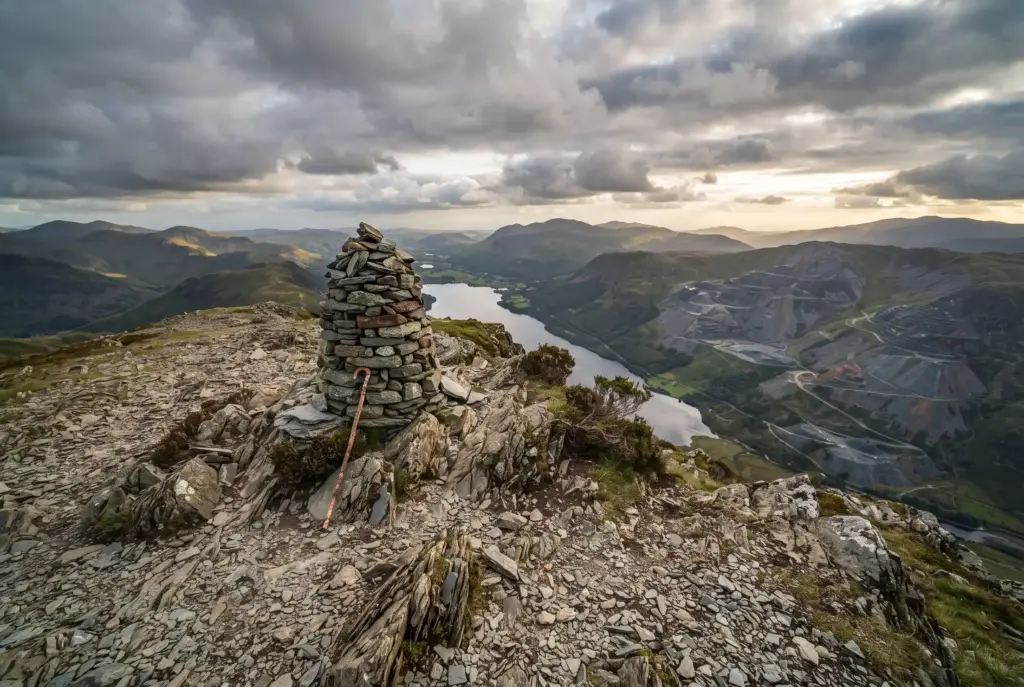
Two more moderate favourites stand out for their character. Helm Crag above Grasmere — known as “the Lion and the Lamb” for its distinctive summit rocks — is a short, steep climb of around 4 km with a big view over the valley. Castle Crag in Borrowdale is the only Wainwright under 1,000 feet, a craggy little hill of about 5 km with a disused slate quarry and a superb outlook down the Jaws of Borrowdale. For a gentle walk to a waterfall, Aira Force by Ullswater is a short, family-friendly path to a dramatic 20-metre fall in National Trust woodland. Stronger walkers after a full day can link the Fairfield Horseshoe from Ambleside, a classic 17 km ridge round taking in several summits.
The classic summits: Scafell Pike, Helvellyn and Blencathra
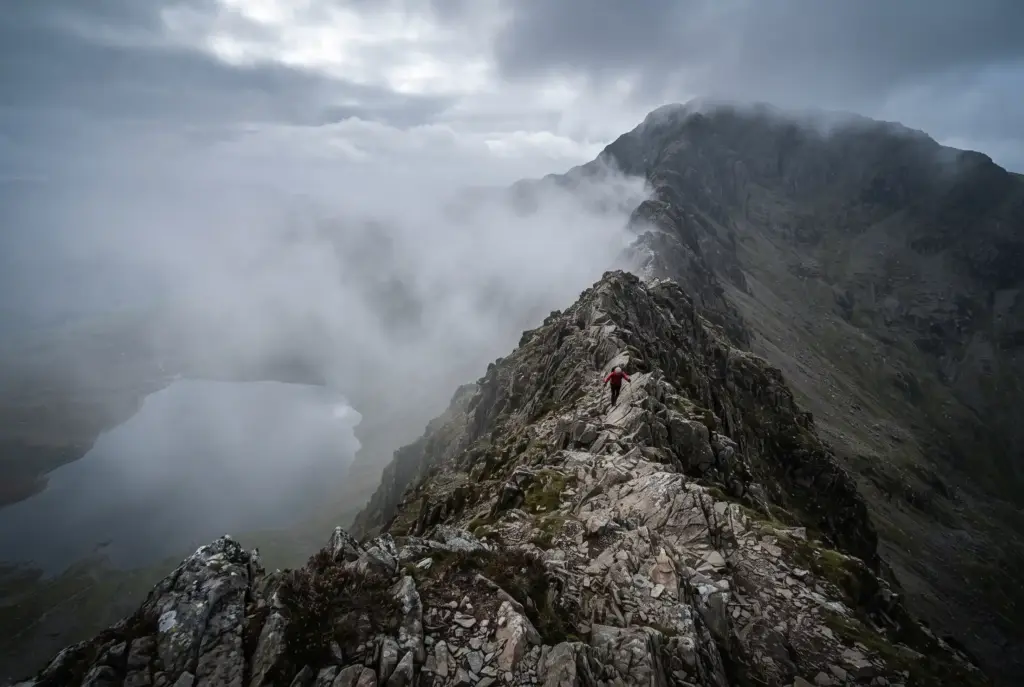
Scafell Pike, at 978 m the highest mountain in England, is a serious hill walk rather than a technical climb; the shortest route from Wasdale Head is around 9 km with 900 m of ascent and takes most walkers 5 to 7 hours, over rough and rocky ground where navigation off the summit in cloud is genuinely tricky. Helvellyn (950 m) is most famously climbed via Striding Edge, an exposed, rocky arete that is an unforgettable grade 1 scramble in good conditions but a place where people are injured every year — it demands a head for heights, sure footing and settled weather, and is not a route for beginners or winter without the right skills and kit. Blencathra (868 m) offers a similar thrill on Sharp Edge, a notoriously narrow and polished ridge; the mountain also has gentler routes to the same summit for those who want the view without the exposure.
Choosing the right Lake District walk

- First walk / with children: Orrest Head or Tarn Hows for views with minimal effort.
- Your first real fell: Catbells or Loughrigg Fell — short, rewarding, and a taste of a summit.
- A satisfying half-day summit: the Old Man of Coniston or Haystacks.
- A big day and England’s roof: Scafell Pike.
- A scramble with a head for heights: Helvellyn via Striding Edge or Blencathra via Sharp Edge — experienced walkers, good weather only.
Where to base yourself
Where you stay shapes which walks are easiest to reach. Keswick in the north is perfect for Catbells, Latrigg, Blencathra, Derwentwater and the Borrowdale fells, and has launches across the lake to car-free starts. Ambleside and Grasmere in the central lakes put Loughrigg, Helm Crag, the Fairfield Horseshoe and the Rydal and Grasmere lakeshore walks on your doorstep. Coniston is the base for the Old Man and Tarn Hows, Glenridding on Ullswater for Helvellyn and the beautiful Ullswater “Way” and Aira Force, and Wasdale in the west for Scafell Pike and Great Gable. Staying close to your chosen fell means an earlier, calmer start and more time on the hill before the car parks fill.
Planning your walk: parking, weather and safety
Lake District valleys get busy, so arrive early for popular car parks (Wasdale for Scafell Pike, Glenridding for Helvellyn, the Honister and Gatesgarth areas for Haystacks), and consider the excellent bus network and lake “launches” to reach trailheads car-free. The weather on the tops is colder, wetter and windier than in the valleys and can change fast, so check the Lake District mountain forecast, carry waterproofs, warm layers, food, water, a map and compass (and know how to use them), and start early enough to finish in daylight. In winter, the high fells hold snow and ice and become serious mountaineering terrain needing an axe, crampons and the skills to match. Whatever route you choose, be honest about your fitness and experience, and be ready to turn back — the summit will still be there another day.
Frequently asked questions
What is the best Lake District walk for beginners?
Orrest Head above Windermere and Tarn Hows near Coniston are the best easy walks, giving huge views for very little effort. For a first proper fell, Catbells above Derwentwater is the classic choice — short, with a couple of easy scrambly steps and a superb summit view.
What is the easiest walk with a big view in the Lake District?
Orrest Head is hard to beat: about 1.5 km of gentle path from Windermere to a rocky top with a panorama over the lake and fells. Loughrigg Terrace and Catbells also deliver large views for modest effort.
What is the hardest walk in the Lake District?
The most demanding popular routes are the scrambles — Helvellyn via Striding Edge and Blencathra via Sharp Edge — which are exposed and require a head for heights and settled weather. Scafell Pike is the biggest hill walk as England’s highest mountain, long and rough but not technical.
How hard is the Catbells walk?
Catbells is moderate and suits most reasonably fit walkers: around 5.5 km return with roughly 450 m of ascent and a couple of short, easy hands-on steps. It is steep in places but short, which is why it is such a popular first fell.
How long does it take to climb Scafell Pike?
Most walkers take 5 to 7 hours return. The shortest route, from Wasdale Head, is about 9 km with 900 m of ascent over rough, rocky ground. Allow more time in poor weather, and be prepared to navigate carefully off the summit in cloud.
Is Striding Edge on Helvellyn dangerous?
Striding Edge is an exposed grade 1 scramble with steep drops, and people are injured on it every year. In good, dry conditions and with a head for heights it is an exhilarating classic, but it is not for beginners, and in wind, wet or winter it becomes serious. If in doubt, use one of Helvellyn’s gentler routes.