Introduction
For years Milos flew under the radar while its famous neighbour Santorini soaked up the crowds and the postcards. That is changing fast, and once you see the island it is easy to understand why. Milos is a volcanic Cycladic island in the Aegean with around 70 beaches, a lunar-white coastline unlike anywhere else in Greece, whitewashed villages tumbling down to the sea, and a fraction of the crowds and prices of its glamorous neighbour.
This is a practical, honest guide to Milos: why it is worth choosing over Santorini, the best beaches and villages, the boat trip you should not skip, its surprising history, and everything you need to plan the trip, from flights and ferries to the best time to go.
Table of Contents
Why choose Milos over Santorini?
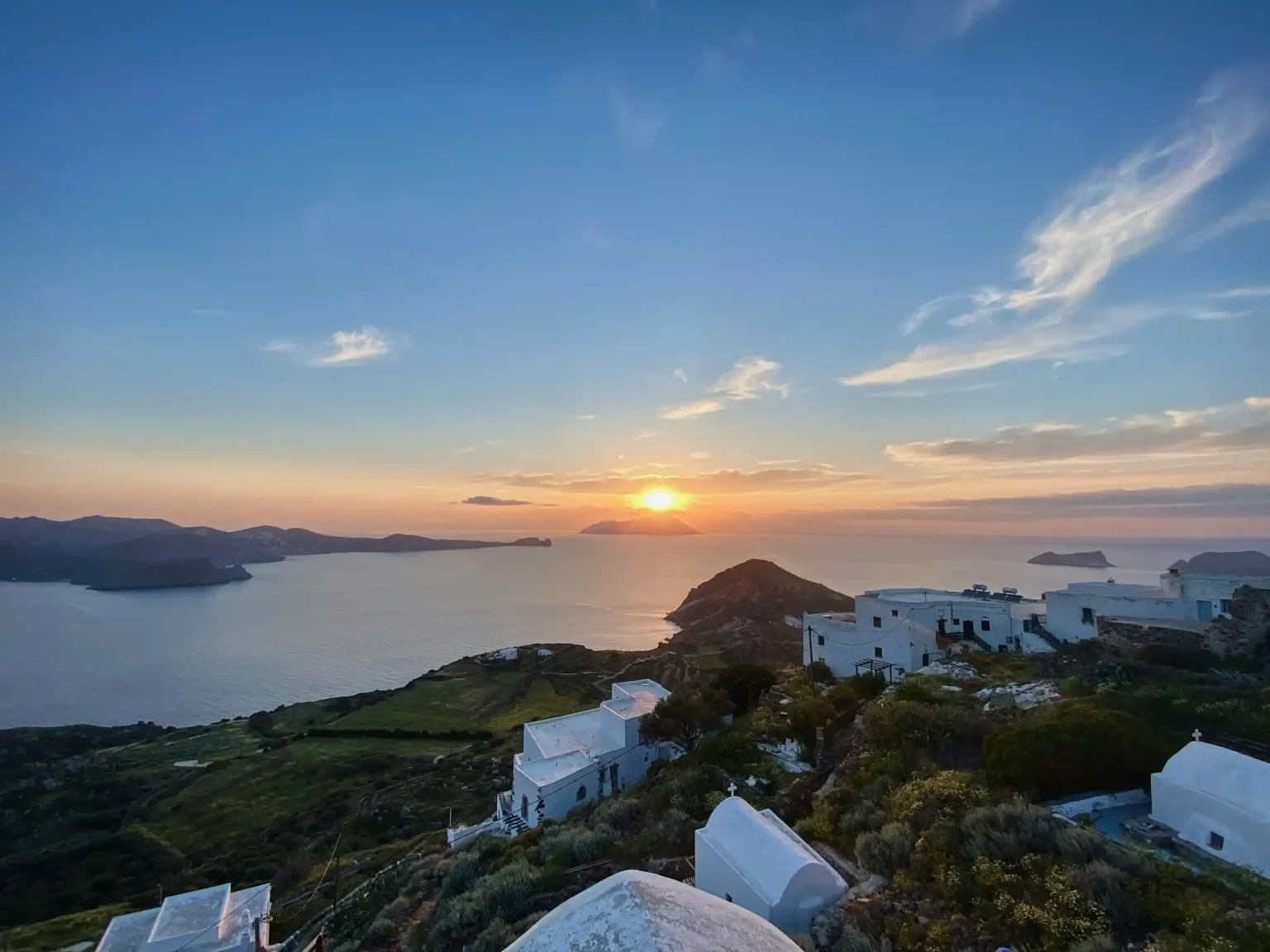
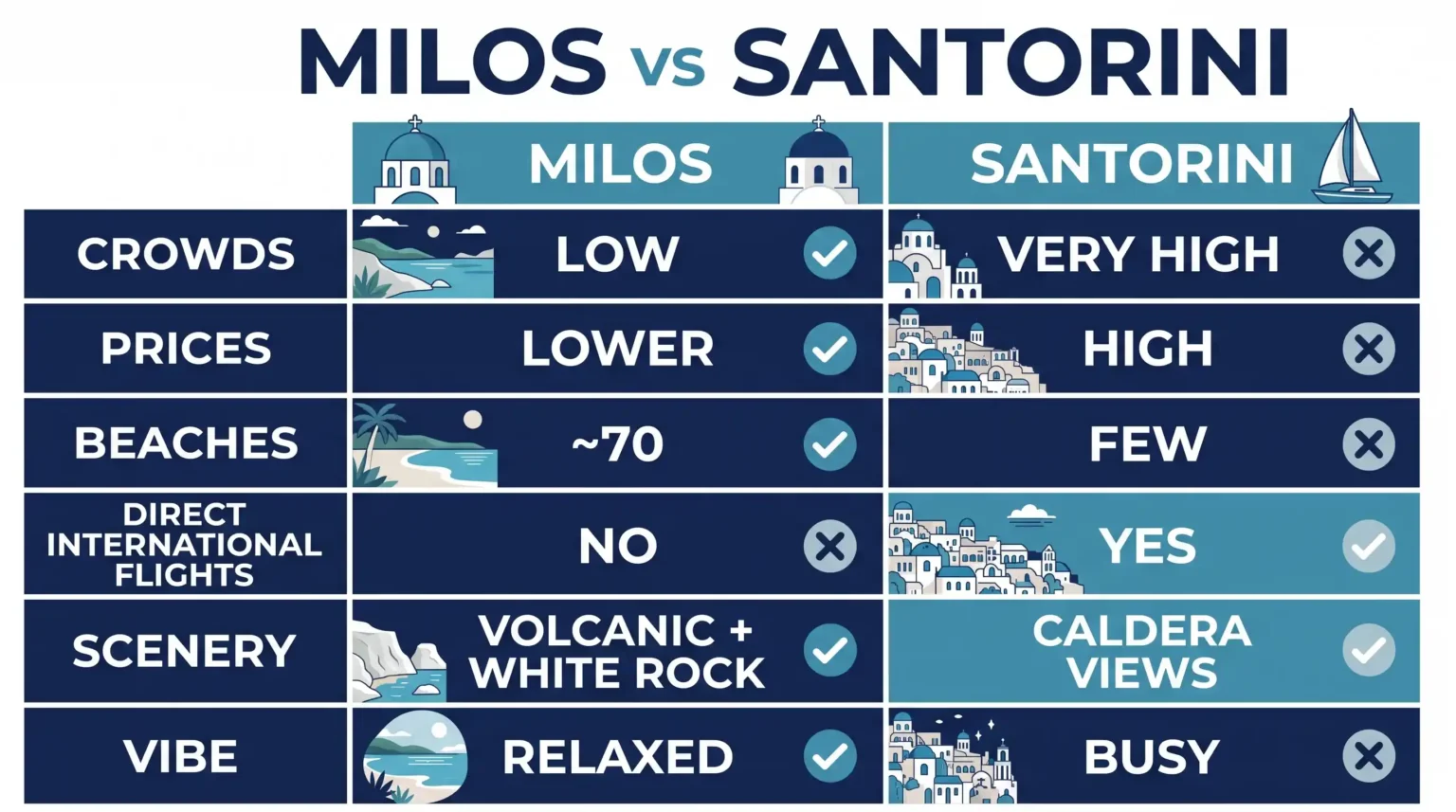
Santorini is spectacular, but it is also crowded, expensive, and often overwhelmed by cruise-ship day trippers. Milos offers much of the same Cycladic magic, the blue-domed churches, the whitewashed alleys, the golden sunsets, but with room to breathe and prices that have not left the atmosphere.
Where Milos pulls ahead is its coastline. This is a volcanic island, and the geology has produced landscapes you simply will not find on Santorini: the white moonscape of Sarakiniko, the pirate sea caves of Kleftiko, cliffs streaked in rust, ochre and pink. With roughly 70 beaches to choose from, you can find an empty cove even in August. The trade-off is honesty in both directions: Milos is less developed, with no luxury mega-resorts and no direct international flights, so if you want polished five-star infrastructure Santorini still wins. For everyone else, Milos is the Greece people imagine, without the queues.
The best beaches in Milos
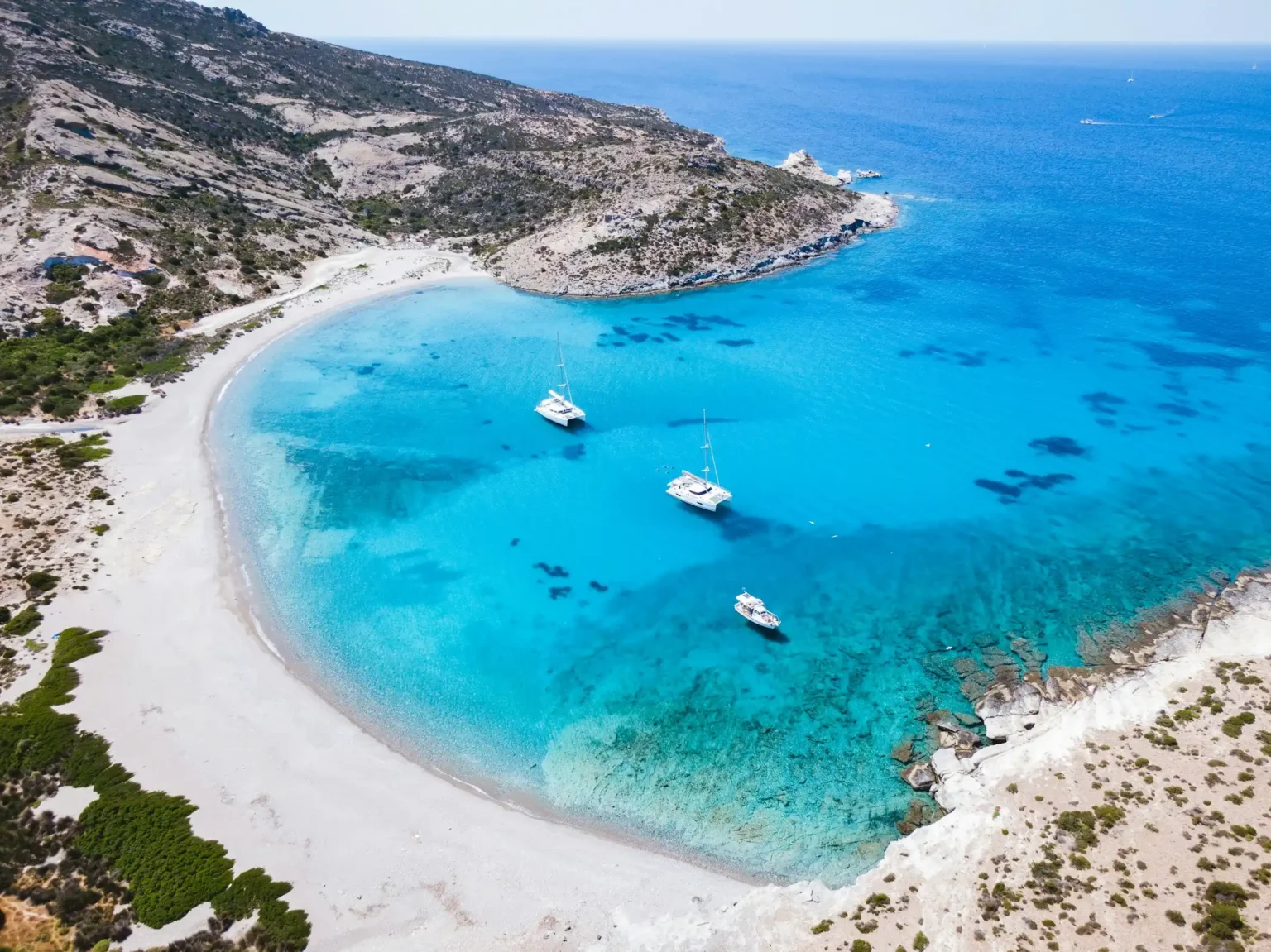
Beaches are the main event on Milos, and they are unusually varied. A handful stand out:
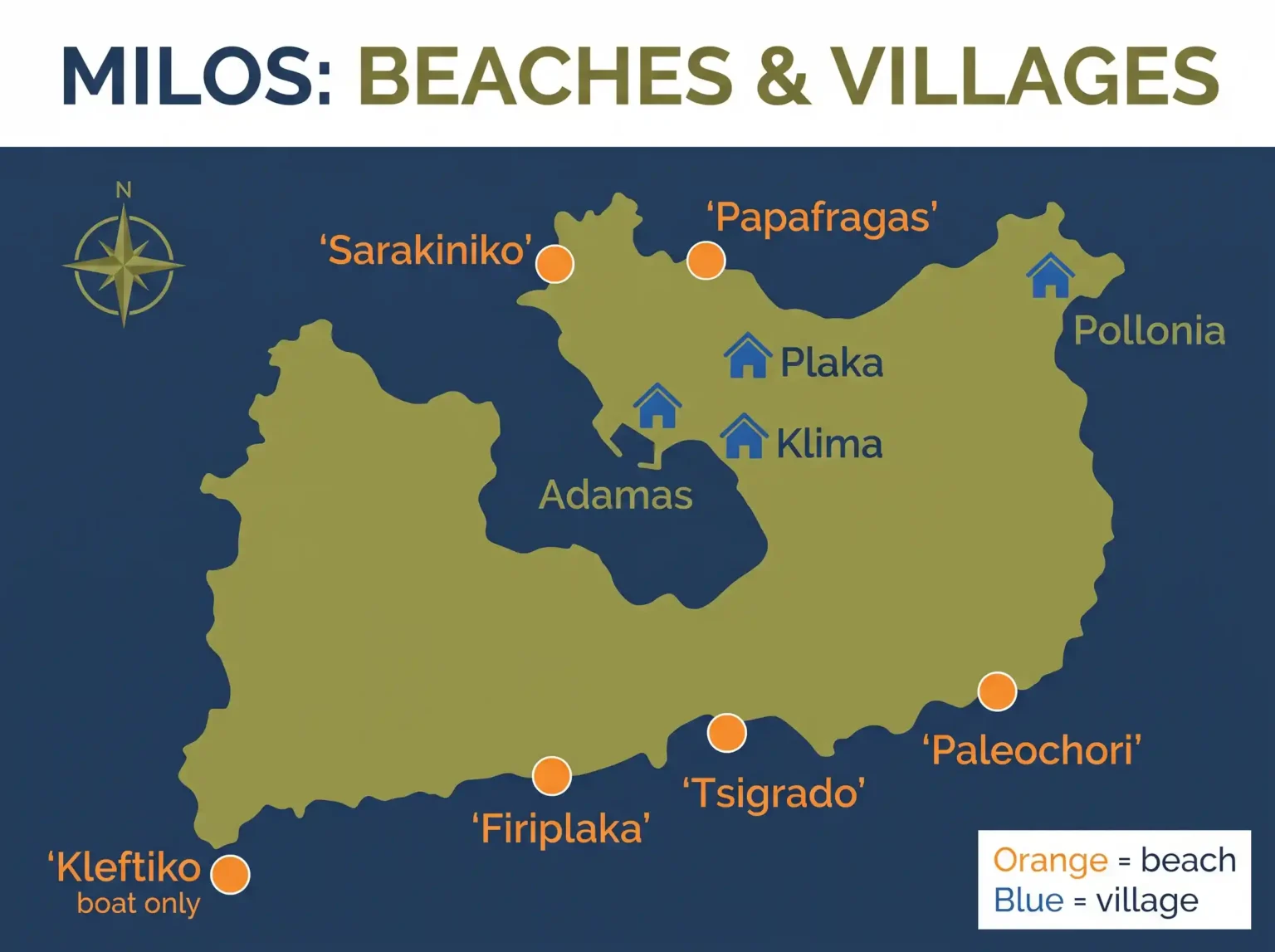
- Sarakiniko. The island’s icon: smooth white volcanic rock sculpted by wind and sea into a lunar landscape, dropping into a deep-blue inlet. Go early or late to avoid both the crowds and the fierce midday glare off the white rock.
- Kleftiko. A cluster of towering white sea stacks and caves on the remote south-west coast, once a genuine pirate hideout. It is reachable only by boat, which is exactly why the water stays so clear and quiet.
- Firiplaka and Tsigrado. Neighbouring beaches of pale cliffs and turquoise water on the south coast. Firiplaka is easy to reach; Tsigrado next door involves a short scramble down a rope and wooden ladder through a gap in the rock, which keeps it wonderfully uncrowded.
- Paleochori. A long beach backed by colourful mineral cliffs, warmed in places by volcanic activity beneath the sand, with good tavernas right behind it.
- Papafragas. Less a beach than a dramatic narrow inlet of blue water squeezed between white cliffs, on the island’s north coast near the ancient site of Phylakopi.
Many of the best beaches sit at the end of rough tracks or are only accessible by sea, so a rental vehicle or a boat trip is the key to reaching them.
The villages: Plaka, Klima, Pollonia and Adamas
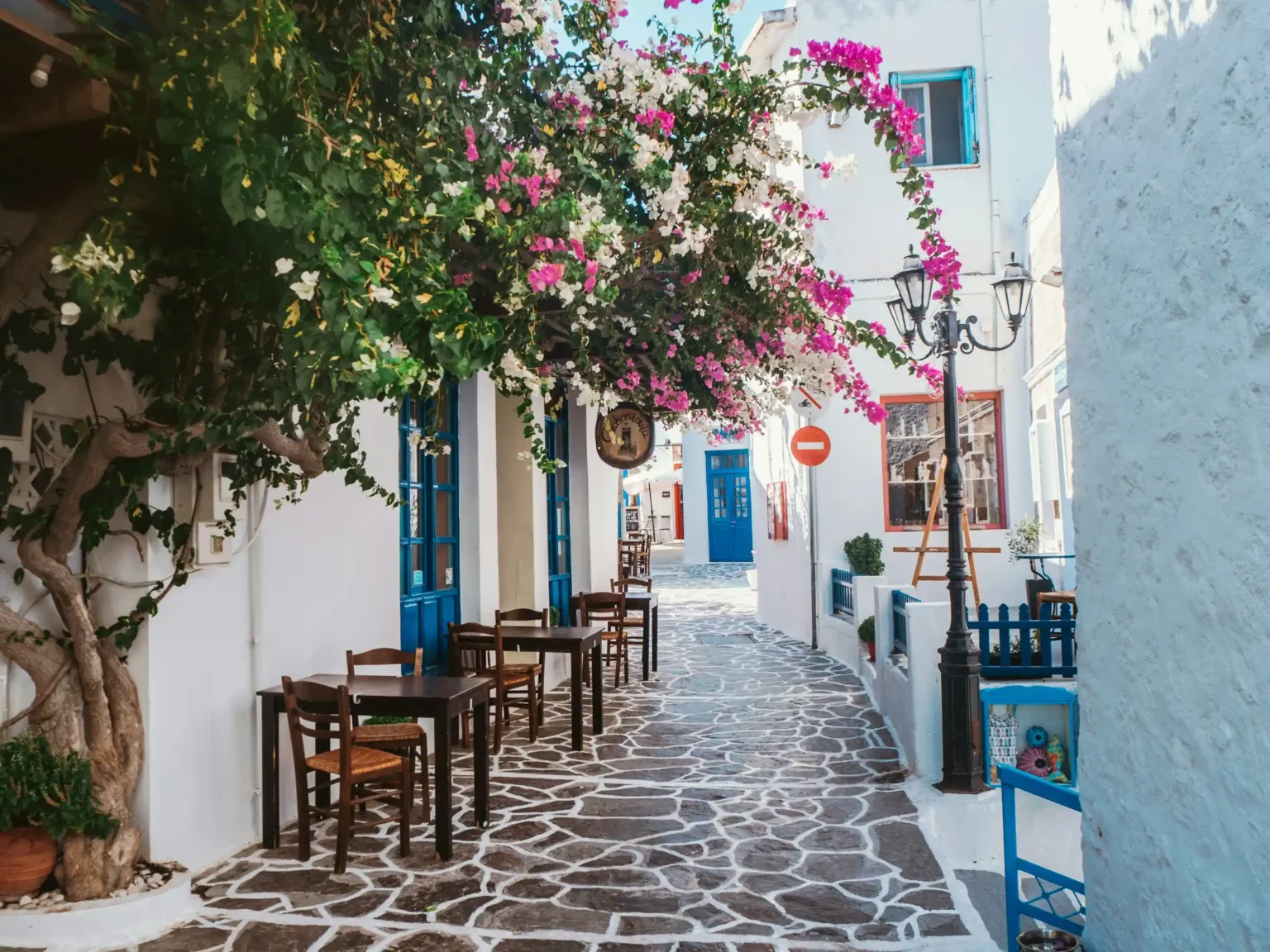
Milos rewards time on land as much as in the water, and its villages each have a distinct character.
- Plaka is the hilltop capital, a maze of whitewashed lanes, bougainvillea and tiny churches crowned by a Venetian castle (the Kastro). The walk up to the castle at dusk gives one of the finest sunsets in the Cyclades.
- Klima is the island’s most photographed spot: a fishing hamlet where two-storey boat garages called syrmata line the shore, their doors painted every shade of red, blue, green and yellow, glowing at sunset.
- Pollonia is a relaxed fishing village on the north-east coast, with a sandy beach, excellent seafood tavernas, and the ferry across to the smaller island of Kimolos.
- Adamas (Adamantas) is the main port and the island’s practical hub, with the widest choice of restaurants, shops, car hire and boat operators.
Things to do beyond the beaches
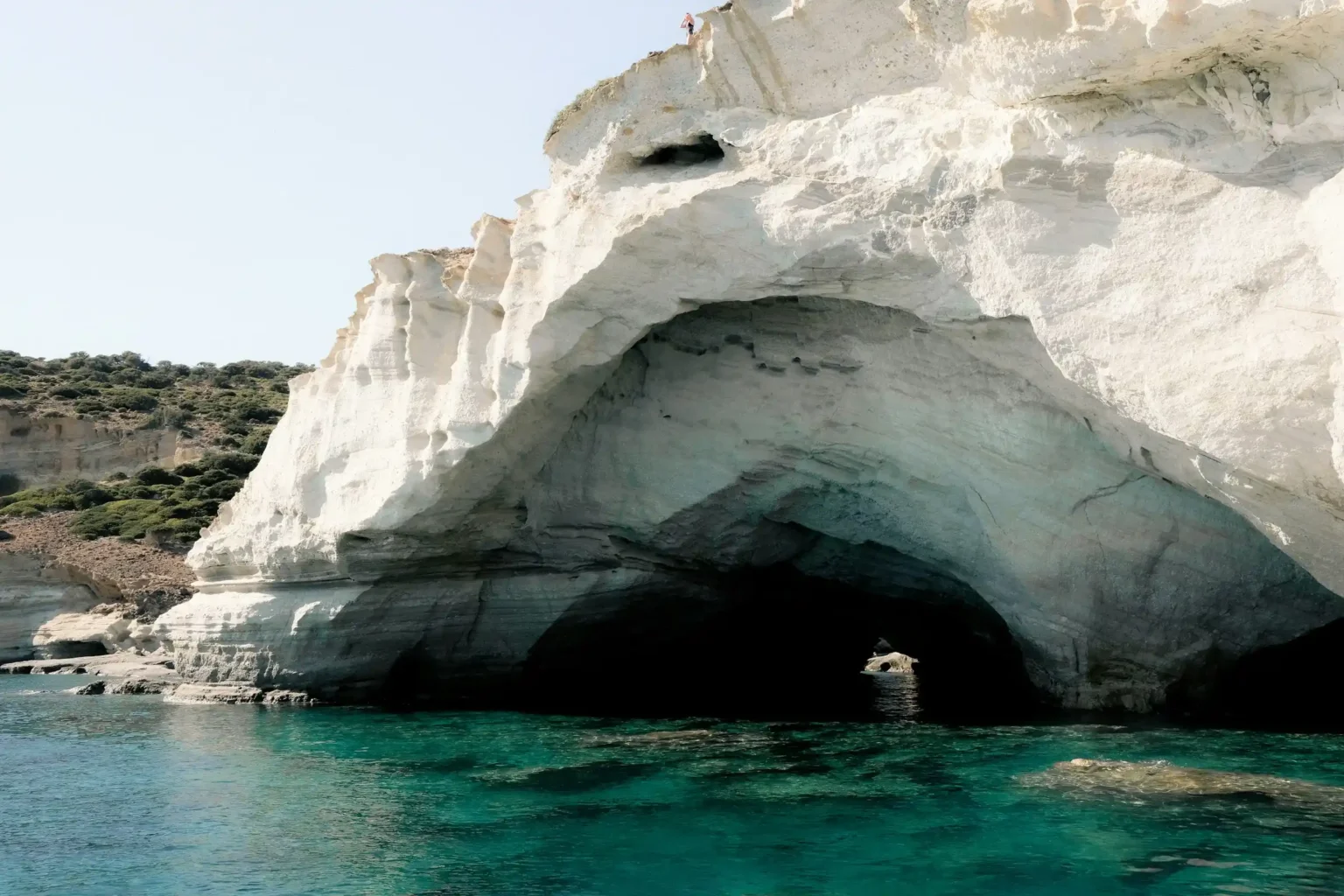
Milos has more history and character than a beach island has any right to. A few things are worth building into any trip:
- Take the Kleftiko boat tour. This is the one experience not to miss. Full-day and half-day boats leave from Adamas and Pollonia to sail the southern coast, swimming and snorkelling in sea caves and coves that no road reaches, with Kleftiko as the finale.
- Trace the Venus de Milo. The world-famous statue of Aphrodite, the Venus de Milo now in the Louvre, was unearthed here in 1820 near the village of Trypiti. You can see the spot where it was found and a cast of the statue in the small Archaeological Museum in Plaka.
- Visit the ancient theatre and catacombs. Near Trypiti, a beautifully preserved Roman-era marble theatre looks out over the sea, and just below it lie early Christian catacombs among the most important in Greece.
- Understand the mining island. Milos has been mined since prehistory, first for obsidian and later for sulphur and minerals that colour its cliffs. The Mining Museum in Adamas tells the story well.
How to get to Milos
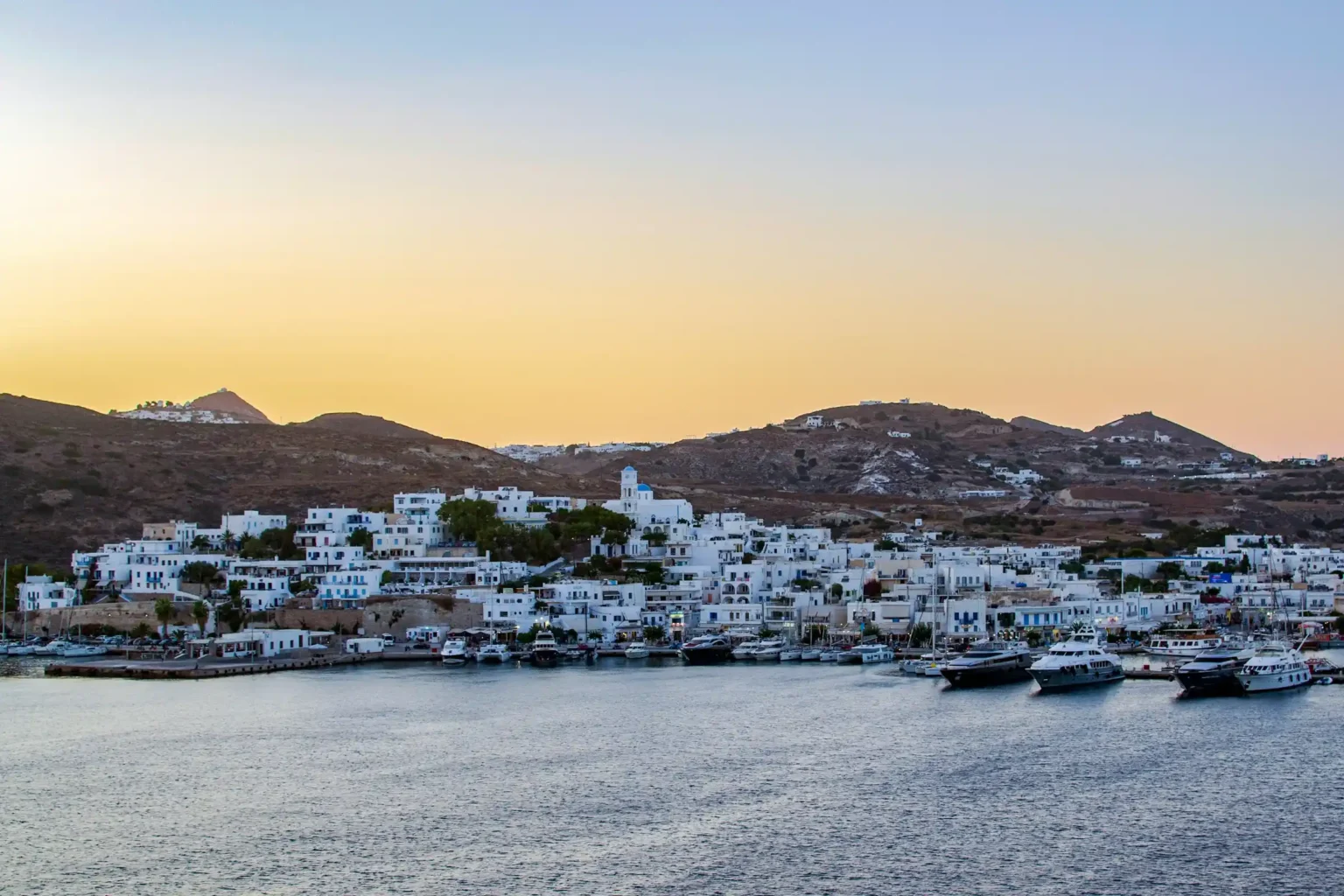
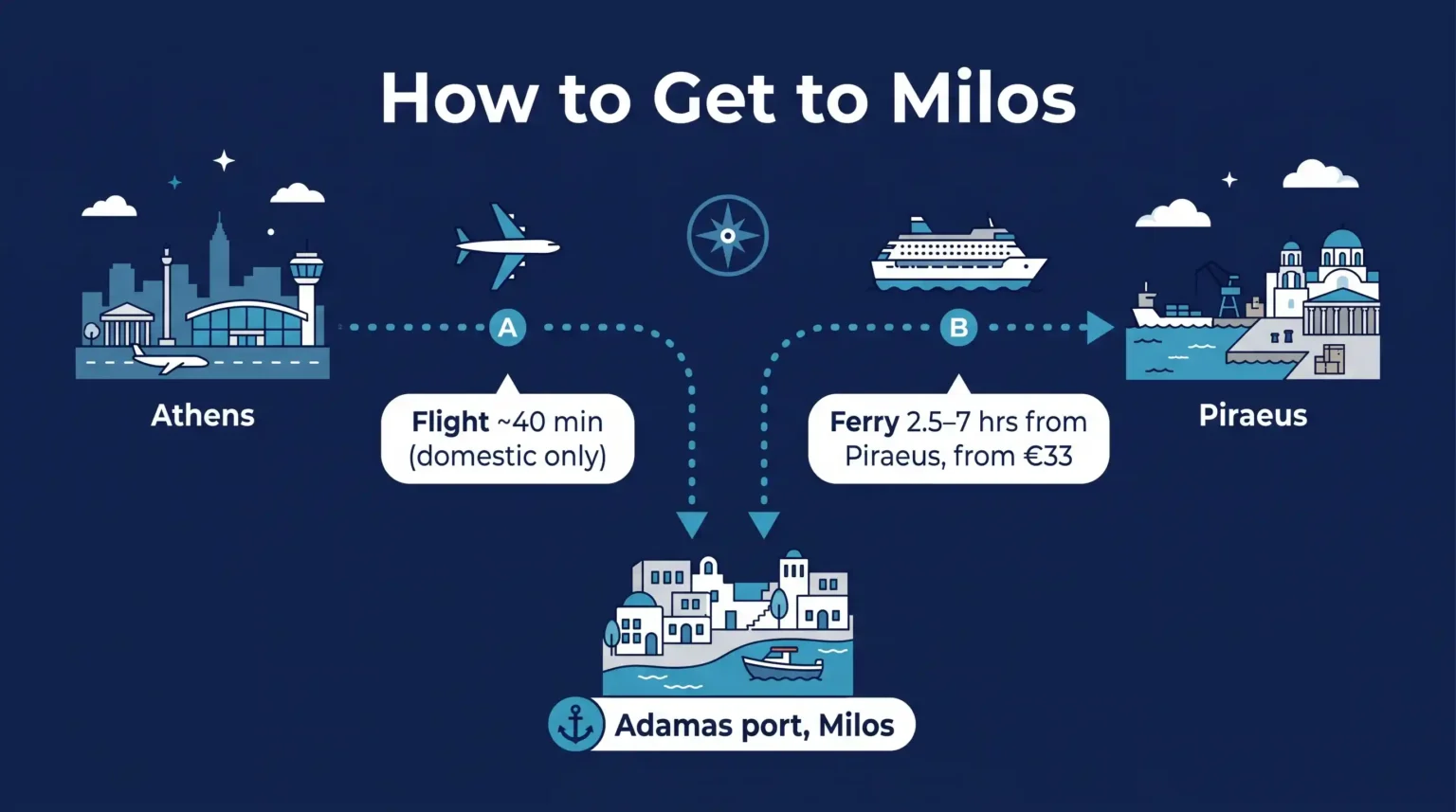
Everything runs through Athens. There are two ways to make the final hop to Milos, and the choice comes down to time versus money.
By air: a domestic flight from Athens is the fastest option, taking roughly 40 minutes in the air. Milos airport only handles domestic flights, so Athens is the sole gateway. Planes are small and seats sell out for summer, so book early.
By ferry: ferries leave from the port of Piraeus in Athens and take anywhere from about two and a half hours on a high-speed vessel to five to seven hours on a conventional ferry, with fares often starting around 33 euros. Summer sailings book up months ahead, so reserve early through a site such as Ferryhopper. Ferries and flights both arrive at Adamas. Because ferry schedules shift with the season and the weather, it is worth checking whether travel insurance is worth it for the trip, particularly if you have tight onward connections.
Best time to visit Milos
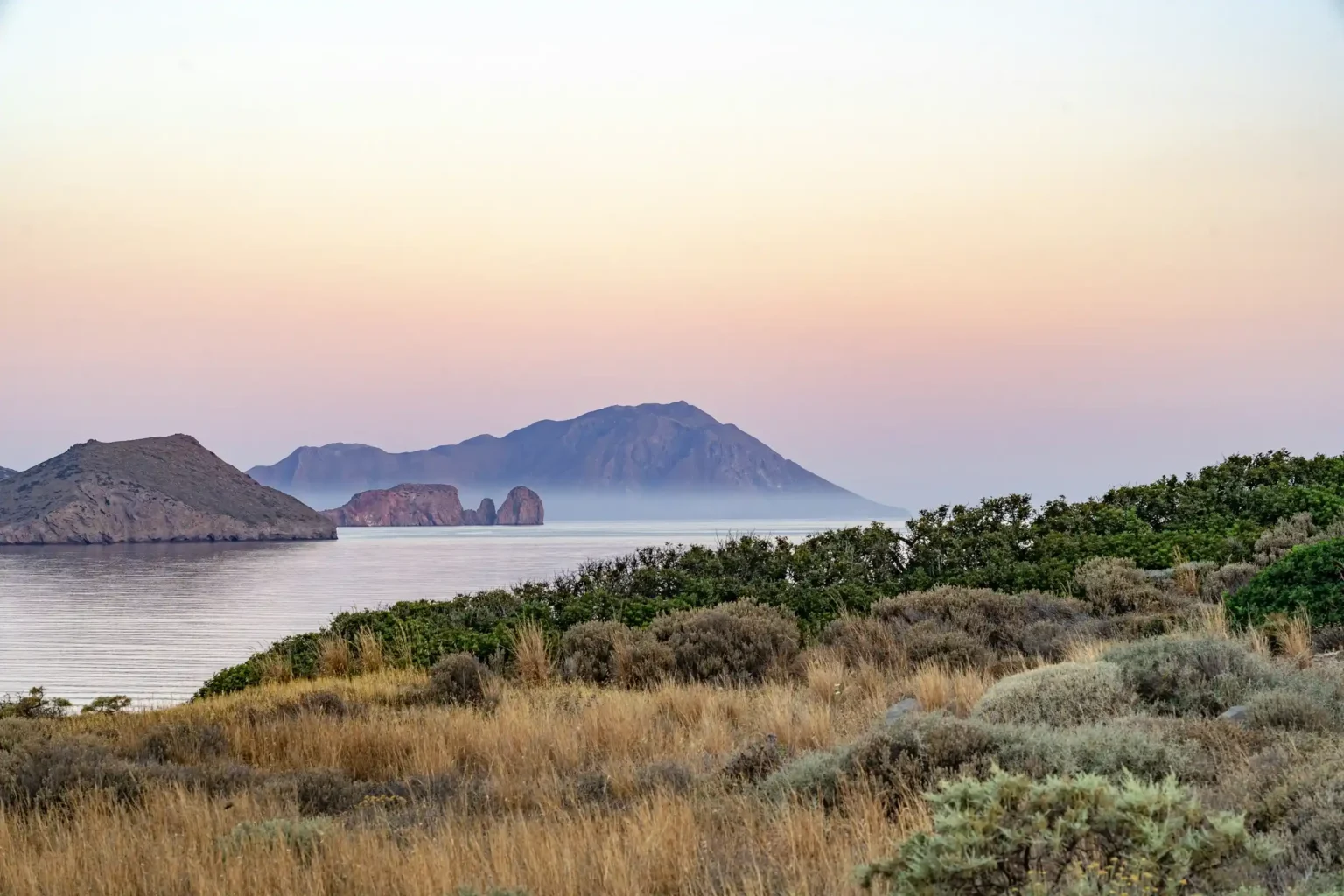
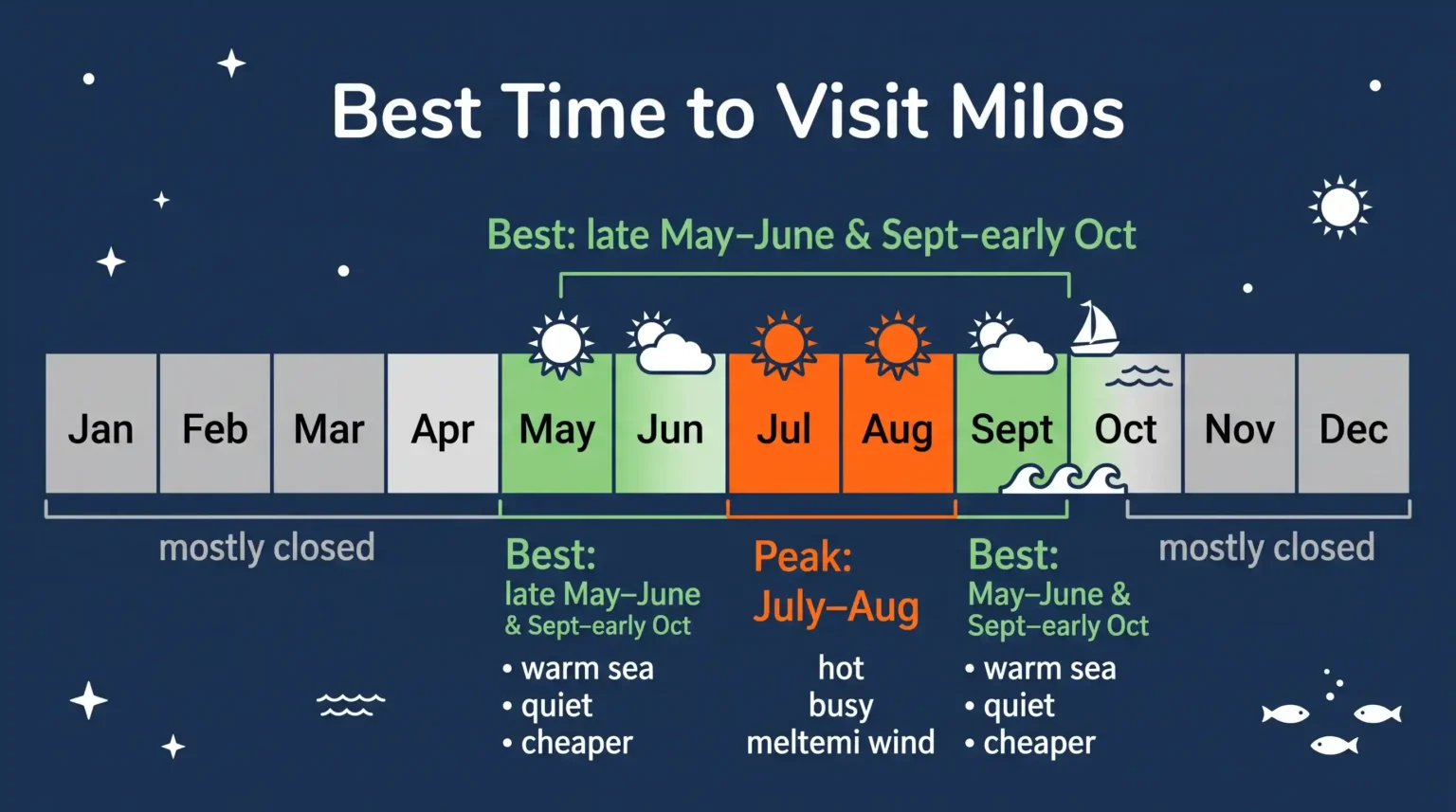
The season runs from May to October. The sweet spots are late May to June and September to early October, when the sea is warm enough to swim, the beaches are quiet, and prices are far below the summer peak. This shoulder season is the best time to visit for most travellers.
July and August bring the hottest weather, the largest crowds and the highest prices, along with the meltemi, a strong northerly wind that can whip up the sea and close some of the exposed beaches and boat tours for a day or two. Winter is very quiet, with most hotels, tavernas and tours closed, so it suits only those looking for near-total solitude.
Where to stay in Milos
Three areas cover most travellers. Adamas is the most convenient base, central to ferries, restaurants and tours. Pollonia is quieter and more stylish, ideal for a relaxed, food-focused stay by a beach. Plaka and nearby Trypiti trade beach access for views, charm and the best sunsets. Whichever you pick, book well ahead for summer, and rent a car or an ATV, as public transport is limited and the island’s best spots are spread out. For a stress-free pack for a beach-and-boat trip, our packing list generator can build a list for you.
Conclusion
Milos delivers the Greece of the imagination, whitewashed villages, glowing sunsets, and water clear enough to see straight to the seabed, without Santorini’s crowds and price tags, and it adds volcanic landscapes you will not see anywhere else. Travel in the shoulder season, rent a car to reach the beaches, take the boat trip to Kleftiko, and base yourself in Adamas or Pollonia. Do that, and you will leave wondering why anyone still fights the crowds next door. If you enjoy islands that reward the effort, our Bora Bora travel guide and our Siquijor Island travel guide both make good companion reads.
Frequently asked questions
Is Milos better than Santorini?
It depends on what you want. Milos has more beaches, far fewer crowds, lower prices, and unique volcanic scenery like Sarakiniko. Santorini has the famous caldera, the polished luxury hotels, and direct international flights. For beaches and relaxation over nightlife and five-star resorts, most travellers now prefer Milos.
How do you get to Milos?
Through Athens. You can fly from Athens in about 40 minutes on a domestic flight, or take a ferry from Piraeus, which takes roughly 2.5 hours on a high-speed boat and up to 5 to 7 hours on a conventional ferry. Both arrive at the port of Adamas.
What is Milos famous for?
Milos is famous for Sarakiniko, its white lunar rock beach, for the Venus de Milo statue that was discovered on the island in 1820, and for having around 70 beaches with dramatic volcanic scenery across a single small island.
Do you need a car in Milos?
Effectively, yes. Public transport is limited, and many of the best beaches sit at the end of rough tracks. Renting a car or an ATV is the easiest way to explore, though a boat tour covers the beaches that no road reaches.
What is the best time to visit Milos?
Late May to June and September to early October are ideal, with warm seas, quiet beaches and lower prices. July and August are hottest and busiest, and can bring the strong meltemi wind. Winter is very quiet with most places closed.
How many days do you need in Milos?
Three to five days is the sweet spot. That is enough for a boat tour to Kleftiko, several of the best beaches, the villages of Plaka and Klima, and the island’s history, without feeling rushed.