Morocco packs an absurd amount of variety into a country roughly the size of California. You can stand in the Sahara dunes at sunrise, eat lunch in a mountain Berber village, and be browsing a 1,000-year-old medina by dinner — all in the same day if you plan the drive right.
The challenge is not finding things to do. It is deciding what to cut. This guide gives you three itineraries — 5, 7, and 10 days — with actual transport times, costs, and the specific things worth skipping so you spend less time on a bus and more time in the places that matter.
Which itinerary length is right for you
5 days: Enough for Marrakech, the Atlas Mountains, and either Essaouira or a quick desert loop. You will feel rushed but cover the highlights. Best if you are adding Morocco to a longer Spain or Portugal trip.
7 days: The sweet spot. Covers Marrakech, the desert (Merzouga or Zagora), and either Fez or the coast. You get depth without burnout. This is what most first-time visitors should plan.
10 days: The full circuit. Marrakech, Sahara, Fez, Chefchaouen, and the coast. You can move at a human pace, spend two nights in places that deserve it, and skip nothing essential.
Quick reference
- Budget per day: 400 to 600 MAD ($40 to $60) for hostels and street food. 1,000 to 1,500 MAD ($100 to $150) for riads and sit-down restaurants. 2,500+ MAD ($250+) for boutique riads and private guides.
- Best time to visit: March to May and September to November. Summer is scorching in the interior (40°C+). Winter is mild on the coast but cold in the mountains and desert at night.
- Ramadan: Moves 10 to 11 days earlier each year. During Ramadan, many local restaurants close during daylight hours. Tourist restaurants stay open. The atmosphere changes — evenings become festive and communal, but daytime streets are quieter. Plan around it or embrace it, but do not ignore it.
- Visa: Citizens of the US, UK, EU, Canada, Australia, and most others get 90 days visa-free on arrival.
- Currency: Moroccan Dirham (MAD). 1 USD ≈ 10 MAD. ATMs are everywhere. Cash is king in medinas and small towns.
Want a personalised day-by-day plan? Use our trip itinerary builder to generate a custom Morocco itinerary based on your travel dates and pace.
5-day Morocco itinerary
Day 1: Arrive in Marrakech
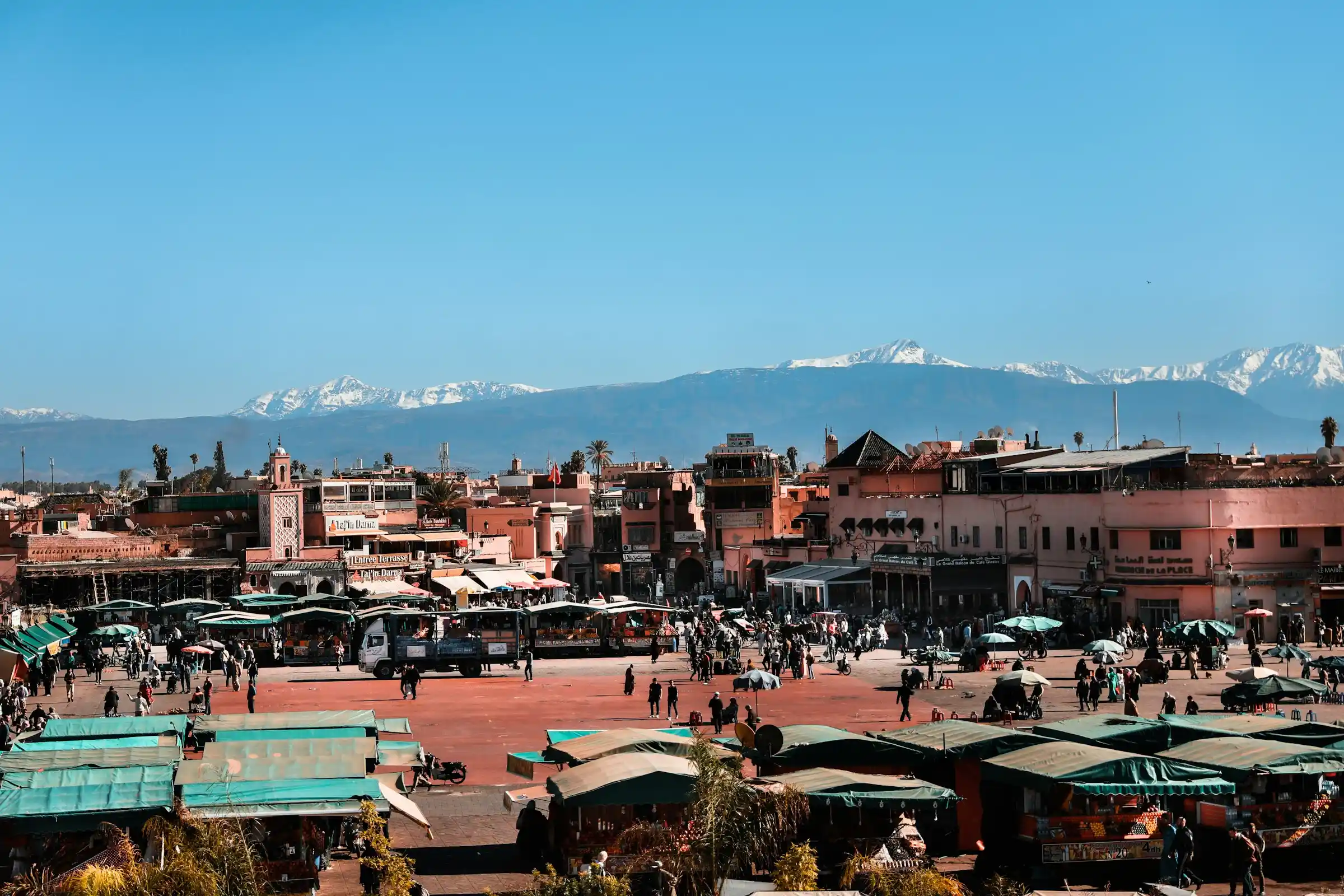
Fly into Marrakech Menara Airport (RAK). Transfer to your riad in the Medina — airport taxis cost 70 to 100 MAD with the meter, or negotiate 150 MAD fixed if the meter is “broken.” Settle in, then walk to Jemaa el-Fnaa in the late afternoon when the square comes alive with food stalls, musicians, and storytellers. Eat dinner at the food stalls (a full plate of grilled meats, bread, and salad runs 40 to 80 MAD) or at a rooftop restaurant overlooking the square for 150 to 300 MAD.
Day 2: Marrakech
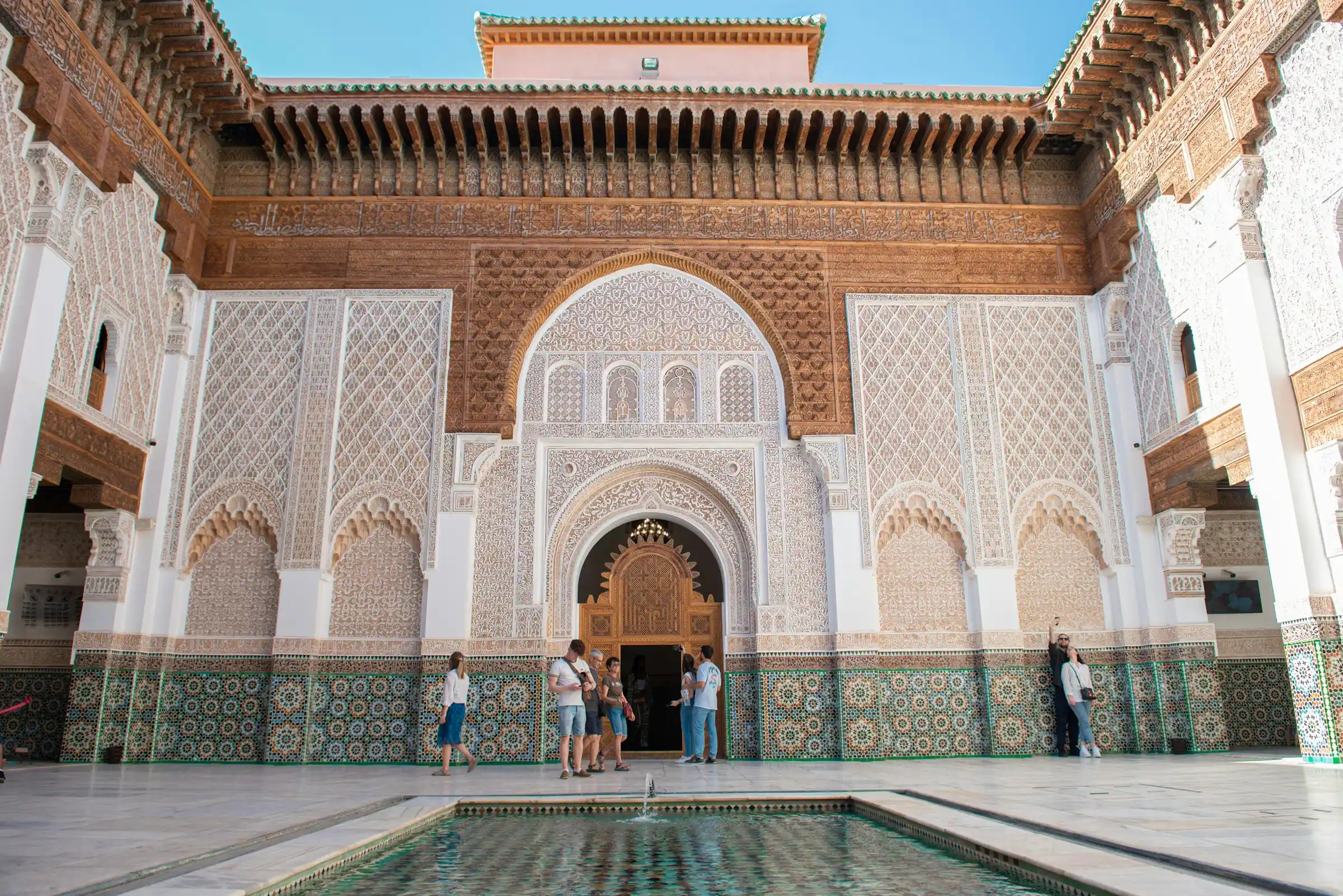
Morning: Ben Youssef Madrasa (70 MAD entry), the Photography Museum, and the souks. Hire a local guide for the morning if you want context — 300 to 400 MAD for a half-day through your riad. Afternoon: Bahia Palace (70 MAD) and the Saadian Tombs (70 MAD). If you have energy, add Jardin Majorelle (150 MAD including the Berber Museum). Evening: Dinner in the Medina. For Marrakech day trip options, you could swap Day 3 for a trip to the Ourika Valley or Ouzoud Falls if the desert does not appeal.
Day 3: Atlas Mountains day trip
Drive or arrange a tour to the Ourika Valley (45 minutes from Marrakech). Hike to the Setti Fatma waterfalls, visit a Berber village, and eat tagine at a riverside restaurant. Return to Marrakech by late afternoon. Cost for a private driver: 500 to 700 MAD for the day. Alternatively, take a grand taxi from Bab er-Rob (25 to 30 MAD per seat, shared).
Day 4: Essaouira
Supratours bus from Marrakech to Essaouira: 2.5 hours, 80 to 100 MAD. Arrive mid-morning. Walk the ramparts, explore the port (watch fishermen auction the morning catch), browse the woodworking workshops in the medina, and eat grilled fish at the port stalls — a generous plate of fish, shrimp, and calamari costs 60 to 100 MAD. Stay overnight in a riad in the medina (300 to 600 MAD).
Day 5: Essaouira and departure
Morning on the beach or a final walk through the medina. Supratours bus back to Marrakech (book return in advance — they sell out). Afternoon flight out of RAK, or extend your trip.
7-day Morocco itinerary
This builds on the 5-day route and adds the Sahara.
Days 1–2: Marrakech
Same as the 5-day itinerary. Two full days in Marrakech is enough to see the major sights without rushing.
Day 3: Marrakech to Sahara desert (via Ait Benhaddou)
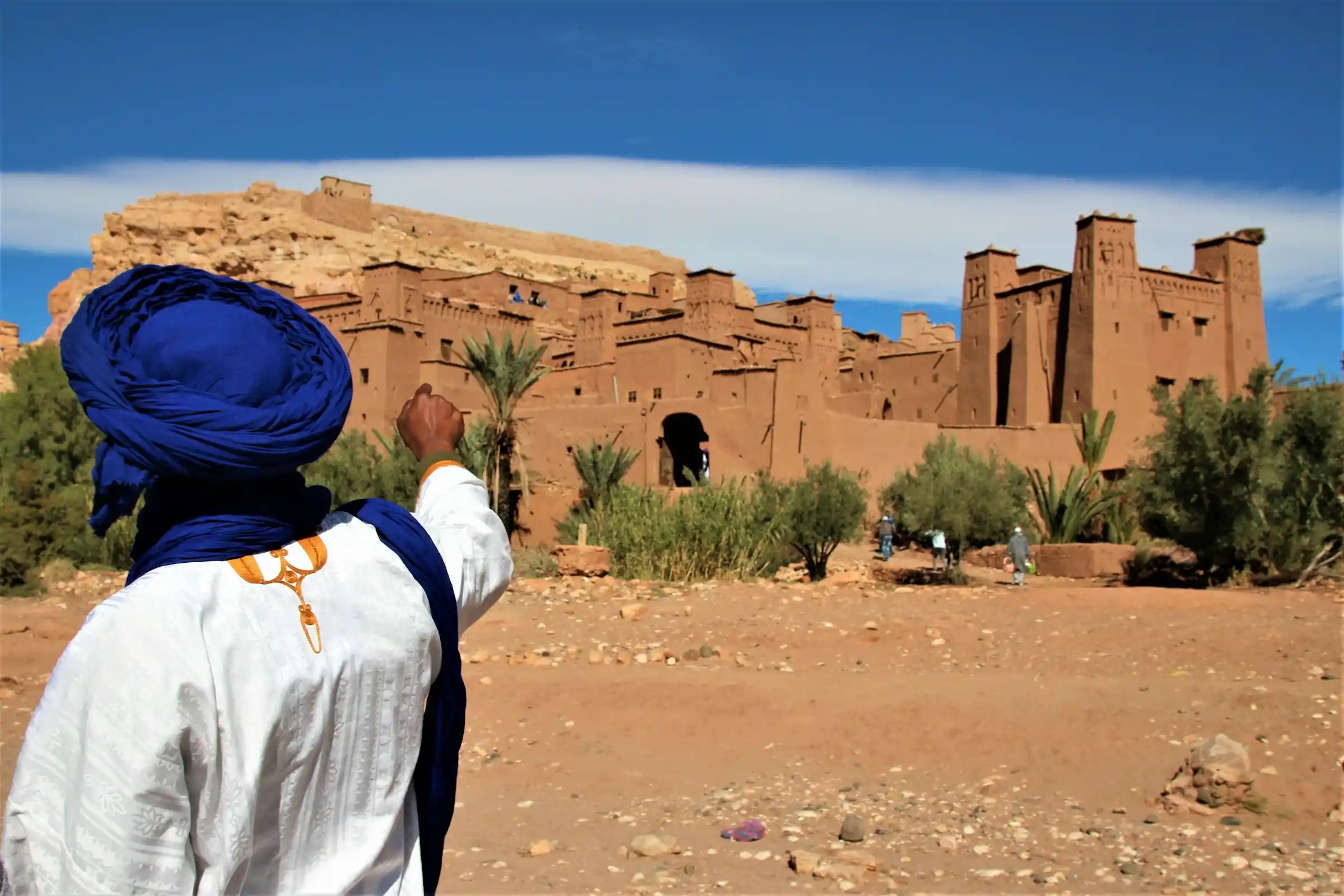
Leave early. Most desert tours drive through the High Atlas via Tizi n’Tichka pass, stopping at Ait Benhaddou — the UNESCO fortified village used in Gladiator and Game of Thrones. Continue to Ouarzazate, then the Dades or Todra Gorge. Overnight in a guesthouse. This is a long driving day (8 to 10 hours total), which is why shared or private tours are the standard — 1,200 to 2,500 MAD per person for a 2-night desert trip from Marrakech, including transport, accommodation, meals, and camel ride.
Day 4: Sahara (Merzouga)
Drive to Merzouga and the Erg Chebbi dunes. Camel ride to the desert camp in the late afternoon. Watch sunset from the dunes. Sleep in a Berber tent camp under the stars. Sunrise the next morning from the dunes is the single most photographed moment in Moroccan tourism, and it earns it.
Day 5: Sahara to Marrakech (or Fez)
Return drive. If continuing to Fez, the drive from Merzouga takes about 8 hours via Midelt and Ifrane. If returning to Marrakech, arrive by evening.
Day 6: Essaouira
Same as Day 4 in the 5-day itinerary. Bus to Essaouira, explore the port and medina, overnight.
Day 7: Essaouira and departure
Morning in Essaouira, then bus back to Marrakech for your flight. Or, if ending in Fez, skip Essaouira entirely and spend Days 6 and 7 exploring Fez instead.
10-day Morocco itinerary
The full circuit: Marrakech, Sahara, Fez, Chefchaouen, and the coast.
Days 1–2: Marrakech
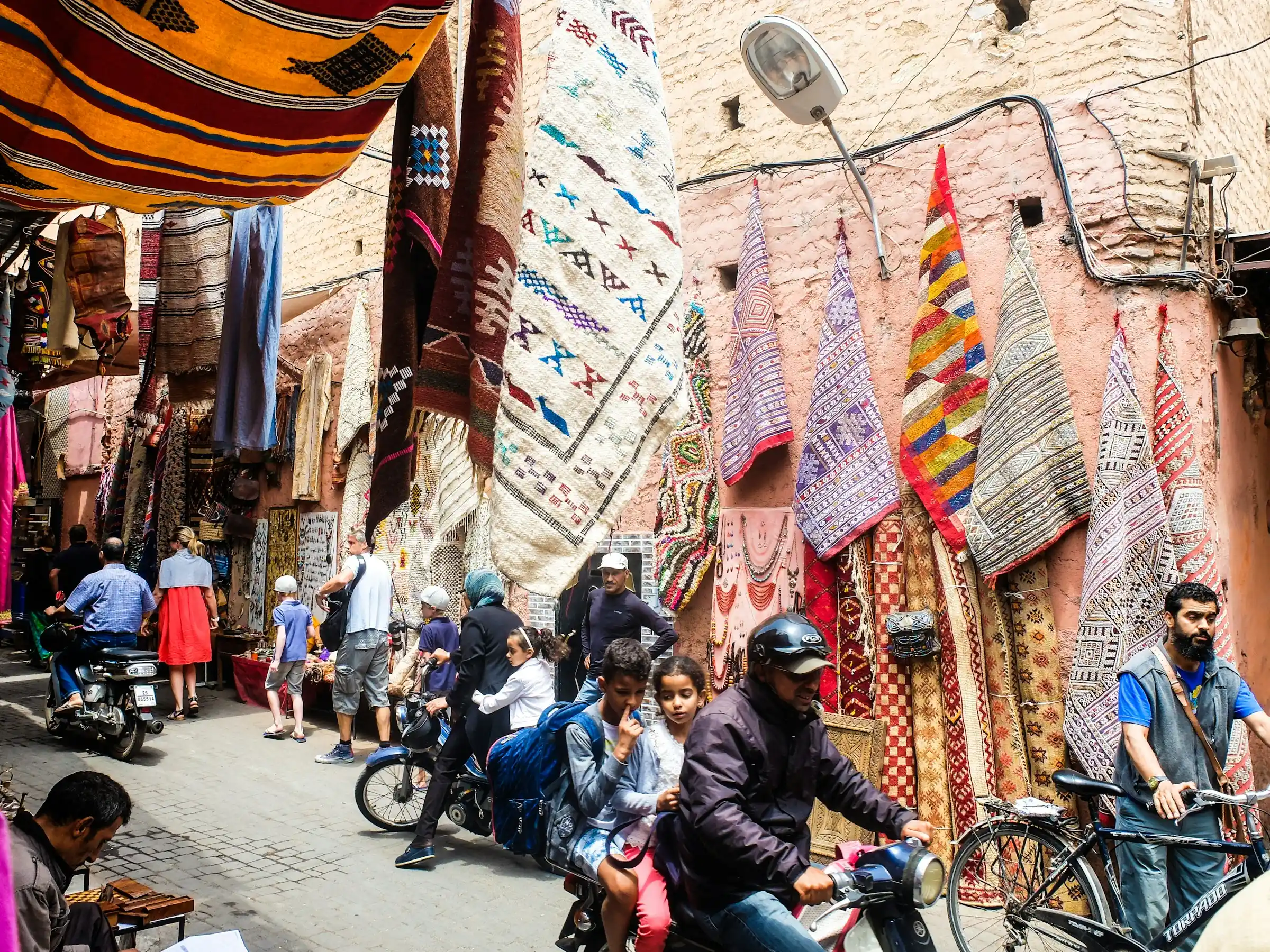
Explore Marrakech at a relaxed pace. Add a hammam experience (traditional public hammam for 20 to 50 MAD, or a tourist-oriented spa hammam for 200 to 500 MAD). Browse the Mellah (Jewish quarter) and the spice market. Evening cooking class at a riad — 300 to 500 MAD per person including dinner.
Days 3–5: Sahara desert
Three-day, two-night desert tour from Marrakech ending in Fez (or vice versa). This eliminates the need to backtrack. Day 3: Marrakech to Dades Gorge via Ait Benhaddou. Day 4: Dades Gorge to Merzouga, camel ride, desert camp. Day 5: Merzouga to Fez via Midelt and the cedar forests of Ifrane. One-way Marrakech-to-Fez desert tours cost 1,500 to 3,000 MAD per person.
Days 6–7: Fez
Two days in the imperial city. Day 6: Hire a guide for the Fez el-Bali medina (the largest car-free urban area in the world). Visit the Bou Inania Madrasa, the tanneries (go in the morning for the best light and less heat), and the Attarine Medersa. Day 7: The Merenid Tombs for a panoramic view at sunrise, then the Royal Palace gates, Mellah, and the Borj Nord weapons museum. Fez is a quieter, more intellectual city than Marrakech — budget more time for getting lost in the medina without a plan.
Day 8: Fez to Chefchaouen
CTM bus from Fez to Chefchaouen: 4 hours, 75 MAD. Arrive by early afternoon. Walk the blue-washed medina, climb to the Spanish Mosque for sunset views over the Rif Mountains. Overnight in a guesthouse — rooms are significantly cheaper here than in Marrakech or Fez (150 to 400 MAD for a double).
Day 9: Chefchaouen
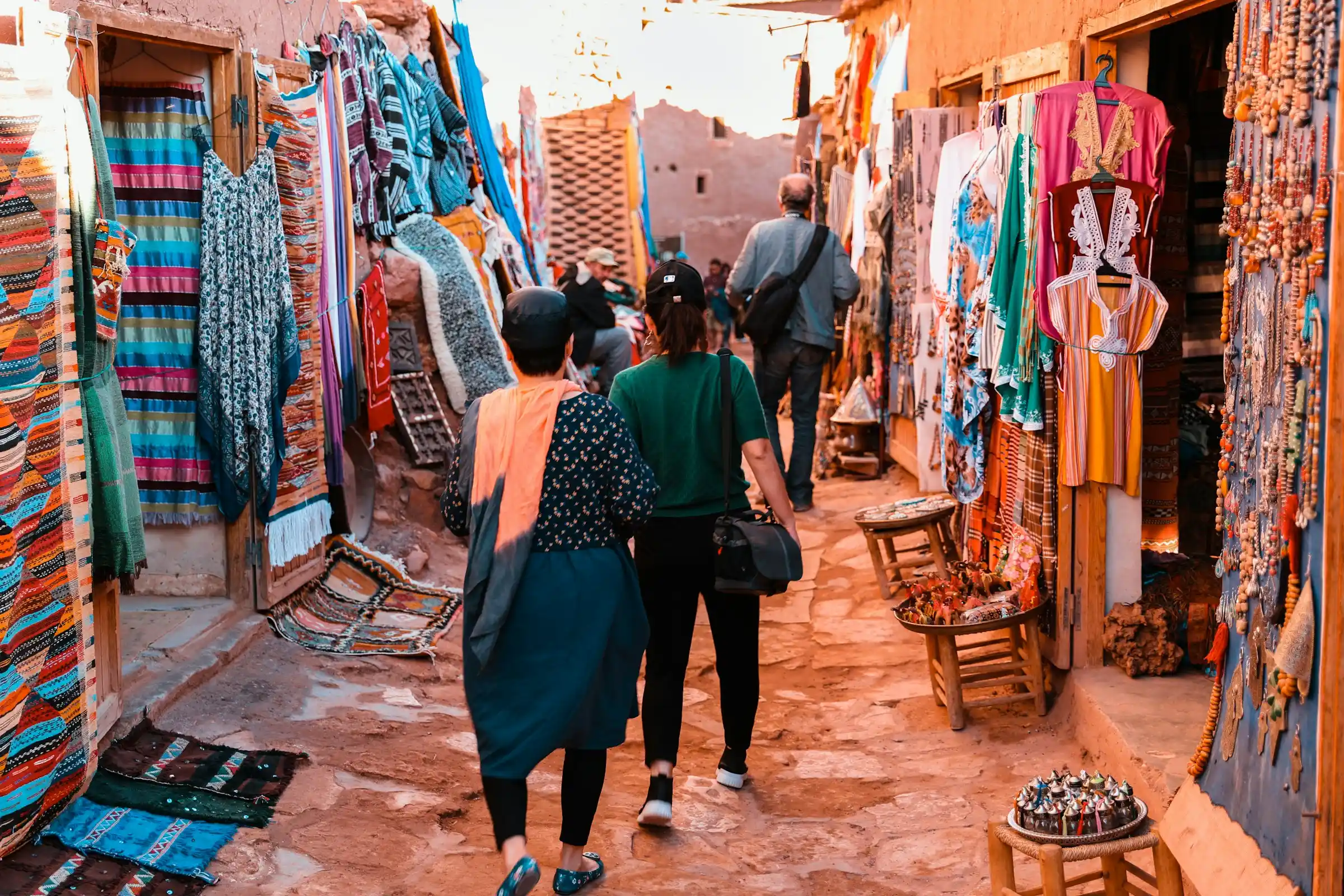
Full day to explore at leisure. Hike to the Akchour Waterfalls and the natural Bridge of God (moderate hike, 3 to 4 hours round trip). Or wander the medina, shop for woven blankets and leather goods (prices are lower here than in Marrakech for comparable quality), and drink mint tea in the main square. Chefchaouen deserves two nights — the day-trip crowds from Fez leave by 4 p.m., and the evening atmosphere is the best part.
Day 10: Chefchaouen to departure
Options depend on your departure airport. To Tangier (for flights or the ferry to Spain): CTM bus, 3 hours, 55 MAD. To Casablanca (for international flights): CTM bus, 6 hours, 175 MAD, or bus to Tangier and train to Casablanca via the Al Boraq high-speed line (2 hours, 200 to 350 MAD).
Getting between cities
Transport logistics are the part of Morocco trip planning that most blogs gloss over. Here are the real options, times, and costs.
Trains (ONCF)
Morocco’s trains connect Tangier, Rabat, Casablanca, Marrakech, Fez, and Meknes. The Al Boraq high-speed train from Tangier to Casablanca takes 2 hours and 10 minutes. Book at oncf.ma or at station ticket windows. First class is 50 to 60 percent more than second class and worth it for air conditioning, seat reservations, and quiet.
- Marrakech to Casablanca: 3 hours, 100 to 150 MAD (2nd class)
- Casablanca to Fez: 3.5 hours, 130 to 190 MAD
- Tangier to Casablanca (Al Boraq): 2h10, 200 to 350 MAD
- Casablanca to Rabat: 1 hour, 45 to 70 MAD
Buses (CTM and Supratours)
CTM and Supratours are reliable, air-conditioned, and cheap. Supratours connects to train stations (it is run by ONCF). Book tickets in advance on ctm.ma or at the station — popular routes sell out, especially on weekends and holidays.
- Marrakech to Essaouira: 2.5 hours, 80 to 100 MAD
- Fez to Chefchaouen: 4 hours, 75 MAD
- Chefchaouen to Tangier: 3 hours, 55 MAD
- Marrakech to Ouarzazate: 4 hours, 90 MAD
Grand taxis
Shared Mercedes sedans that run fixed routes between cities. They leave when all six seats are full (or you buy extra seats to leave sooner). Faster than buses but less comfortable. Negotiate the number of seats you want before boarding.
Rental cars
A good option if you want flexibility, especially for the Atlas Mountains and the coast. Rates start at 250 to 400 MAD per day for a basic car. Get full insurance — accidents on rural roads are common. Do not drive into medinas. Park outside the walls and walk or take a petit taxi.
What it actually costs
Morocco is affordable by European standards, but costs vary enormously depending on your style.
Budget (400 to 600 MAD / $40 to $60 per day)
Hostel dorms (80 to 150 MAD), street food and local restaurants (30 to 80 MAD per meal), CTM buses, and self-guided sightseeing. Skip the private desert tour — take a shared one instead (800 to 1,200 MAD for 2 nights).
Mid-range (1,000 to 1,500 MAD / $100 to $150 per day)
Riad doubles (400 to 800 MAD), sit-down restaurants (80 to 200 MAD per meal), occasional private transport, and guided tours. A comfortable trip without cutting corners on the experiences that matter.
Luxury (2,500+ MAD / $250+ per day)
Boutique riads (1,500 to 5,000 MAD), private guides, fine dining, luxury desert camps, and private transfers everywhere. Morocco’s high end is exceptional value compared to equivalent experiences in Europe.
SIM cards and internet
Get a Moroccan SIM or eSIM immediately on arrival. The three carriers are Maroc Telecom, Orange, and inwi.
- Maroc Telecom: Best coverage across the country, including rural areas and the Sahara. Tourist SIM with 20 GB for about 100 MAD at the airport.
- Orange: Competitive data plans. 10 GB for 50 MAD. Good in cities, weaker in remote areas.
- inwi: Budget option. Coverage is acceptable in cities but drops off in rural areas.
- eSIM (Airalo, Holafly): Convenient but more expensive per gigabyte than a local SIM. No need to visit a shop. Holafly offers unlimited data for about $27 for 7 days.
WiFi in riads and hotels is generally reliable in cities. It drops to unusable in the desert and parts of the Atlas Mountains.
Tipping etiquette
Tipping is expected in Morocco but the amounts are modest.
- Restaurants: 10 to 15 percent if service charge is not included. At informal spots, round up to the nearest 10 MAD.
- Riad staff: 20 to 50 MAD per day total, left at checkout.
- Tour guides: 100 to 200 MAD per day for a full-day guide.
- Drivers: 50 to 100 MAD per day.
- Desert camp staff: 50 to 100 MAD per person for the camp crew.
- Petit taxi: Round up to the nearest 5 MAD. No tip expected on metered rides.
What to skip
Not everything in Morocco is worth your time. These are the common regrets from travelers who tried to do too much.
- Casablanca beyond the mosque. The Hassan II Mosque is genuinely extraordinary — the rest of Casablanca is a working city with little tourist appeal. One night max, and only if you are connecting through.
- Meknes as a standalone stop. Often included on itineraries as an “imperial city,” but it pales next to Fez. Visit as a day trip from Fez if you have time, or skip it entirely.
- The one-day Zagora desert tour. You barely see the desert and spend most of the day in a minivan. If you cannot spare three days for Merzouga, skip the desert rather than doing a rushed Zagora day trip.
- Chefchaouen as a day trip from Fez. It is 4 hours each way. Arriving after noon and leaving by 5 p.m. means you see the blue medina at its most crowded and miss the sunset and morning light that make it special. Stay overnight.
Packing for Morocco
- Layers. Temperatures swing 15 to 20°C between midday and night, especially in the desert and mountains. A light jacket is essential even in summer.
- Modest clothing for medinas. Loose trousers or long skirts and tops that cover shoulders. Not legally required, but reduces unwanted attention and is respectful in traditional areas.
- Comfortable walking shoes. Medina streets are uneven, cobbled, and often slippery. Sandals are fine for riads and beaches; real shoes for everything else.
- Scarf or shawl. Useful as a head covering for mosques (exterior areas), sun protection in the desert, and warmth on cold evenings.
- Sunscreen and sunglasses. UV is intense, especially in the south and the desert.
- Power adapter. Morocco uses Type C and E plugs (European two-pin).
Extending to Spain or Portugal
Morocco combines naturally with southern Spain or Portugal. The Tarifa-to-Tangier ferry takes 35 minutes and costs €35 to €45 each way (FRS and Inter Shipping). Algeciras-to-Tangier Med is 1.5 hours and slightly cheaper. From Tangier, you can start a northbound Morocco itinerary or head south to Chefchaouen and Fez.
Budget airlines (Ryanair, easyJet) fly directly between Marrakech/Fez and Barcelona, Madrid, Lisbon, and Seville for €30 to €80 one way. Adding 5 days in Morocco to a 10-day Spain trip is one of the best value extensions in Mediterranean travel.
Conclusion
Morocco does not need three weeks unless you want to disappear into it. Five days gives you the highlights. Seven days gives you the desert. Ten days gives you everything a first trip should include, without the burnout that comes from trying to see the entire country in one pass. Pick the itinerary that matches your energy, book your riads early in peak season, and leave room for the unplanned — the best moments in Morocco are the ones you did not schedule.
Frequently asked questions
How many days do you need in Morocco?
Seven days is the sweet spot for a first visit. You can cover Marrakech, the Sahara, and either Fez or the coast without rushing. Five days works if you focus on Marrakech and one other region.
Is Morocco expensive to travel?
No. Budget travelers can manage on $40 to $60 per day. A comfortable mid-range trip costs $100 to $150 per day including riads, restaurants, and transport. Morocco is one of the most affordable destinations near Europe.
Should I book a Morocco tour or travel independently?
Both work. Independent travel is easy between major cities using trains and CTM buses. The Sahara desert portion is best done as a tour (shared or private) since driving logistics are complex. Book desert tours in advance during peak season.
What is the best time to visit Morocco?
March to May and September to November. Summer is extremely hot in the interior. Winter is mild on the coast but cold in the mountains and desert at night. Check Ramadan dates — they shift 10 to 11 days earlier each year.
Is Morocco safe for tourists?
Yes. Read our full Morocco travel safety guide for city-by-city details, scam awareness, and practical tips.
Can I travel Morocco during Ramadan?
Yes, but expect changes. Many local restaurants close during daylight hours. Tourist restaurants stay open. Evenings are festive — iftar meals after sunset are a cultural experience worth having. Avoid eating, drinking, or smoking in public during the day out of respect.