Morocco receives roughly 14 million international tourists a year. The US State Department rates it Level 2 — “Exercise Increased Caution” — the same advisory level it gives France, the UK, Germany, and Spain. The Global Peace Index ranks Morocco as the second-safest country in North Africa, behind only Tunisia.
None of that tells you what you actually need to know: which scams to expect, how taxis work, what women traveling alone should prepare for, and where the real risks are versus the imagined ones. This guide covers all of it.
The short answer: yes, Morocco is safe
Violent crime against tourists in Morocco is rare. The threats you will actually face are petty theft, aggressive touts, taxi overcharging, and the occasional well-rehearsed scam. These are irritating, not dangerous, and they are avoidable once you know the patterns.
Morocco’s tourism infrastructure is mature. The country has invested heavily in security since the early 2010s, with visible police and military presence at transport hubs, tourist areas, and city entries. Tourist police units (Brigade Touristique) operate in Marrakech, Fez, Tangier, and other major cities specifically to handle visitor complaints.
The areas most visitors go — Marrakech, Fez, Chefchaouen, Essaouira, the Sahara, and the coast — have well-established tourism economies where locals have a financial incentive to keep visitors safe and coming back.
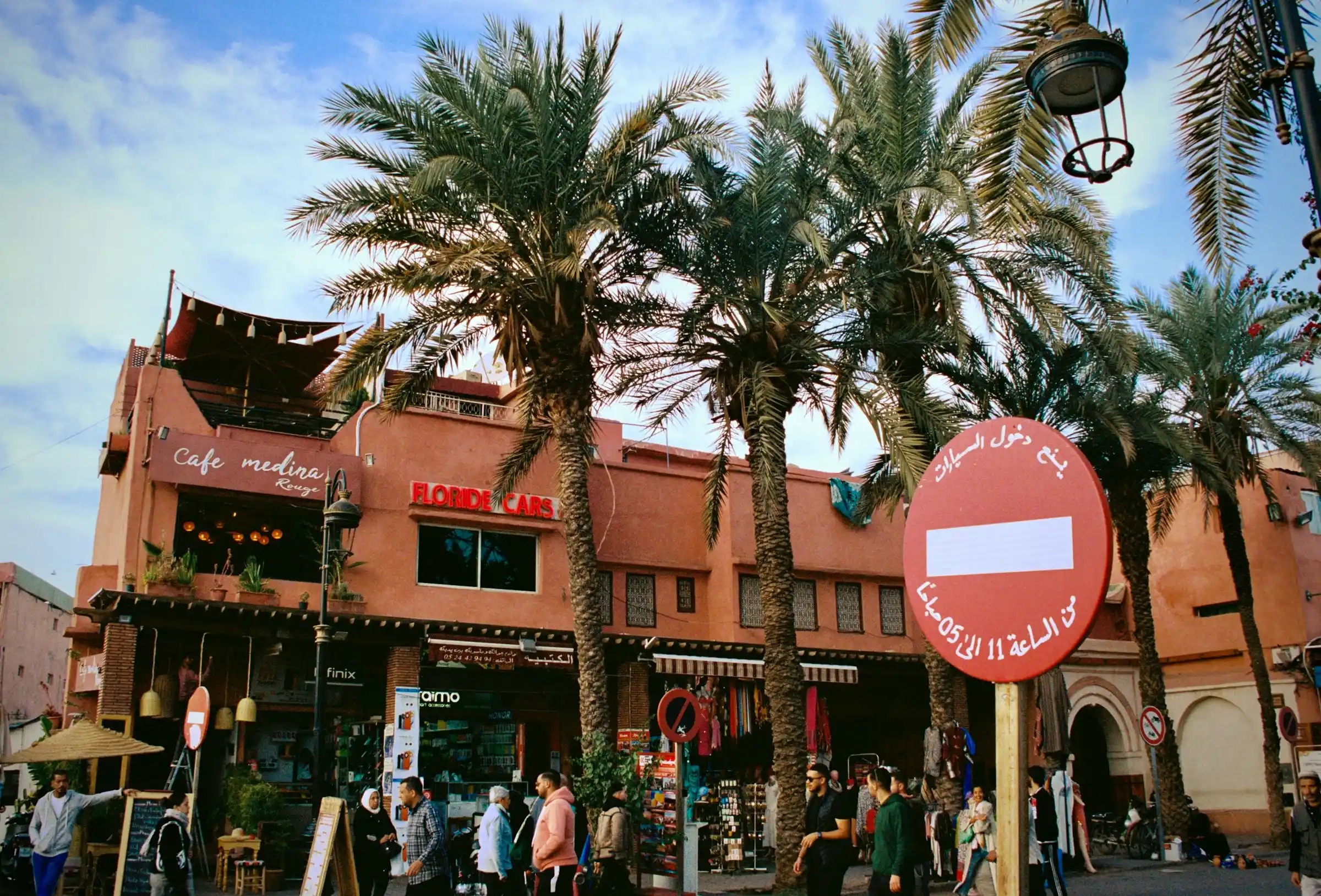
Common scams and how to handle them
Scams in Morocco follow predictable scripts. Once you recognise them, they stop working.
The “friendly guide”
Someone approaches you near a medina entrance and offers to help you find your riad or a specific shop. They walk with you for 10 to 20 minutes, then demand payment — typically 100 to 300 MAD ($10 to $30). The fix: politely decline all unsolicited help with a firm “la, shukran” (no, thank you). If you need directions, ask a shopkeeper who is clearly working — they have no reason to walk you somewhere and demand payment.
Taxi meter games
Petit taxis in Moroccan cities run on meters. Many drivers will claim the meter is broken, then quote a price two to five times the actual fare. Always insist on the meter before getting in. If they refuse, walk to the next taxi. A ride within central Marrakech should cost 15 to 30 MAD ($1.50 to $3). Airport to city center runs 70 to 150 MAD ($7 to $15) depending on the city. Grand taxis (shared long-distance) have fixed routes and fixed prices — ask at the station before boarding.
The souk bait-and-switch
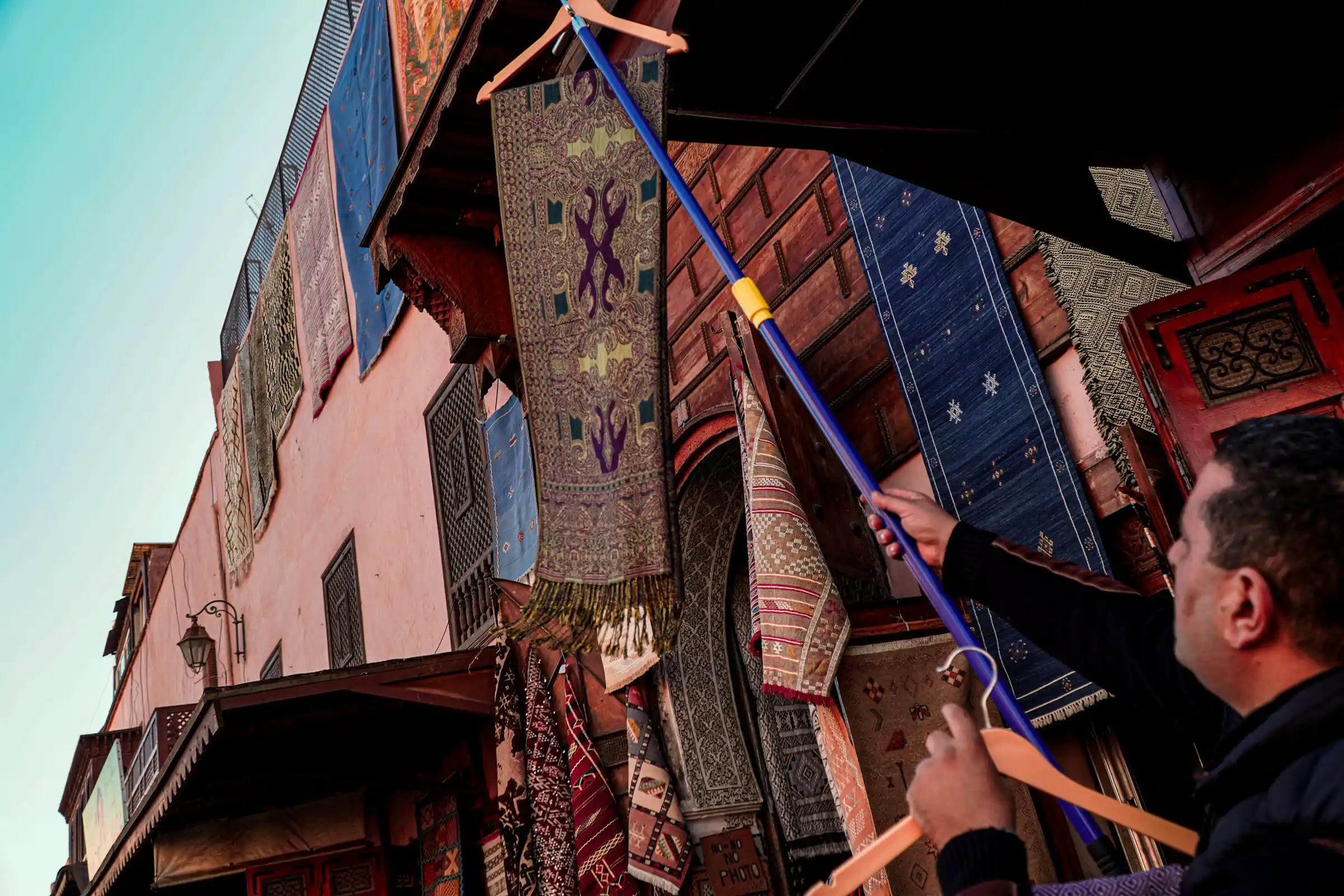
A shop owner invites you in for tea. The conversation is warm and long. Eventually, goods appear, and the social pressure to buy becomes intense. The first price quoted is always three to ten times what the seller will accept. If you want to buy, offer 30 to 40 percent of the asking price and negotiate from there. If you do not want to buy, stand up, thank them for the tea, and leave. You owe nothing for accepting hospitality.
The “closed mosque” redirect
Near popular landmarks — especially in Fez and Marrakech — someone will tell you that the site you are heading to is closed today, and offer to take you somewhere else instead. It is almost never closed. Ignore the claim, walk past, and check for yourself.
Henna artists and monkey handlers
In Jemaa el-Fnaa (Marrakech’s main square), henna artists may grab your hand and start applying henna before you agree, then demand 200+ MAD. Monkey handlers will place a Barbary macaque on your shoulder for a photo, then demand payment. Decline firmly and walk away before anything is placed on you or applied to you.
Safety by city
Morocco’s safety profile varies by location. Here is what to expect in each major destination.
Marrakech
The most-visited city and the most aggressive touts. Jemaa el-Fnaa and the surrounding souk are where most scams happen. The Ville Nouvelle (Gueliz) is calmer and more modern. Tourist police are active. Pickpocketing is a real risk in crowded areas — carry valuables in a front pocket or crossbody bag. After dark, stick to well-lit, populated streets. The Medina quiets down significantly after 10 p.m. If you are looking for things to do beyond the city itself, see our guide to the best day trips from Marrakech.
Fez
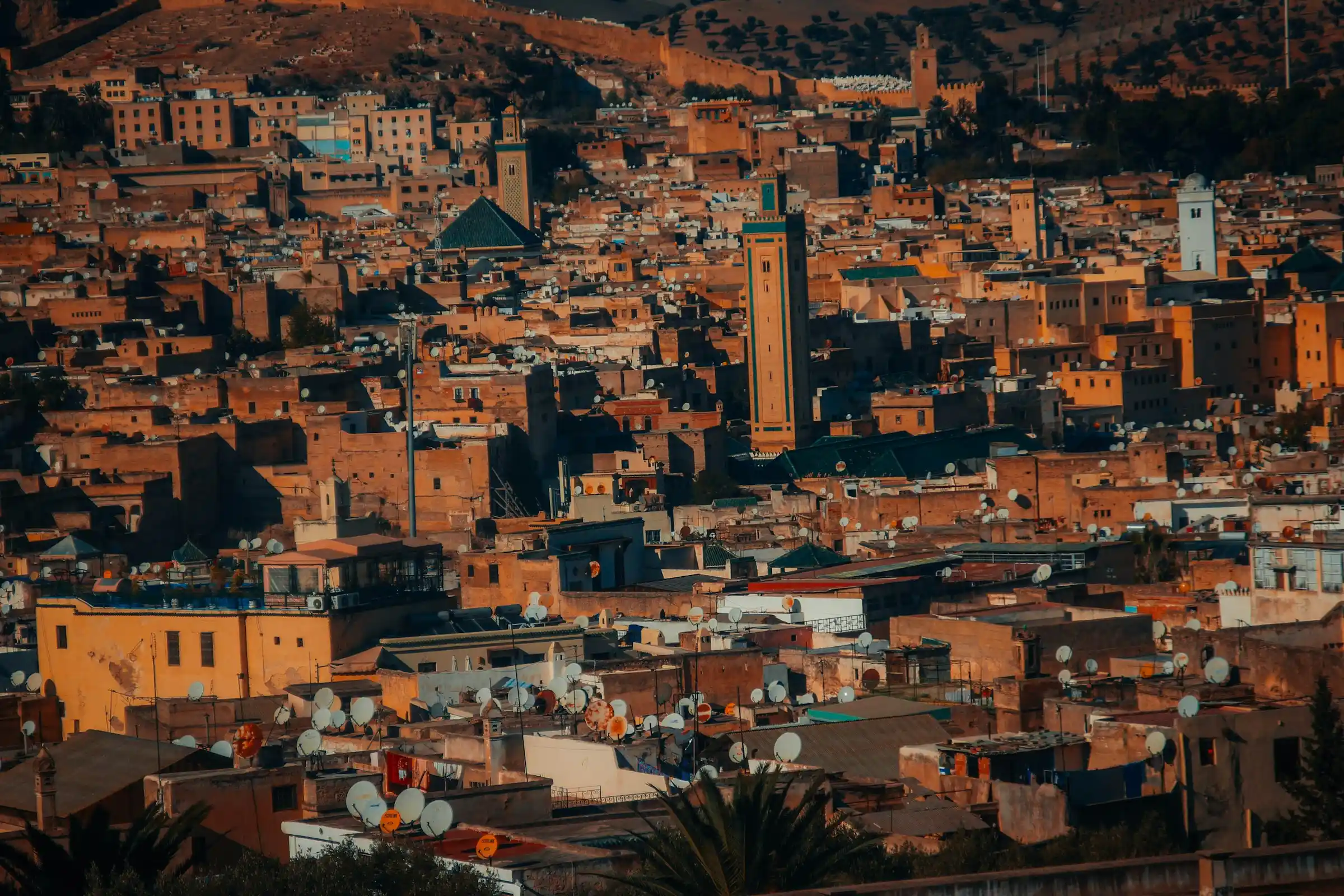
The oldest medina in the world is genuinely disorienting — GPS often fails in the narrow alleys. False guides are more persistent here than anywhere else in Morocco because getting lost without help is a real possibility. Hire an official guide through your riad or the tourist office (around 300 to 400 MAD for a half day) for your first day. After that, you will know the main routes.
Casablanca
Morocco’s largest city feels more like a working metropolis than a tourist destination. Petty crime rates are higher here than in Marrakech or Fez simply because the city is larger and less tourism-oriented. Avoid the area around Casa-Port train station late at night. The Corniche and Habous Quarter are fine. Most visitors only stay one night for the Hassan II Mosque, and that is enough.
Tangier
Tangier has cleaned up considerably since its rough reputation in the 1990s. The renovated Kasbah area and the waterfront are well-patrolled. The port area and Petit Socco can be seedy at night. If arriving by ferry from Spain, have your transport arranged in advance — the port exit is a gauntlet of taxi drivers and touts.
Chefchaouen
The “Blue City” is one of the safest places in Morocco. Small, walkable, and heavily tourism-dependent. Scams are minimal. The biggest risk is the aggressive hash sellers on the streets leading to the main square — a firm refusal is all that is needed.
Sahara desert tours
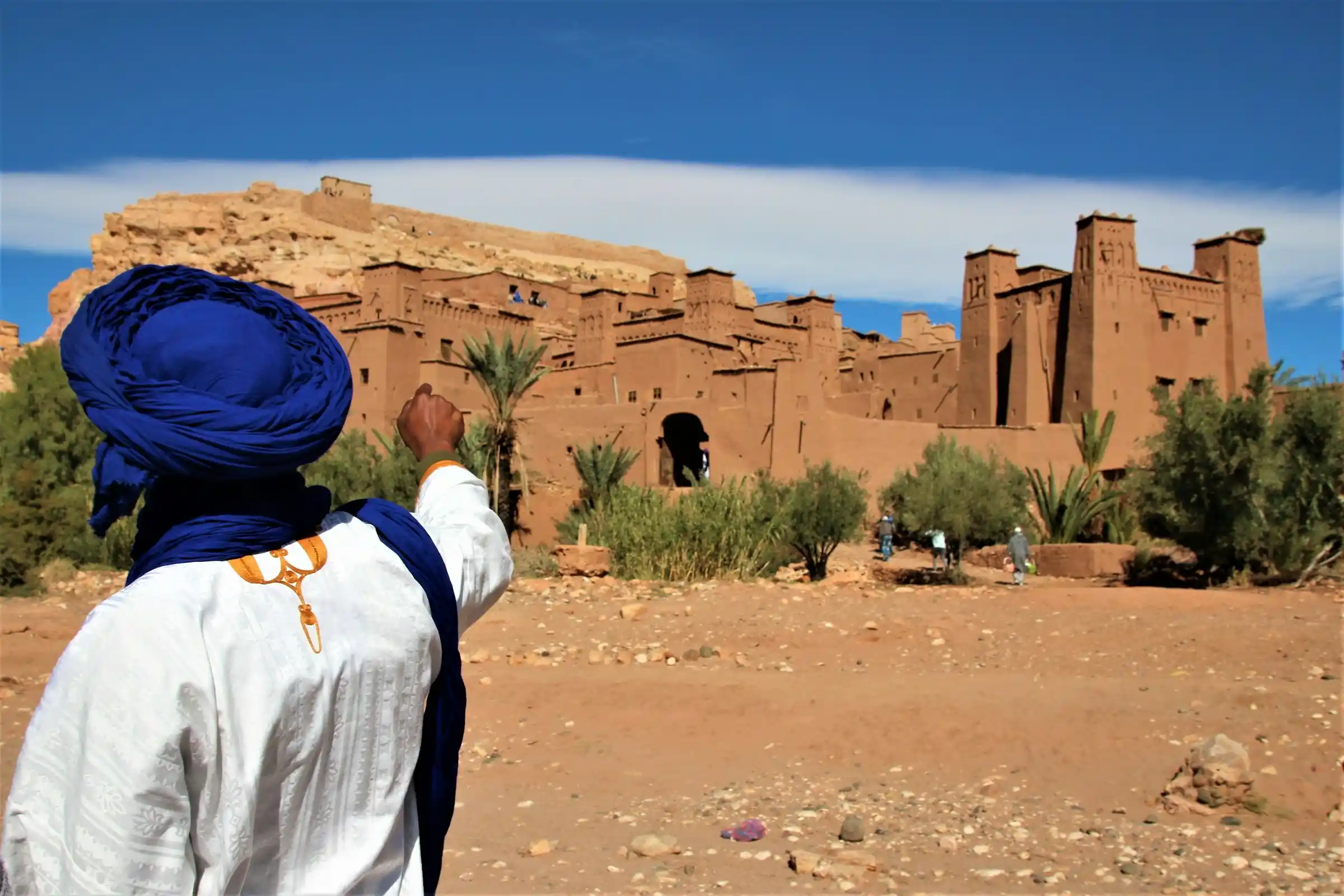
Desert tours from Marrakech or Fez to Merzouga or Zagora are generally safe. Book through your accommodation or a licensed agency — not from a street tout. Verify the tour includes a qualified driver, working vehicle, and proper camp setup. Dehydration and heat exposure are the main risks, not crime.
Safety for women
Morocco is safe for women travelers, including solo women, but it requires more awareness than most European destinations. Catcalling and verbal harassment happen, especially in Marrakech and Casablanca. Physical harassment is much less common but not unheard of.
What helps:
- Dress modestly in medinas and smaller towns. Loose-fitting clothes that cover shoulders and knees reduce unwanted attention significantly. Coastal resort areas and the Ville Nouvelle districts of major cities are more relaxed about dress.
- Walk with purpose. Looking lost invites approaches. Even if you are lost, keep walking confidently until you can check your phone privately.
- Avoid walking alone in quiet areas after dark. This applies in Marrakech’s medina, Fez’s old city, and Casablanca’s port area.
- Have your riad’s phone number saved. If you feel uncomfortable, call your accommodation — most riad owners will send someone to guide you back.
- Wearing a ring (real or fake) and mentioning a husband can reduce persistent approaches. It should not be necessary, but it works in practice.
Thousands of solo women visit Morocco every year without incident. The harassment that does occur is almost always verbal and stops when you disengage. Report anything physical to the tourist police immediately — they take it seriously.
Health and food safety
Morocco does not require any vaccinations for entry, but the CDC recommends being up to date on routine vaccines and suggests Hepatitis A and Typhoid for most travelers. Rabies vaccination is worth considering if you plan to spend time in rural areas.
Water
Do not drink tap water. Bottled water is cheap and available everywhere — 5 to 7 MAD ($0.50 to $0.70) for 1.5 litres. Check that the seal is intact. Use bottled water for brushing your teeth if you have a sensitive stomach. Ice in tourist restaurants is usually made from purified water, but street stalls are a gamble.
Street food
Moroccan street food is generally safe as long as you follow two rules: eat from stalls with high turnover (locals queuing is the best quality signal), and avoid anything that has been sitting at room temperature. Freshly grilled meats, msemen (flatbread), and harira (soup) are almost always fine. The food stalls in Jemaa el-Fnaa are touristy but the food is freshly cooked — though prices are inflated compared to the local medina stalls two streets away.
Pharmacies and medical care
Pharmacies in Morocco are excellent. Pharmacists are well-trained and many speak French and English. Common medications — anti-diarrheals, antihistamines, basic antibiotics — are available over the counter at a fraction of US prices. For anything serious, Marrakech, Casablanca, and Rabat have private clinics that meet international standards. Get travel insurance before you go.
Transport safety
Driving
Road conditions on major highways (autoroutes) are good. Secondary roads — especially in the Atlas Mountains and the south — can be narrow, poorly maintained, and shared with donkeys, cyclists, and pedestrians. Night driving outside cities is risky due to unlit vehicles and animals on the road. If you rent a car, get full insurance and avoid driving in medina areas entirely.
Trains
ONCF trains are the safest way to travel between major cities. The Al Boraq high-speed train from Tangier to Casablanca is modern and reliable. First class is comfortable, air-conditioned, and costs 50 to 60 percent more than second class — worth the upgrade. Keep belongings close on overnight or long-haul services.
Buses
CTM and Supratours are the two reliable intercity bus companies. Both are safe, air-conditioned, and reasonably punctual. Avoid unnamed local bus companies on rural routes if you have an alternative.
Laws you need to know
- Cannabis. Morocco is one of the world’s largest cannabis producers, and you will be offered it frequently in Chefchaouen and the Rif Mountains. Possession, purchase, and use are illegal. Penalties range from fines to six months in prison. Some offers are setups — the seller tips off police who then extract a bribe.
- LGBTQ+ rights. Same-sex sexual activity is criminalized in Morocco with penalties of up to three years in prison. While enforcement against tourists is rare, public displays of affection between same-sex couples carry real risk. LGBTQ+ travelers should exercise caution, particularly outside major cities.
- Photography. Ask before photographing people, especially in rural areas. Some people — particularly older women — object strongly. Photographing military installations, police stations, and government buildings is prohibited.
- Alcohol. Available in licensed restaurants, hotels, and some supermarkets. Drinking in public or appearing visibly intoxicated in the street is culturally unacceptable and can lead to police attention.
- Ramadan. During the holy month, eating, drinking, and smoking in public during daylight hours is disrespectful and can draw police warnings. Tourist restaurants remain open, but many local eateries close until sunset.
What to do if something goes wrong
- Police emergency: 19 (in cities) or 177 (gendarmerie, for rural areas)
- Ambulance: 15
- Fire: 15
- Tourist police (Marrakech): Located near Jemaa el-Fnaa. Ask any uniformed officer for directions.
- US Embassy (Rabat): +212 537-637-200
- UK Embassy (Rabat): +212 537-633-333
For stolen property, file a report at the nearest police station — you will need it for insurance claims. For medical emergencies, go directly to the nearest private clinic rather than a public hospital if you have the option.
Practical safety tips
- Carry small change. Keep a mix of 10, 20, and 50 MAD notes in an accessible pocket. Use these for taxis, tips, and small purchases. Keep larger notes and cards in a concealed money belt or hotel safe.
- Get a local SIM or eSIM. Orange, Maroc Telecom, and inwi all offer tourist SIM cards at the airport for 30 to 50 MAD with a few gigabytes of data. Having mobile data means you always have maps, translation, and the ability to call your accommodation.
- Learn five phrases. “La, shukran” (no, thank you), “B’saha” (enjoy/cheers), “Shhal?” (how much?), “Bezzaf” (too much/too expensive), and “Salam” (hello). A small amount of Darija (Moroccan Arabic) changes how people interact with you.
- Carry a photocopy of your passport. Leave the original locked at your accommodation. A photo on your phone works for most situations, but a physical copy is better if your phone is lost or stolen.
- Use ATMs inside banks. Avoid standalone ATMs at night or in isolated locations. Bank-attached ATMs in commercial areas are safe and give better rates than currency exchange booths.
- Agree on a price before anything. This applies to taxis, guides, henna, camel rides, and horse-drawn carriages. If a price is not agreed upon in advance, you will pay whatever the provider decides after the fact.
Conclusion
Morocco is as safe as any popular Mediterranean destination, with the caveat that its hustle culture requires more street awareness than, say, Portugal or Greece. The risks are predictable and manageable. Most visitors leave having had nothing worse happen than paying too much for a taxi or being led through the souk by a “helpful” stranger. Read the patterns above, stay alert in crowded areas, and you will have a straightforward trip.
Frequently asked questions
Is Morocco safe for Americans?
Yes. Morocco is one of the US’s oldest allies (the first country to recognise American independence in 1777). The US State Department rates it Level 2, the same as most Western European countries. Americans are well-received throughout the country.
Is Morocco safe for solo female travelers?
Yes, with preparation. Dress modestly in traditional areas, avoid quiet streets after dark, and have your accommodation’s contact saved. Verbal harassment can occur but physical incidents are uncommon. Thousands of solo women visit Morocco every year.
Is Marrakech safe at night?
The main square (Jemaa el-Fnaa) and surrounding restaurants are lively and safe until late. The narrow medina alleys empty out after 10 p.m. and are best avoided on foot alone. Gueliz (the modern district) has bars and restaurants open late and is generally safe.
Is Tangier safe for tourists?
Yes. Tangier has modernised significantly in the past decade. The Kasbah and waterfront are well-patrolled. Petty crime exists around the port area, especially targeting ferry arrivals. Arrange transport before arrival.
Is Casablanca safe to visit?
Casablanca is safe for tourists visiting the Hassan II Mosque and the Corniche. It has higher petty crime rates than Marrakech or Fez because it is a large working city. Stick to tourist areas and main streets, and avoid the area around Casa-Port station at night.
Do I need vaccines for Morocco?
No vaccines are required for entry. The CDC recommends Hepatitis A and Typhoid. Routine vaccinations (measles, diphtheria, tetanus) should be current. Rabies vaccine is advisable if you will spend time in rural areas.
Is Moroccan street food safe to eat?
Generally yes. Eat at stalls with high turnover and freshly cooked food. Avoid anything sitting at room temperature. Stick to bottled water. The most common issue is mild stomach upset from new spices and oils, not food contamination.
What is the Morocco travel advisory?
The US State Department rates Morocco Level 2: “Exercise Increased Caution” due to terrorism risk. The UK FCDO advises against travel to the Western Sahara border regions but considers the rest of the country safe for tourists. Canada and Australia have similar assessments.