Mumbai’s suburban locals are the arteries of the city — millions of journeys a day packed onto three main lines that move the city far faster than its roads ever could. For a newcomer, the challenge is not the trains but the system: which line to take, the crucial fast-versus-slow distinction, and how to read the Mumbai local train time so you catch the right service. This guide maps the network and the habits that make riding it painless.
Mumbai local trains in short
- Network: The suburban system is built around three core lines, including the Western Line from Churchgate and the Central Line from CSMT.
- Fast vs slow: Slow trains stop at every station, while fast trains halt only at major ones, so check before you board.
- Timetable: Use a live app such as m-Indicator, which shows the next trains, whether each is fast or slow, the platform and the destination.
- Tickets: The UTS mobile app lets you buy a ticket from your phone and skip the counter queue.
- Tip: Avoid the morning and evening peak if you have luggage, and check for Sunday mega-blocks.
The three lines
The suburban network is built around three core lines, each a corridor out from the island city:
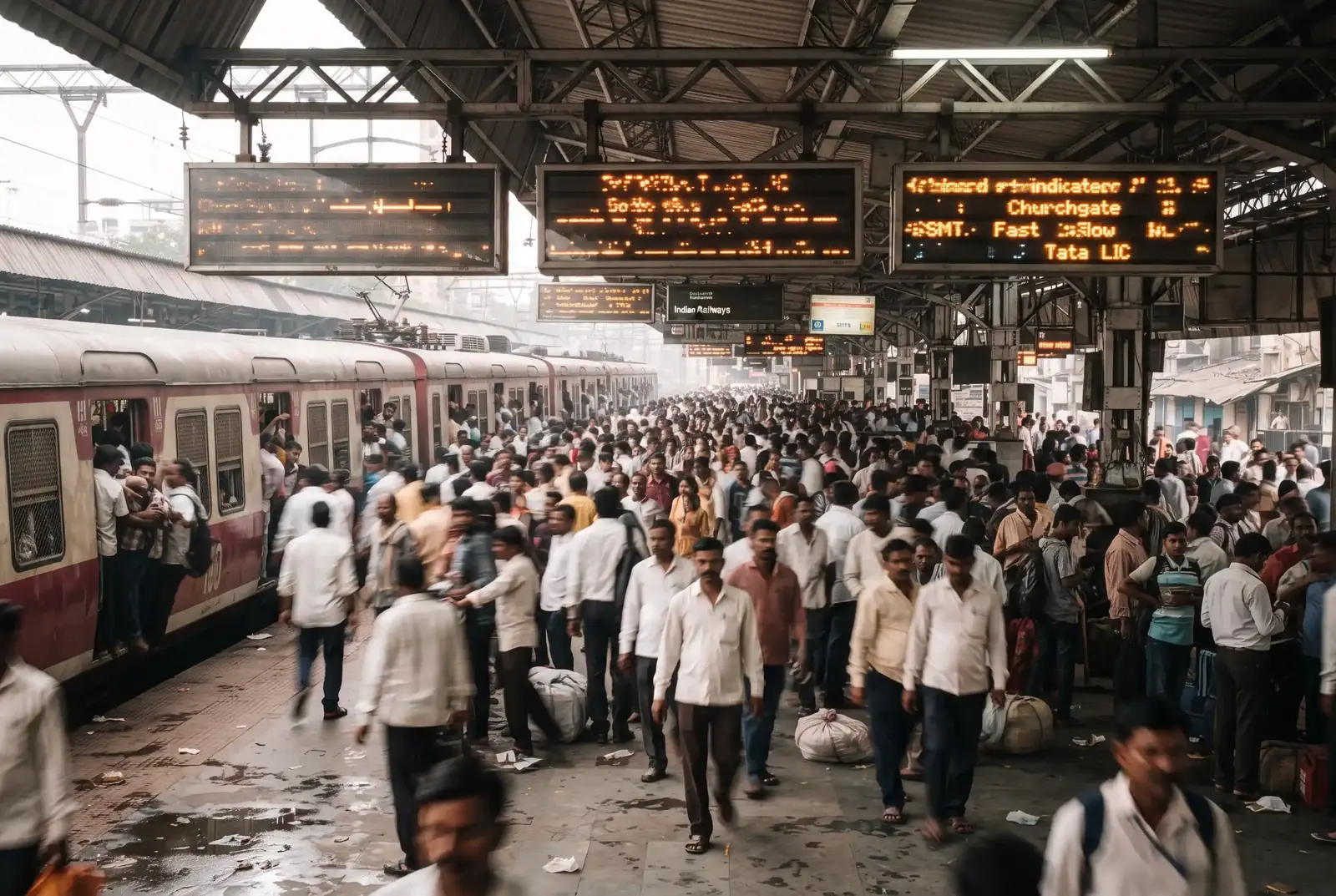
- Western Line — runs north from Churchgate up the western suburbs through Dadar, Bandra, Andheri and Borivali, continuing towards the far northern suburbs. This is the line for the western side of the city and the domestic and international airport approach.
- Central Line — runs from Chhatrapati Shivaji Maharaj Terminus (CSMT) towards the northeastern suburbs and beyond, serving Dadar, Kurla, Ghatkopar, Thane and onward.
- Harbour Line — branches from CSMT towards Vashi and Panvel in Navi Mumbai, and also links towards Bandra and Goregaon.
Dadar is the great connector between the Western and Central lines, which is why it is one of the busiest interchange stations in the country.
Fast versus slow — the distinction that matters most
Slow trains stop at every station, while fast trains halt only at major ones and save significant time on long runs. Check which one you are boarding before you get on.
This is the single thing that trips up visitors. Slow trains stop at every station; fast trains skip the minor stations and halt only at major ones, saving significant time over a long run. Boarding a fast train expecting it to stop at a small station — and watching it sail past your stop — is the classic Mumbai mistake. Before you board, confirm whether the service is fast or slow and whether it halts where you need. The indicator boards on the platform and the announcements tell you; so does a good local-train app.
| Slow train | Fast train | |
|---|---|---|
| Stops | Every station | Major stations only |
| Best for | Short hops and minor stations | Longer runs between major stations |
| Journey time | Longer | Significantly shorter over long runs |
| Check before boarding | Destination and platform | That it halts at your station |
How do you check Mumbai local train times?
Use a live app such as m-Indicator, which shows the next trains, whether each is fast or slow, the platform and the destination. Western Railway and Central Railway publish the official timetable.
Trains run from the early hours until past midnight, at high frequency through the day and very high frequency in the peaks. Rather than memorise a printed timetable, most riders use a live app — m-Indicator is the long-standing favourite — which shows the next trains from your station, whether each is fast or slow, the platform, and the destination. The official Western Railway and Central Railway channels publish the authoritative timetable and any revisions. Services are periodically updated, so when a new timetable takes effect, re-check your regular trains.
Classes, tickets and passes
Trains have first class and second class coaches, with first class costing considerably more for more space, and there are dedicated ladies’ coaches and air-conditioned local services on some routes. For tickets, the UTS mobile app lets you buy a ticket from your phone and skip the counter queue, and a season pass is far cheaper if you commute daily. Always hold a valid ticket for your class and route — checks do happen, and travelling without one carries a fine.
Tips for riding Mumbai local trains
Avoid the morning and evening peak if you have luggage, check for Sunday mega-blocks, and keep a live app open so you know whether your train is fast or slow.
- Avoid the peak crush (roughly the morning and evening commute) if you have luggage — it is genuinely tight.
- Check for Sunday mega-blocks, when maintenance diverts or suspends services on parts of a line; the railways announce these in advance.
- Stand clear of the doors and let passengers alight before you board — the flow is fast and orderly once you know it.
- Keep a live app open so you always know if the next train is fast or slow and where it stops.
Travelling on to other Indian cities by rail? Our guides to checking seat availability, reading your PNR status and tracking live running status cover long-distance train travel beyond the suburban network. Heading north to the capital, our Delhi Metro route map shows every line and where to change.
How much does a Mumbai local train ticket cost?
Second class is the cheapest by a wide margin, first class costs several times more, and the air-conditioned (AC) local costs slightly more than first class. A ticket from Panvel to CSMT on the Harbour line cost Rs 20 in second class, Rs 100 in first class and Rs 110 in AC in early 2026.
Fares rise with distance. These are the published first-class and AC fares from the main terminals, in rupees:
| Journey | First class | AC local |
|---|---|---|
| Churchgate to Dadar | 40 | 50 |
| Churchgate to Andheri | 60 | 70 |
| Churchgate to Borivali | 85 | 95 |
| Churchgate to Virar | 100 | 115 |
| CSMT to Dadar | 25 | 35 |
| CSMT to Thane | 85 | 95 |
| CSMT to Kalyan | 100 | 105 |
| CSMT to Panvel | 100 | 110 |
Second-class fares are much lower still. On the Harbour line, Panvel to Vashi cost Rs 15 and Panvel to CSMT cost Rs 20. A season pass works out far cheaper per trip for daily commuters.
Check the exact fare for your stations in the UTS app or on the chart at the ticket counter before you travel, because the railways revise fares from time to time.
Last checked: November 2026.
Rush hour, ladies’ coaches and luggage on Mumbai locals
Rush hour on the Mumbai locals runs roughly from 8 to 11 am and from 5 to 9 pm on weekdays, and Dadar is the busiest interchange. Travel outside those windows if you carry a suitcase.
- Peak times: sources give slightly different windows, so treat the hours above as a guide and expect crowding either side of them.
- Ladies’ coaches: trains reserve coaches for women, including a first-class ladies’ coach. Women can also travel in the general coaches if they prefer.
- Luggage: large bags are hard to manage in a packed general coach. Use the luggage compartment where the train has one, or take a taxi to or from the airport instead.
- First-class coaches at peak: second-class ticket holders often board first class when it is crowded. Do not copy them, because inspectors check tickets.
For long-distance trains from the same terminals, see our guides to live train running status and PNR status.
Frequently asked questions
What is the difference between fast and slow local trains?
Slow trains stop at every station; fast trains skip minor stations and halt only at major ones, saving time over longer journeys. Always check whether a train is fast or slow and whether it stops where you need before boarding.
What are the three Mumbai local lines?
The Western Line (from Churchgate up the western suburbs), the Central Line (from CSMT to the northeastern suburbs), and the Harbour Line (from CSMT towards Vashi and Panvel). Dadar is the main interchange between Western and Central.
How do I check Mumbai local train times?
Use a live app such as m-Indicator, which shows the next trains from your station, whether each is fast or slow, the platform and destination. The official Western and Central Railway channels publish the full timetable and any revisions.
Can I buy a local train ticket on my phone?
Yes. The UTS mobile app lets you buy suburban tickets from your phone and skip the counter queue. If you commute daily, a season pass is much cheaper than buying single tickets.
What is a Sunday mega-block?
A mega-block is planned maintenance, usually on a Sunday, that diverts or suspends services on part of a line. The railways announce these in advance, so check the day’s notice before travelling on a weekend.