A waitlisted train ticket turns every Indian Railways journey into a guessing game, and the ten-digit PNR number printed at the top of your ticket is the only thing that answers it honestly. PNR stands for Passenger Name Record, and the codes attached to it — CNF, RAC, GNWL, PQWL and the rest — tell you whether you can board, whether you will share a berth, and how far down the queue you really are. This guide explains how to read your train PNR status and the waiting-list logic behind it, so you know what each code means before you reach the platform.
What a PNR number actually is
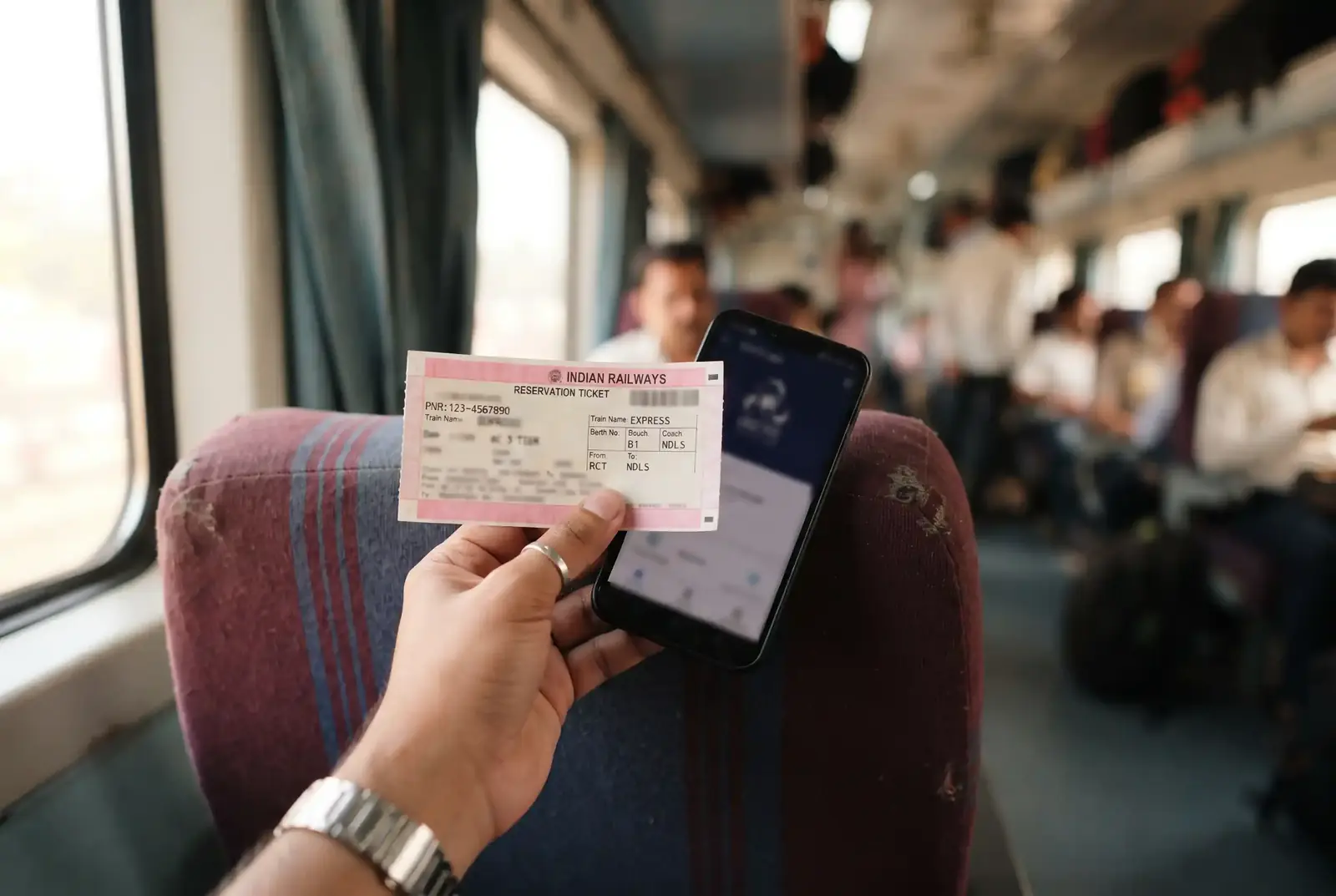
Every reserved ticket on Indian Railways carries a unique ten-digit PNR number. It is generated when you book and it links your journey details — train, date, boarding point, class and the list of passengers — to a single record in the railway’s reservation system. On an e-ticket it sits in the top-left corner; on a counter ticket it is printed at the very top. One PNR can hold up to six passengers travelling together, which is why a group booking shows a single number even when some travellers are confirmed and others are still waitlisted.
How do you check PNR status?
You only need the ten-digit number to check where you stand. There are three reliable routes, and none of them requires you to install anything if you do not want to.
- IRCTC website or Rail Connect app — log in, open the PNR enquiry section, enter the number and it returns your current booking and coach status. This is the primary source because it reads the same database that issues your ticket.
- SMS, no internet needed — send
PNR <your 10-digit number>to 139, the Rail Madad helpline. You get the status back by return SMS, which is useful on a moving train with no data signal. - Trusted third-party apps — services such as ixigo, RailYatri, Where Is My Train and Trainman pull the same official status and add confirmation predictions. Treat the prediction as an estimate, not a promise.
Be wary of look-alike websites. Several sites copy the Indian Railways name and layout to harvest booking details, so stick to the official IRCTC portal, the 139 SMS service, or a well-known app, and never enter card or password details on a page you reached through an advert.
What the status codes mean
The short code beside each passenger is the whole story. Here is what the common ones tell you.
| Code | Meaning | Can you board? |
|---|---|---|
| CNF | Confirmed — a berth is yours | Yes; coach and berth show after charting |
| RAC | Reservation Against Cancellation — guaranteed to board, shared side berth | Yes, with a seat that may become a full berth |
| GNWL | General Waiting List | Only if it clears to RAC or CNF |
| RLWL | Remote Location Waiting List | Only if it clears |
| PQWL | Pooled Quota Waiting List | Only if it clears (often slow) |
| TQWL | Tatkal Waiting List | Rarely clears |
| NOSB | No seat or berth (child fare under 12) | Travels without an allotted berth |
Confirmed (CNF) and RAC explained
CNF means the system has allotted you a berth. The exact coach (such as S4 or B2) and berth number are assigned when the reservation chart is prepared, usually around four hours before the train departs from its origin, and they then appear on your ticket and in the app. RAC is the halfway house: you are guaranteed to board, but two RAC passengers share one side-lower berth — enough to sit through the journey, and often upgraded to a full berth if a confirmed passenger cancels before charting. An RAC ticket is a safe bet to travel on; a deep waitlist is not.
Understanding the waiting-list types
Not all waiting lists are equal. The prefix tells you which quota your ticket is queued against, and that largely decides your odds.
- GNWL (General Waiting List) issues to passengers boarding at or near the train’s originating station. It has the most berths released to it and the best chance of clearing.
- RLWL (Remote Location Waiting List) applies to important intermediate stations. It clears only when someone cancels for that specific stretch, so movement can be erratic.
- PQWL (Pooled Quota Waiting List) covers several smaller intermediate stations that share one small pool of berths. Because the pool is tiny, it clears slowly and sometimes not at all on busy routes.
- TQWL (Tatkal Waiting List) is for Tatkal bookings. These have a low chance of confirming because Tatkal berths are limited and in heavy demand.
- RSWL (Roadside Station Waiting List) covers nearby roadside stations and rarely confirms.
As a rule of thumb, a GNWL ticket with a low number on a long-distance train stands a genuine chance; a PQWL or TQWL ticket on a popular route is far less likely to come through. If your plans are firm, a low GNWL position is the only waitlist worth gambling on.
Will my waitlisted ticket confirm?
Confirmation depends on cancellations between booking and charting. The system clears vacant berths automatically in a set priority — generally GNWL first, then RAC moves up, with the other quotas following — so a GNWL 5 will usually clear before a PQWL 2 on the same train. Watch the number fall over the days before travel: steady movement is a good sign, a stuck number is not. The reservation chart is prepared roughly four hours before departure, and a second chart can be prepared up to about 30 minutes before the train leaves, which is the final moment a waitlisted ticket might turn into RAC or CNF.
What happens after the chart is prepared
If you booked an e-ticket online and it is still fully waitlisted when the chart is prepared, Indian Railways cancels it automatically and refunds the fare — you are not allowed to board on a waitlisted e-ticket. A counter ticket bought at a station is different: it is not auto-cancelled, so a waitlisted counter ticket must be cancelled at a counter to claim a refund, and boarding on it is not permitted either. An RAC ticket, by contrast, always lets you board. Knowing which of these you hold the night before travel is the difference between a confident journey and a scramble for a last-minute alternative.
Once you know you are travelling, the next thing to track is the train itself — see our guide on how to check live train running status so you reach the platform at the right time, and learn how to check train seat availability before you book your next leg. If you are still setting up your booking account, our walkthrough of IRCTC login and account recovery covers the sign-in problems most travellers hit.
Frequently asked questions
How many digits is a PNR number and where do I find it?
A PNR number is ten digits. On an e-ticket it appears in the top-left corner of the booking; on a printed counter ticket it is at the very top. You need only this number to check status.
Can I board the train with a waitlisted ticket?
No. A fully waitlisted ticket does not permit boarding. A waitlisted e-ticket is cancelled and refunded automatically after the chart is prepared, while a waitlisted counter ticket must be cancelled at a station. Only CNF and RAC tickets allow you to board.
What is the difference between RAC and a waiting list?
RAC guarantees you can board with a shared side berth, and it often upgrades to a full berth if someone cancels. A waiting-list ticket only lets you travel if it first clears to RAC or confirmed before charting.
Which waiting list clears fastest?
GNWL, the General Waiting List, has the most berths released to it and the best chance of clearing. PQWL, TQWL and RSWL tickets clear far less often, especially on busy routes.
How do I check my PNR status without internet?
Send an SMS reading PNR followed by your ten-digit number to 139. You receive the current status by return message, which works even on a train with no data connection.