The Romantic Road is Germany’s most beloved scenic route, a 350 kilometre ribbon through Bavaria and beyond that strings together walled medieval towns, vineyards, baroque churches, and a fairy-tale castle. It was created in the 1950s to tempt travellers into the gentle heart of southern Germany, and it still delivers the country at its most storybook. This guide covers the Romantic Road route, its best stops, and how to travel it by car, bus, or bike.
What is the Romantic Road
The Romantic Road, or Romantische Strasse in German, runs from Wurzburg in the north to Fussen in the Bavarian Alps in the south. It is not a motorway but a themed touring route linking around 30 towns and sights along quiet country roads. The name captures the mood rather than any romance in particular: rolling farmland, half-timbered houses, town gates, and castles that look lifted from a storybook.
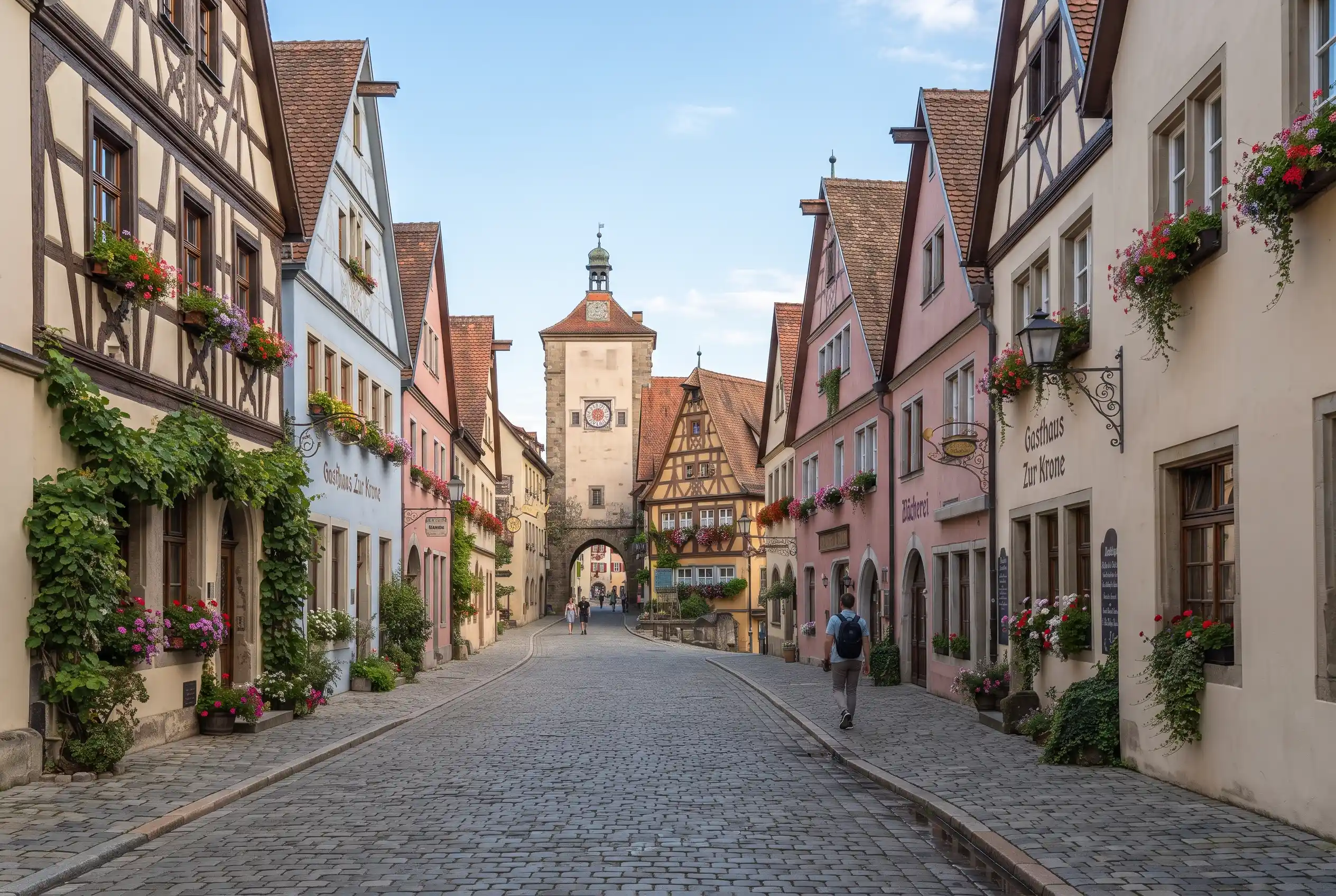
The best stops on the route
- Wurzburg, the northern start, with its grand baroque Residenz palace and wine culture.
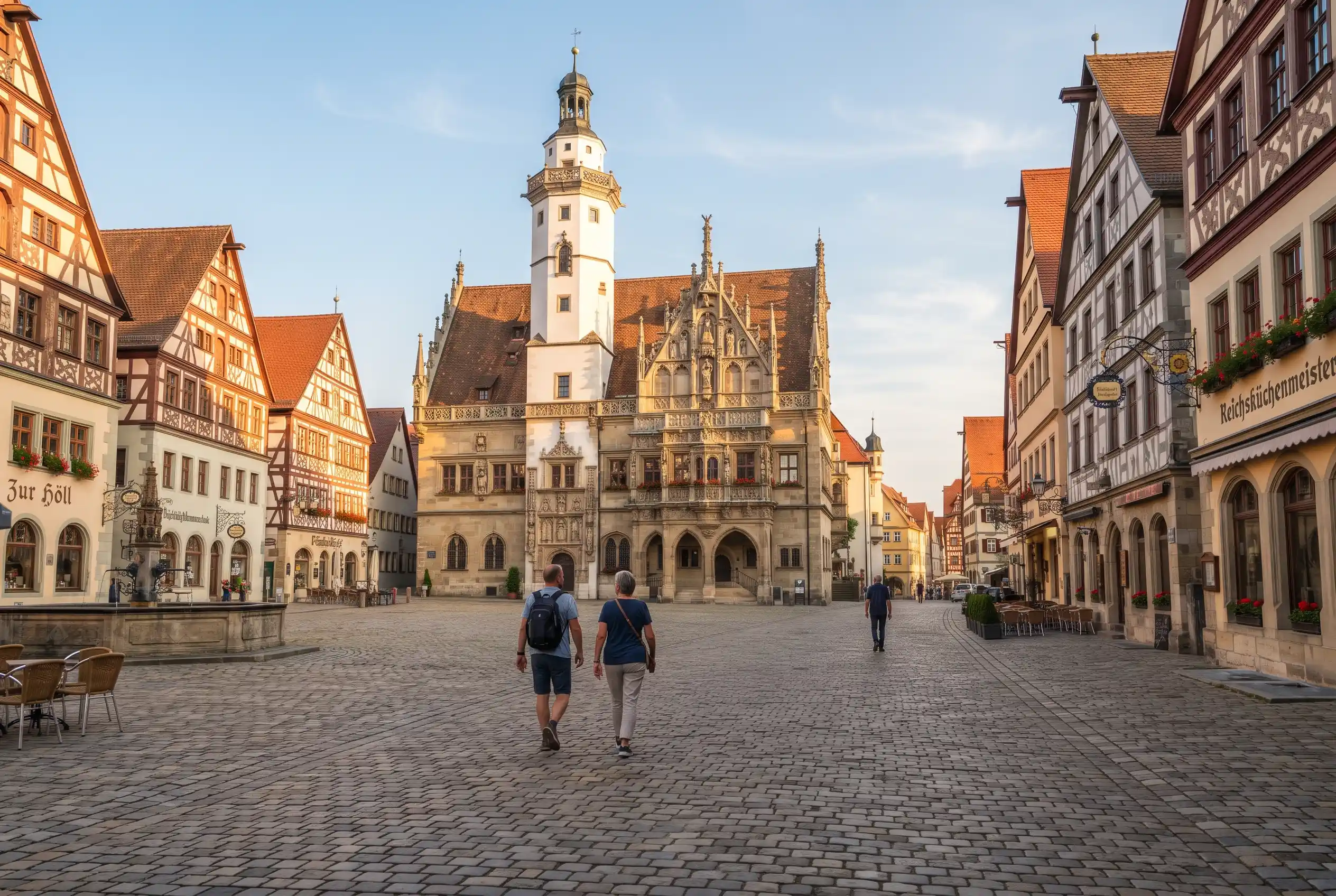
- Rothenburg ob der Tauber, the jewel of the route, a perfectly preserved walled town famous for its Christmas shop and market.
- Dinkelsbuhl and Nordlingen, two more intact medieval towns, the second set inside a meteorite crater.
- Augsburg, one of Germany’s oldest cities, founded by the Romans.
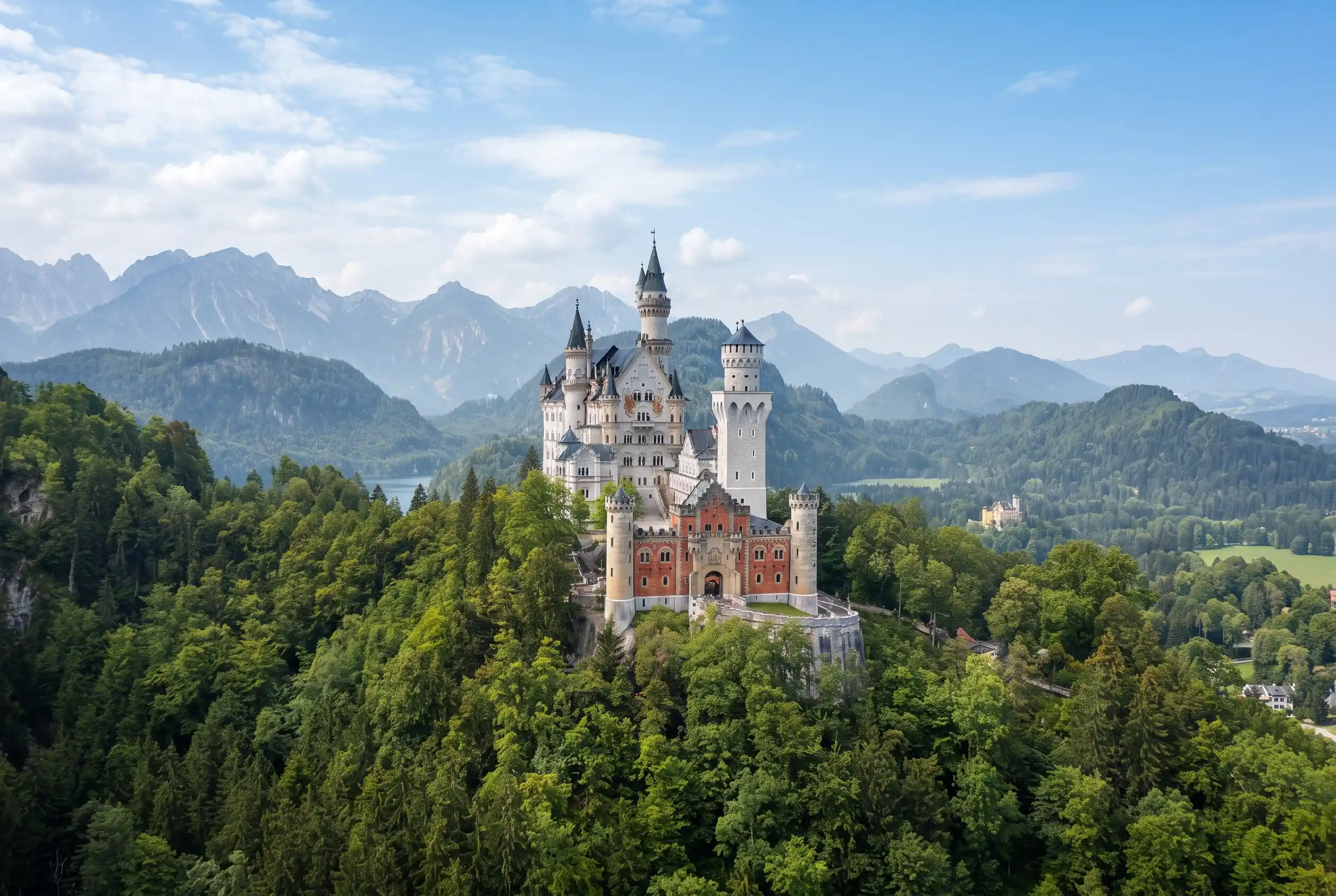
- Neuschwanstein Castle near the southern end, the fairy-tale castle that inspired Disney.
- The Wieskirche, a UNESCO-listed rococo pilgrimage church set in alpine meadows.
How to travel the Romantic Road
Driving is the classic way, giving you the freedom to stop in any town and follow the brown Romantische Strasse signs the whole way. Without a car, a dedicated coach service runs the route in summer, and the towns are also linked by regional trains and buses, though connections are slower. Cyclists can follow a signed long-distance bike path that shadows the road through the gentle countryside.
When to go and how long
You can drive the whole route in two days, but three to five days lets you slow down and enjoy the towns properly. Late spring and summer bring warm weather and long days, autumn adds colour and the wine harvest, and December turns Rothenburg and the other towns into magical Christmas market destinations. If you are planning a festive trip, our guide to the best places to travel in December covers more European markets, and the packing list generator can help you pack for a road trip in any season.
Frequently asked questions
Where does the Romantic Road start and end?
It runs about 350 kilometres from Wurzburg in the north to Fussen in the Bavarian Alps in the south, near Neuschwanstein Castle. You can drive it in either direction.
What is the best town on the Romantic Road?
Rothenburg ob der Tauber is the highlight for most visitors, a beautifully preserved walled medieval town. Dinkelsbuhl and Nordlingen are quieter but equally charming, and Neuschwanstein Castle is the most dramatic sight.
How many days do you need for the Romantic Road?
You can drive it in two days, but three to five days is ideal to explore the towns, visit Neuschwanstein, and enjoy the countryside without rushing.
Can you do the Romantic Road without a car?
Yes. A seasonal coach service runs the full route in summer, and the main towns are connected by regional trains and buses. There is also a signed cycle path for those who want to ride it.
Is Neuschwanstein Castle on the Romantic Road?
Yes. Neuschwanstein, the fairy-tale castle that inspired Disney, sits near Fussen at the southern end of the route. Book tickets in advance, as it is one of the most visited sights in Germany.
When is the best time to drive the Romantic Road?
Late spring through early autumn offers the best weather and long days. December is special for the Christmas markets in Rothenburg and other towns, though colder and busier on weekends.
Food and where to stay along the way
Part of the pleasure of the Romantic Road is eating and sleeping in the small towns rather than rushing through them. The route runs through Franconian wine country in the north around Würzburg, where crisp whites are served in the distinctive flat Bocksbeutel bottle, and into hearty Bavarian territory further south. Rothenburg ob der Tauber is famous for the Schneeball, a ball of fried shortcrust pastry dusted with sugar, and most towns have a bakery and a beer garden worth a stop.
Staying overnight in one of the walled towns is the trick that separates a memorable trip from a blur of car parks. After the day-trippers leave, places like Rothenburg and Dinkelsbühl become quiet and atmospheric, with the lanes almost to yourself at dusk and dawn. Book a night or two in the historic centres rather than at a roadside hotel, and build your driving around early starts and late strolls when the light is best and the crowds are gone.