Venice is a city stitched together by water and bridges. Built across more than 100 small islands, it is linked by around 400 bridges that arch over its canals, from the grand marble sweep of the Rialto to tiny stone crossings on quiet backwaters. The bridges are not just how you get around, they are the stage for the city’s most famous views and stories. This guide covers the most famous Venice bridges, their history, and how to find them.
A city of bridges
With no roads and no cars, Venice moves on foot and by boat, and the bridges are what make walking the city possible. Around 400 of them cross the canals, most small and humpbacked, a few grand and famous. Only four bridges span the Grand Canal, the city’s main waterway, which is why those four are landmarks in their own right. Part of the joy of Venice is simply crossing bridge after bridge as you lose yourself in the lanes.
The Rialto Bridge
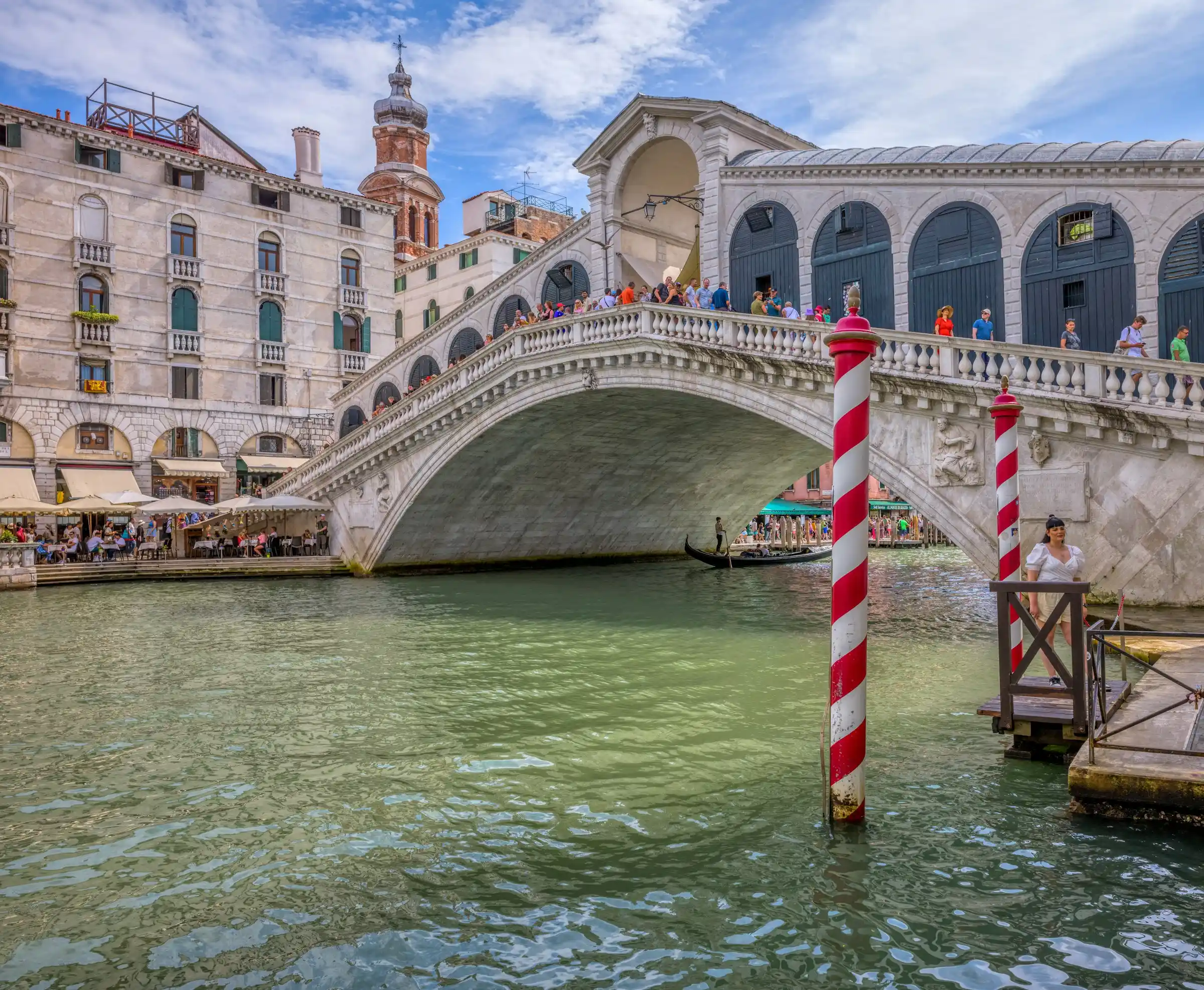
The Rialto is the most famous bridge in Venice and the oldest of the four across the Grand Canal. The current stone bridge, completed in 1591, is a single grand arch lined with shops, topped by walkways that give classic views along the canal. It sits at the historic commercial heart of the city, beside the bustling Rialto market. Expect crowds, and come early or late for the best photographs.
The Bridge of Sighs
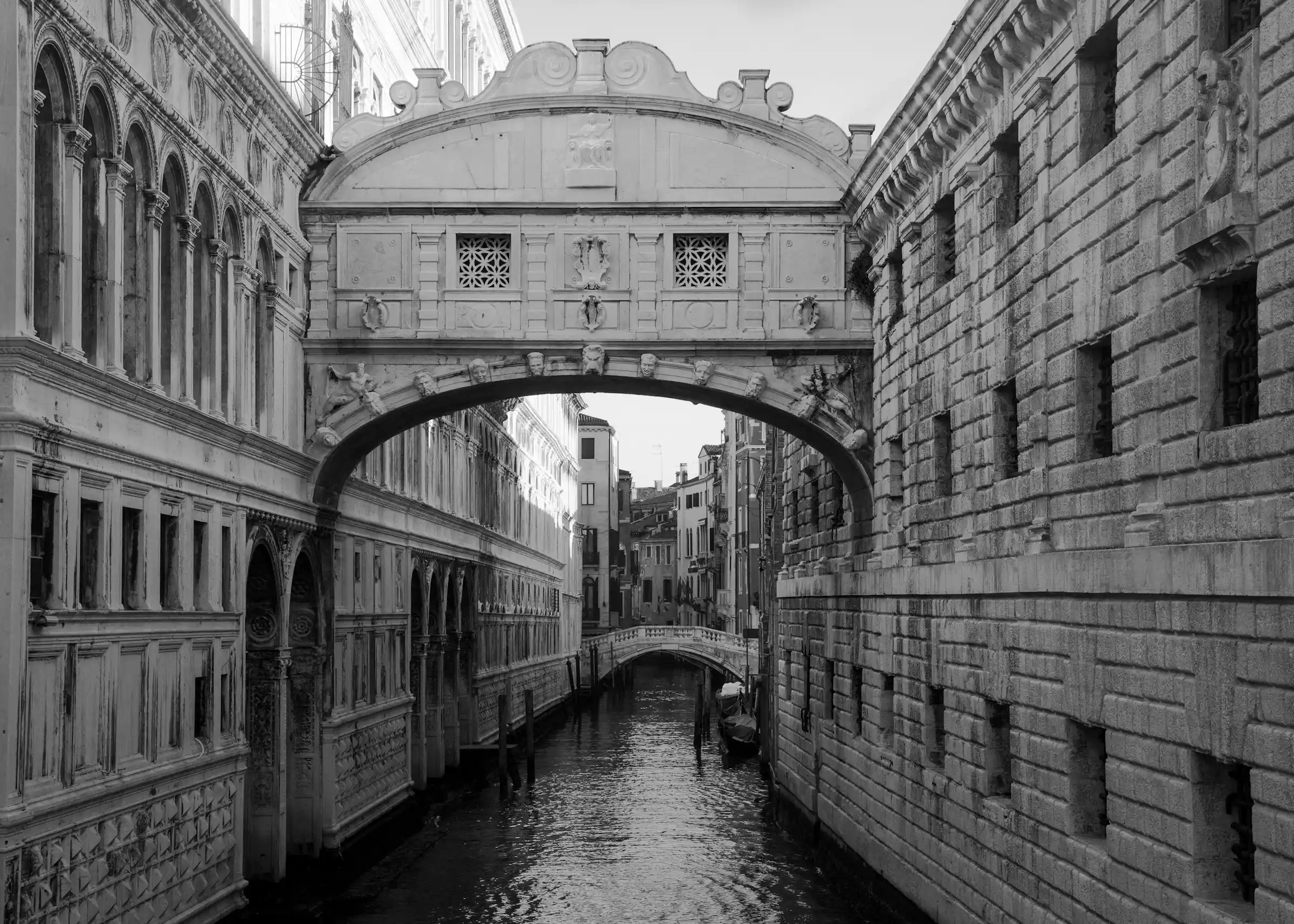
The Bridge of Sighs is Venice’s most romantic and most misunderstood crossing. This enclosed white limestone bridge links the Doge’s Palace to the old prison, and legend says prisoners sighed at their last view of Venice through its small windows. Today it is better known as a photo spot and the setting for a kiss said to bring eternal love. You see it best from the Ponte della Paglia nearby, or from inside on a Doge’s Palace tour.
Other bridges worth seeing
- The Accademia Bridge, a graceful wooden arch over the Grand Canal with a famous view toward the Salute church.
- The Scalzi Bridge, the elegant stone crossing by the train station.
- The Constitution Bridge, the modern glass and steel span by Calatrava, also near the station.
- The Ponte dei Pugni and other small bridges once used for staged fist-fights between rival districts.
Tips for exploring the bridges
Wear comfortable shoes, as you will climb countless steps, and note that most bridges have steps rather than ramps, which makes wheeled luggage and prams hard work. The quietest, most photogenic bridges are away from San Marco and Rialto, in districts like Cannaregio and Dorsoduro. Early morning light is magic and crowd-free. If you are travelling on through Italy, pair Venice with the hill town charm of San Gimignano in Tuscany, and our Rome public transport guide helps with the next big city.
Frequently asked questions
How many bridges are there in Venice?
Venice has around 400 bridges crossing its canals, linking more than 100 small islands. Most are small stone footbridges, while only four large bridges span the main Grand Canal.
What is the most famous bridge in Venice?
The Rialto Bridge is the most famous, the oldest and grandest of the four crossings of the Grand Canal, lined with shops. The Bridge of Sighs is a close second for its romance and history.
Why is it called the Bridge of Sighs?
The name comes from the legend that prisoners sighed at their final glimpse of Venice through its windows as they were led from the Doge’s Palace to the prison. The romantic name was popularised by poets in the 1800s.
How many bridges cross the Grand Canal?
Just four: the Rialto, the Accademia, the Scalzi, and the modern Constitution Bridge by Calatrava. Elsewhere you cross the Grand Canal by vaporetto water bus or by the traghetto gondola ferries.
Can you walk across Venice on the bridges?
Yes. Venice is entirely walkable, and its bridges connect the islands so you can cross the whole city on foot. Expect many steps and some dead ends, so a map or app helps, but getting lost is part of the fun.
Where is the best view of the Bridge of Sighs?
The best outside view is from the Ponte della Paglia, the bridge beside the Doge’s Palace on the waterfront. You can also cross inside the Bridge of Sighs itself as part of a Doge’s Palace tour.
High water and quieter bridges
Two things reward a little planning. In autumn and winter Venice experiences acqua alta, the periodic high tides that flood the lowest areas and can leave the approaches to some bridges and squares under water for a few hours. The city posts tide forecasts and sets up raised walkways in the worst-hit spots, so check the day’s prediction, pack waterproof footwear in that season, and simply time your bridge-hopping around the peak rather than fighting it.
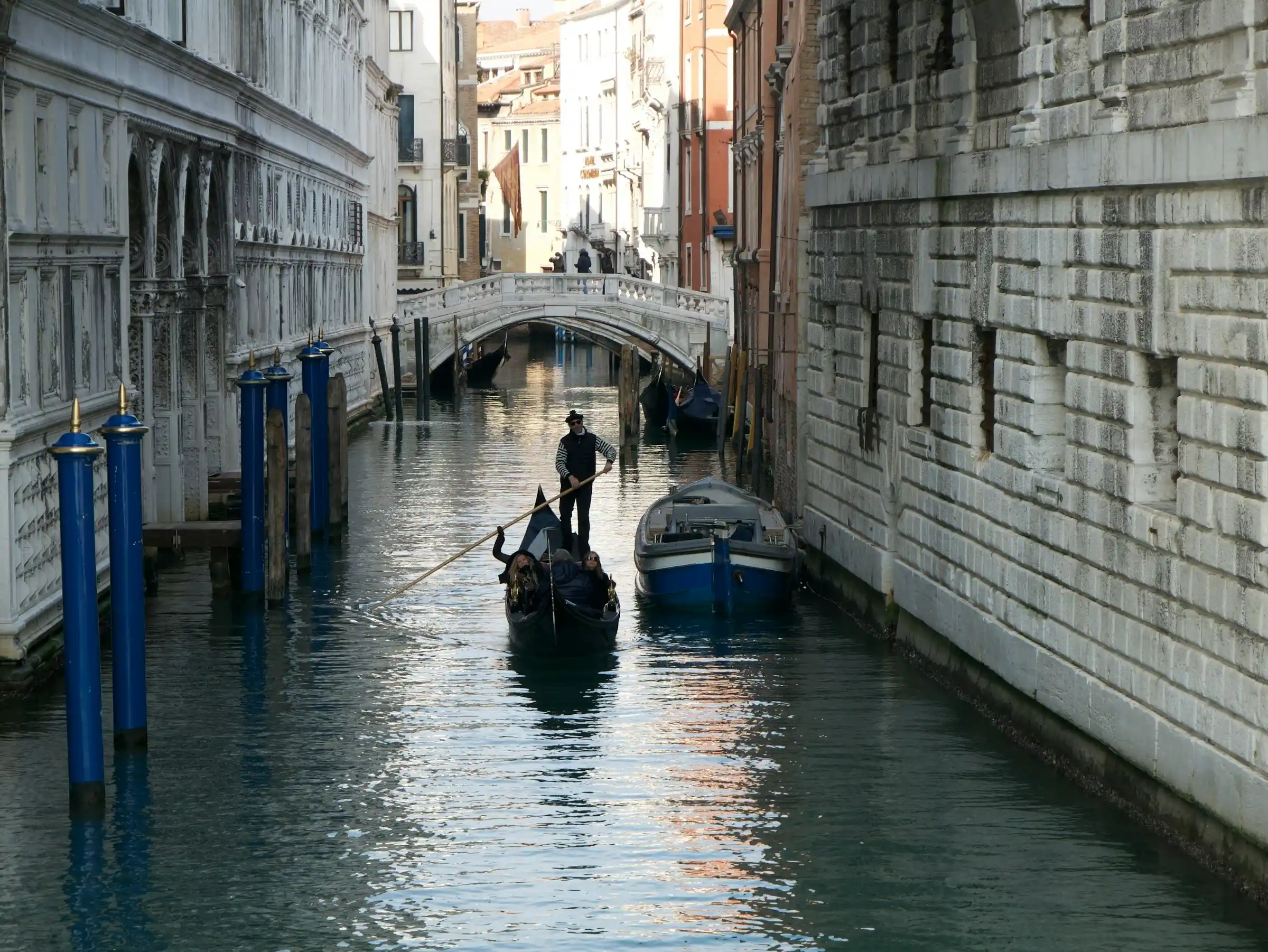
For the atmosphere without the crush, step away from the Rialto and Accademia crossings into the quieter sestieri of Cannaregio and Dorsoduro, where small canal bridges frame the everyday life of the city — laundry strung overhead, boats unloading, locals crossing with shopping. Early morning and late evening are the magic hours, when the day-trippers have gone and you can stand on a bridge watching the water with the lanes almost to yourself.