Last updated: 28 October 2026. Climate figures from the Japan Meteorological Agency’s 1991–2020 averages; 2026 cherry blossom dates from JMA observations.
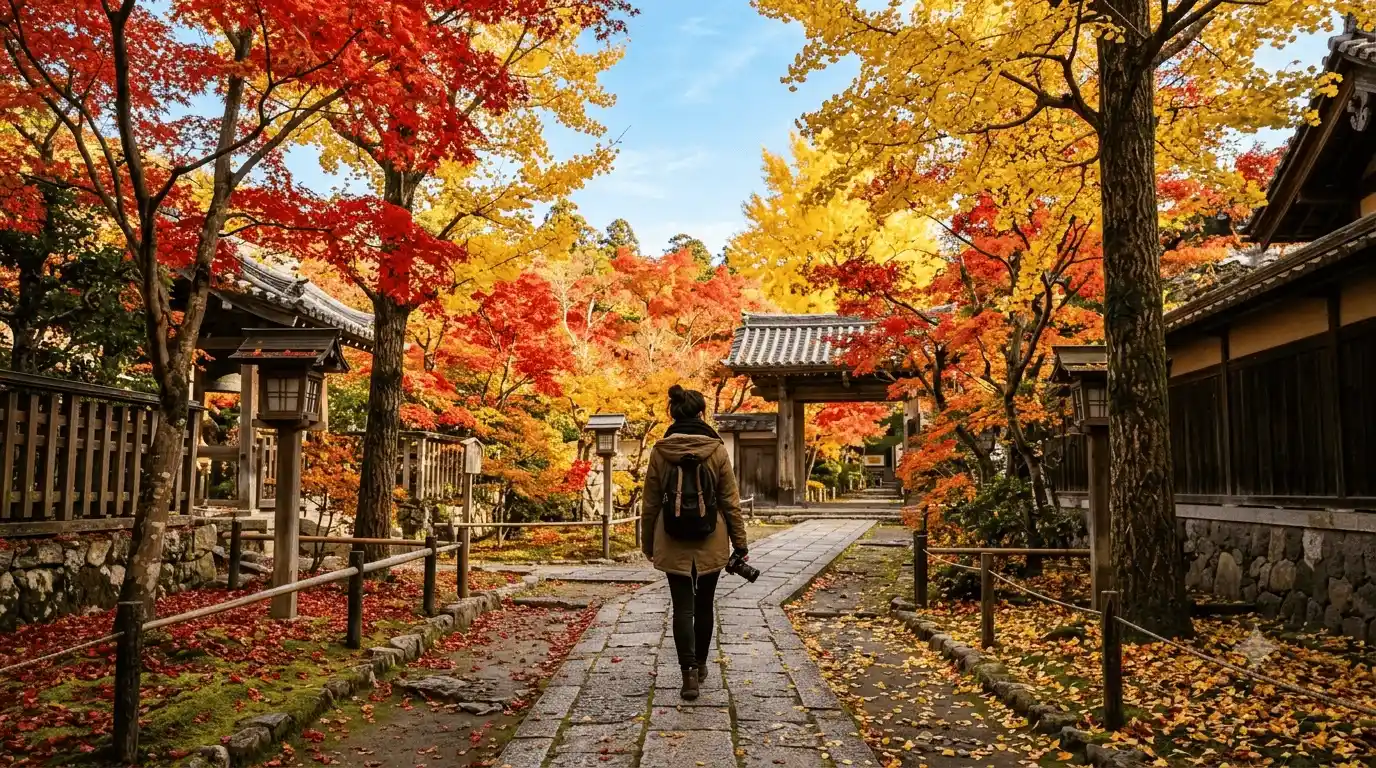
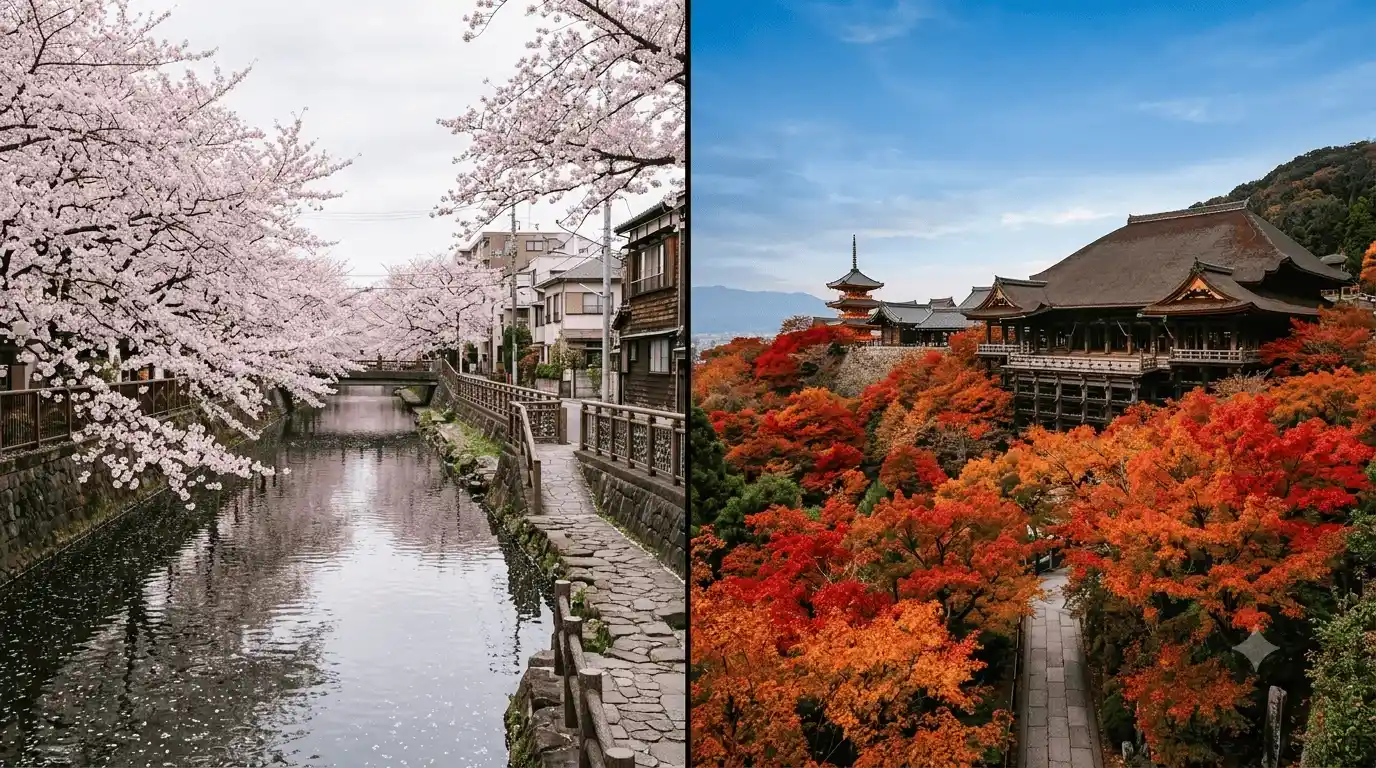
The best time to visit Japan is late March to early April for cherry blossoms, or late October to November for autumn colours and settled weather. Both are busy. If you would rather trade scenery for quiet streets and lower prices, go in January or February, or the first half of December.
Below are the official monthly averages for Tokyo, Sapporo and Naha, this year’s real blossom dates, and the weeks to avoid. Travelling from the UAE? Read our Japan visa for UAE residents guide first, or compare options in our visa-free countries for UAE residents list.
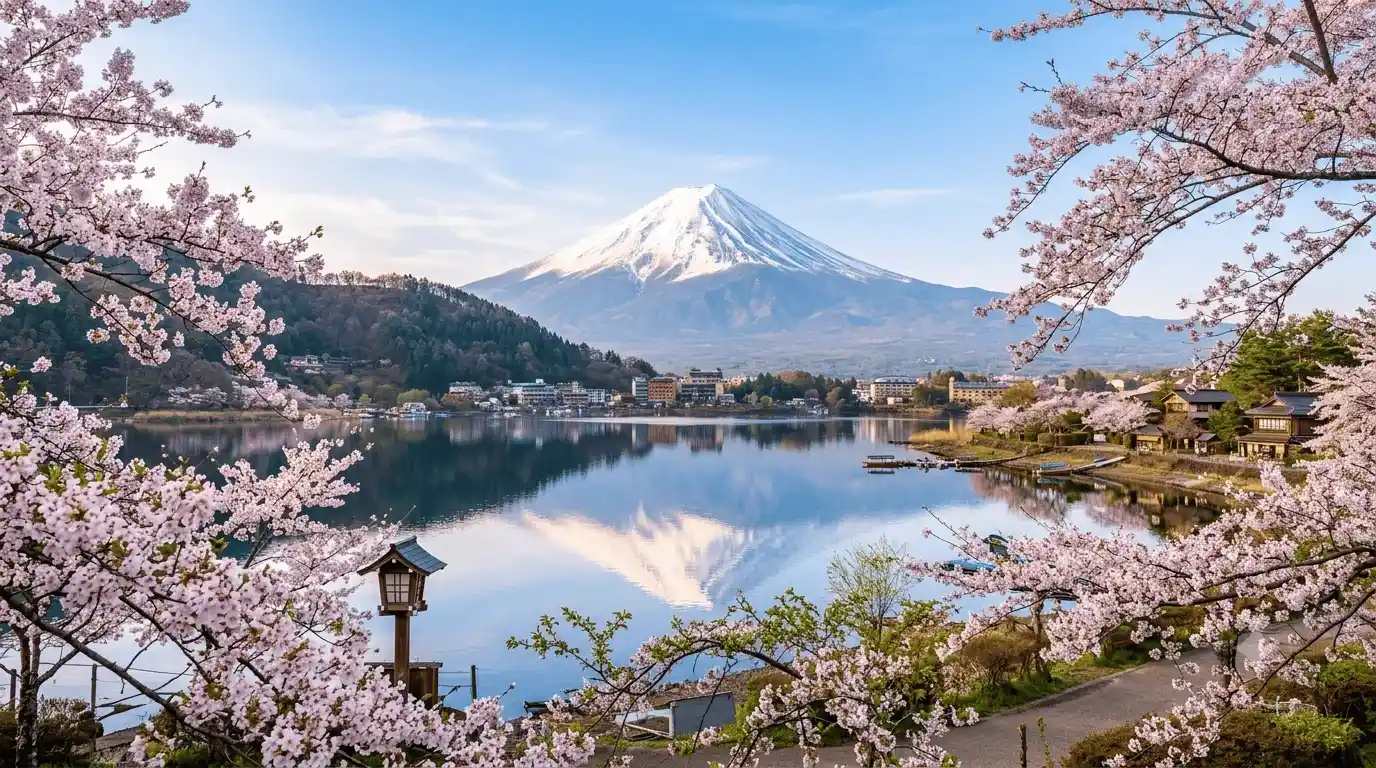
Table of Contents
- Best Time to Visit Japan: Quick Answer
- Japan Weather by Month
- What Each Season Is Like
- Cherry Blossom Season
- Autumn Leaves
- Rainy Season and Typhoons
- Best Time to Visit Japan by Region
- When Japan Is Busiest
- Frequently Asked Questions
Best Time to Visit Japan: Quick Answer
| If you want | Go in | Why |
|---|---|---|
| Cherry blossoms | Late March to early April | Tokyo and Kyoto peak within about a week of each other |
| Autumn colours | Mid to late November | Kyoto’s temples peak around the third week |
| Comfortable weather | May, late October, November | Highs of 17–24°C in Tokyo and little rain in November |
| Snow and skiing | January and February | Hokkaido highs stay around 0°C; powder snow in Niseko |
| Fewer crowds and lower prices | Mid-January, February, June, early December | Outside school and national holidays |
| Beaches | May, early June, October (Okinawa) | Warm sea outside the main typhoon months |
Japan Weather by Month
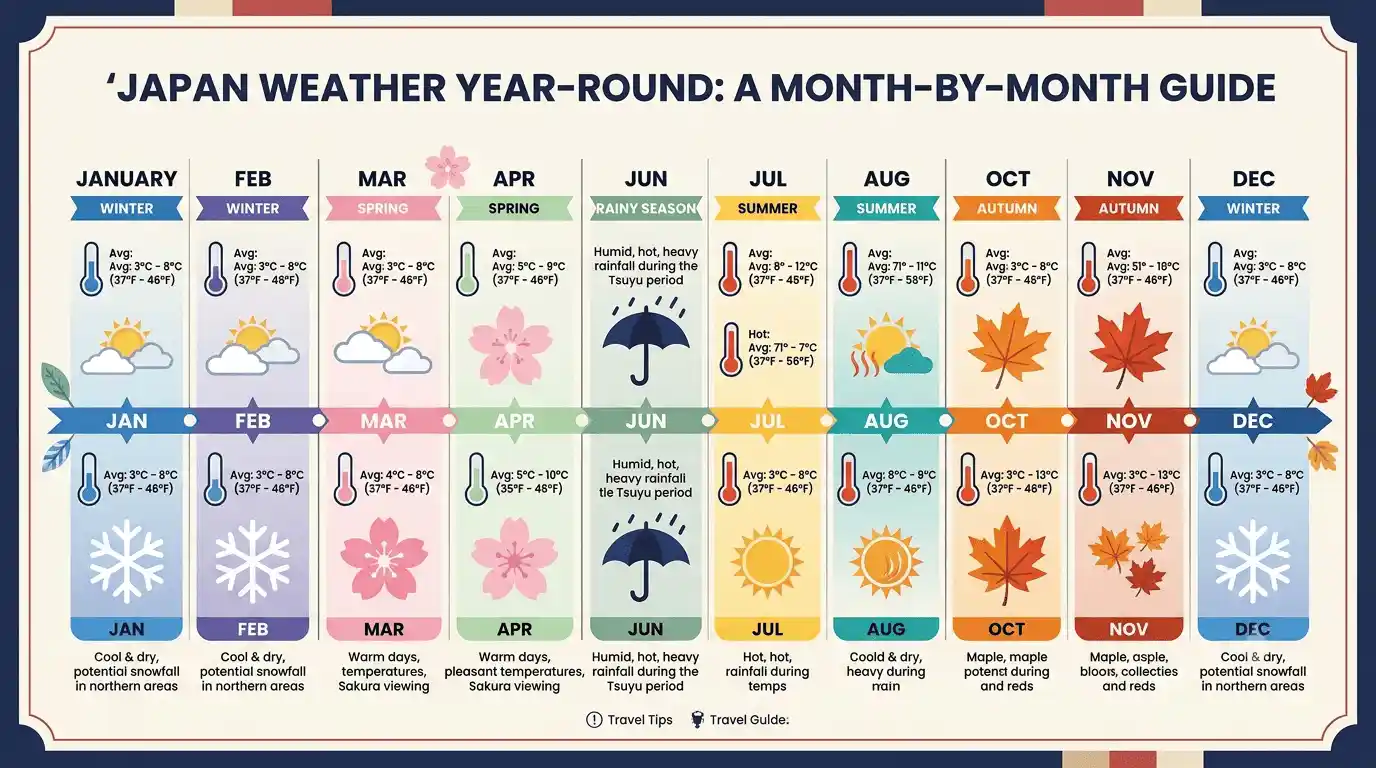
Average daily highs and rainfall from the Japan Meteorological Agency’s 1991–2020 records. Tokyo stands in for Kyoto and Osaka, which run a degree or two warmer in summer.
| Month | Tokyo high | Tokyo rain | Sapporo high | Naha (Okinawa) high | What to expect |
|---|---|---|---|---|---|
| January | 9.8°C | 60 mm | -0.4°C | 19.8°C | Cold, dry and clear; New Year crowds until about 3 January |
| February | 10.9°C | 57 mm | 0.4°C | 20.2°C | Coldest feel; best snow in Hokkaido; plum blossoms |
| March | 14.2°C | 116 mm | 4.5°C | 21.9°C | Cherry blossoms open in the second half of the month |
| April | 19.4°C | 134 mm | 11.7°C | 24.3°C | Blossoms early in the month; Golden Week starts 29 April |
| May | 23.6°C | 140 mm | 17.9°C | 27.0°C | Warm and fairly dry once Golden Week ends |
| June | 26.1°C | 168 mm | 21.8°C | 29.8°C | Rainy season (tsuyu) in most of Honshu |
| July | 29.9°C | 156 mm | 25.4°C | 31.9°C | Rainy season ends mid to late month; humid |
| August | 31.3°C | 155 mm | 26.4°C | 31.8°C | Hottest month; Obon holidays mid-month |
| September | 27.5°C | 225 mm | 22.8°C | 30.6°C | Still hot; peak typhoon risk; Tokyo’s wettest spell |
| October | 22.0°C | 235 mm | 16.4°C | 28.1°C | Typhoons ease; clear, comfortable days by the end |
| November | 16.7°C | 96 mm | 8.7°C | 25.0°C | Autumn colours in Tokyo and Kyoto; ideal walking weather |
| December | 12.0°C | 58 mm | 2.0°C | 21.5°C | Cool and dry; illuminations; quiet before New Year |
What Each Season Is Like
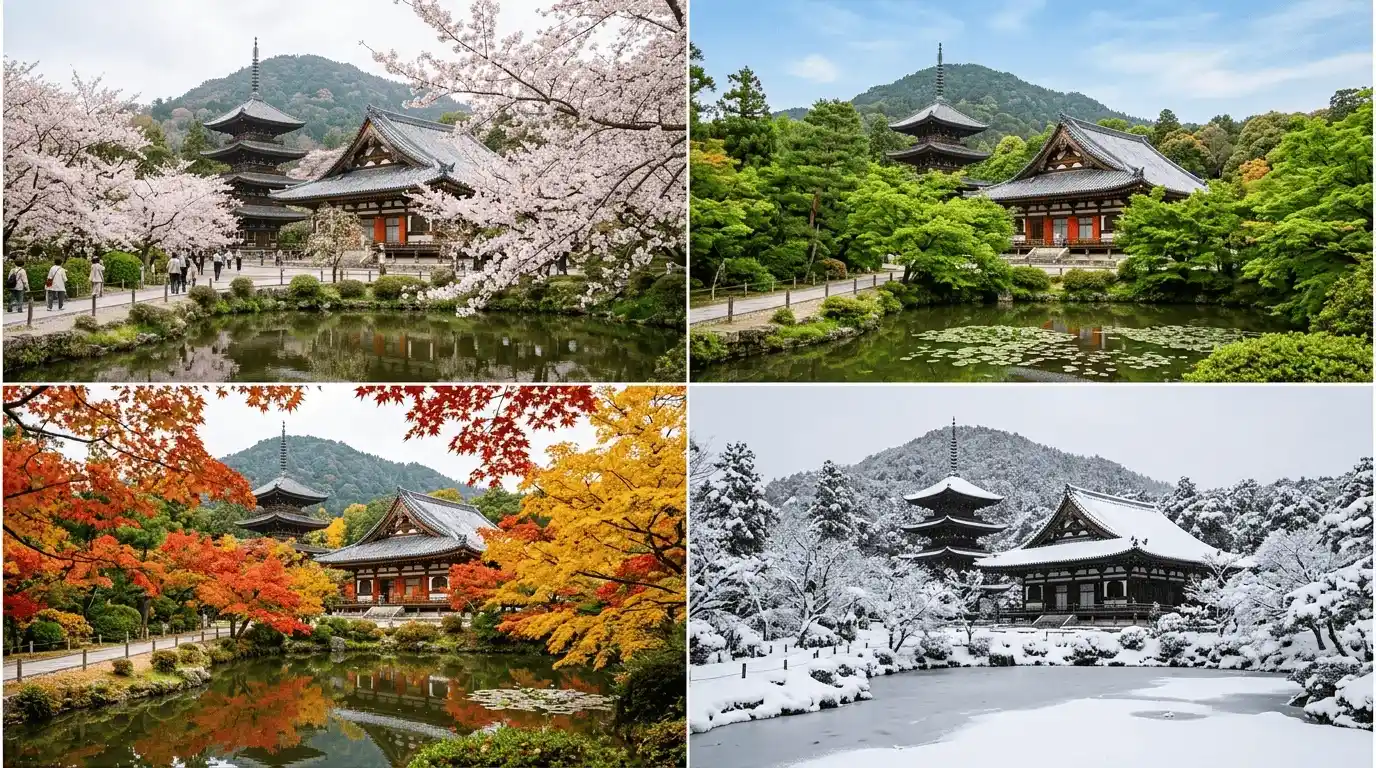
Winter: December to February
Tokyo is cold but bright, with highs around 10°C and very little rain, so views of Mount Fuji are clearest now. Hokkaido and the Japan Alps get heavy snow, which is why ski resorts such as Niseko and Hakuba fill up from late December. Outside New Year and the Sapporo Snow Festival in early February, hotels are at their cheapest.
Spring: March to May
March starts cool, and the blossom season arrives in the second half of the month. April is mild (about 19°C in Tokyo) and expensive. Book early if your dates fall between late March and mid-April. May is warmer and calmer once Golden Week ends on 5 May.
Early summer: June and July
The rainy season usually covers June and most of July in Tokyo, Kyoto and Osaka. In 2026 it began in the Kanto region on 7 June and ended around 20 July. Expect overcast days and showers rather than constant rain. Hokkaido largely escapes it, which makes June a good time to go north.
Late summer: August and September
August is the hottest month, with an average Tokyo high of 31°C and humidity that makes it feel worse. Festivals and fireworks are the reward. September stays hot and is the peak of typhoon season, which is why it is one of Tokyo’s two wettest months.
Autumn: October and November
Early October can still bring a typhoon, but by late October the air is dry and clear. November is the most comfortable month of the year for walking, with highs of 17°C in Tokyo and leaves turning across Honshu.
Cherry Blossom Season
Blossom dates move by a week or more each year, so treat any calendar as a guide. In 2026, the Japan Meteorological Agency recorded:
- Tokyo: first blossoms on 19 March, full bloom on 28 March, three days earlier than average.
- Kyoto: first blossoms on 23 March, full bloom on 30 March.
Typical windows elsewhere are January to February in Okinawa, late March in Kyushu, early April in Osaka and the Tohoku region, and late April to mid-May in Hokkaido. Trees stay at their best for about a week after full bloom, less if there is wind or rain. Follow the official cherry blossom forecast from February.
Autumn Leaves
Autumn colour moves the opposite way, from north to south:
- Hokkaido (Daisetsuzan): late September to early October
- Tohoku and the Japan Alps: mid to late October
- Nikko and Hakone: late October to early November
- Tokyo, Kyoto and Osaka: mid-November to early December
Unlike blossoms, the leaves stay good for two to three weeks, so there is more room to plan.
Rainy Season and Typhoons
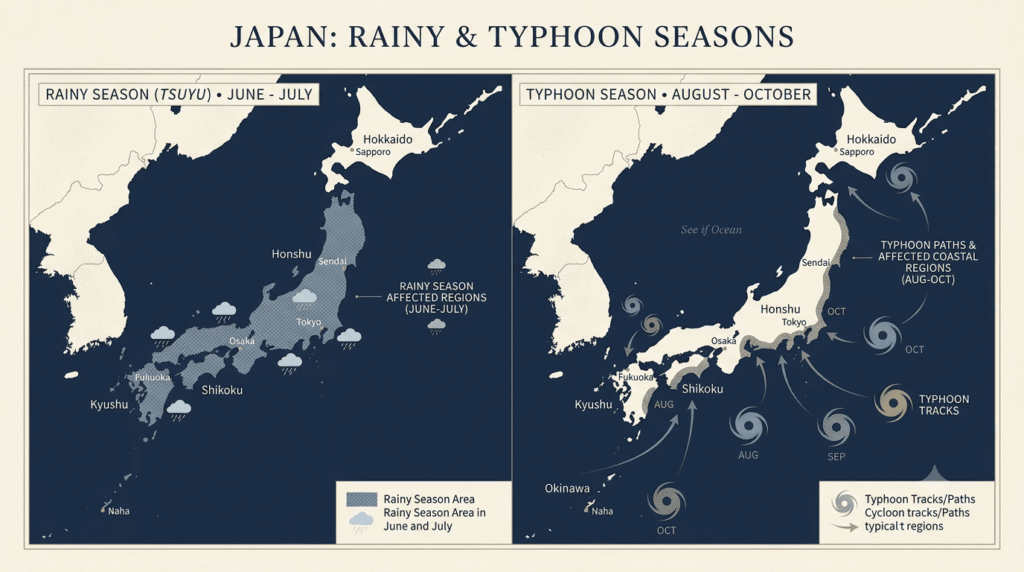
The rainy season (tsuyu) brings frequent showers from early June to mid or late July in most of Honshu; Okinawa’s runs from May to June. It rarely rains all day, and indoor sights, gardens and mountain temples look their best in the wet.
Typhoons are a bigger risk to plans. They can arrive from July to October, most often in August and September, and cause most of Tokyo’s heavy autumn rainfall. A direct hit can stop flights and bullet trains for a day. Check the Japan Meteorological Agency warnings before travel days, and consider travel insurance that covers weather delays.
Best Time to Visit Japan by Region
- Tokyo, Kyoto and Osaka: late March to early April, and late October to November. Kyoto is the most crowded of the three in both seasons, so arrive at famous temples when they open.
- Hokkaido: February for snow (highs around 0°C in Sapporo) or July to September for walking and lavender, when Sapporo’s highs are a pleasant 23–26°C.
- Okinawa: April to early June and October. Highs are already 24°C in April, and the sea is warm, but typhoon risk is highest from July to September.
- Mount Fuji: clearest from November to February. The official climbing season is July to early September.
When Japan Is Busiest
Three national holiday periods fill trains and push up prices across the country: Golden Week (29 April to 5 May), Obon (around 13 to 16 August) and New Year (about 29 December to 3 January). Cherry blossom weeks in Kyoto and Tokyo are just as busy. If your dates are flexible, moving a trip even one week outside these periods usually means noticeably cheaper hotels and emptier trains.
Planning visits to multiple destinations? Our best time to visit Machu Picchu guide covers the same month-by-month breakdown for Peru’s iconic citadel. For a short-season summer trip, see the best time to visit Banff (Rocky Mountain lake thaw and shuttle dates) or the best time to visit Croatia (Adriatic sea temperatures by month).
Frequently Asked Questions
What is the best month to visit Japan?
For a first trip, late March to early April for cherry blossoms, or late October to November for autumn colours and dry, mild weather. November is the easier of the two: it is less crowded and Tokyo’s average high is a comfortable 17°C.
When is cherry blossom season in Japan?
In Tokyo and Kyoto it usually runs from the last week of March to the first week of April. In 2026 Tokyo reached full bloom on 28 March and Kyoto on 30 March. Okinawa blooms in January and February, and Hokkaido in late April to mid-May.
What is the rainiest month in Tokyo?
September and October, with about 225 mm and 235 mm of rain on average, mostly from typhoons and autumn fronts. June, in the rainy season, averages about 168 mm but has many more grey, drizzly days.
Is Japan too hot in summer?
It is hot and very humid. Tokyo’s average high is 30°C in July and 31°C in August, and heatwaves above 35°C are now common. Hokkaido stays cooler, with August highs around 26°C in Sapporo.
When is Japan cheapest to visit?
Mid-January to February (outside ski areas), June, and the first half of December usually have the lowest hotel prices. Avoid Golden Week (29 April to 5 May), Obon in mid-August and New Year, when domestic travel peaks.
When is typhoon season in Japan?
Typhoons can arrive from July to October, with the most risk in August and September. Okinawa and Kyushu are hit most often. A typhoon can cancel flights and trains for a day or two, so leave slack in your plans.