Introduction
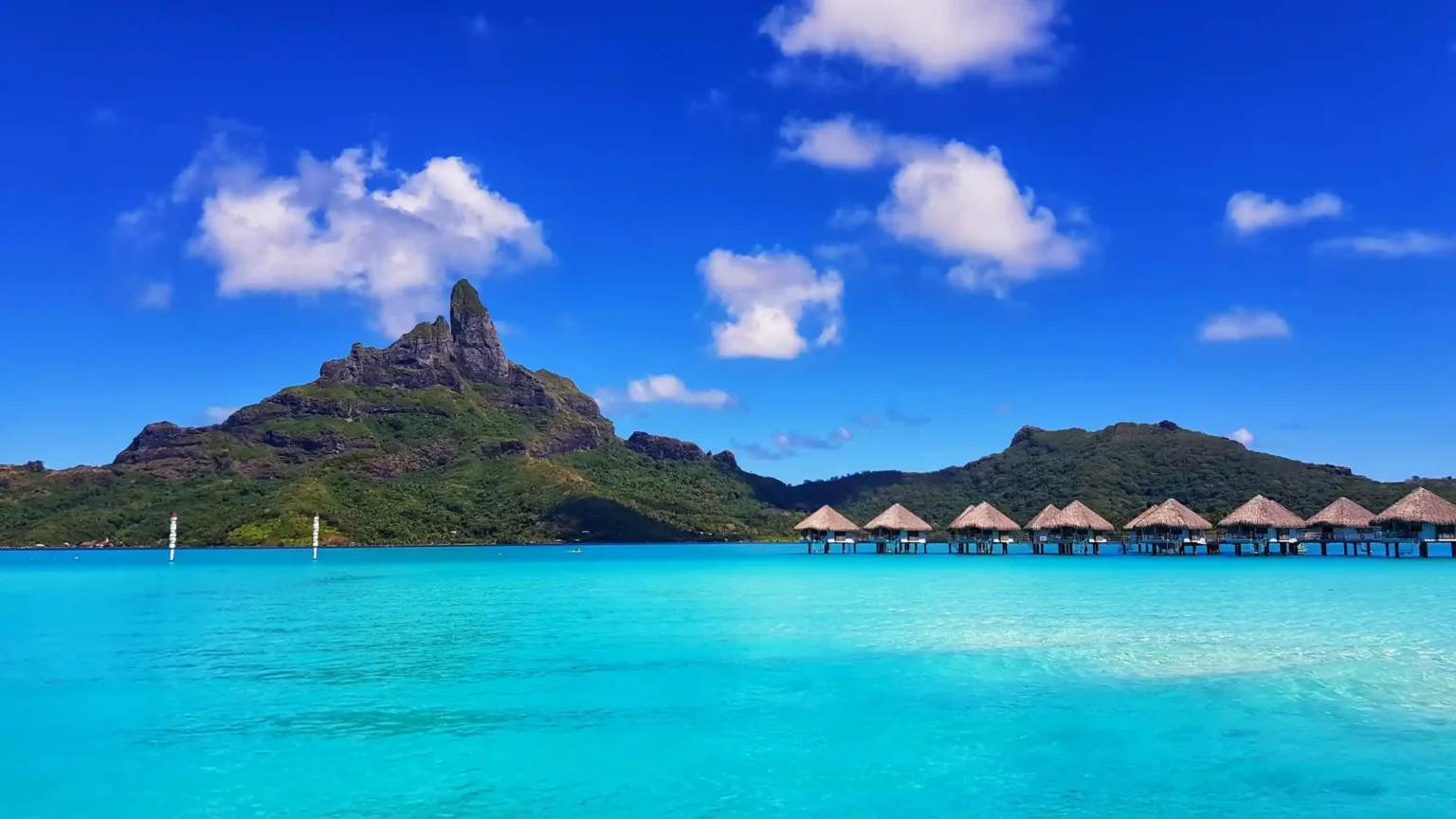
Bora Bora is the image most people picture when they imagine paradise: a ring of white-sand islets around a lagoon in impossible shades of blue, overwater bungalows on stilts, and the green spire of an ancient volcano rising from the centre. It sits in French Polynesia, deep in the South Pacific, and it has spent decades at the top of honeymoon and bucket-list wish lists for good reason.
It is also remote and expensive, so a little planning goes a long way. This guide covers where Bora Bora actually is, the best things to do, where to stay, when to go, how to get there from Tahiti, and what a trip really costs.
Table of Contents
Where is Bora Bora?
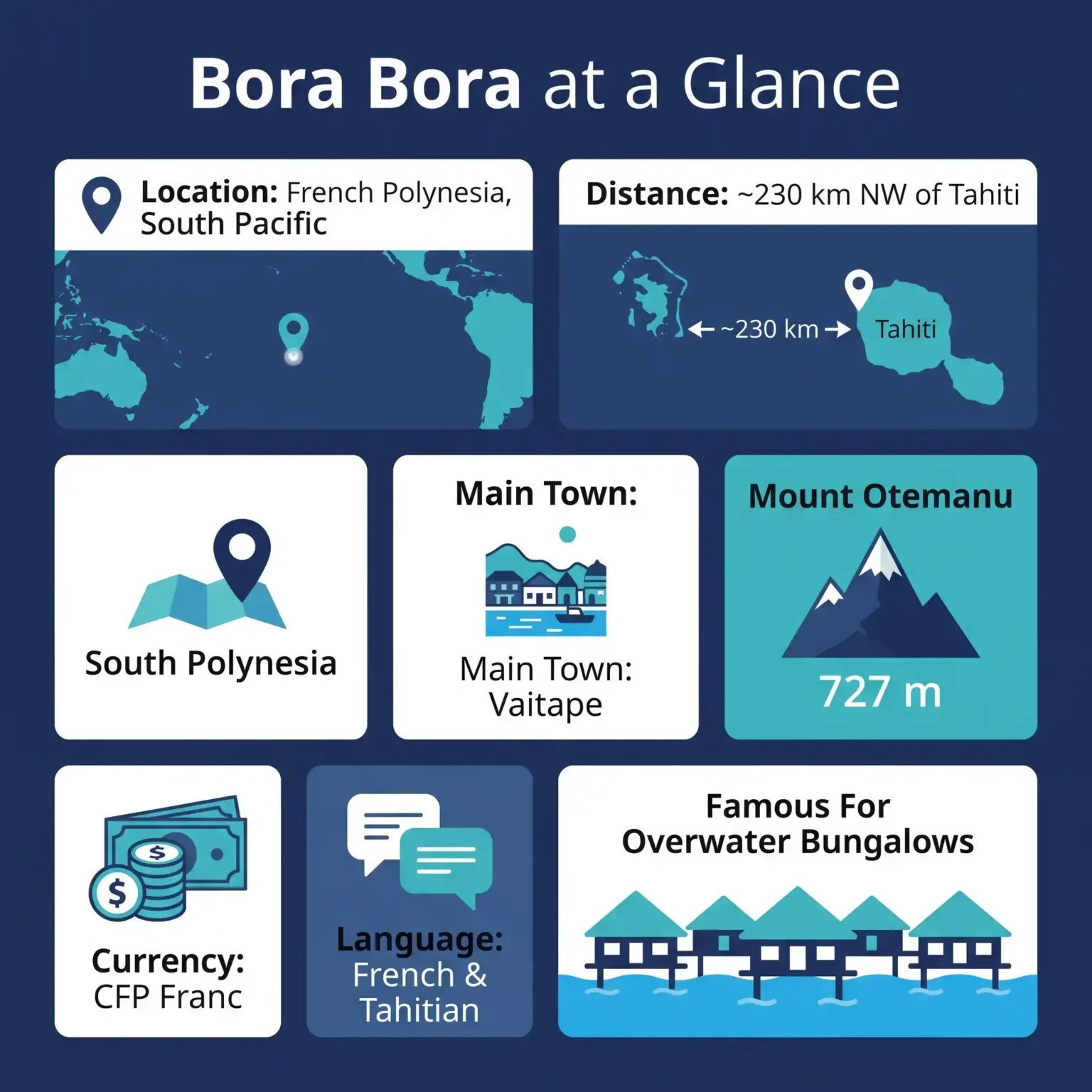
Bora Bora is a small island in the Leeward group of the Society Islands, part of French Polynesia. It lies about 230 kilometres north-west of Tahiti, the territory’s main island, in the middle of the South Pacific Ocean. The whole island is wrapped in a turquoise lagoon and a protective coral reef, with a scatter of low, palm-covered islets known as motu strung along the outer edge.
At its heart stands Mount Otemanu, the 727-metre remnant of an extinct volcano that towers over the lagoon and appears in almost every photograph of the island. The main town and port, Vaitape, sits on the western side of the central island. Because it is part of French Polynesia, the language is French and Tahitian, and the currency is the CFP franc. You can see the full lay of the land on the official Bora Bora tourism page.
Things to do in Bora Bora
For such a small island, Bora Bora offers a surprising amount to do, and almost all of it revolves around the lagoon.
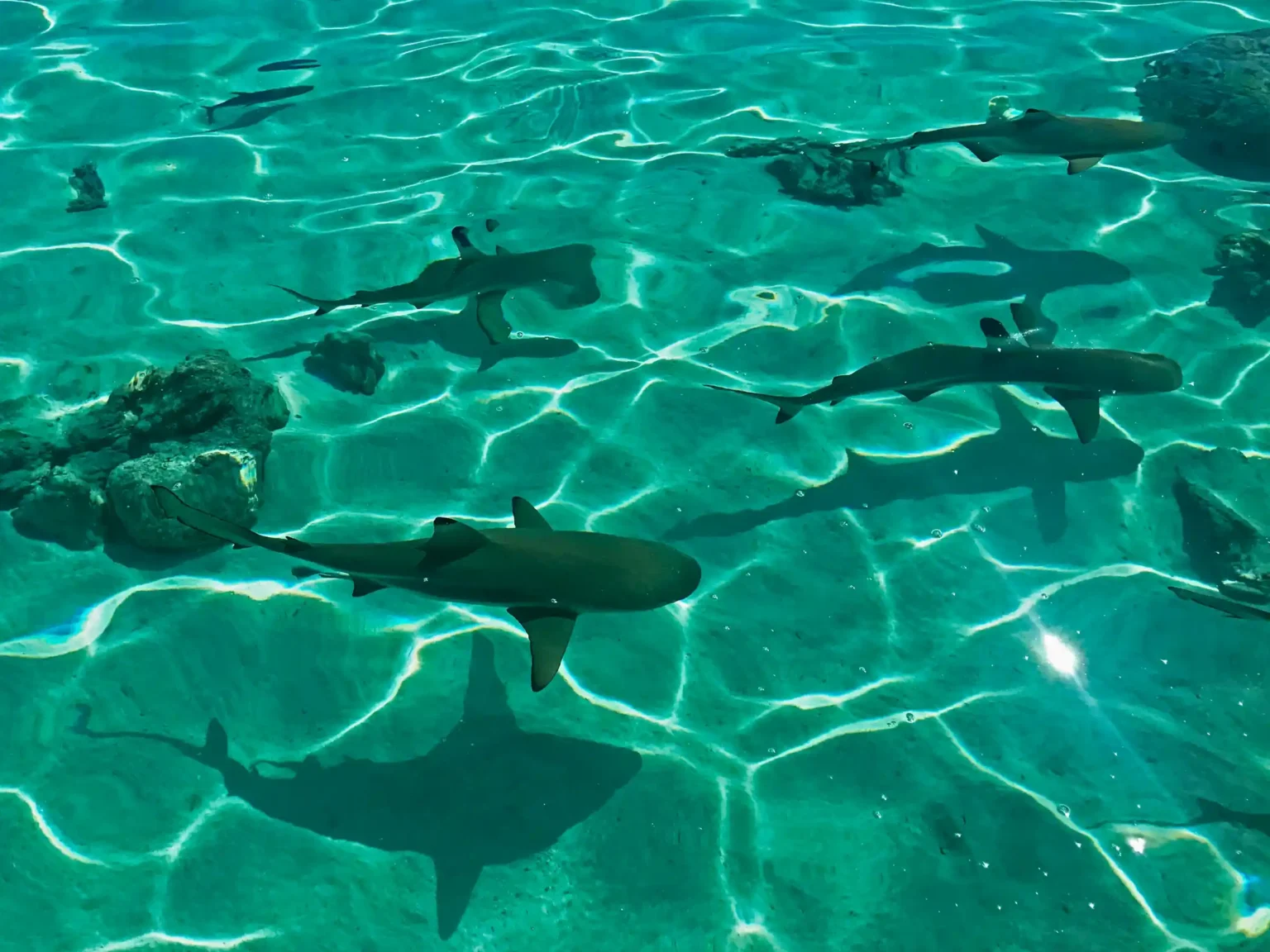
- Take a lagoon tour. The classic Bora Bora day out is a boat trip around the lagoon, stopping to snorkel in the coral gardens and in shallows where stingrays and blacktip reef sharks gather. Most tours include a barbecue lunch on a motu.
- Relax on Matira Beach. At the island’s southern tip, Matira is Bora Bora’s only real public beach: a long stretch of soft white sand and warm, shallow water. It faces west, which makes it the best sunset spot on the island, with Mount Otemanu framed behind you.
- Get close to Mount Otemanu. You cannot summit Otemanu, but you can get near it on a 4×4 safari through the interior, a guided hike to its lower viewpoints, or a boat tour that circles beneath the peak. Helicopter flights offer the most dramatic view of all.
- Snorkel and dive. The lagoon is warm all year and rich with life, from manta rays and reef sharks to clouds of tropical fish over the coral. Many resorts have a house reef you can snorkel straight off the deck.
- Explore Vaitape. The main town is the place to browse local pearl shops and craft markets, pick up supplies, and see WWII-era coastal cannons left over from the island’s time as a US supply base.
- Watch the sunset from the water. A sunset cruise, or simply a paddle out from your bungalow, turns the lagoon from turquoise to gold as the light fades behind the peaks.
Overwater bungalows and where to stay
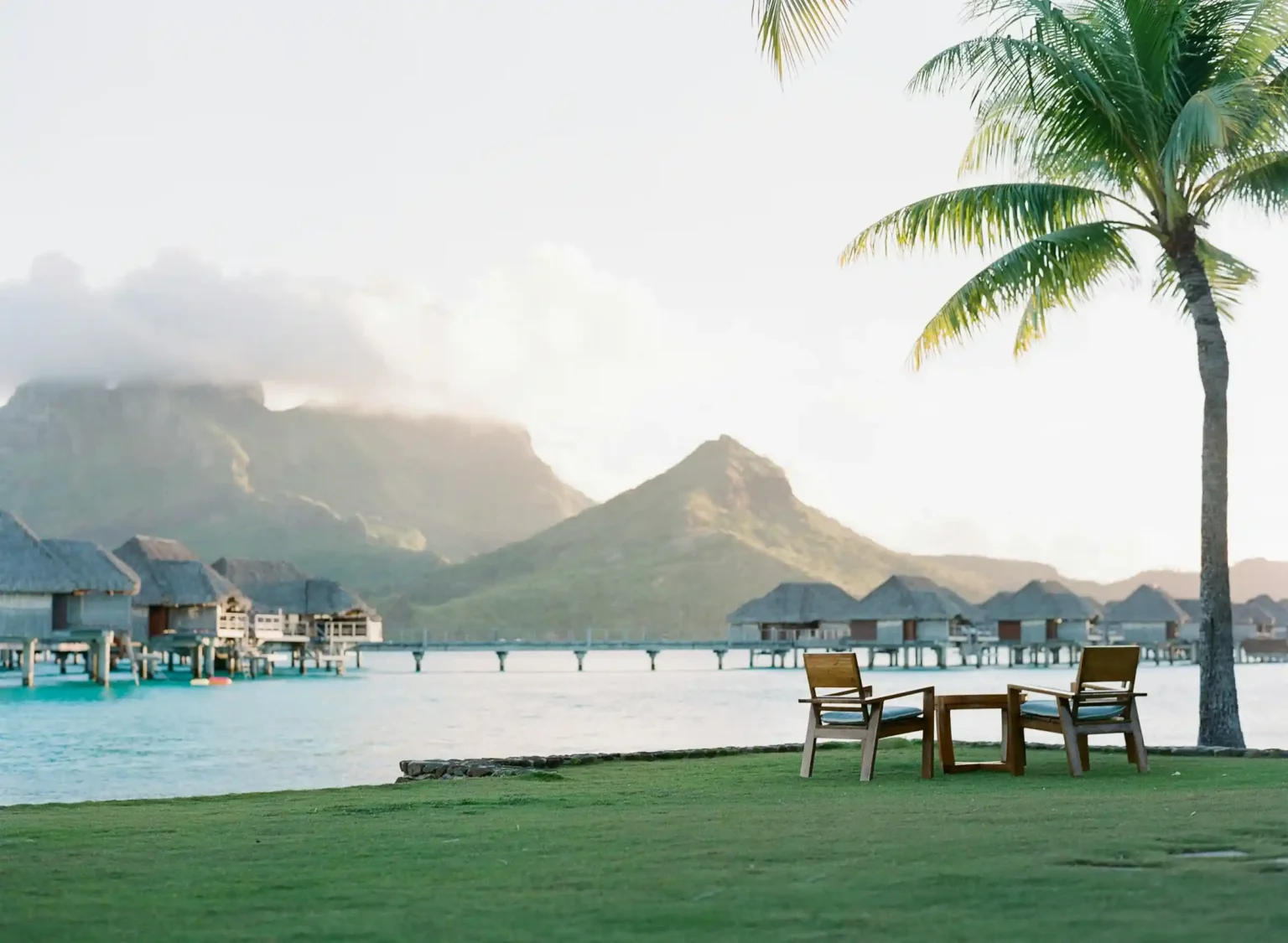
Bora Bora is where the overwater bungalow was born, and it remains the island’s signature experience: a private cabin on stilts above the lagoon, often with a glass floor panel and steps straight down into the water. The luxury resorts that offer them sit mostly on the outer motu, ringing the lagoon with views back toward Mount Otemanu.
These resorts are among the most famous in the world and price accordingly. Many operate on an all-inclusive or half-board basis, since the motu are separated from the main island and dining options are limited to the resort itself. If an overwater bungalow is beyond budget, the main island around Vaitape and Matira has smaller hotels, guesthouses (pensions), and beachfront rooms that cost far less while keeping you close to the same lagoon. Wherever you stay, remember that reaching your resort usually involves a boat transfer, so pack a day bag for the journey. Our packing list generator can build a tropical-trip kit for you.
Best time to visit Bora Bora
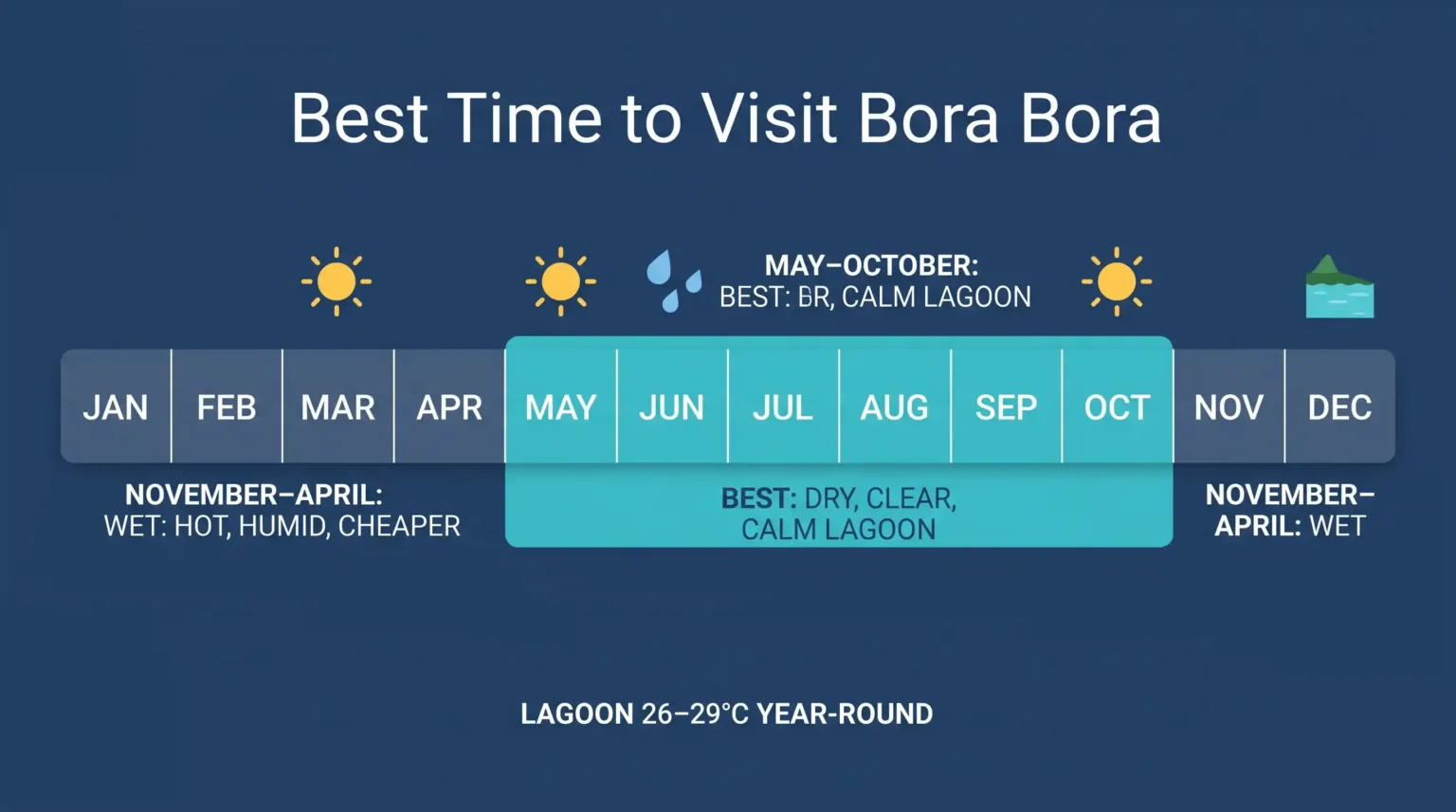
Bora Bora has two seasons. The dry season, from May to October, is the best time to visit: humidity is low, the skies are clear, rainfall is minimal, and the lagoon is at its calmest and most vivid. This is the peak period, so resorts are busiest and prices highest, with the middle months of the southern winter the most reliable for sunshine.
The wet season, from November to April, is hotter and far more humid, with short heavy downpours and a small risk of tropical storms. The upside is lower prices and fewer visitors, and because the rain often comes in brief bursts, a wet-season trip can still deliver plenty of sunshine. The lagoon stays warm all year, hovering around 26 to 29 degrees Celsius, so swimming and snorkelling are comfortable whenever you go.
How to get to Bora Bora
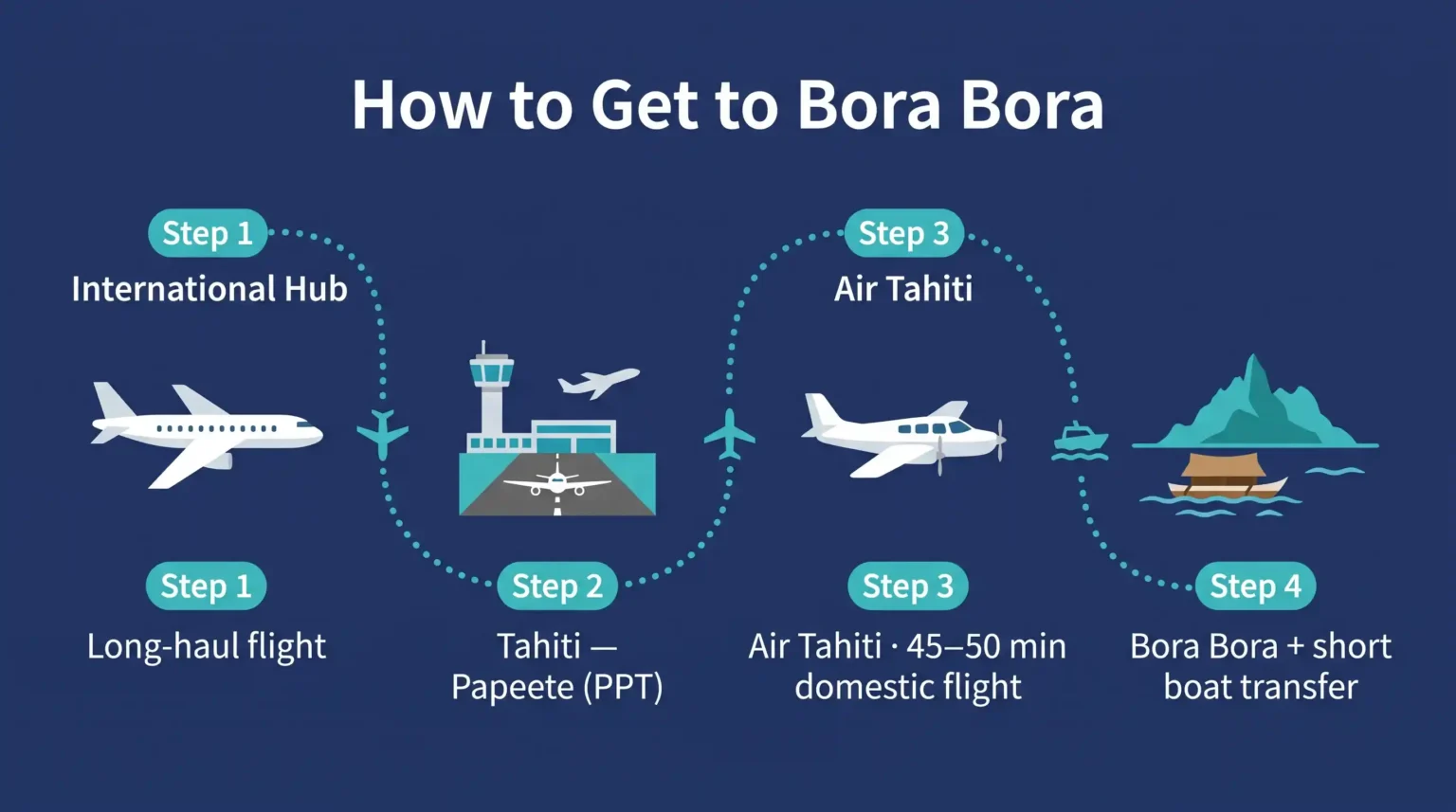
Getting to Bora Bora takes effort, which is part of why it stays so unspoilt. There are no direct international flights to the island. Every trip runs through Tahiti: you first fly into Faaa International Airport near Papeete, the gateway to French Polynesia, on a long-haul route from Los Angeles, Auckland, Paris, Tokyo, or another hub.
From Tahiti, a domestic flight with Air Tahiti covers the final leg to Bora Bora in around 45 to 50 minutes. The island’s small airport sits on its own motu, so a short boat transfer then carries you across the lagoon to Vaitape or directly to your resort. Allow a comfortable connection in Tahiti, and consider a night on either Tahiti or nearby Moorea to break up the long journey. Because the trip is such a big investment, it is worth reading up on whether travel insurance is worth it before you book.
How much does Bora Bora cost?
There is no getting around it: Bora Bora is one of the most expensive destinations on earth. Overwater bungalows at the marquee resorts commonly run from several hundred to well over a thousand US dollars a night, and because almost everything is imported, meals, drinks, and lagoon excursions all carry premium prices. A week for two, including international flights, the Air Tahiti connection, an overwater stay, and activities, can easily reach five figures.
It can be done for less. Staying in a main-island guesthouse rather than an overwater resort, travelling in the wet season, eating at local roulottes (food trucks) and small cafes in Vaitape, and booking lagoon tours selectively all bring the cost down significantly. Bora Bora will never be a budget destination, but with those choices it becomes reachable for a special-occasion trip rather than only a once-in-a-lifetime splurge.
Conclusion
Bora Bora earns its reputation. The lagoon really is that colour, the overwater bungalows really are that beautiful, and Mount Otemanu really does loom over it all like something from a film. The keys to a good trip are simple: go in the dry season if you can, plan the journey through Tahiti with time to spare, decide early whether an overwater bungalow or a main-island base suits your budget, and build your days around the lagoon. Do that, and Bora Bora delivers exactly the paradise it promises. For a wilder, stranger island at the opposite end of the spectrum, see our Socotra Island travel guide, or our Milos travel guide for a Greek-island escape, or our roundup of secret places in the world untouched by tourism for somewhere far off the map, or our Fernando de Noronha travel guide for Brazil’s strictly protected island.
Frequently asked questions
Where is Bora Bora located?
Bora Bora is in the Leeward Islands of the Society Islands, part of French Polynesia, in the South Pacific Ocean. It lies about 230 kilometres north-west of Tahiti.
What is the best time to visit Bora Bora?
The dry season from May to October is the best time to visit, with low humidity, clear skies, and a calm, vivid lagoon. The wet season from November to April is hotter and rainier but cheaper and quieter.
How do you get to Bora Bora?
There are no direct international flights. You fly to Tahiti (Papeete) first, then take a 45 to 50 minute domestic flight with Air Tahiti to Bora Bora, followed by a short boat transfer across the lagoon.
How much does a trip to Bora Bora cost?
Bora Bora is very expensive. Overwater bungalows often cost from several hundred to over a thousand US dollars a night, and a week for two with flights can reach five figures. Main-island guesthouses and wet-season travel reduce the cost considerably.
Do you need to fly through Tahiti to reach Bora Bora?
Yes. All travellers connect through Tahiti’s Faaa International Airport near Papeete, then take a short domestic flight to Bora Bora. Many people add a night in Tahiti or Moorea to break up the long journey.
Is Bora Bora worth the money?
For a honeymoon or milestone trip, most visitors feel it is. The lagoon, the overwater bungalows, and the scenery are genuinely world-class. If the resort prices are out of reach, a main-island stay still lets you experience the same lagoon for far less.