Introduction
Socotra looks less like a real place and more like a film set for an alien world. Trees shaped like flying saucers crowd its highland plateaus, vast white dunes pile against turquoise lagoons, and much of what grows here grows nowhere else on earth. Marooned in the Arabian Sea off the coast of Yemen, this remote island has become one of the most sought-after destinations for travellers chasing somewhere genuinely different.
It is also one of the harder places to reach, with no independent travel and a shifting flight situation, so a trip needs planning. This guide covers where Socotra is, its famous dragon blood trees, the best things to do, how to get there, when to go, and what to expect on the ground.
Table of Contents
Where is Socotra Island?
Socotra is an island in the Arabian Sea and part of Yemen, though it sits far from the mainland: around 380 kilometres south of the Arabian Peninsula and only about 240 kilometres off the Horn of Africa. It is the largest of a small four-island archipelago and the only one that is inhabited to any real degree, with the main town, Hadibo, strung along the north coast.
That isolation is the whole point. Cut off for millions of years, Socotra evolved a cast of plants and animals found nowhere else, and roughly a third of its plant species are endemic. This is why it is often called the Galapagos of the Indian Ocean and why the archipelago was named a UNESCO World Heritage Site in 2008. For anyone who has already ticked off the classic tropical islands, Socotra is the strange, wild opposite of a place like our Bora Bora travel guide describes.
The dragon blood trees and unique nature
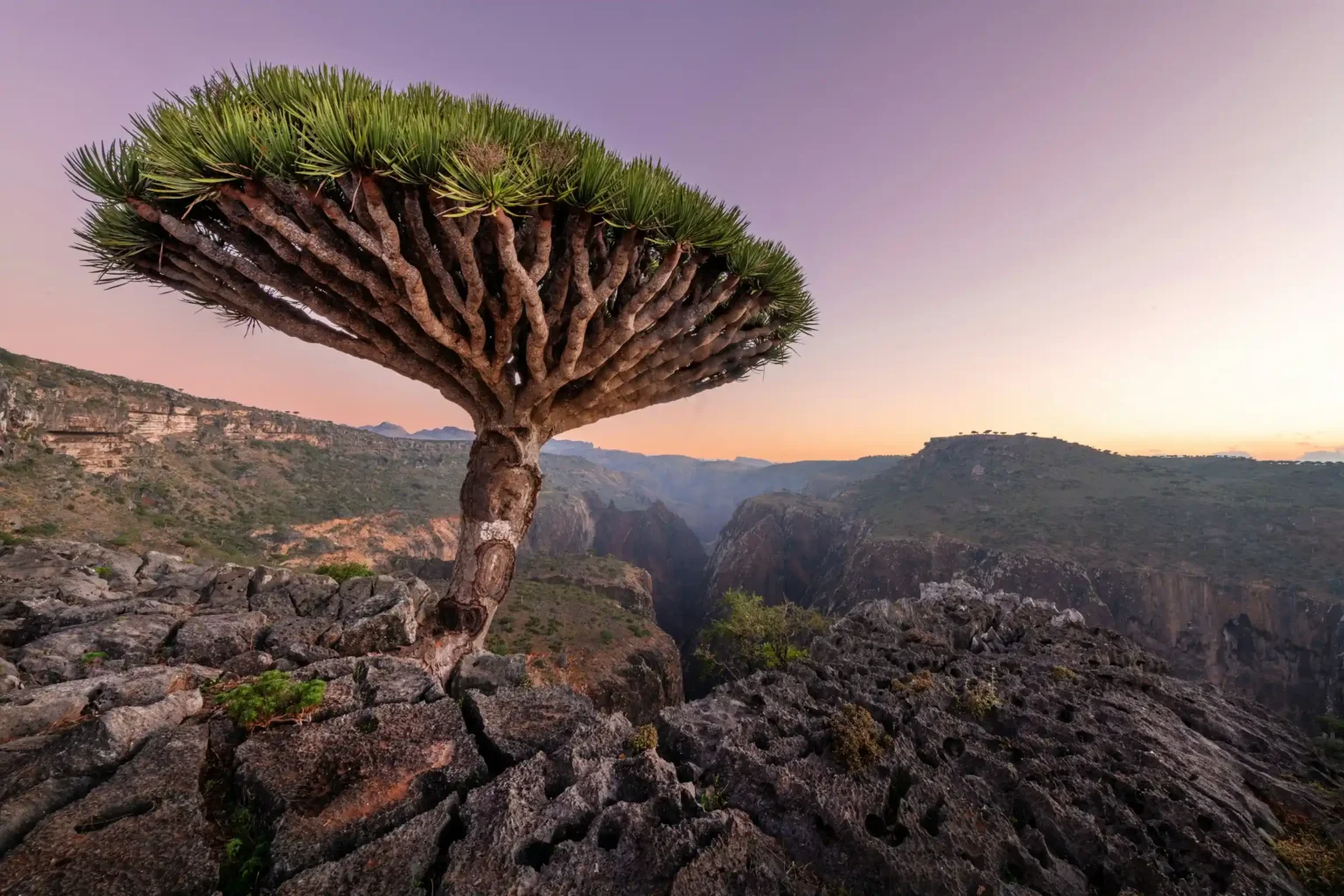
The island’s signature sight is the dragon blood tree, Dracaena cinnabari. Shaped like an upturned umbrella or a giant mushroom, it has a dense, flat canopy that shades the ground beneath and a deep-red sap that gives the tree its name and was prized for centuries as a dye and medicine. The national tree of Yemen, it can live for several hundred years and grows in dramatic stands across the high Diksam Plateau. It is also endangered, so the forests are protected.
The dragon blood tree is only the headline act. Socotra is also home to the bulbous bottle trees, which store water in their swollen trunks, and the pink-flowered desert rose that clings to bare rock. Frankincense trees, giant aloes, and endemic birds fill out an ecosystem unlike anywhere else. Time your visit to the dragon blood forests for early morning or late afternoon, when low light turns the canopies to fire; the midday sun flattens them.
Things to do in Socotra

Socotra is an outdoor, small-group destination, and almost everything is done on foot, by boat, or from a 4×4 as part of a camping-based tour.
- Walk the Diksam Plateau. The heartland of the dragon blood forests, with canyons, viewpoints, and the densest concentration of the island’s iconic trees.
- Swim at Detwah Lagoon. A shallow, luminous turquoise lagoon near the fishing village of Qalansiyah on the west coast, backed by pale sand and often rated the island’s most beautiful spot.
- See the dunes at Arher. On the east coast, enormous white sand dunes rise straight from the sea against a mountain backdrop, with a cool freshwater stream running down beside them to swim in.
- Cool off at Homhil. A protected highland area with bottle trees, frankincense, and a natural rock pool that spills over a cliff edge into an infinity-pool view of the coast far below.
- Explore Hoq Cave. A large limestone cave hung with stalactites and marked with ancient inscriptions left by sailors over two thousand years ago.
- Relax on empty beaches. Shuab, Qalansiyah, and Amak offer long, near-deserted stretches of sand, with boat trips out to see dolphins along the way.
How to get to Socotra

Getting to Socotra is the single biggest piece of planning, and the route changes from season to season, so always confirm the current situation before you commit. There are no independent arrivals: you cannot book a Socotra flight on a normal booking site or turn up alone. Every visitor travels with an authorized local tour operator, who books the flight and arranges the entry permit as part of the trip.
For the current 2026 season, the main scheduled route is a weekly Yemenia flight from Jeddah in Saudi Arabia, with occasional connections through Cairo or the Yemeni mainland. In recent past seasons, charter flights from Abu Dhabi were the popular option for Gulf-based and international travellers, and those may return, which is why you will still see “Socotra flights from the UAE” widely discussed. Your operator will tell you which airport and route is running for your dates and route you through the right connection. Because the logistics are complex and the destination remote, it is well worth reading up on whether travel insurance is worth it before you book.
Best time to visit Socotra
The season runs from roughly October to April, and this is by far the best time to visit. During these months the weather is dry and calm, the seas are gentle enough for boat trips and swimming, and the dragon blood forests are at their most photogenic. The cooler middle of this window is the most comfortable for hiking.
From about June to September the south-west monsoon takes over, bringing fierce winds and rough seas. Many flights are suspended and most operators close for the season, so the island is effectively off-limits to visitors during the summer. Late September and May sit on the shoulders and can still work, but the reliable window is the dry season.
Where to stay and practical tips
Do not expect resorts. Socotra is a camping destination first and foremost, and the classic trip means sleeping in tents beside the dunes, forests, and beaches, with your operator handling all the gear, food, and cooking. There are a few very basic guesthouses and simple hotels in Hadibo for a night at the start or end, but the wild camping is the experience most people come for.
A few things to know before you go:
- Permit and passport. Entry requires a permit, usually around USD 150 and arranged by your operator, plus a passport valid for at least six months.
- Cash only. There are no working ATMs and cards are not accepted. Bring enough US dollars in cash for the whole trip to change into Yemeni rial.
- Basic infrastructure. Electricity, mobile signal, and internet are limited and intermittent. Pack for self-sufficiency; our packing list generator can build a kit for a remote camping trip.
- Safety and advice. Socotra sits far from Yemen’s mainland conflict and has stayed peaceful, and it is visited on organized tours, but Yemen carries serious travel warnings. Check your government’s current travel advice for Yemen and make sure your insurance covers the trip.
Conclusion
Socotra rewards the effort it takes to get there. Few places on earth feel this untouched or this strange, from the dragon blood forests of Diksam to the dunes of Arher and the glowing lagoon at Detwah. The keys to a good trip are simple: go in the dry season, book with a reputable local operator who handles the flights and permit, pack for basic conditions and pay in cash, and check the latest travel advice before you commit. Do that, and Socotra delivers one of the most extraordinary island trips left in the world. For a gentler, more accessible island escape, see our Milos travel guide, or find it among the world’s most remote escapes in our guide to the secret places in the world untouched by tourism.
Frequently asked questions
Where is Socotra Island located?
Socotra is in the Arabian Sea and belongs to Yemen. It lies about 380 kilometres south of the Arabian Peninsula and roughly 240 kilometres off the Horn of Africa, making it one of the most isolated inhabited islands in the region.
How do you get to Socotra Island?
Only through an authorized tour operator, who books your flight and arranges the entry permit. Routes change seasonally; for the 2026 season the main option is a weekly Yemenia flight from Jeddah, while charter flights from Abu Dhabi have run in past years and may return.
Do you need a tour and a permit to visit Socotra?
Yes. Independent travel is not possible. You must join an organized tour, and an entry permit, usually around USD 150 and valid for 30 days, is arranged for you by the operator. A passport valid for at least six months is required.
What is the best time to visit Socotra?
October to April, the dry season, when the weather is calm and the seas are swimmable. Avoid June to September, when the monsoon brings strong winds, rough seas, and suspended flights, and most operators close.
Is Socotra safe to visit?
Socotra is geographically far from Yemen’s mainland conflict and has remained peaceful, and it is visited on organized tours. That said, Yemen carries serious travel warnings, so check your government’s current travel advice and ensure your travel insurance covers the trip before booking.
What are the dragon blood trees of Socotra?
The dragon blood tree (Dracaena cinnabari) is an endemic species found only on Socotra. Shaped like an umbrella with a red sap, it is the national tree of Yemen, can live for centuries, and grows across the Diksam Plateau. It is endangered and protected.