The Sahara is the hottest large desert on earth, yet one of the first things that surprises visitors is how cold it gets once the sun goes down. A day that touches 40 degrees Celsius can give way to a night near freezing, a swing few places on the planet can match. If you are heading out to a desert camp, understanding the Sahara desert temperature at night is the difference between a magical evening under the stars and a miserable, shivering one. This guide explains how cold it really gets, why the drop is so steep, and exactly how to pack for it. Our packing list generator can build the list for you once you have read this.
How cold does the Sahara get at night?
It depends heavily on the season, but the short answer is colder than almost anyone expects. In the deep summer months of June to August, nights stay warm, usually around 20 to 28 degrees Celsius (68 to 82 Fahrenheit), even after daytime highs above 45 degrees. The real cold arrives in the cooler half of the year. In spring and autumn, nights fall to roughly 10 to 15 degrees Celsius (50 to 59 Fahrenheit). In winter, from December to February, desert nights commonly drop to between 0 and 8 degrees Celsius (32 to 46 Fahrenheit), and in exposed spots or at higher elevations the temperature can fall below freezing.
It can go further still. The Sahara has recorded genuine snowfall, most famously around the town of Ain Sefra in Algeria, where dunes have been dusted white more than once in recent years. Snow is rare, but it is a reminder that the phrase hot desert only describes the daytime.
Why the Sahara temperature drops so much after sunset
The size of the nightly drop comes down to three things working together, and it is the same physics that makes the climate in the Sahara desert so extreme.
The air is extremely dry. Water vapour is the main gas that traps heat near the ground. Humid places stay warm overnight because that moisture holds the day’s heat like a blanket. Sahara air carries almost no water vapour, so once the sun sets, heat radiates straight back out to space with nothing to stop it.
The skies are clear. Clouds act as a second blanket, reflecting warmth back toward the surface. The Sahara is cloudless for most of the year, so there is nothing overhead to slow the loss of heat after dark.
Sand does not hold heat. Unlike the sea, which warms and cools slowly, sand has a low heat capacity. It heats up fast under the midday sun and gives that heat up just as fast in the evening. Within an hour or two of sunset, the ground that was scorching is already cool to the touch.
Day versus night: the daily temperature range
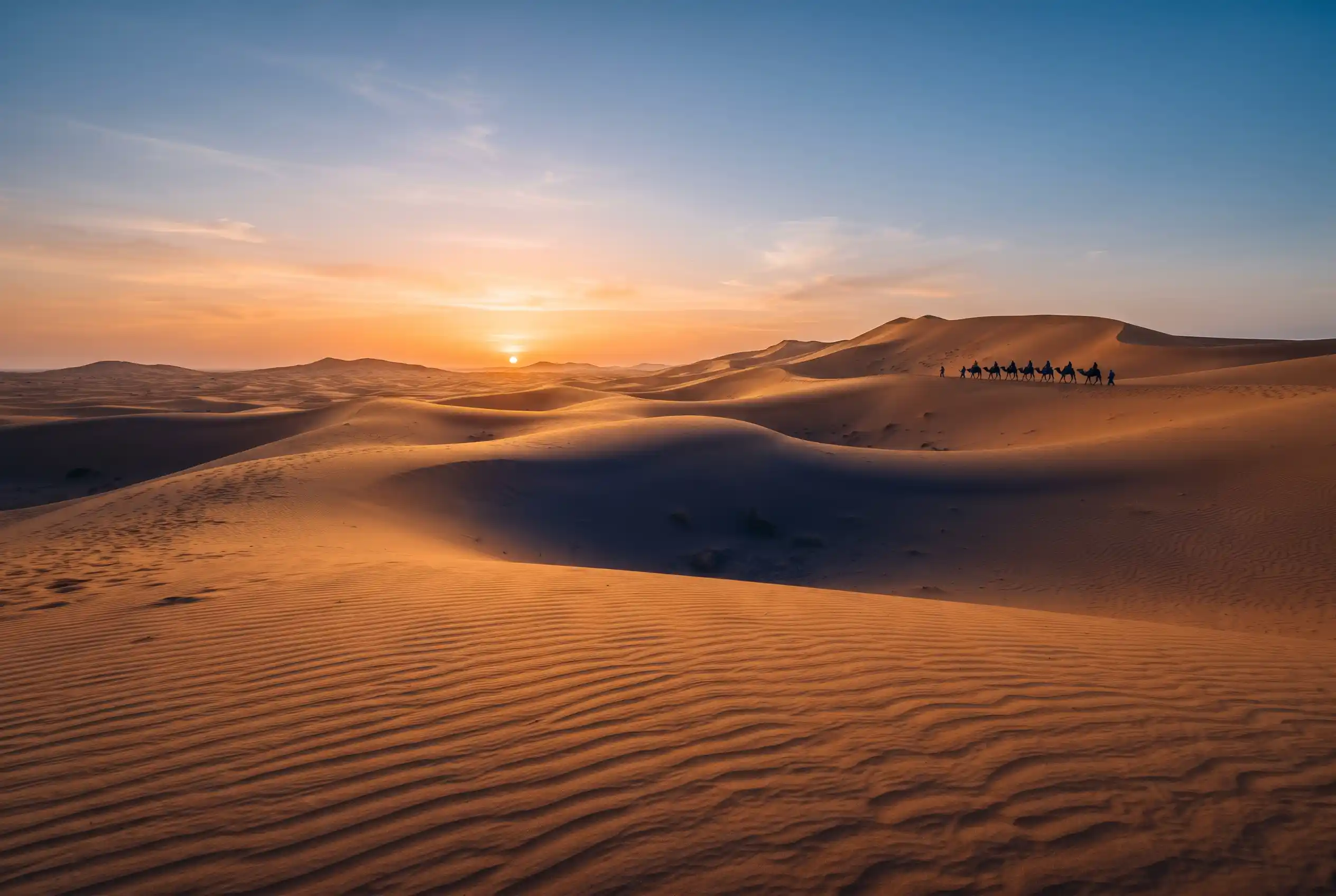
What makes the Sahara desert weather so striking is not just the heat or the cold on its own, but the gap between them in a single day. A swing of 20 to 30 degrees Celsius between the afternoon high and the pre dawn low is normal, and in winter or at altitude the difference can stretch beyond 40 degrees. You might wear a t shirt and sweat through the afternoon, then reach for a thick jacket a few hours later around the campfire. Planning for both ends of that range on the same day is the whole trick to enjoying the desert.
The climate in the Sahara desert, season by season
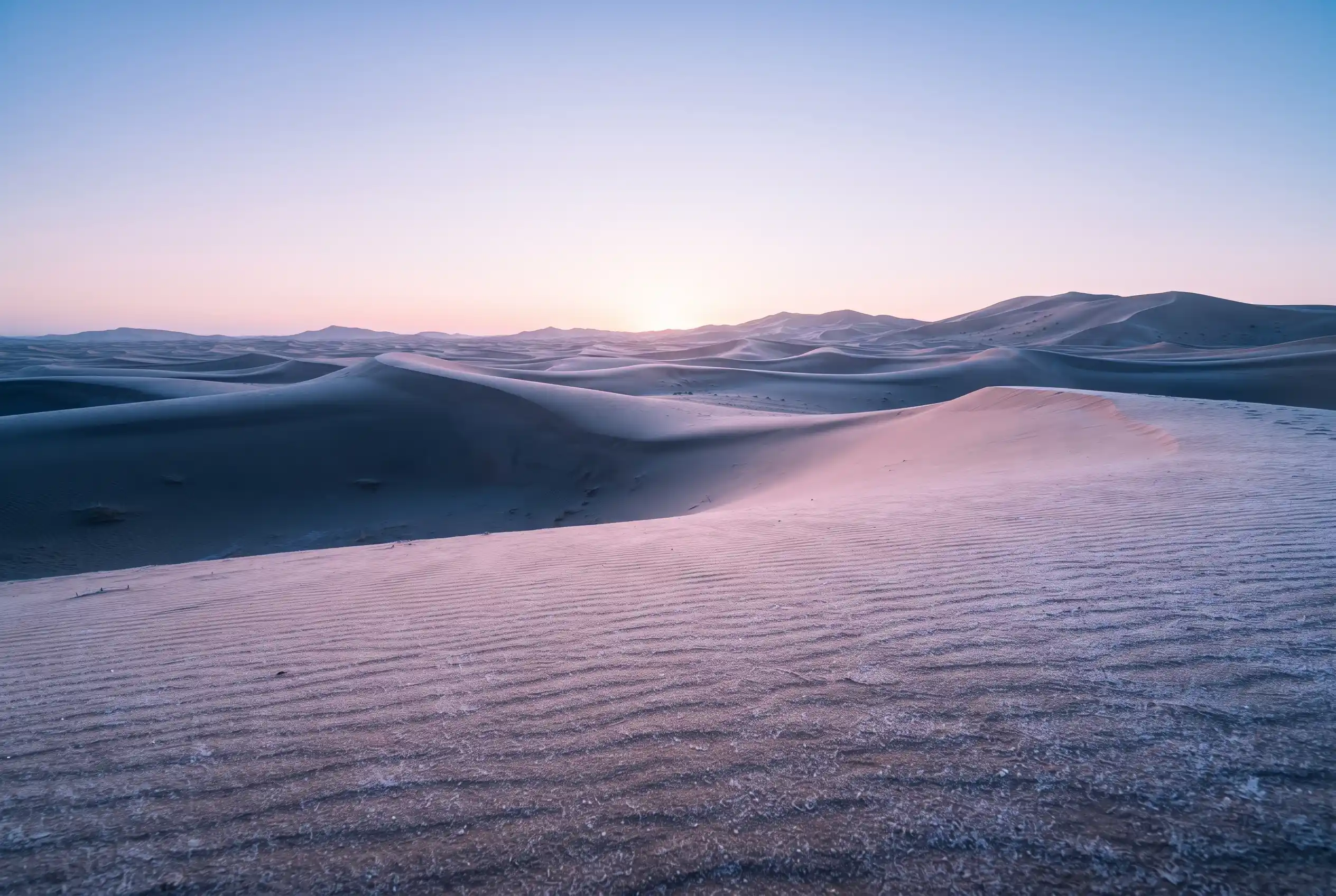
Across the year the pattern is consistent, with the cool season being by far the most comfortable time to visit.
- Spring (March to May): warm days of 25 to 35 degrees Celsius and mild nights near 10 to 15 degrees. One of the best windows, though spring sandstorms are possible.
- Summer (June to August): brutal daytime heat above 45 degrees and warm nights. Best avoided for anything active, and midday should be spent in the shade.
- Autumn (September to November): cooling days and pleasant nights, a return to comfortable conditions after the summer peak.
- Winter (December to February): mild days of 15 to 22 degrees but genuinely cold nights near or below freezing. Clear, crisp, and quiet, with the fewest crowds.
For most travellers the sweet spot is roughly October to April, when the days are warm rather than dangerous and the nights, while cold, are manageable with the right kit. If you are timing a wider trip, our guide to the Morocco itinerary covers how the desert fits with the imperial cities and the coast.
What to pack for cold Sahara nights
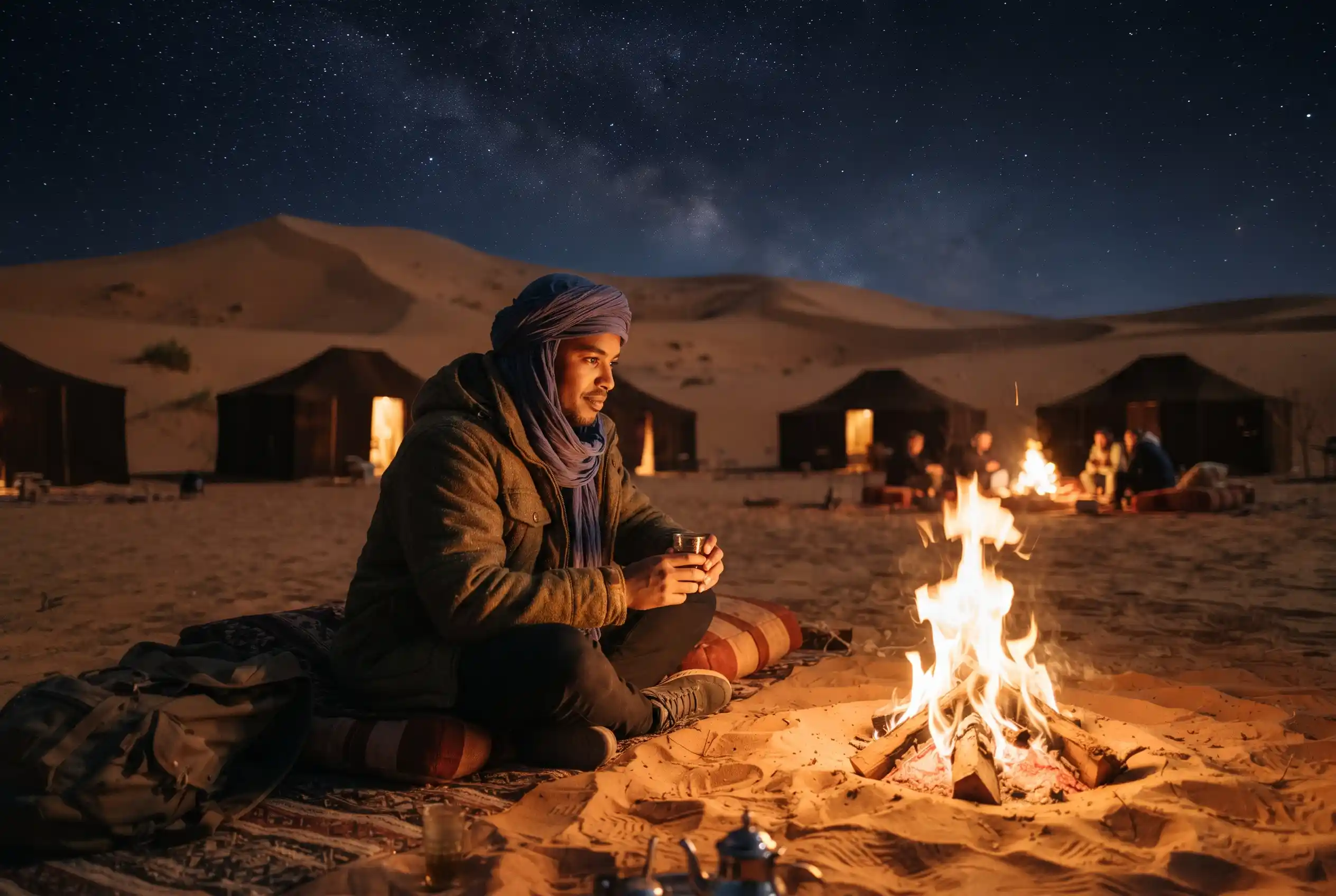
The answer to the temperature swing is layers, so you can add and remove clothing as the day turns to night. Even in summer you will want one warm layer for the evening. For a winter desert camp you need to pack as if for a cold night outdoors, because that is exactly what it is. A sensible list looks like this:
- A light base layer and breathable long sleeves for sun protection by day
- A warm mid layer such as a fleece, plus an insulated or down jacket for after sunset
- A hat and a scarf or headscarf, which doubles as protection against blowing sand
- Warm socks and closed shoes for the evening, when the ground cools quickly
- For winter nights, thermal layers and, if you run cold, a sleeping bag liner to add to the camp bedding
- Plenty of water, high factor sunscreen, and lip balm for the dry air
The easiest way to make sure none of this is forgotten is to let our packing list generator build a list around your trip type and dates, so the warm layers make it into the bag alongside the sun kit.
Nights at a desert camp
Most visitors meet the Sahara at night on an overnight trip to a camp in the great dune fields, such as Erg Chebbi near Merzouga or the more remote Erg Chigaga, both reached on tours from Marrakech or Fes. Camps provide tents, blankets, and often thick duvets, and a fire for the evening meal, so you will not be left to freeze. Even so, the clear desert sky that makes the stargazing unforgettable is the same clear sky that pulls the warmth away, so bring your own layers rather than relying only on what the camp supplies. If you are planning the trip out from the city, our guide to the best day trips from Marrakech covers the routes, and our guide to whether Morocco is safe answers the common worries before you go.
For background on the desert itself, the Encyclopaedia Britannica entry on the Sahara and the National Geographic resource on deserts both set out the geography and climate in more detail.
Frequently asked questions
How cold does the Sahara desert get at night?
It varies by season. Summer nights stay warm at around 20 to 28 degrees Celsius, spring and autumn nights fall to about 10 to 15 degrees, and winter nights commonly drop to between 0 and 8 degrees Celsius, sometimes below freezing in exposed areas.
Why does the Sahara get so cold at night?
The air is extremely dry, so there is almost no water vapour to hold the day’s heat, and the skies are usually cloudless, so nothing traps warmth near the ground. Sand also releases heat quickly. Together these let the heat escape fast after sunset.
Does it snow in the Sahara desert?
Rarely, but yes. Snow has fallen several times in recent years around Ain Sefra in Algeria, and frost can form on cold winter nights. It is unusual, but it shows how low desert temperatures can go after dark.
What should I wear in the Sahara at night?
Dress in layers. Keep light, breathable clothing for the day and add a fleece and an insulated jacket for the evening, with a hat, a scarf, and warm socks. In winter, bring thermal layers and consider a sleeping bag liner for the camp bedding.
What is the best time to visit the Sahara desert?
October to April is the most comfortable window, with warm days rather than dangerous heat. Spring and autumn offer the best balance of mild days and bearable nights, while winter is quiet and clear but cold after dark.
How big is the temperature difference between day and night?
The daily swing is usually 20 to 30 degrees Celsius, and in winter or at higher elevations it can exceed 40 degrees. This large day to night range is one of the defining features of the climate in the Sahara desert.