Spiti is a cold desert of thousand-year-old monasteries, villages clinging to ochre cliffs, and a Buddhist culture that has kept its rhythm for centuries. It is also fragile — in its environment, its roads and its traditions — which is why how you travel there matters as much as where you go. This guide to Spiti Valley in India focuses on the culture, etiquette and practicalities to understand before you go, so you arrive as a respectful guest rather than just another tourist.
Affiliate disclosure: this page contains Amazon affiliate links. As an Amazon Associate, Boarding Gate earns from qualifying purchases, at no extra cost to you. How this works.
Spiti Valley in short
- Route: Enter on the Shimla and Kinnaur side, which climbs gradually over several days, rather than the Manali route, which gains height far faster.
- Permits: Foreign nationals need a Protected Area Permit from Shimla or the Kaza DC office, while Indian nationals need no permit for the core circuit.
- Altitude: Kaza sits around 3,800 m, so spend a couple of nights acclimatising at lower villages and drink plenty of water.
- Etiquette: Dress modestly, keep your voice low, ask before taking photos, remove your shoes where instructed and never touch the murals.
- Plan: Allow seven to nine days, carry enough cash and fuel, and expect few ATMs and patchy mobile coverage.
Two ways in — and why the route matters
Spiti is reached by two mountain roads that meet at Kaza, the main town. The Shimla–Kinnaur route climbs gradually over several days through Narkanda, Rampur, Reckong Peo and Nako before Tabo and Kaza. The Manali route crosses Kunzum Pass and reaches high altitude far faster. For first-timers the Shimla–Kinnaur side is strongly recommended because the gradual ascent helps you acclimatise; the Manali route gains height so quickly it raises the risk of altitude sickness. A popular approach is to enter via Shimla and exit via Manali once you are acclimatised. The Manali–Kaza road is seasonal, typically open from around late May to mid-October, so check current status before relying on it.
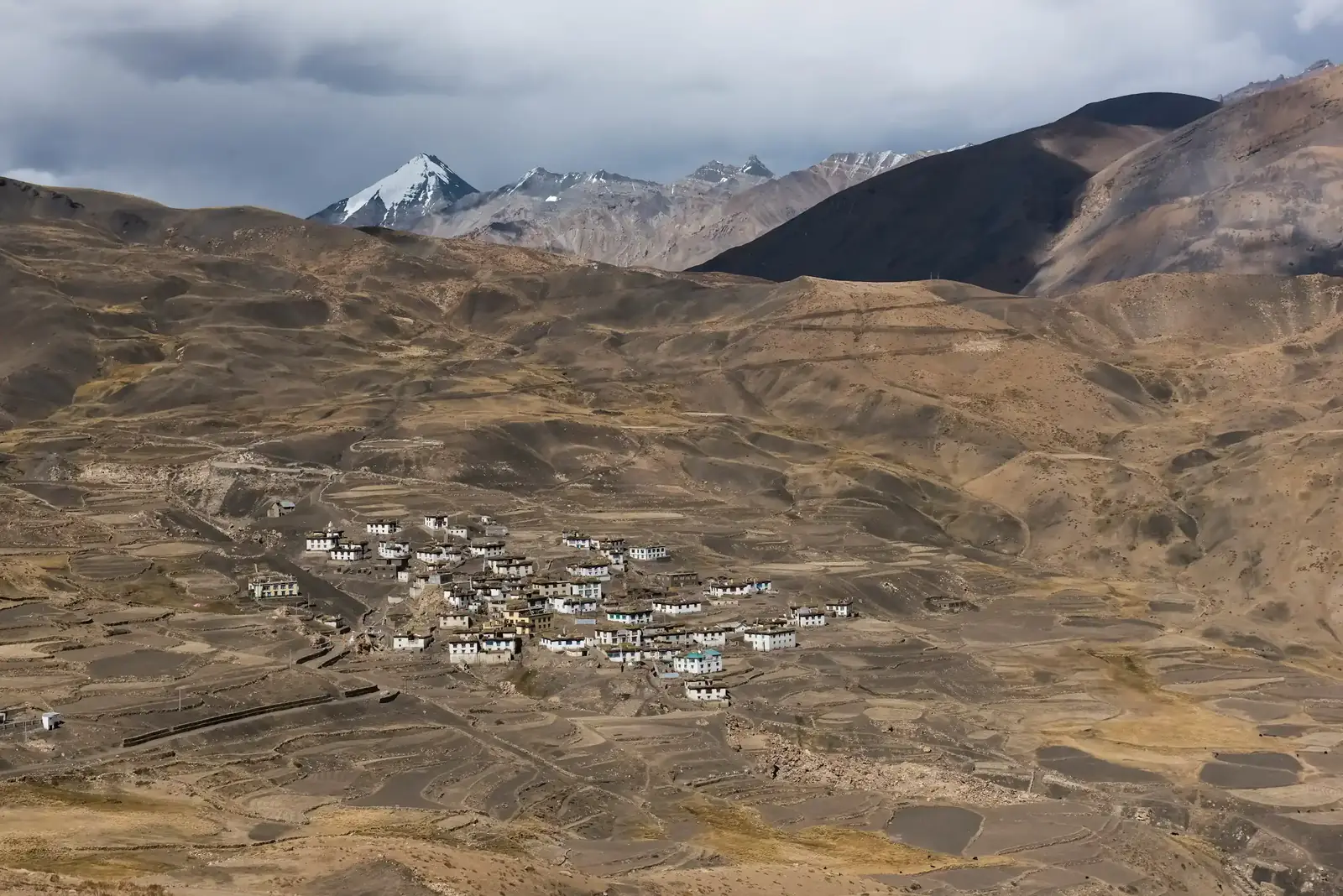
Spiti Valley permits and altitude
Indian nationals need no permit for the core Spiti circuit; foreign nationals require a Protected Area Permit, obtainable at Shimla or the Kaza DC office. If you enter from the Manali side, a separate Rohtang permit applies to vehicles and is booked online. On altitude: Kaza sits around 3,800 m and Kunzum Pass climbs higher still, so acute mountain sickness is a genuine risk. Spend a couple of nights acclimatising at lower villages before sleeping at Kaza, drink plenty of water, avoid alcohol early in the trip, and watch for breathlessness and nausea. Rushing the altitude is the single most common way to ruin a Spiti trip. A fingertip pulse oximeter lets you track your blood oxygen as you gain height, but how you feel matters more than the number.
Monastery and village etiquette
Dress modestly, keep your voice low, ask before taking photos, remove your shoes where instructed and never touch the murals at Spiti’s monasteries.
Spiti’s monasteries — Key, just above Kaza and the largest in the region, and Tabo, famous for its ancient murals — are living places of worship, not museums. A few simple courtesies matter:
- Dress modestly and keep your voice low in prayer halls.
- Ask before photographing monks, rituals or interiors, and accept a no; many prayer halls forbid photography.
- Remove your shoes where instructed and walk clockwise around shrines and stupas.
- Never touch murals, statues or manuscripts — Tabo’s thousand-year-old paintings are irreplaceable.
- Visit in the early morning or quieter hours for a calmer, more respectful experience, and don’t cram too many monasteries into one day.
Travelling responsibly in a fragile place
Carry enough cash, fuel and offline maps, since ATMs and fuel are scarce and mobile coverage is patchy, and choose community-run homestays that support villages directly.
Spiti’s small communities and thin ecology feel every visitor, so travel lightly. Carry enough cash from Shimla, Rampur or Reckong Peo, as ATMs in the valley are few and often out of service. Fuel is scarce beyond the main towns, so fill up and carry a reserve for long stretches. Mobile coverage is patchy — a postpaid connection on the network that works best in the region is wise, and download offline maps before you enter. Choose community-run homestays over large operators where you can; your money then supports the villages directly. Carry out your waste, use water sparingly, and leave the smallest footprint you can in a landscape that recovers slowly.
Planning more high-Himalaya travel? See our guides to the best time to visit Leh Ladakh and trekking to Triund, and get to your Himalayan starting point with our guide to tracking live train running status.
Spiti itinerary for first-time visitors
Allow seven to nine days, climbing gradually up the Shimla and Kinnaur side and using Kaza as a base, with one or two buffer days for delays.
Because altitude is the main constraint, a good Spiti plan is built around acclimatising rather than ticking off sights. A comfortable first-timer’s loop runs up the Shimla–Kinnaur side over several days, pausing at lower stops such as Kalpa and Nako before reaching Tabo, then using Kaza as a base. From Kaza, day trips reach Key Monastery and the high village of Kibber, the fossil-rich hamlet of Langza, and Hikkim with its famously high post office. Chandratal lake and the exit over Kunzum Pass towards Manali make a natural end once you are well adjusted to the height.
Give the trip seven to nine days including one or two buffer days, because landslides, weather and road work regularly delay travel here and a tight schedule leaves no room to absorb a closure. Spending two nights at lower elevations before you sleep at Kaza is the single best thing you can do to avoid altitude sickness and actually enjoy the valley rather than endure it.
Frequently asked questions
Do Indians need a permit for Spiti Valley?
No permit is needed for Indian nationals on the core Spiti circuit. Foreign nationals require a Protected Area Permit from Shimla or the Kaza DC office. Entering from Manali also needs a separate Rohtang permit for the vehicle, booked online.
Which route to Spiti is better for first-timers?
The Shimla–Kinnaur route, because it climbs gradually and helps you acclimatise. The Manali route reaches high altitude much faster, raising the risk of altitude sickness. A popular plan is to enter via Shimla and exit via Manali.
How do I avoid altitude sickness in Spiti?
Ascend gradually and spend a couple of nights acclimatising at lower villages before sleeping at Kaza (around 3,800 m). Drink plenty of water, avoid alcohol early on, and watch for breathlessness and nausea. Do not rush the altitude.
What are the rules inside Spiti’s monasteries?
Dress modestly, keep quiet, remove shoes where instructed, and walk clockwise around shrines. Ask before photographing monks or interiors and accept a refusal. Never touch murals, statues or manuscripts, especially Tabo’s ancient paintings.
What should I prepare before entering Spiti?
Carry enough cash, as ATMs are few and unreliable; fill up on fuel and carry a reserve; download offline maps since network is patchy; and favour community homestays. Travel lightly and carry out your waste in this fragile region.