Introduction
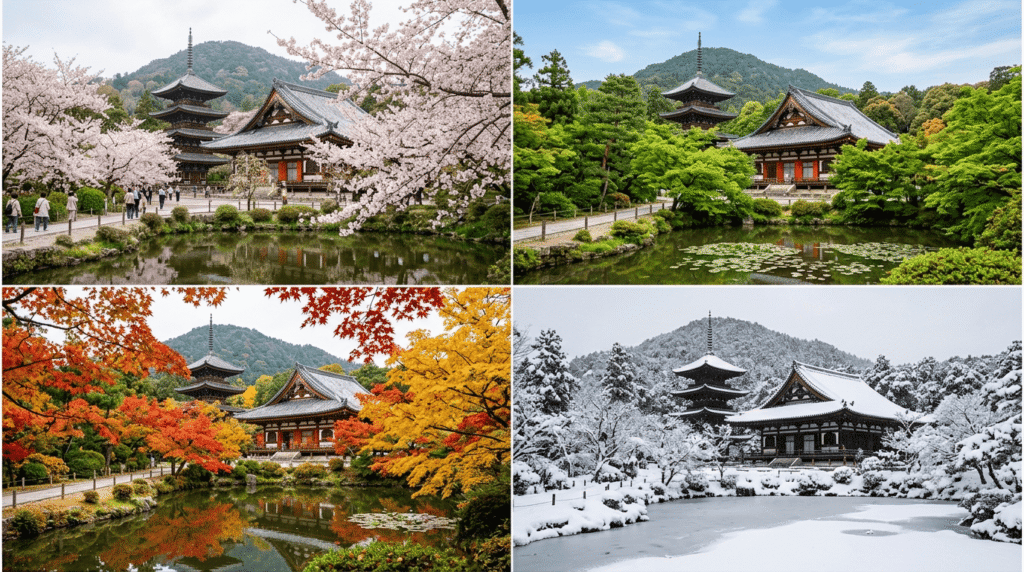
Japan is a destination that changes dramatically throughout the year. Unlike countries with relatively stable weather, Japan experiences four distinct seasons, each bringing different temperatures, rainfall patterns and scenery. A visit in April looks completely different from one in August, while January offers an entirely different experience compared to November.
The best time to visit Japan depends less on the attractions you want to see and more on the weather conditions you prefer. Some travellers enjoy the cool temperatures and colourful autumn leaves, while others specifically plan their holiday around the famous cherry blossom season. Winter attracts visitors looking for snow-covered landscapes, whereas summer is ideal for those who don’t mind heat and humidity.
This guide explains what to expect each month, typical temperatures, rainfall, seasonal changes and the best periods to plan your trip.
If you’re travelling from the UAE, read our Japan Visa for UAE Residents guide before booking your flights. If you’re still choosing a destination, you may also find our Visa-Free Countries for UAE Residents guide useful.
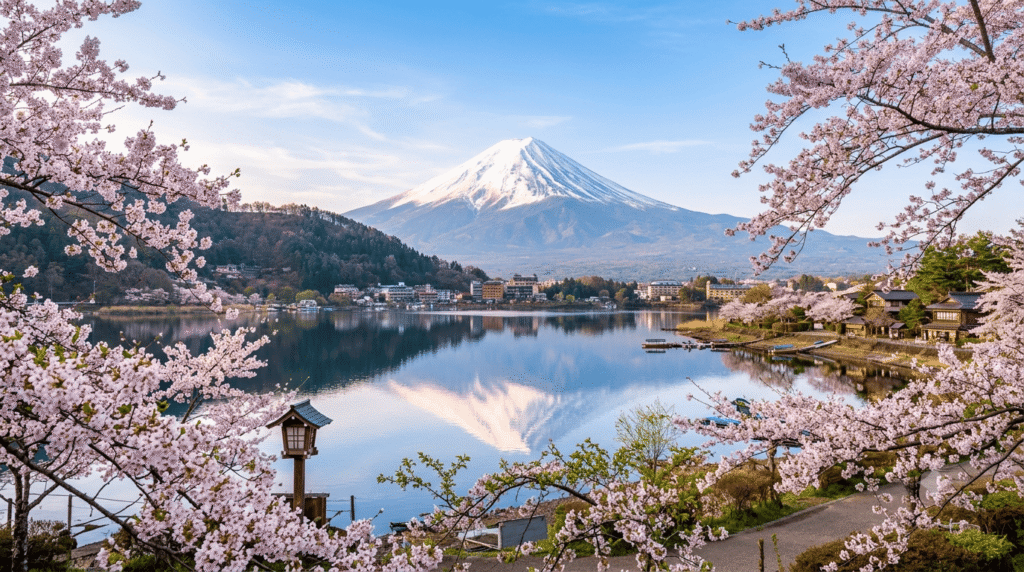
Table of Contents
- Japan Weather at a Glance
- Best Time to Visit Japan by Season
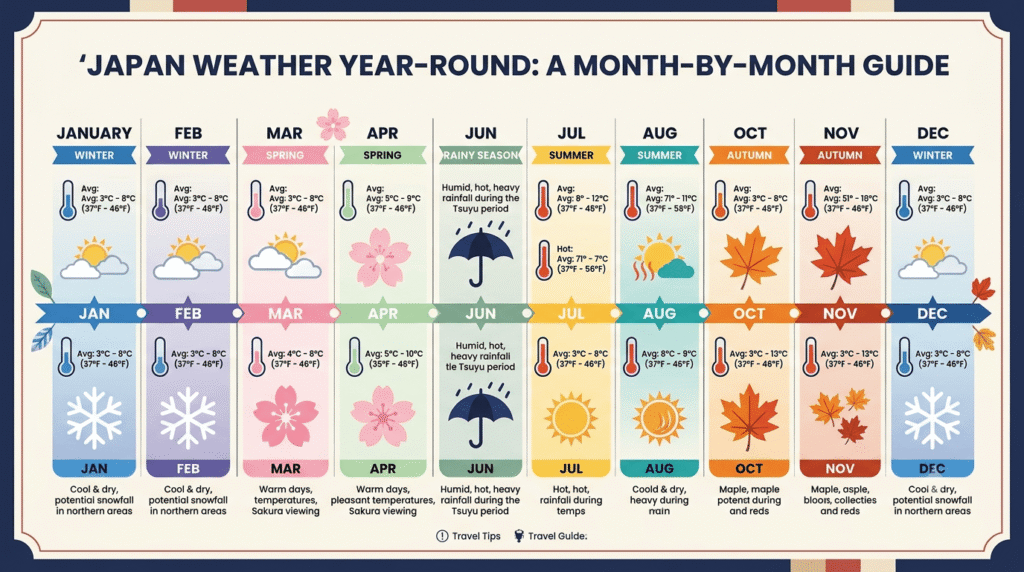
- Month-by-Month Weather Guide
- Rainy Season in Japan
- Typhoon Season
- When Are Cherry Blossoms in Japan?
- When Is Autumn Foliage?
- Best Months to Visit Japan
- Best Time to Visit Japan by Region
- Which Region Should You Choose?
- When Should You Avoid Visiting Japan?
- Conclusion
- Frequently Asked Questions
Japan Weather at a Glance
Japan stretches over 3,000 kilometres from north to south, so the weather varies considerably between regions. Northern Japan, especially Hokkaido, experiences long snowy winters and relatively cool summers. Central Japan, including Tokyo, Kyoto and Osaka, has four distinct seasons with hot summers and cool winters. Southern Japan and Okinawa enjoy a subtropical climate with warmer winters and longer summers. For most visitors travelling to Tokyo, Kyoto, Osaka, Hiroshima and Mount Fuji, the seasonal patterns described below will closely match their experience.
Best Time to Visit Japan by Season
Spring (March to May)
Spring is widely considered the best season to visit Japan. After the cold winter months, temperatures become comfortable across most of the country. Parks, riversides and castles transform as cherry blossom trees bloom, creating one of Japan’s most recognisable landscapes.
Average daytime temperatures:
• March: 13–17°C
• April: 18–22°C
• May: 22–26°C
Humidity remains relatively low, making sightseeing comfortable. Because of the pleasant weather and cherry blossom season, this is also one of Japan’s busiest travel periods. Hotels and flights often become expensive, particularly during late March and early April.
Summer (June to August)
Summer begins with Japan’s rainy season before transitioning into hot and humid weather.June is generally wet rather than extremely hot. July and August bring high temperatures, increased humidity and occasional thunderstorms.
Average daytime temperatures:
• June: 24–28°C
• July: 29–33°C
• August: 31–35°C
Southern regions usually feel hotter than northern Japan. While summer receives fewer international tourists than spring, it remains busy because of Japanese school holidays and festivals.
Autumn (September to November)
Autumn is another excellent season for visiting Japan. Temperatures gradually cool after summer while humidity decreases significantly. Many experienced travellers actually prefer autumn over spring because the weather is stable and tourist crowds are slightly smaller.
Average daytime temperatures:
• September: 27–30°C
• October: 20–25°C
• November: 15–20°C
Autumn colours usually begin in northern Japan before gradually moving south.
Winter (December to February)
Winter offers completely different scenery. Northern Japan becomes one of the world’s premier snow destinations, while Tokyo, Kyoto and Osaka remain relatively dry with occasional cold days.
Average daytime temperatures:
• December: 10–13°C
• January: 8–11°C
• February: 9–12°C
Although temperatures appear low, clear skies make sightseeing comfortable in many central cities. Winter also brings lower hotel prices outside the New Year holiday period.
Month-by-Month Weather Guide
January
January is the coldest month across much of Japan. Tokyo experiences crisp winter weather with average highs around 10°C, while Kyoto and Osaka are slightly cooler in the mornings. Hokkaido regularly remains below freezing and receives significant snowfall. This is an excellent month for travellers looking for fewer crowds, lower hotel prices and clear skies.
February
February remains cold but daylight gradually increases. Snow conditions reach their peak in northern Japan. Early plum blossoms begin appearing in warmer parts of the country, providing the first signs of spring. Tourist numbers remain relatively low outside ski resorts.
March
Spring slowly arrives. Southern Japan begins warming first, followed by Tokyo and central regions. Cherry blossoms usually begin opening in southern cities during the second half of March before progressing northward. Temperatures become much more comfortable for walking.
April
April is considered by many to be the best month to visit Japan. Cherry blossoms reach their peak across Tokyo, Kyoto and Osaka during much of the month, although exact dates vary every year. Average temperatures between 18°C and 22°C create ideal sightseeing conditions. Expect higher accommodation prices because of domestic and international demand.
May
May combines pleasant temperatures with relatively low humidity. The only exception is Golden Week, usually held in late April and early May, when millions of Japanese residents travel domestically. Outside Golden Week, May offers some of the year’s best weather.
June
June marks the beginning of the rainy season across much of Japan. Despite the increased rainfall, temperatures remain comfortable compared with July and August. Rain rarely falls continuously throughout the day. Instead, visitors should expect frequent showers and cloudy conditions. Hokkaido generally avoids the rainy season.
July
July becomes noticeably hotter. The rainy season usually ends in central Japan during the month, although exact timing changes annually. Humidity increases significantly. Visitors should carry water and plan outdoor sightseeing during mornings or evenings.
August
August is typically Japan’s hottest month. Temperatures frequently exceed 35°C in cities such as Tokyo and Osaka. Humidity can make conditions feel even warmer. Typhoon activity also begins increasing toward the end of the month. Unless travelling during school holidays, many visitors prefer spring or autumn over August.
September
September marks the transition from summer to autumn. Temperatures slowly decline, but the Pacific Ocean remains warm enough to support tropical storms. Typhoons are most common during August and September, although not every region experiences severe weather each year. Travellers should monitor weather forecasts before departure.
October
October offers nearly perfect sightseeing weather. Humidity falls sharply, skies become clearer and temperatures remain comfortably warm. Many travellers consider October the ideal balance between weather and crowd levels. Hotel prices remain lower than during peak cherry blossom season.
November
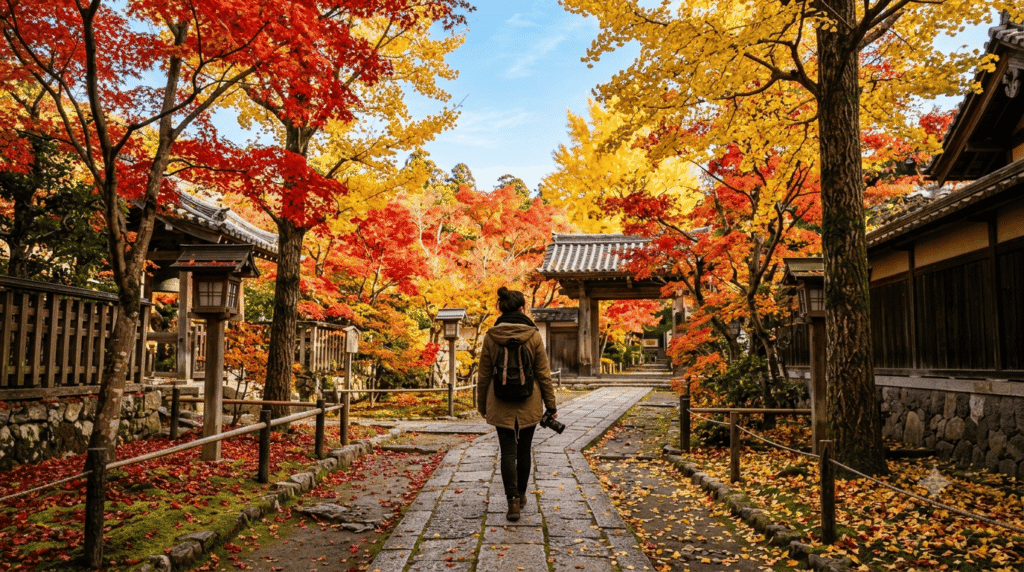
November is famous for autumn foliage. Maple trees turn vibrant shades of red, orange and yellow across much of Japan. Comfortable daytime temperatures make walking tours enjoyable. Many repeat visitors rank November alongside April as Japan’s best month.
December
Winter gradually returns. Northern regions receive increasing snowfall, while Tokyo generally remains dry and sunny. December before Christmas often offers attractive hotel rates. However, prices rise around New Year when domestic travel reaches its peak.
Rainy Season in Japan
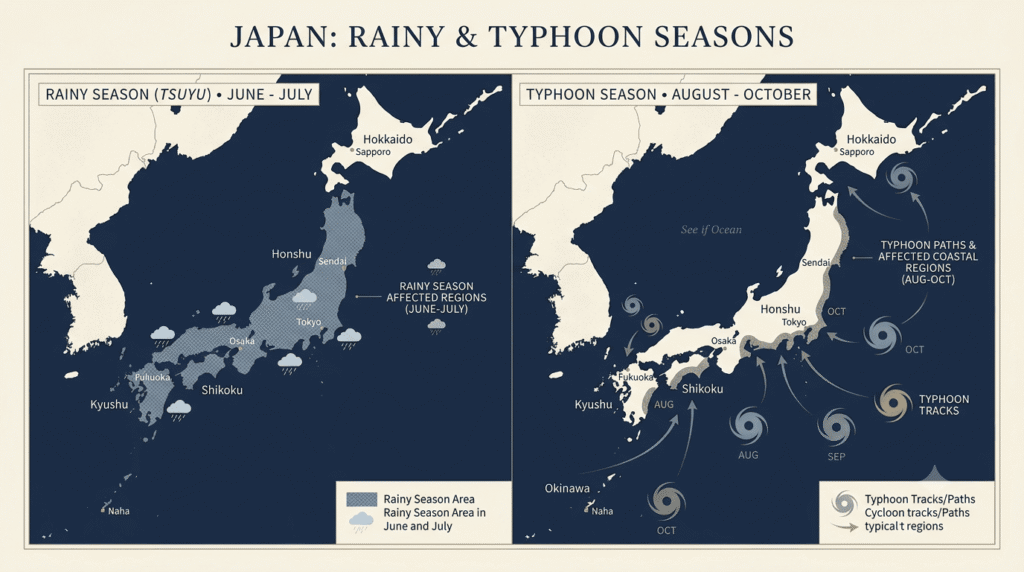
Japan’s rainy season, known as Tsuyu, generally begins during early June and lasts until mid-July across much of the country. The exact dates differ depending on location. Hokkaido usually avoids the rainy season entirely. Rainfall is often moderate rather than continuous, meaning sightseeing remains possible on many days. Visitors should simply pack lightweight waterproof clothing and flexible travel plans.
Typhoon Season
Japan’s typhoon season typically runs from August through October, with activity usually peaking during August and September. Not every typhoon makes landfall. Even when one approaches Japan, its effects may be limited to certain regions. Flights occasionally experience delays or cancellations, making travel insurance worthwhile during this period.
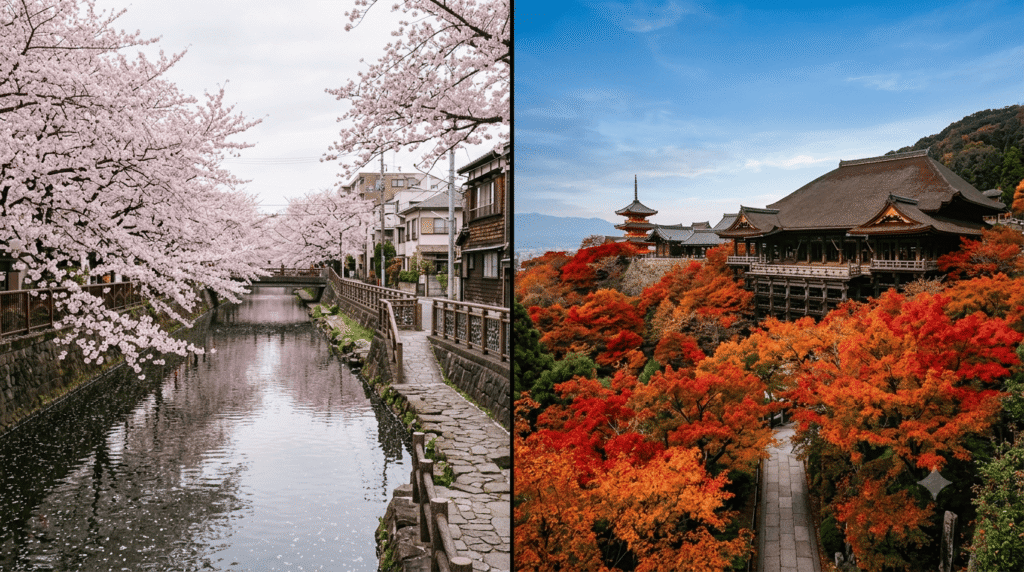
When Are Cherry Blossoms in Japan?
Cherry blossom season changes every year depending on temperatures.
Typical flowering periods are:
• Okinawa: January to February
• Kyushu: Late March
• Tokyo: Late March to early April
• Kyoto: Late March to early April
• Osaka: Early April
• Hokkaido: Late April to early May
Peak bloom usually lasts around one week, although weather conditions can shorten or extend this period.
When Is Autumn Foliage?
Autumn colours also progress from north to south.
Typical periods include:
• Hokkaido: September
• Northern Honshu: October
• Tokyo: Late November
• Kyoto: Mid to late November
• Osaka: Late November
Unlike cherry blossoms, autumn colours generally remain attractive for several weeks.
Best Months to Visit Japan
Best overall weather
April, May, October and November.
Best for cherry blossoms
Late March and early April.
Best for autumn colours
November.
Best for snow
January and February.
Best for lower hotel prices
January (after New Year), June and early December.
Best for avoiding crowds
Late January, February, June and early December.
Best Time to Visit Japan by Region
Although Japan has four distinct seasons nationwide, weather conditions vary considerably from north to south. A trip to Hokkaido in April is very different from a visit to Okinawa at the same time. If you’re planning to explore a specific region, these recommendations can help you choose the best travel period.
Tokyo
Best time: March to May and October to November
Tokyo experiences warm, humid summers and cool, relatively dry winters. Spring offers comfortable temperatures and cherry blossoms, while autumn brings clear skies, pleasant weather and colourful parks. Summer can be hot, with temperatures often exceeding 30°C, while January is usually the coldest month but remains suitable for sightseeing.
Average temperatures:
• Spring: 15–22°C
• Summer: 27–35°C
• Autumn: 15–25°C
• Winter: 5–12°C
Kyoto
Best time: April, May, October and November
Kyoto follows a climate similar to Tokyo but often experiences hotter summers because it is surrounded by mountains. Spring is famous for cherry blossoms around temples and traditional streets, while November attracts visitors for spectacular autumn foliage.
July and August can feel particularly humid, making early mornings and evenings the most comfortable times for exploring.
Average temperatures:
• Spring: 16–24°C
• Summer: 30–36°C
• Autumn: 16–24°C
• Winter: 3–11°C
Osaka
Best time: April to May and October to November
Osaka enjoys a relatively mild climate throughout the year. Spring and autumn provide the best balance of pleasant weather and manageable tourist crowds.
Summer is hot and humid, while winter is cool but rarely experiences significant snowfall.
Average temperatures:
• Spring: 16–24°C
• Summer: 30–35°C
• Autumn: 17–25°C
• Winter: 5–12°C
Hokkaido
Best time: February for snow, July to September for mild weather
Hokkaido has one of Japan’s coolest climates. Winters are long and snowy, making it one of Asia’s premier skiing and snowboarding destinations. Summer is much cooler than Tokyo and Osaka, making it popular with travellers escaping the heat.
Cherry blossoms also arrive much later here, usually in late April or early May.
Average temperatures:
• Spring: 8–18°C
• Summer: 20–28°C
• Autumn: 10–20°C
• Winter: -8 to 2°C
Okinawa
Best time: April to June and October
Okinawa has a subtropical climate with warm temperatures throughout the year. Winters are mild enough for comfortable sightseeing, while summers are hot, humid and more prone to typhoons.
Beach conditions are generally best during late spring and early autumn.
Average temperatures:
• Spring: 22–27°C
• Summer: 30–33°C
• Autumn: 26–30°C
• Winter: 17–22°C
Which Region Should You Choose?
If you’re visiting Japan for the first time, Tokyo, Kyoto and Osaka are best enjoyed during April, May, October and November, when temperatures are comfortable and rainfall is relatively low.
Travellers looking for snow-covered landscapes should head to Hokkaido between January and February, while those seeking beaches and warmer weather will generally enjoy Okinawa during April, May and October.
Because Japan stretches over a long north-to-south distance, it is entirely possible to experience snow in Hokkaido while enjoying spring-like weather in Okinawa during the same week. Checking the forecast for each destination rather than relying on nationwide weather conditions will help you plan a more comfortable trip.
When Should You Avoid Visiting Japan?
There is no truly bad time to visit Japan, but some months may not suit every traveller.
August can be uncomfortable because of extreme heat and humidity.
June is wetter than other months because of the rainy season.
Late April and early May become crowded during Golden Week.
Late December and early January also experience heavy domestic travel.
If you prefer mild weather and fewer crowds, April (outside peak blossom days), May, October and November are usually the best choices.
Conclusion
Japan is one of the few destinations where every season offers a completely different experience.
For first-time visitors, April, May, October and November provide the best combination of comfortable temperatures, lower humidity and stable weather.
Travellers hoping to see cherry blossoms should plan for late March or early April, while those interested in winter landscapes should consider January or February. Autumn is equally rewarding, offering beautiful foliage and excellent sightseeing conditions without the intense summer heat.
Regardless of when you travel, checking the latest regional weather forecasts before departure is always recommended, as seasonal conditions and blossom dates can vary slightly each year.
Frequently Asked Questions
What is the best month to visit Japan?
For most travellers, April, May, October and November offer the best balance of pleasant weather, comfortable temperatures and ideal sightseeing conditions. April is famous for cherry blossoms, while November is known for vibrant autumn colours.
Is Japan worth visiting in summer?
Yes, but be prepared for hot and humid weather. July and August often see temperatures above 30°C in major cities, and humidity can make it feel even warmer. If you visit during summer, plan outdoor sightseeing early in the morning or after sunset.
Does it rain every day during Japan’s rainy season?
No. Although June and early July are considered the rainy season across much of Japan, rainfall is usually spread throughout the day rather than being continuous. Many days still have long dry periods suitable for sightseeing.
When is cherry blossom season in Japan?
Cherry blossom season generally begins in late March in Tokyo, Kyoto and Osaka, reaching peak bloom during late March and early April. Hokkaido experiences cherry blossoms much later, usually in late April or early May.
When is autumn foliage at its best?
Autumn colours appear earliest in Hokkaido during September before gradually moving south. Kyoto, Tokyo and Osaka usually experience peak autumn foliage during November.
What is the coldest month in Japan?
January is generally the coldest month across most of Japan. Northern regions such as Hokkaido experience heavy snowfall and temperatures below freezing, while Tokyo remains much milder with daytime temperatures around 10°C.
What is the hottest month in Japan?
August is typically the hottest month. Temperatures in Tokyo, Osaka and Kyoto frequently exceed 35°C, especially during heatwaves.
When is typhoon season in Japan?
Typhoon season usually runs from August through October, with the greatest likelihood of storms during August and September. Not every typhoon affects major tourist destinations, but travellers should monitor weather forecasts before departure.
Which month has the fewest crowds?
Late January, February, June and early December generally have fewer international tourists compared with spring and autumn. These months can also offer better hotel prices.
Which month is best for first-time visitors?
April and October are excellent choices for first-time visitors. Both months offer pleasant temperatures, comfortable walking conditions and reliable sightseeing weather.