Bolivia Fun Facts: 30 Surprising Things You Did Not Know
Zebra traffic wardens, a backwards clock, 37 official languages, pink river dolphins — Bolivia is full of surprises. Updated for 2026.
arrow_back Back to Bolivia GuideBolivia at a Glance
| Detail | Information |
|---|---|
| Area | 1,083,300 km² |
| Population (2026 est.) | ~12.7 million |
| Capitals | Sucre (constitutional), La Paz (administrative) |
| Official languages | 37 (Spanish + 36 indigenous) |
| Currency | Boliviano (BOB) |
| Highest point | Nevado Sajama, 6,542 m |
Source: Worldometer — Bolivia Population 2026
Geography and Nature
1. Bolivia Has the World’s Largest Salt Flat
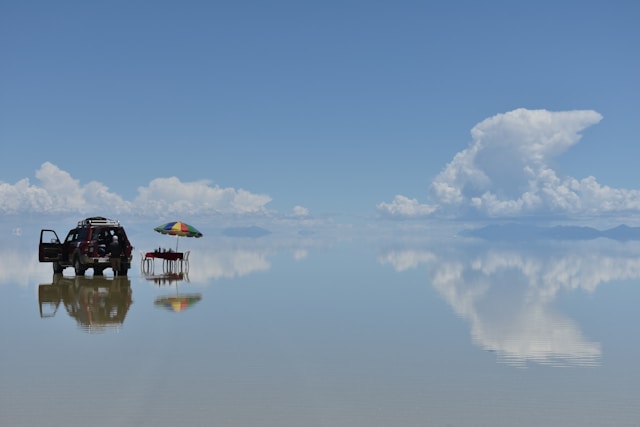
The Salar de Uyuni stretches across roughly 10,582 square kilometres. It is so flat that satellites use it to calibrate their altimeters. During the wet season, a thin layer of water turns it into the world’s largest natural mirror.
2. Lake Titicaca Is the Highest Navigable Lake on Earth
At 3,812 metres above sea level, Lake Titicaca covers 8,372 square kilometres with depths up to 281 metres. The Bolivian side is quieter than Peru’s — read more in our Bolivia beaches and water destinations guide.
3. Bolivia Is One of Only Two Landlocked Countries in South America
Bolivia and Paraguay are the only landlocked nations in South America. Bolivia lost its Pacific coastline to Chile in the War of the Pacific (1879–1883). The country still maintains a navy that trains on Lake Titicaca.
4. Madidi National Park Is Among the Most Biodiverse Places on Earth
Covering nearly 19,000 square kilometres from Andean glaciers to tropical rainforest, Madidi contains an estimated 11% of the world’s bird species, according to the Wildlife Conservation Society.
5. The Yungas Road Was Once Called the World’s Most Dangerous Road
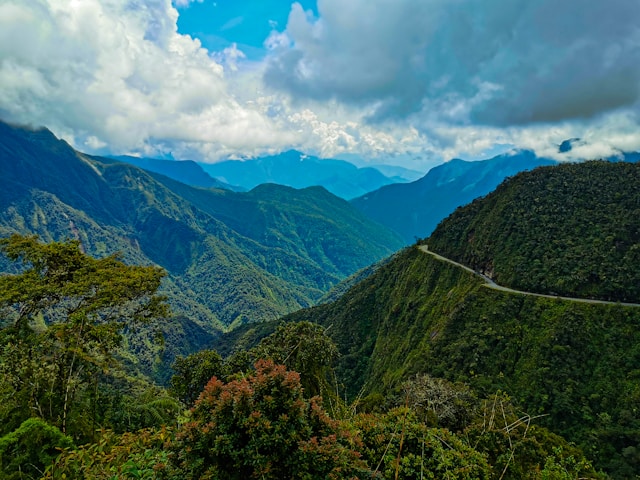
The North Yungas Road drops from 4,650 m to 1,200 m over 64 kilometres. Before a bypass was built, it was notorious for narrow width and sheer cliff drops. Today it is a popular cycling route with improved safety.
6. Bolivia Spans Five Distinct Climate Zones
Within a single country, Bolivia encompasses the frozen Andean Altiplano, inter-Andean valleys, tropical Yungas cloud forest, the dry Chaco lowlands, and the humid Amazon basin — a range of ecosystems found across an entire continent elsewhere.
7. Pink River Dolphins Swim in Bolivia’s Amazon Rivers
The bufeo, or Amazon river dolphin, inhabits Bolivia’s lowland rivers in the Beni and Pando regions. These freshwater dolphins are one of only five river dolphin species in the world and can grow up to 2.5 metres long.
8. Bolivia’s Highest Peak Is an Active Stratovolcano
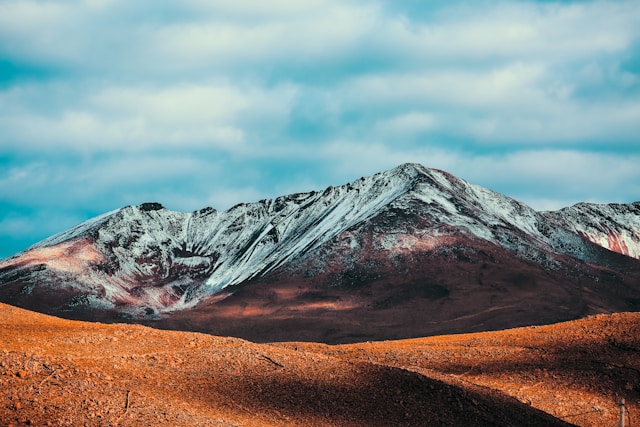
Nevado Sajama reaches 6,542 metres and is Bolivia’s tallest mountain. It is a dormant stratovolcano on the border with Chile and is considered one of South America’s most demanding high-altitude climbs.
History and Culture
9. Bolivia Has Two Capitals
Sucre is the constitutional capital (Supreme Court). La Paz is the administrative capital (president and congress). This split happened after the Federal Revolution of 1899. More details in the Bolivia travel guide.
10. Bolivia Recognises 37 Official Languages
Spanish plus 36 indigenous languages including Quechua, Aymara, and Guarani. Street signs in La Paz often appear in both Spanish and Aymara — one of the most linguistically diverse countries in the Americas.
11. Tiwanaku Predates the Inca Empire by Centuries
The Tiwanaku civilisation flourished from around 300 to 1000 AD near Lake Titicaca. The ruins are a UNESCO World Heritage Site with the iconic Gate of the Sun.
12. Bolivia Has Had More Than 190 Coups and Revolutions
Since independence in 1825, Bolivia has experienced over 190 government overthrows — more than almost any other country. This turbulent history shaped the nation’s modern identity.
13. Zebras Direct Traffic in La Paz
Since 2001, young volunteers dress in full zebra costumes to help pedestrians cross busy streets. The “Cebras” programme promotes road safety through humour and has become a beloved La Paz institution.
14. Bolivia Is Named After Its Liberator
The country takes its name from Simón Bolívar, the Venezuelan general who led independence campaigns across six South American nations. Bolívar himself attended the 1825 independence declaration in Sucre.
15. Carnaval de Oruro Is a UNESCO World Heritage Celebration
Recognised by UNESCO as Intangible Cultural Heritage of Humanity, Carnaval de Oruro draws around 20,000 dancers and 10,000 musicians each February. The parade stretches over four kilometres and lasts nearly 20 hours.
16. Bolivia’s Day of the Dead Includes a Skull Tradition
The Ñatitas tradition, observed on 8 November each year, sees families bring the decorated skulls of deceased relatives to churches and cemeteries. The skulls are adorned with flowers, offered coca leaves and cigarettes, and asked for protection in the year ahead.
17. Cholitas Are One of Bolivia’s Most Distinctive Cultural Symbols
Aymara women known as cholitas wear the bombín (bowler hat), colourful shawl, and wide layered pollera skirt as everyday dress. The bowler hat tradition reportedly began in the early 20th century after an oversized European shipment arrived and indigenous women adopted the style as their own.
Food and Daily Life
18. Salteñas Are Bolivia’s Signature Snack
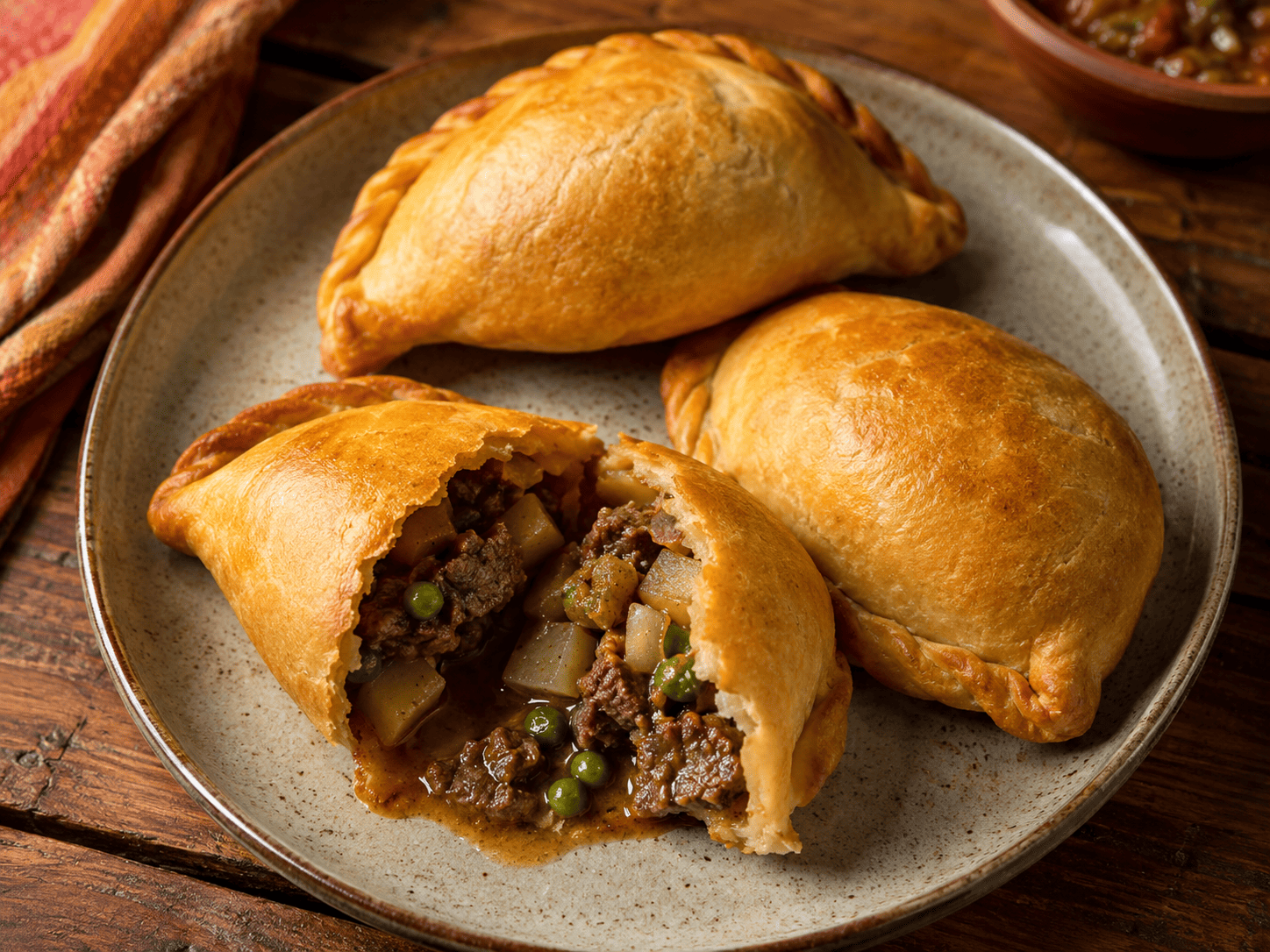
Baked pastries filled with meat, potatoes, peas, and a spicy broth — eaten mid-morning across the country. The trick is eating them without spilling. Discover more in our Bolivia popular food guide.
19. Coca Leaves Are Legal and Part of Daily Life
Chewing coca leaves or drinking coca tea is a centuries-old tradition that helps with altitude sickness, hunger, and fatigue. Coca is sold openly in markets and offered to guests as a gesture of hospitality.
20. Bolivia Has One of the World’s Highest Golf Courses
The La Paz Golf Club sits at roughly 3,340 metres. At that altitude, golf balls travel noticeably farther due to thinner air — a distinct advantage (or disadvantage) for visiting players.
21. Chicha Is Brewed at Home Across the Highlands
Chicha, a mildly fermented maize drink, has been central to Andean life for thousands of years. A pink or white flag hung outside a home signals that fresh chicha is available — an informal neighbourhood system that predates the internet by centuries.
22. The Almuerzo Is Bolivia’s Main Meal of the Day
A three-course set lunch — soup, main course, and a small dessert — is served from market stalls across Bolivia for under $2. The almuerzo runs between noon and 14:00 and is the most social meal of the Bolivian day.
23. Llajwa Is Bolivia’s Essential Condiment
This fiery fresh salsa of locoto chillies and tomatoes, ground on a flat stone called a batán, appears on virtually every table in Bolivia. Each family has its own recipe, and Bolivians abroad often cite llajwa as the one thing they miss most about home.
Records and Quirks
24. La Paz Is the Highest Administrative Capital in the World
At 3,640 metres, La Paz sits higher than any other seat of government. El Alto International Airport, serving the city, is even higher at 4,061 metres — one of the highest commercial airports on Earth.
25. Bolivia Has One of the World’s Largest Butterfly Sanctuaries
Biocentro Guembe near Santa Cruz houses thousands of tropical butterflies across multiple domed enclosures — a striking contrast to the high-altitude landscapes most visitors associate with Bolivia.
26. The Witches’ Market Sells Dried Llama Foetuses
The Mercado de las Brujas in La Paz sells traditional Aymara folk remedies including dried llama foetuses, used in “ch’alla” offerings buried in building foundations for good luck.
27. Chacaltaya Was Once the World’s Highest Ski Slope
At over 5,300 metres near La Paz, Chacaltaya’s glacier melted completely by 2009 due to climate change. The site remains accessible for hiking with striking panoramic views over the Altiplano.
28. La Paz Has the World’s Highest Urban Cable Car Network
Mi Teleférico connects La Paz and El Alto via 10 colour-coded lines at altitudes exceeding 4,000 metres. Opened in 2014, it is the world’s longest and highest urban cable car system — and a genuinely useful daily commuter route for hundreds of thousands of residents.
29. Bolivia’s National Football Stadium Is Banned by FIFA
Estadio Hernando Siles in La Paz sits at 3,637 metres. FIFA temporarily banned international matches there in 2007 citing health risks to visiting players. The ban was partially lifted after protests — Bolivia’s home record at altitude remains one of the most intimidating in South American football.
30. Three Species of Flamingo Breed on Bolivia’s Salt Lakes
The high-altitude salt lakes of the Bolivian Altiplano — including Laguna Colorada — support breeding populations of the Chilean, Andean, and James’s flamingo. The James’s flamingo (Phoenicoparrus jamesi) is one of the rarest birds in the world and is found almost exclusively in this region.
Frequently Asked Questions
What is the most surprising fact about Bolivia?
The zebra traffic wardens in La Paz consistently surprise visitors. Since 2001, young volunteers in full zebra costumes help pedestrians cross busy streets — a uniquely Bolivian approach to road safety.
Why does Bolivia have two capitals?
The Federal Revolution of 1899 split government functions. Sucre kept the Supreme Court and constitutional status. La Paz became the administrative capital with the president and congress.
What world records does Bolivia hold?
World’s largest salt flat (Salar de Uyuni), highest navigable lake (Lake Titicaca, shared with Peru), highest administrative capital (La Paz, 3,640 m), world’s highest urban cable car network (Mi Teleférico), and one of the highest commercial airports (El Alto, 4,061 m).
How many languages are spoken in Bolivia?
Bolivia recognises 37 official languages — Spanish plus 36 indigenous languages. Quechua and Aymara are the most widely spoken after Spanish.
Does Bolivia really have a navy?
Yes. Bolivia maintains a naval force that trains on Lake Titicaca and its rivers, symbolising the country’s claim to regain Pacific access lost in the War of the Pacific (1879–1883). Día del Mar is observed every March 23.