The Ethiopian calendar is one of the few calendars still in daily use that looks nothing like the Gregorian one most of the world follows. It runs about seven to eight years behind, it has thirteen months rather than twelve, and it begins the year in September. For travellers, students, and anyone with Ethiopian friends or family, that can be confusing at first. This guide explains how the Ethiopian calendar works, why it differs, what the thirteen months are, and how its New Year and leap years fit together. If you just need to switch a date or check today, our Ethiopian calendar converter does it in a click.
What the Ethiopian calendar is
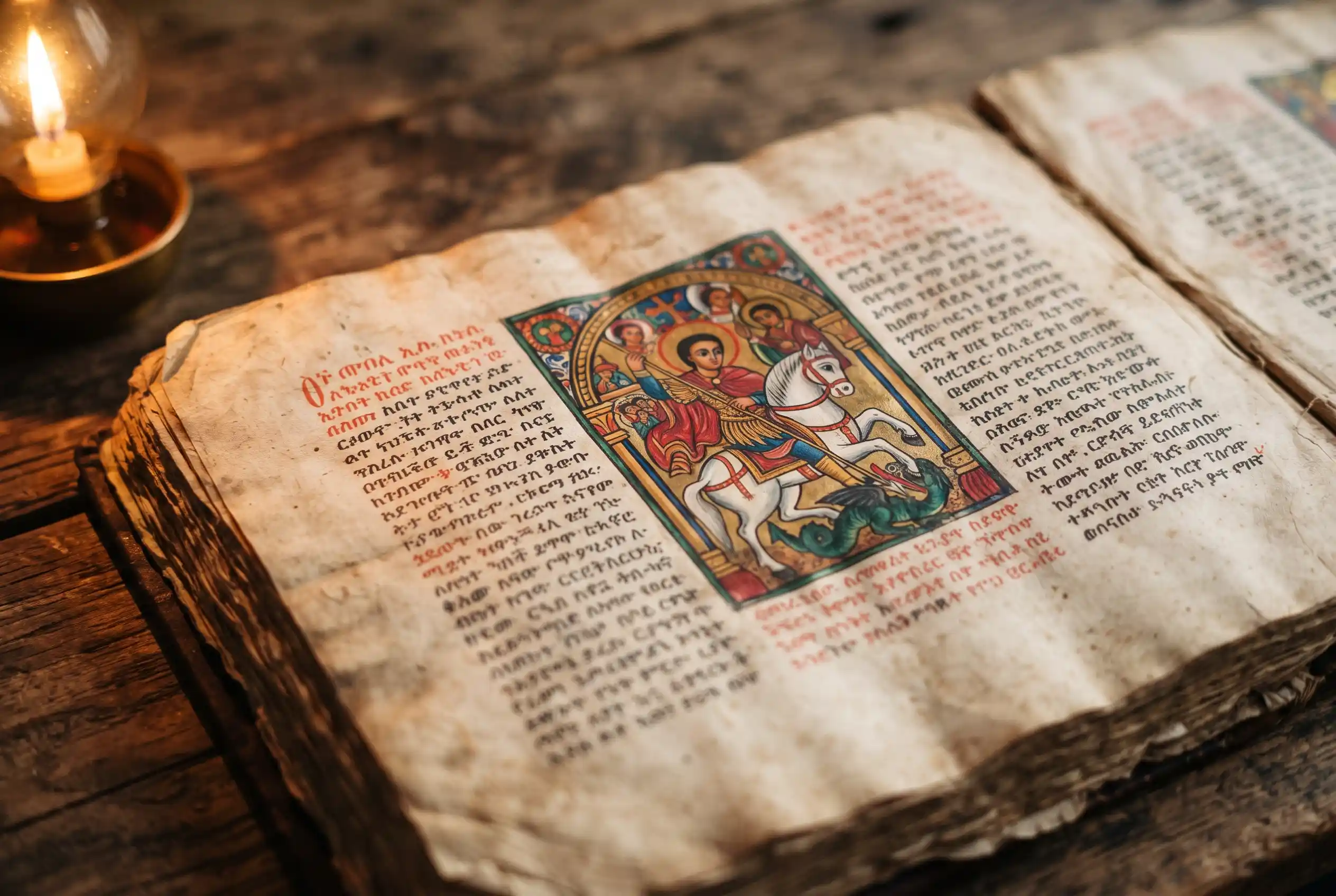
The Ethiopian calendar is the official calendar of Ethiopia and the calendar of the Ethiopian Orthodox Tewahedo church. It descends from the ancient Egyptian and Coptic calendars, and it is written in Ge’ez, the old liturgical language, which is why it is sometimes called the Ge’ez calendar. In everyday English it is also called the Amharic calendar, after the most widely spoken language in Ethiopia. Whatever the name, it refers to the same system of thirteen months and a year count that sits several years below the Gregorian year.
Why Ethiopia is seven to eight years behind
The gap comes down to a disagreement about one date: the year of the birth of Christ. The calculation the Ethiopian church inherited places that event a few years later than the one adopted in Europe in the sixth century. Because the two calendars start counting from different points, the Ethiopian year ends up about seven to eight years lower than the Gregorian year.
The exact gap depends on the time of year. From the Ethiopian New Year in September to the end of December, the difference is seven years. For the rest of the Gregorian year it is eight years, because the two calendars begin their years on different days. This is why a single Gregorian year overlaps with two Ethiopian years, and the other way around.
The 13 months of the Ethiopian calendar
The most distinctive feature is the structure of the year. The Ethiopian calendar has twelve months of exactly thirty days each, followed by a short thirteenth month. In order, the months are:
- Meskerem, Tikimt, Hidar, Tahsas, Tir, and Yekatit
- Megabit, Miazia, Ginbot, Sene, Hamle, and Nehase
- Pagume, the thirteenth month, with five days, or six in a leap year
Because every month except Pagume has the same length, the Ethiopian calendar months are easy to track once you know the names. The tidy thirty day blocks are also why Ethiopia is sometimes promoted to visitors as the land of thirteen months of sunshine, a phrase that refers to this extra short month rather than to the weather.
Ethiopian New Year and leap years

The Ethiopian year begins on Meskerem 1, which falls on 11 September in the Gregorian calendar, or on 12 September in the year before a Gregorian leap year. The Ethiopian New Year is called Enkutatash, and it is one of the biggest celebrations of the year, marking the end of the main rainy season.
The leap year rule is simpler than the Gregorian one. The Ethiopian calendar adds a sixth day to Pagume every four years, in the year that comes just before a Gregorian leap year. There is no exception for century years, so the pattern never breaks. That extra day is what keeps the Ethiopian New Year anchored to the same September dates year after year.
How the days and the clock work
The days of the week line up exactly with the Gregorian week, so a given day is the same day in both calendars, only the names differ. The week runs from Ehud, which is Sunday, through to Kidame, which is Saturday.
Ethiopia also keeps its own way of telling time, which often surprises visitors. The Ethiopian clock counts twelve hours from dawn and twelve from dusk, so what a visitor calls seven in the morning is one o’clock in local reckoning. The clock and the calendar are separate systems, but both are good to understand before a trip. If you are juggling meetings across borders, our time zone meeting planner handles the hour differences.
Holidays, fasting, and the Orthodox calendar
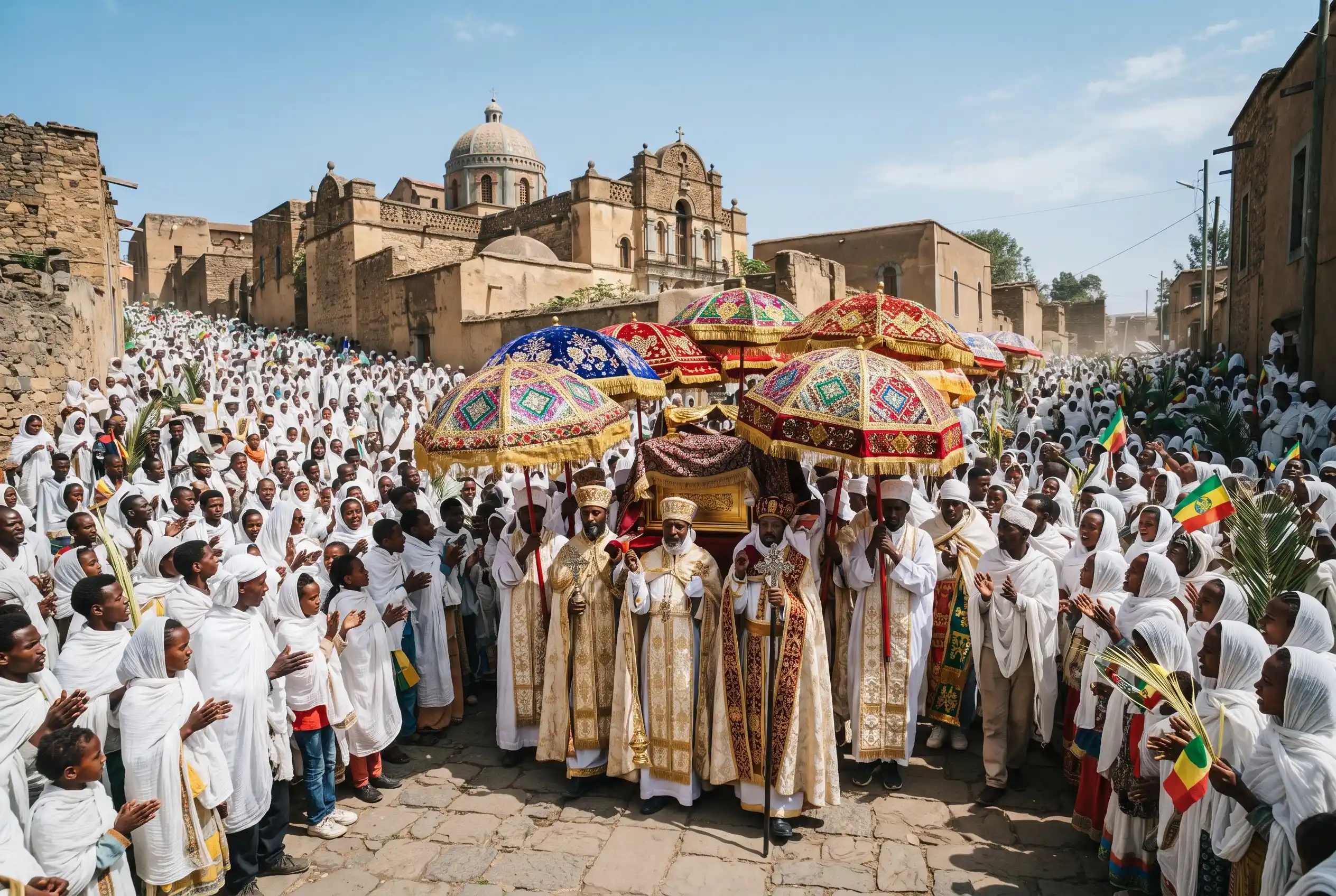
The same calendar sets the dates of the major holidays and the fasting periods of the Ethiopian Orthodox church, which is why many people search for the Ethiopian Orthodox calendar or the fasting calendar by name. Ethiopian Christmas, known as Genna, falls on 7 January in the Gregorian calendar, and Timket, the celebration of the baptism of Christ, follows in January. Because these dates are fixed to the Ethiopian calendar, they land on slightly different Gregorian days from one year to the next. If you are planning a visit, checking the Ethiopian date helps you line up with local holidays and the working week.
Converting Ethiopian and Gregorian dates
You can convert a date by hand once you know the rules, but it is fiddly because of the leap year offset. The quickest way is to use our Ethiopian calendar converter, which switches a date in either direction, shows today’s Ethiopian date automatically, and gives the weekday for any date. Enter a Gregorian date to read off the Ethiopian day, month, and year, or switch the direction to go the other way.
For further background, the Encyclopaedia Britannica entry on the Ethiopian calendar and the broader reference on the Ethiopian calendar both set out its history in more detail.
Frequently asked questions
How does the Ethiopian calendar work?
The Ethiopian calendar has thirteen months: twelve of thirty days each, plus a short month called Pagume of five or six days. The year begins on 11 September and runs about seven to eight years behind the Gregorian year. The days of the week match the Gregorian week exactly.
Why is Ethiopia seven to eight years behind?
The Ethiopian church uses a different calculation of the year of the birth of Christ than the one adopted in Europe, so the Ethiopian year count is lower. The gap is seven years from September to December and eight years for the rest of the Gregorian year, because the two calendars start on different days.
What are the 13 months of the Ethiopian calendar?
They are Meskerem, Tikimt, Hidar, Tahsas, Tir, Yekatit, Megabit, Miazia, Ginbot, Sene, Hamle, and Nehase, each of thirty days, followed by Pagume, which has five days or six in a leap year.
When is Ethiopian New Year?
Ethiopian New Year, called Enkutatash, falls on 11 September, or 12 September in the year before a Gregorian leap year. It marks the first day of Meskerem and the end of the main rainy season.
Is the Ethiopian calendar the same as the Ge’ez or Orthodox calendar?
Yes. The Ethiopian calendar is written in Ge’ez and is the calendar the Ethiopian Orthodox church uses to set holidays and fasting periods, so the Ge’ez calendar, the Amharic calendar, and the Ethiopian Orthodox calendar all describe the same system.