Hanoi street food is some of the best and cheapest eating in Asia, and it is built on specialisation. Many of the city’s famous stalls have cooked a single dish for decades, perfecting one bowl of noodles rather than offering a long menu. The result is that a meal that costs a dollar or two can be better than anything you will find in a restaurant. This guide covers the dishes worth seeking out, where to find the classic versions, what they cost, and how to eat on the street without getting it wrong.
Pho, the morning bowl
Pho is the dish Hanoi is best known for: a clear beef or chicken broth simmered for hours, poured over flat rice noodles with herbs and a squeeze of lime. In Hanoi the broth is cleaner and less sweet than the southern version, and locals eat it mainly for breakfast. Two names come up again and again: Pho Gia Truyen on Bat Dan Street, known for its classic clear broth and long morning queue, and Pho Thin on Lo Duc, famous for a richer broth made with stir fried beef. Expect to pay around 50,000 to 80,000 Vietnamese dong a bowl.
Bun cha, the lunch everyone remembers
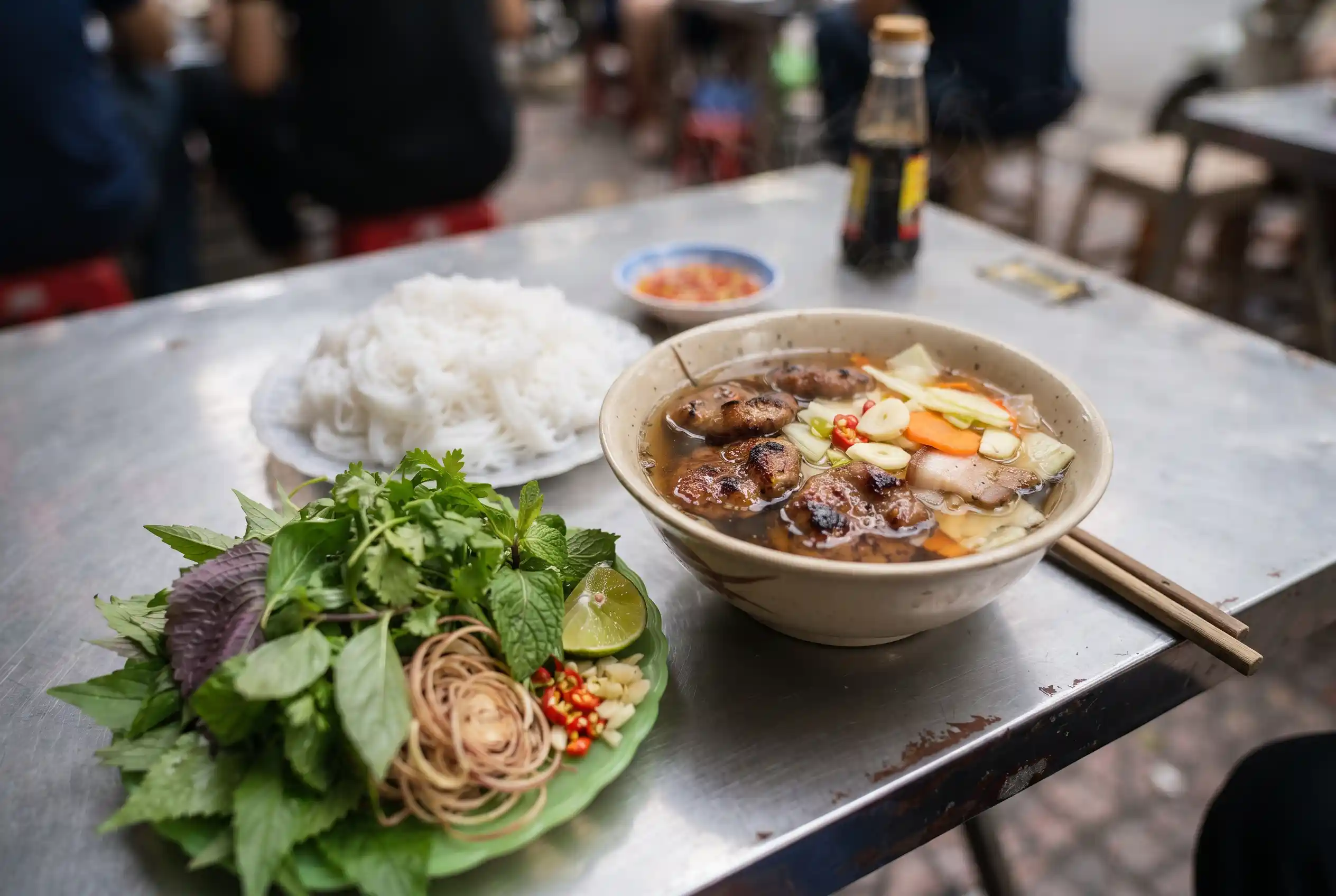
If you eat one thing in Hanoi, make it bun cha: smoky grilled pork patties and slices of pork belly served in a bowl of sweet and sour dipping broth, with a plate of cold rice vermicelli and a pile of fresh herbs to dunk in. It is a lunchtime dish, and most places sell out by early afternoon. Bun Cha Huong Lien on Le Van Huu became famous as the spot where Barack Obama and Anthony Bourdain shared a meal, and it still serves the full set. Bun Cha Dac Kim in the Old Quarter is another long running favourite. A plate runs around 40,000 to 70,000 dong.
Banh mi and other street classics
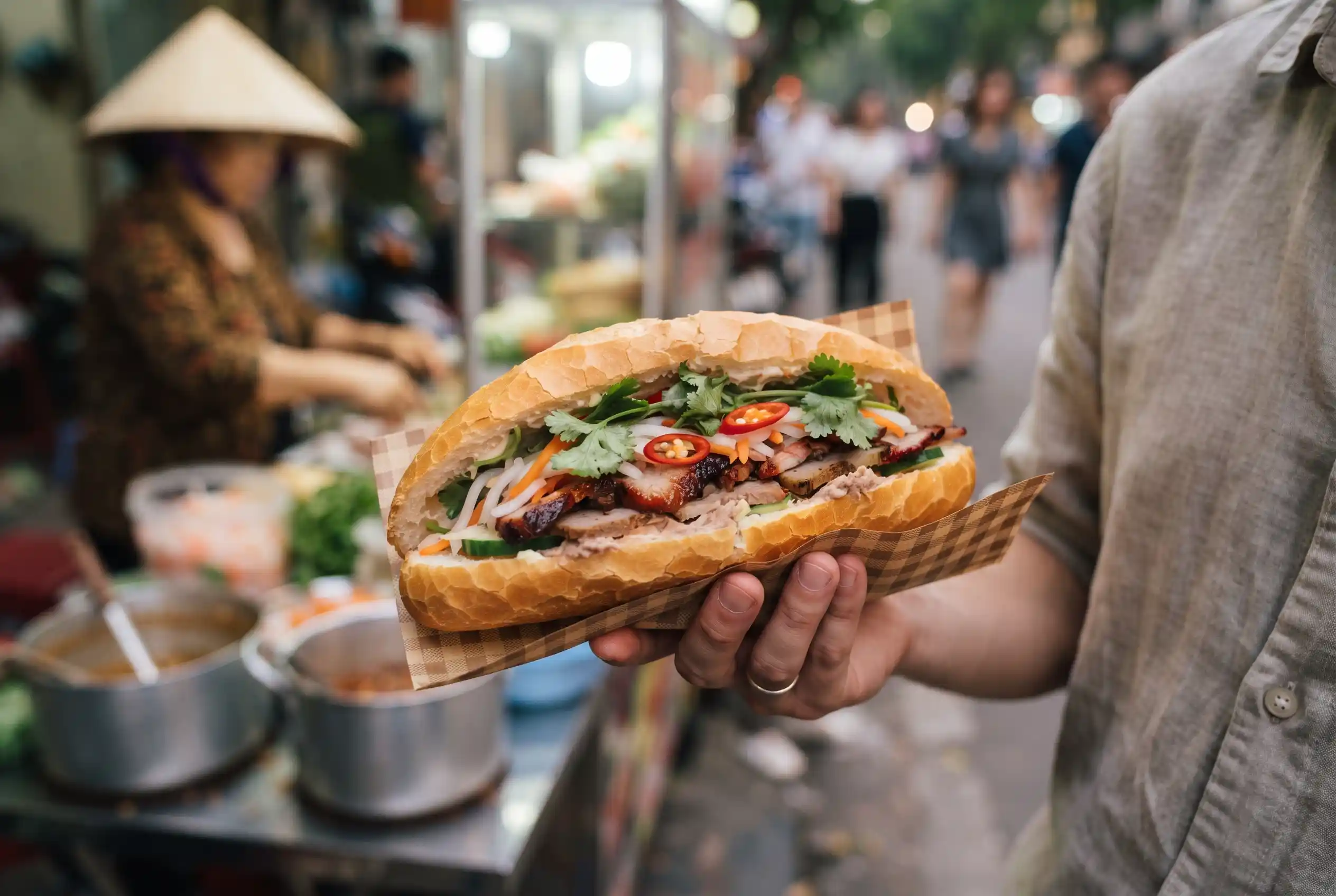
Banh mi, the crisp Vietnamese baguette filled with pate, pork, pickled vegetables, chilli, and coriander, is the perfect thing to eat on the move for 25,000 to 40,000 dong. Banh Mi 25 in the Old Quarter is the usual recommendation. Beyond that, keep an eye out for cha ca, turmeric and dill fish fried at your table, a Hanoi speciality served on Cha Ca Street since 1871; bun bo nam bo, a dry bowl of beef, noodles, herbs, and crispy shallots; and banh cuon, delicate steamed rice rolls filled with pork and mushroom. Round it off with egg coffee, ca phe trung, a Hanoi invention of coffee topped with whipped egg yolk and condensed milk, best at the tiny Cafe Giang.
Where to eat: the Old Quarter
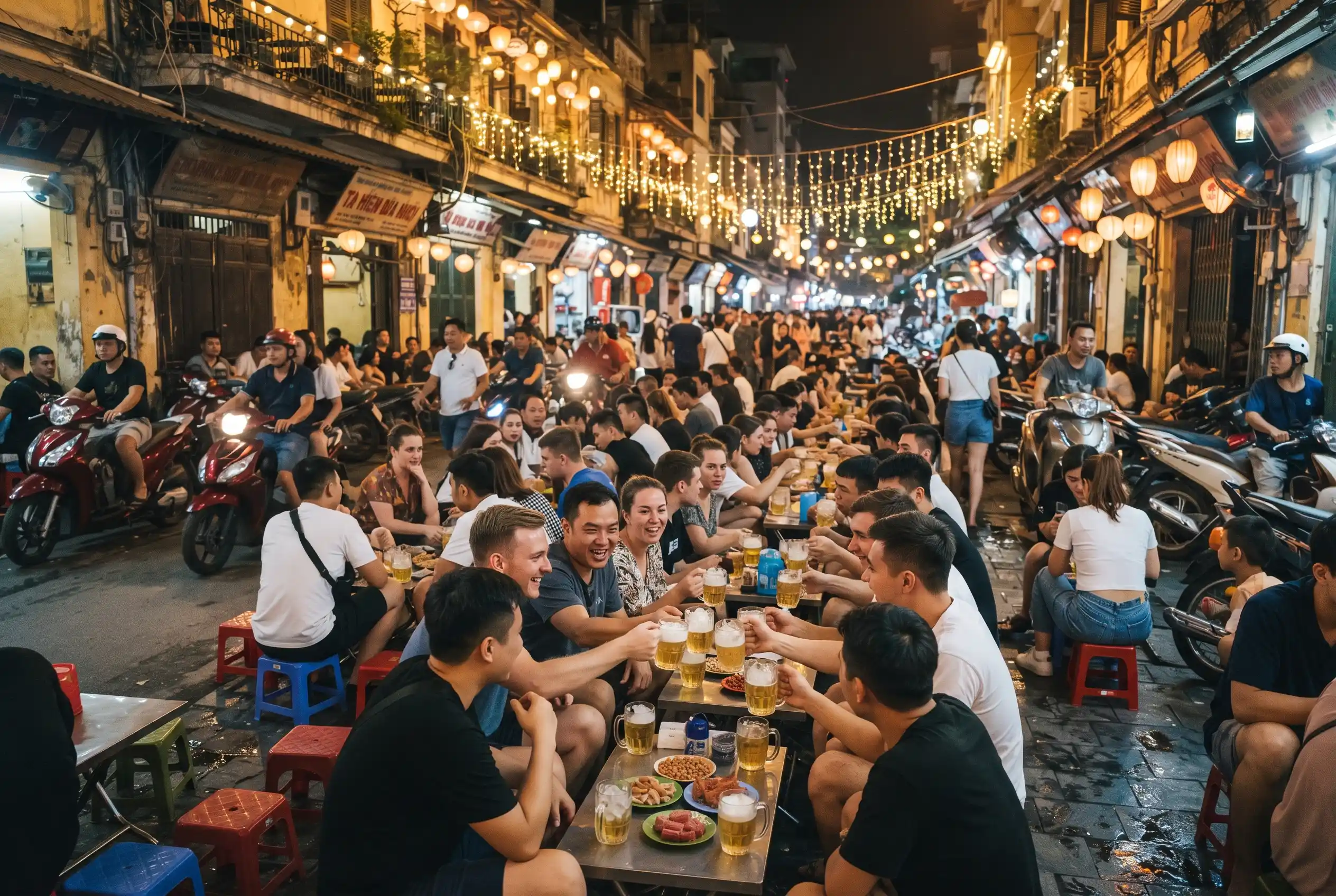
Almost all of this is concentrated in the Old Quarter, the dense grid of 36 trading streets north of Hoan Kiem Lake. Many streets are still named after the trade once sold there, and food stalls spill onto the pavements on low plastic stools. In the evening, head to the corner of Ta Hien, known as Bia Hoi corner, for glasses of fresh, light draught beer that cost a few thousand dong each, alongside grilled snacks. Wandering and following the crowds is a perfectly good strategy here.
How to eat street food well
A few simple habits make street eating both safer and better. Pick stalls with a high turnover and a queue of locals, because busy means fresh. Eat each dish at the right time, pho in the morning, bun cha at lunch, since stalls cook to a daily rhythm and the best is gone later on. Carry small notes, as almost everything is cash only and change for a large bill can be a problem. Sit down on the little stools rather than taking food away, which is how the food is meant to be eaten and keeps it hot.
On drinks, stick to bottled or boiled water and be sensible with ice from unknown stalls, though ice made in factories (the kind with a hole through the middle) is generally fine. Our tap water safety guide has the detail for Vietnam. Having a data connection to find stalls and read reviews helps, and our eSIM data calculator can size a plan before you land.
When to go and what it costs
Hanoi is a year round food city, but the weather matters for sitting outside. Autumn, from September to November, is the local favourite, cooler and drier. Summer is hot and humid, and the winter months can be surprisingly chilly and grey. For the full picture, see our guide to the monsoon season in Vietnam. Most street dishes sit between 25,000 and 90,000 dong, so you can eat very well all day for the price of one restaurant meal back home. If you plan to travel on from Hanoi, our guide to seeing the country by rail covers the scenic route in our Vietnam by train post. For curated listings, the Michelin Guide for Hanoi now covers several street stalls.
Frequently asked questions
What is Hanoi’s most famous street food?
Pho and bun cha are the two dishes most tied to Hanoi. Pho is a clear noodle soup eaten in the morning, while bun cha is grilled pork with vermicelli and dipping broth, eaten at lunch. Banh mi and egg coffee are close behind.
Is street food in Hanoi safe to eat?
Generally yes, if you choose busy stalls with high turnover, where food is cooked fresh and does not sit around. Stick to bottled or boiled water, be sensible with ice from unknown vendors, and eat where you see locals eating.
How much does street food cost in Hanoi?
Most dishes cost between 25,000 and 90,000 Vietnamese dong, roughly one to four US dollars. A full day of eating well on the street can cost less than a single restaurant meal in many Western cities. Carry small notes, as stalls are cash only.
Where is the best area for street food in Hanoi?
The Old Quarter, the grid of 36 old trading streets north of Hoan Kiem Lake, is the heart of the street food scene. Ta Hien, known as Bia Hoi corner, is the spot for cheap fresh beer and grilled snacks in the evening.
What time should I eat pho and bun cha?
Eat pho for breakfast, when stalls serve their freshest broth. Bun cha is a lunch dish, and many places sell out by early afternoon, so go around midday rather than in the evening.