Vietnam is long and thin, with almost all of its famous places strung along a single rail line between Hanoi in the north and Ho Chi Minh City in the south. That makes the train one of the best ways to see the country: cheaper than flying, far more scenic, and a chance to watch rice fields, coastline, and mountains roll past from your bunk. This guide covers the main line, the different classes, the spectacular Hai Van Pass, where to stop, and how to book your tickets.
The Reunification Express
The backbone of the network is the North South line, often called the Reunification Express, which runs about 1,726 km between Hanoi and Ho Chi Minh City (Saigon). The full journey takes roughly 32 to 35 hours, but almost no one rides it end to end in one go. The point is to break it into legs, stopping at the cities and sights along the way. Trains are numbered, with the SE services being the fastest and most comfortable. This is a slow railway, averaging around 50 km an hour, so think of it as part of the trip rather than just transport.
The classes explained
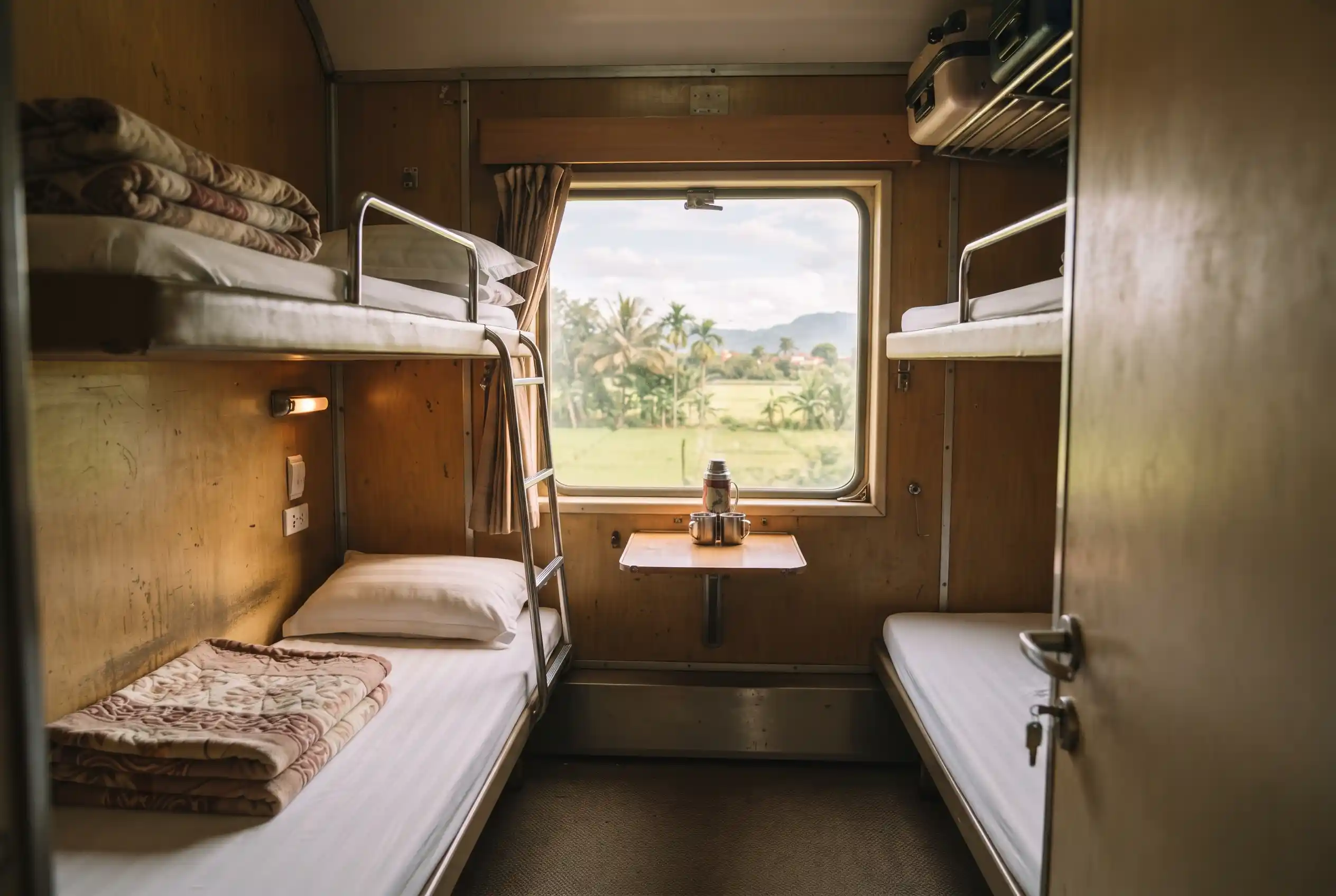
Vietnamese trains offer several classes, and the one you choose shapes the experience. Hard seat is the cheapest and least comfortable, best only for short daytime hops. Soft seat adds padding and air conditioning. For overnight journeys you want a sleeper: a hard sleeper cabin has six berths stacked three high, while a soft sleeper cabin has four berths and more room, and is the sweet spot for comfort and value. The lowest berths cost a little more because you can sit up on them. On some routes, private operators run upgraded carriages with smarter cabins, and the Vietage offers a short luxury service between Da Nang and Quy Nhon if you want a splurge. An overnight sleeper also saves you a hotel night, which helps the budget.
The most scenic stretch: the Hai Van Pass
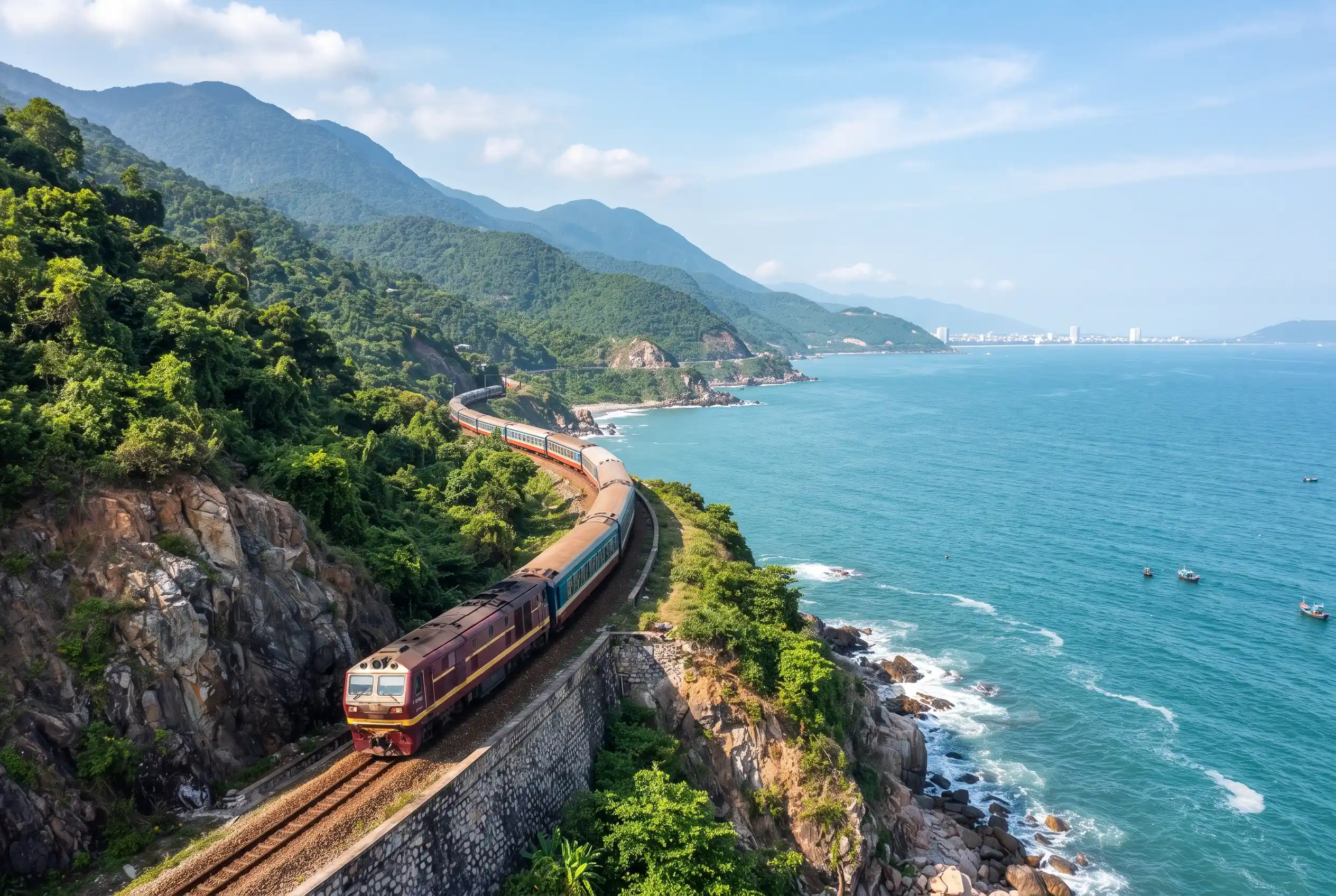
If you ride only one section, make it the three hour daytime run between Hue and Da Nang. The track clings to the coast and climbs over the Hai Van Pass, with the mountains on one side and the South China Sea on the other, and it is regularly rated among the most beautiful train journeys in the world. Sit on the seaward side, keep your camera ready, and do this leg in daylight rather than overnight so you do not miss it.
Where to stop along the way
The line connects most of the country’s highlights, so you can build a whole trip around it. From north to south, the useful stops are Hanoi, for the Old Quarter and its famous food; Ninh Binh, for the karst scenery of Tam Coc; Dong Hoi, the gateway to the vast caves of Phong Nha; Hue, the old imperial capital; Da Nang, the jumping off point for the lantern lit town of Hoi An; Nha Trang, for beaches; and finally Ho Chi Minh City. You do not need to stop at all of them, but the beauty of the train is that you can pick the ones that appeal and ride between them. For the food in the first of those, see our guide to Hanoi street food.
Other useful routes
Beyond the main line, the most popular branch is the overnight train from Hanoi to Lao Cai, the gateway to the mountain town of Sapa and its rice terraces. It is a classic way to reach the far north while you sleep. There are also shorter services, such as Hanoi to Hai Phong for the coast and ferries to Cat Ba.
How to book
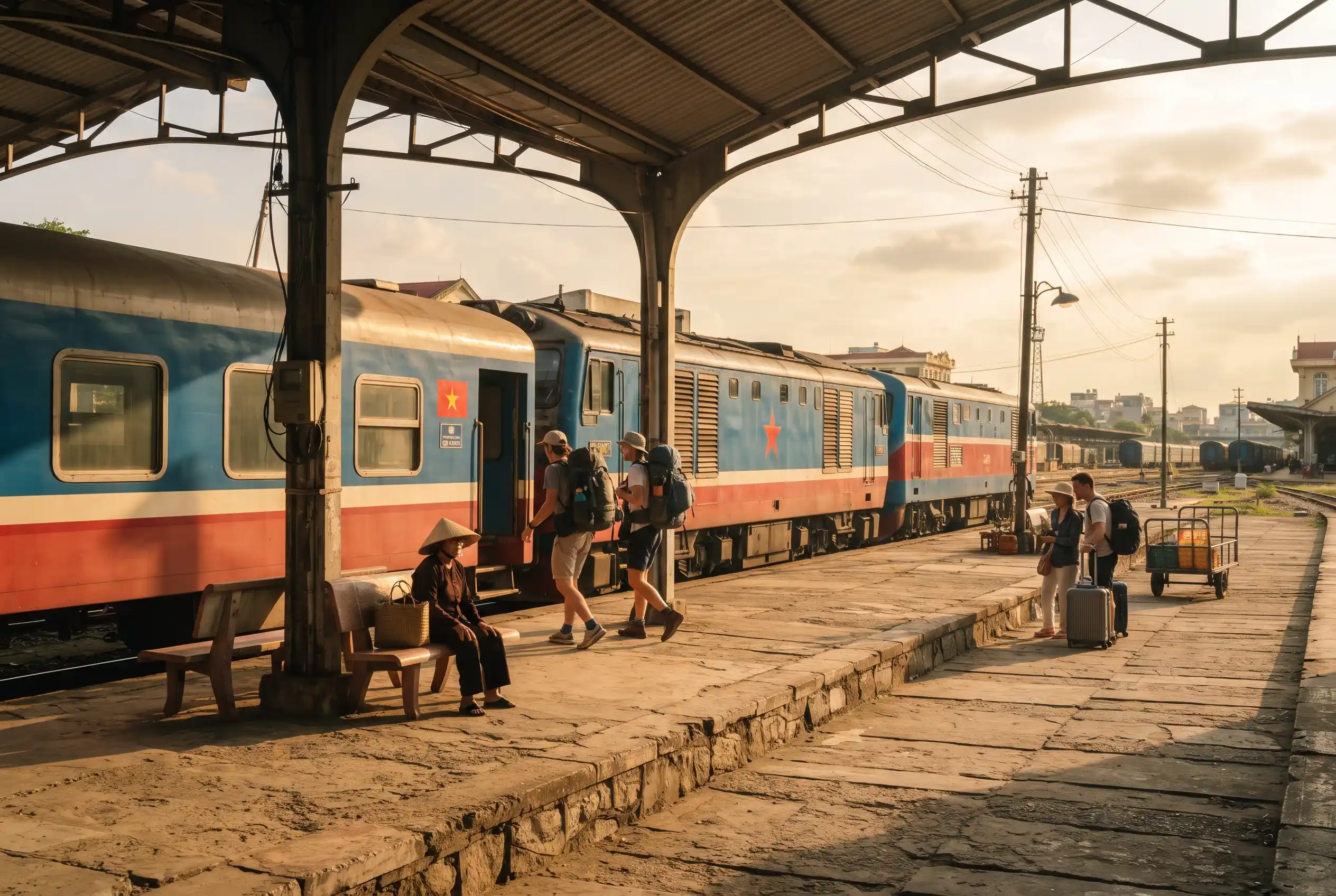
You can book directly on the official Vietnam Railways website, which takes foreign cards and issues an e ticket you show on your phone, or buy at station counters. Booking agents add a small fee but can be simpler for complex trips. Reserve sleepers a few days ahead in general, and well in advance around Vietnamese public holidays, especially Tet, when trains sell out. A data connection makes booking and navigating stations far easier, and our eSIM data calculator can size a plan before you arrive. To budget the wider trip around your rail legs, try our travel budget calculator.
A sample rail itinerary
A popular two week plan runs north to south: a few days in Hanoi, an overnight train to Hue, the daytime Hai Van Pass run to Da Nang and on to Hoi An, an overnight train to Nha Trang for the beach, and a final overnight leg to Ho Chi Minh City. It mixes daytime scenery with night sleepers that double as accommodation, and it leaves you free to fly home from the south. The timing depends on the weather, which varies a lot along the country’s length, so read our guide to the monsoon season in Vietnam before you fix dates. For deep route detail, the Man in Seat 61 and the official Vietnam Railways site are the best references.
Frequently asked questions
How long does the train take from Hanoi to Ho Chi Minh City?
The full Reunification Express journey of about 1,726 km takes roughly 32 to 35 hours on the fastest SE trains. Most travellers break it into shorter legs with stops rather than riding it all at once.
Which train class is best in Vietnam?
For overnight journeys, the four berth soft sleeper is the best balance of comfort and value. Hard sleepers have six berths and cost less. Soft seats suit shorter daytime hops, while hard seats are best avoided except for very short trips.
What is the most scenic train journey in Vietnam?
The three hour run between Hue and Da Nang over the Hai Van Pass, where the line hugs the coast with mountains on one side and the sea on the other. Ride it in daylight and sit on the seaward side for the best views.
How do I book Vietnam train tickets?
Book directly on the official Vietnam Railways website, which accepts foreign cards and issues e tickets, or buy at station counters. Booking agents charge a small fee but simplify complex trips. Reserve sleepers ahead, and well in advance around the Tet holiday.
Is the train a good way to travel Vietnam?
Yes. Because almost all of Vietnam’s highlights lie along the North South line, the train links them cheaply and scenically. It is slower than flying but far more memorable, and overnight sleepers save a hotel night.