Everyone knows the Taj Mahal is a white marble tomb in India, but the facts behind it are stranger and more human than the postcard suggests. It was built out of grief, it hides a deliberate flaw, its minarets are designed to fall the right way, and several of the stories told about it are not true. This guide gathers the Taj Mahal facts worth knowing, why it was built, how it was made, the design secrets, the myths, and what you need to know to visit.
Why the Taj Mahal was built
The Taj Mahal is a mausoleum, built by the Mughal emperor Shah Jahan for his wife Mumtaz Mahal. She died in 1631 giving birth to their fourteenth child, and the emperor, by every account, was devastated. He commissioned a tomb on the bank of the Yamuna River in Agra that would be worthy of her, and the building is as much a monument to loss as a wonder of architecture. Mumtaz Mahal’s actual grave lies in a quiet lower chamber at the heart of the building, directly beneath the famous dome.
How long it took and how it was made
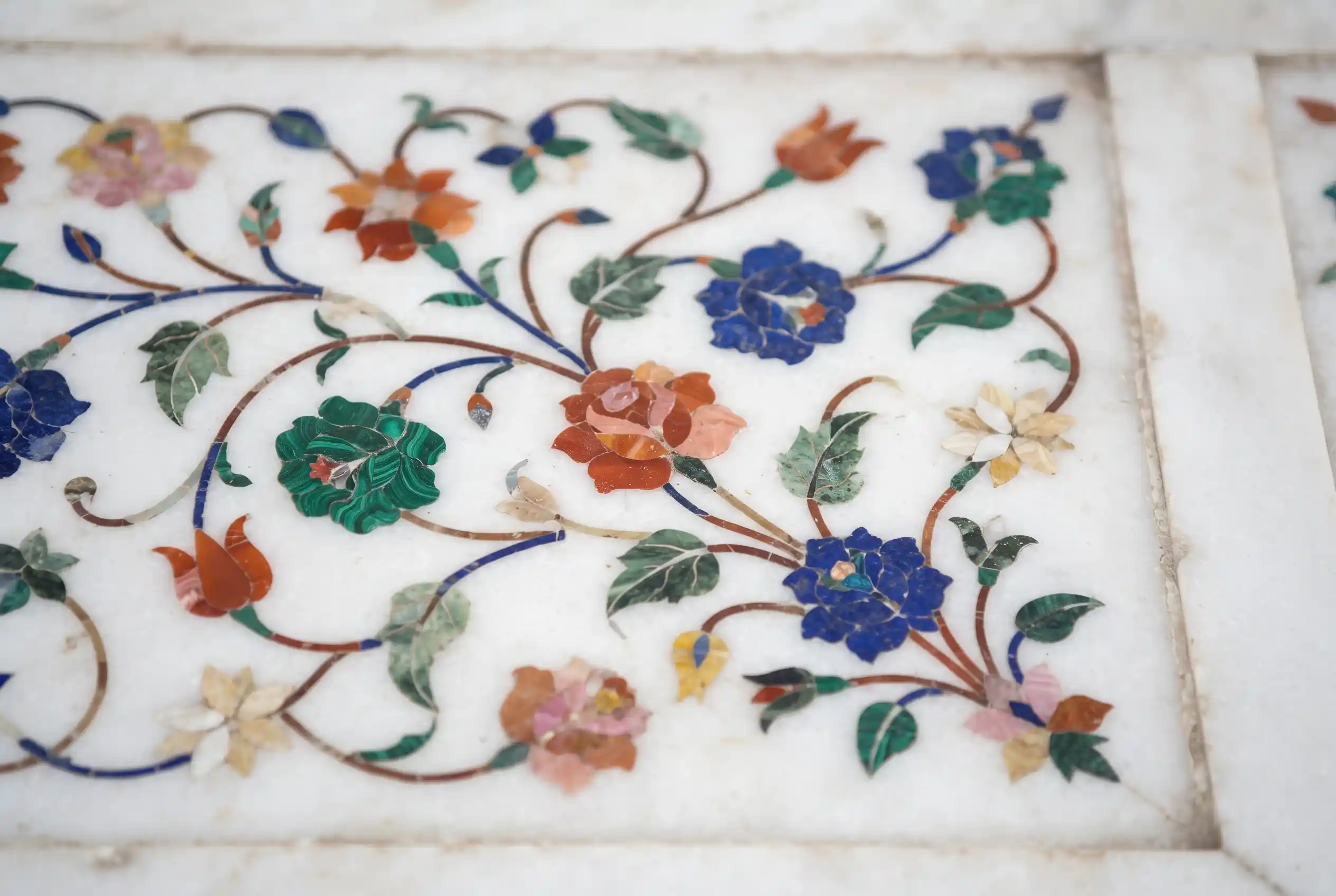
Work began around 1632. The main mausoleum was finished in about 1643, and the full complex of gardens, gateway, and mosque took until roughly 1653, making it around 22 years of building. Contemporary accounts describe a workforce of some 20,000 craftsmen and labourers, and around 1,000 elephants used to haul materials. The marble came from the quarries at Makrana in Rajasthan, and it was inlaid with 28 types of precious and semi precious stones using a technique called pietra dura. Those stones were brought from across Asia: jade and crystal from China, turquoise from Tibet, lapis lazuli from Afghanistan, sapphire from Sri Lanka, and carnelian from Arabia. The chief architect is usually named as Ustad Ahmad Lahauri.
The design secrets
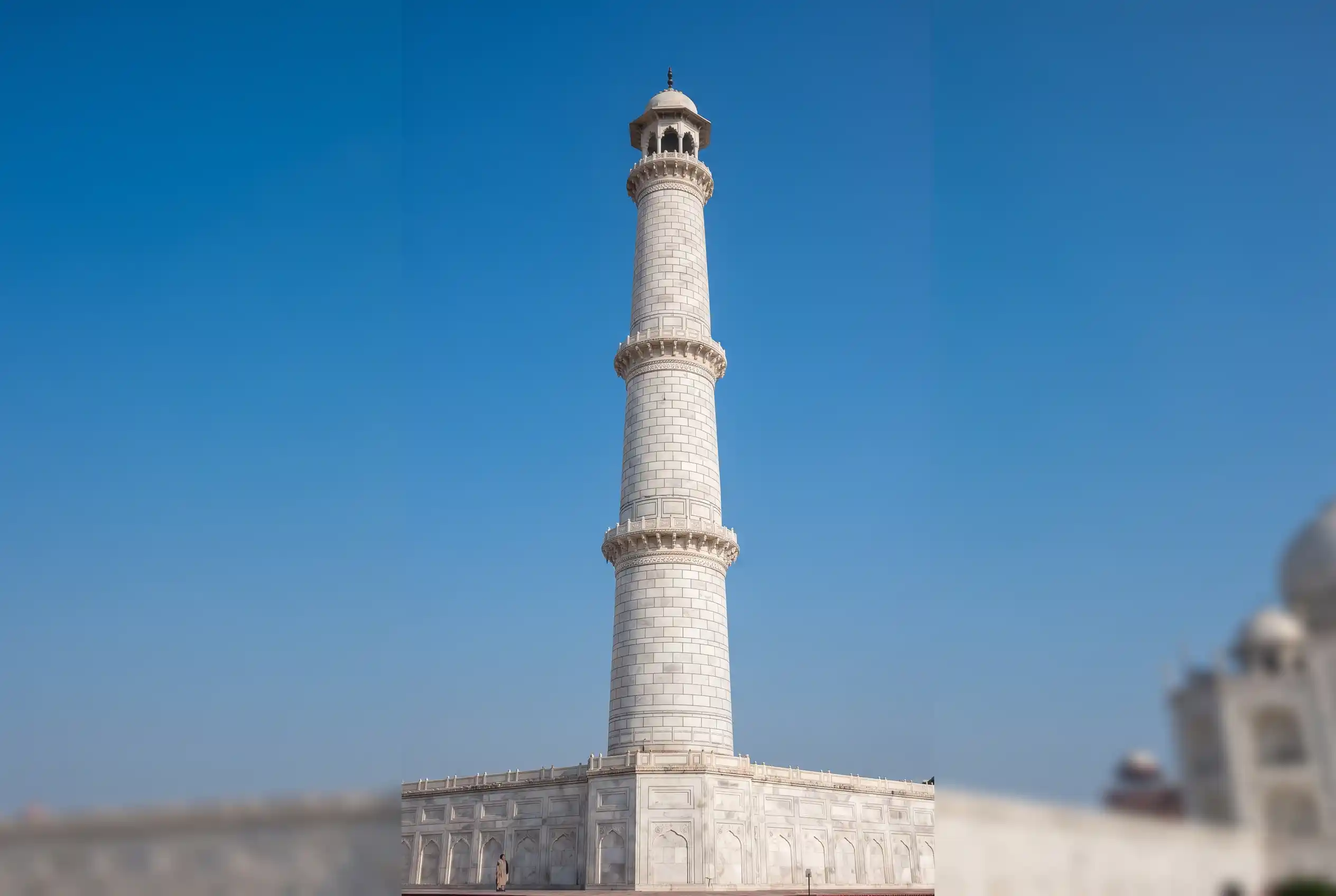
The Taj is famous for its near perfect symmetry, and it keeps that symmetry so strictly that the one exception stands out. Inside, Mumtaz Mahal’s cenotaph sits exactly on the central axis. Shah Jahan’s own cenotaph was added later, beside hers and slightly larger, and it is the only element in the entire complex that breaks the balance. Both of these upstairs tombs are decorative markers. The real graves lie in the sealed chamber below.
The four minarets around the platform lean very slightly outward rather than standing perfectly straight. This was deliberate: in the event of an earthquake they would fall away from the central tomb rather than onto it. The builders also played tricks with scale, making the Arabic calligraphy around the great arch larger towards the top so that it appears the same size when read from the ground.
The colour that changes with the light
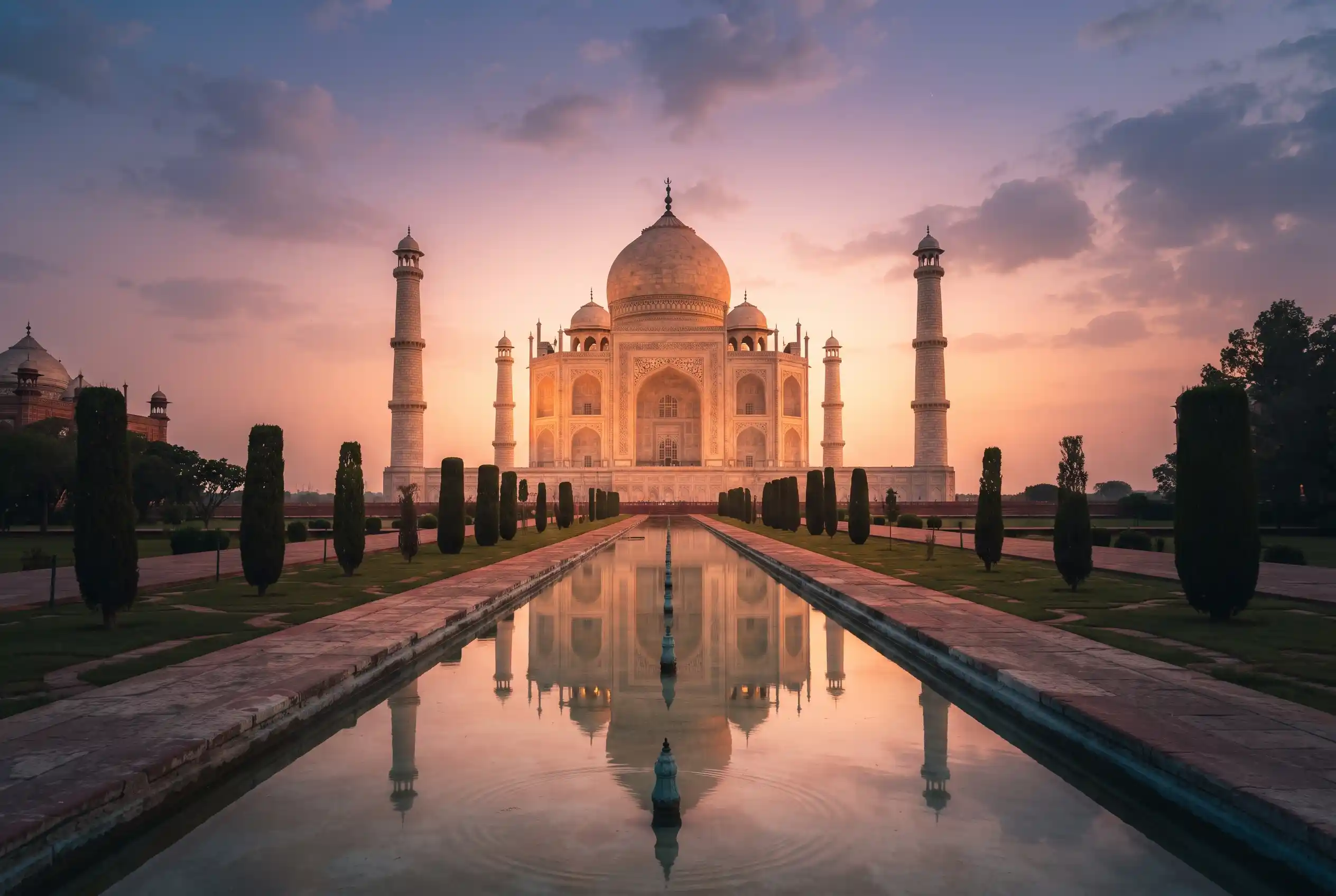
One of the most striking facts is something you can see for yourself. The white marble catches and reflects the light of the sky, so the Taj looks faintly pink at dawn, brilliant white under the midday sun, and golden or silver by moonlight. This is why sunrise is the favourite time to visit, and why the building never looks quite the same twice.
Myths that are not true
Two stories come up constantly, and both are almost certainly legend. The first is that Shah Jahan planned a mirror image Taj in black marble on the opposite bank of the river for his own tomb. Excavations across the river found the remains of a garden, not a black building, and most historians treat the black Taj as a myth. The second is that Shah Jahan had the hands of his craftsmen cut off so they could never build anything as beautiful again. There is no historical evidence for this, and it is regarded as folklore. What is true is that Shah Jahan was later deposed by his son Aurangzeb and spent his final years under house arrest in Agra Fort, from where he could see the Taj across the river. He is now buried beside Mumtaz inside it.
Visiting the Taj Mahal today
The Taj Mahal is in Agra, around three to four hours from Delhi by road or express train, and it became a UNESCO World Heritage Site in 1983. It is open from sunrise to sunset every day except Friday, when it closes for prayers at the mosque. Foreign visitors pay an entry fee of a little over 1,000 rupees, with a small extra charge to step inside the main mausoleum. Sunrise is the best time for soft light and smaller crowds. Air pollution has been slowly yellowing the marble, and conservators periodically apply a clay mud pack to clean it, so you may occasionally see scaffolding.
If the Taj is part of a wider India trip, our guides to the Kerala backwaters and the ashrams of Rishikesh cover the south and the Himalayan foothills, and our guide to places to visit in Kathmandu covers the wider region. To plan costs, try our travel budget calculator. For official information, see the UNESCO listing for the Taj Mahal and the Archaeological Survey of India Taj Mahal site.
Frequently asked questions
Why was the Taj Mahal built?
The Mughal emperor Shah Jahan built it as a mausoleum for his wife Mumtaz Mahal, who died in 1631 giving birth to their fourteenth child. It is a monument to his grief as much as a feat of architecture, and both are now buried inside it.
How long did the Taj Mahal take to build?
About 22 years. Work began around 1632, the main mausoleum was finished around 1643, and the full complex was complete by roughly 1653. Around 20,000 workers and 1,000 elephants were involved.
Is the Taj Mahal perfectly symmetrical?
Almost. The whole complex is strictly symmetrical except for Shah Jahan’s own cenotaph, which was added beside his wife’s central one and is the single element that breaks the balance. The minarets also lean slightly outward by design.
Did workers have their hands cut off?
There is no historical evidence for this, and it is regarded as folklore. The same goes for the legend of a black marble Taj across the river, which excavations did not support. Both are myths rather than facts.
When is the Taj Mahal closed?
It is closed every Friday for prayers at the on site mosque. On other days it opens from sunrise to sunset. Sunrise is the best time to visit for soft light and smaller crowds.