Rishikesh, on the banks of the Ganges in the foothills of the Himalayas, is often called the yoga capital of the world, and its ashrams are the reason. Staying in one is the closest most travellers come to living a simple spiritual routine, with early mornings, yoga, meditation, and plain vegetarian food. This guide covers the best known ashrams, what daily life inside one is actually like, how to choose the right one for you, and the practical things to know before you book.
Why Rishikesh
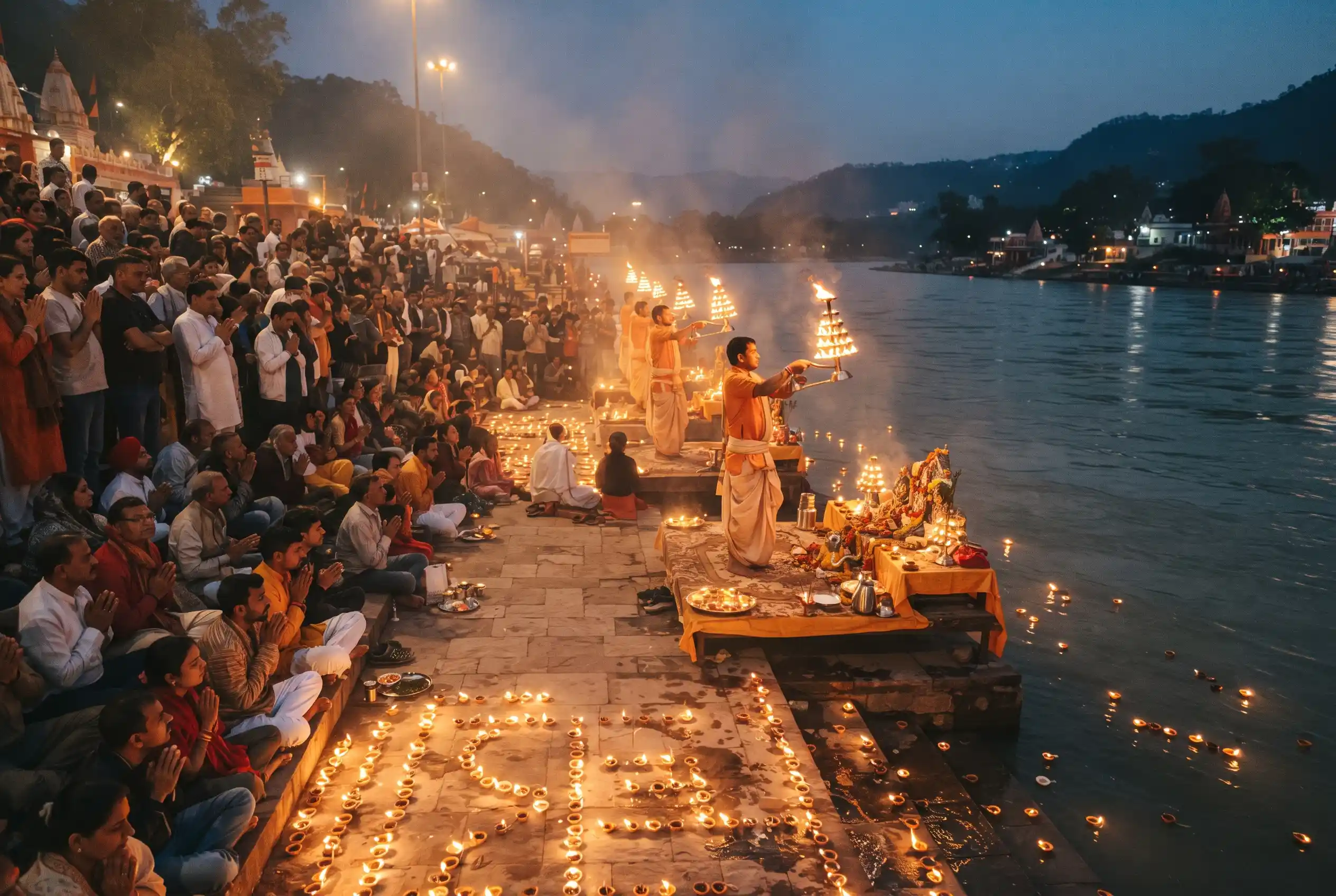
Rishikesh sits where the Ganges leaves the mountains and reaches the plains, which has made it a place of pilgrimage for centuries. It is a holy city, so it is strictly vegetarian and alcohol is banned, and that calm, clean living atmosphere is part of why ashram life works here. Beyond the ashrams, the town is tied together by two famous footbridges, Laxman Jhula and Ram Jhula, and by the evening Ganga Aarti, a candlelit river ceremony that anyone can watch.
The best known ashrams
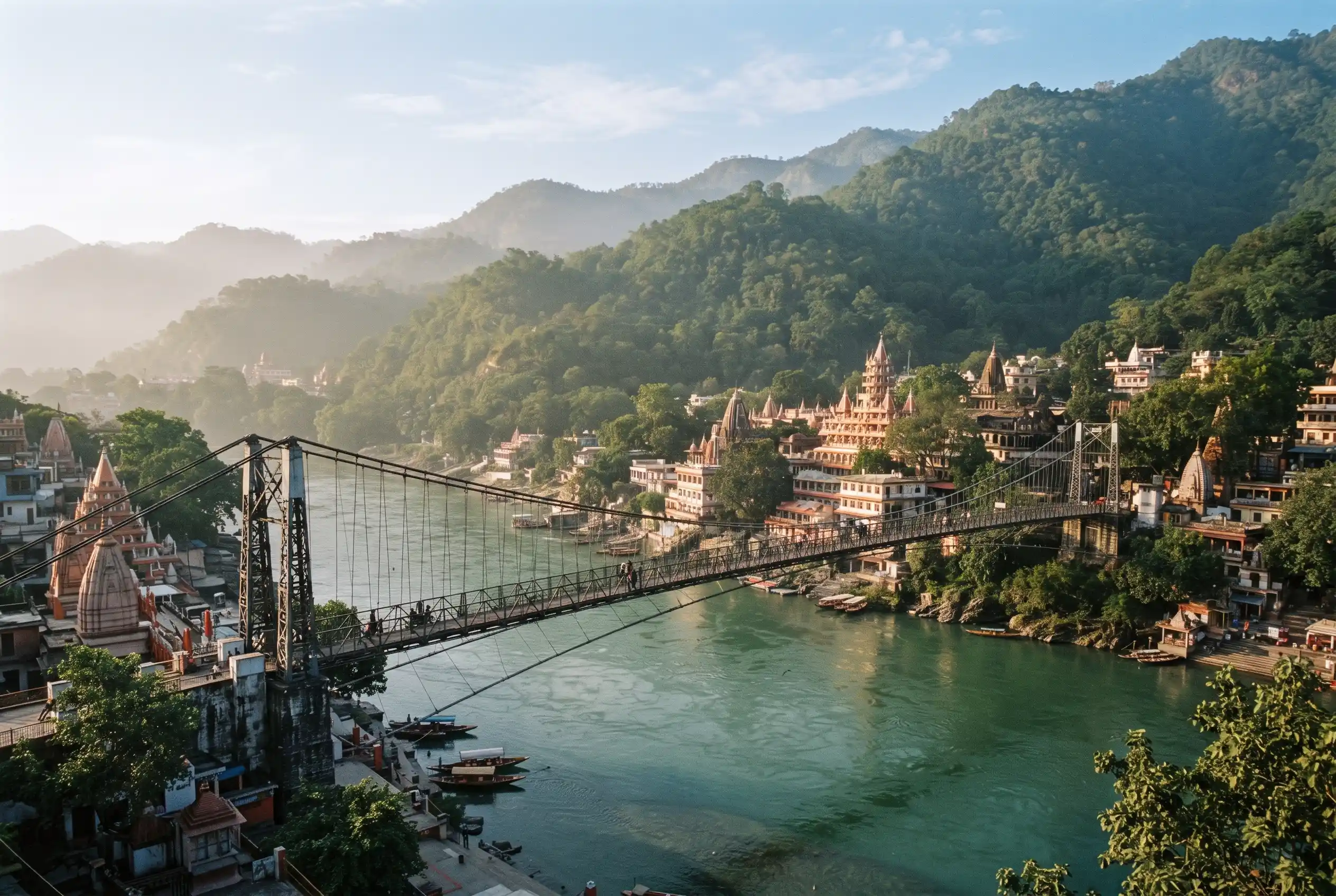
Parmarth Niketan is the largest ashram in Rishikesh, in the Swarg Ashram area, and hosts the most famous evening Ganga Aarti at its own ghat. It suits people who want a big, active spiritual community.
Sivananda Ashram, run by the Divine Life Society and founded by Swami Sivananda, is one of the most respected centres for spiritual study, and it runs on donation. Yoga Niketan, one of the oldest ashrams in town, in the quiet Muni ki Reti area, offers a structured residential programme of yoga and meditation with a fixed daily schedule.
Phool Chatti Ashram, further upriver and more remote, is known for a traditional set programme, often seven days, that mixes yoga, meditation, silence, and simple living. Anand Prakash Ashram is a well regarded centre in the Akhanda Yoga tradition. At the budget end, places like Ved Niketan are popular with backpackers for cheap, simple rooms and drop in classes.
Worth knowing, though it is no longer an ashram, is the Beatles Ashram (Chaurasi Kutia), where the band stayed with Maharishi Mahesh Yogi in 1968. It is now an atmospheric abandoned site covered in murals, open as a ticketed attraction rather than a place to stay.
What ashram life is really like
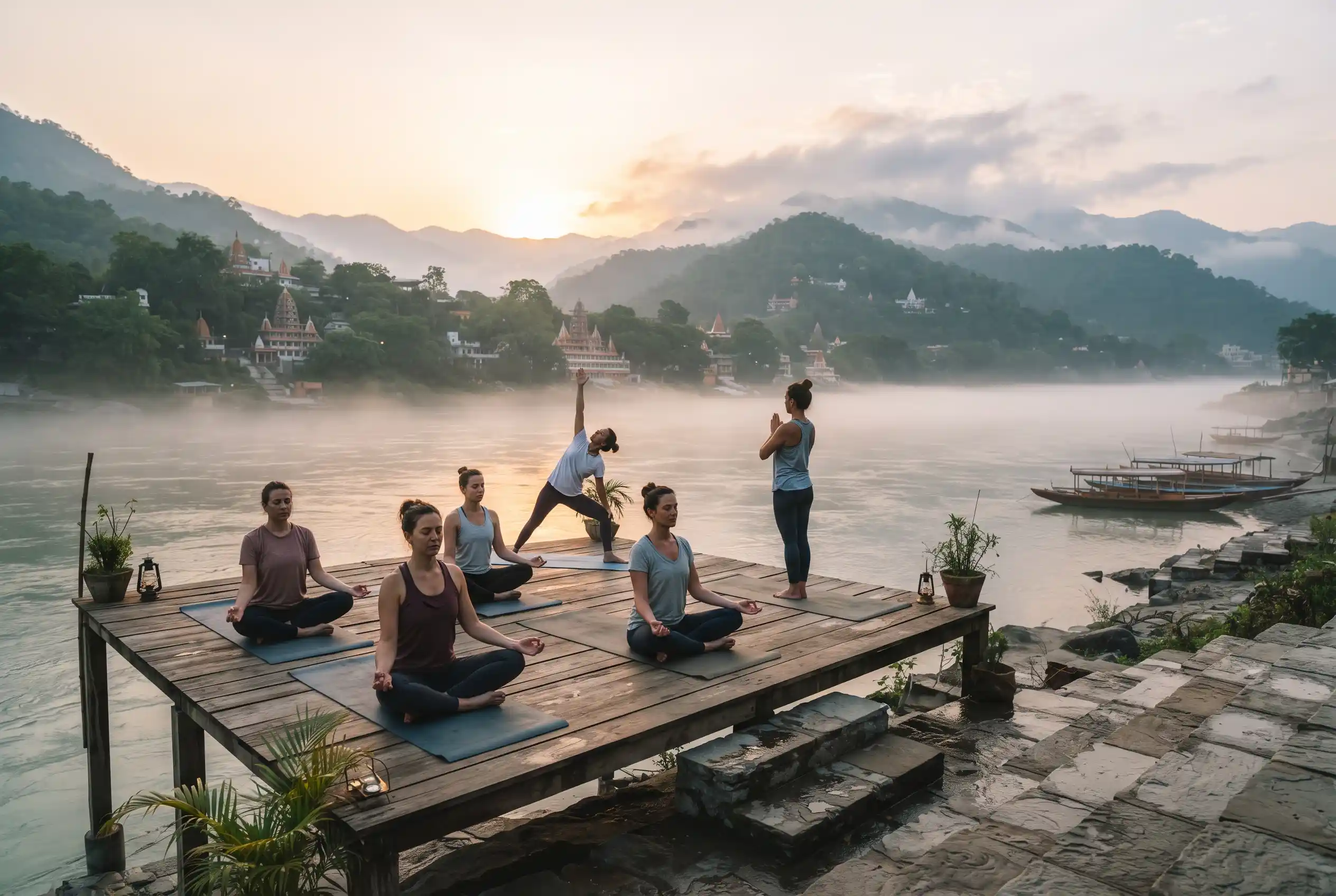
A day in a traditional ashram starts early, often around 5 or 6 am, with meditation or chanting, followed by a yoga session before breakfast. The rest of the day mixes more yoga and meditation, lectures or satsang, and sometimes karma yoga, which means helping with simple chores as a form of selfless service. Meals are vegetarian, plain, and sattvic, meaning light and free of onion, garlic, and stimulants in stricter ashrams. Rooms are basic, phones and laptops may be discouraged, and some ashrams keep periods of silence. Most ask for modest dress covering shoulders and knees.
Cost works in two ways. Some ashrams, like Sivananda, run on donation, while others charge a modest fixed fee for a room and the programme. Either way, this is not a hotel. You are a guest in a spiritual community and are expected to follow its rules and rhythm. Many ashrams ask for a minimum stay, often several days, so you settle into the routine rather than dropping in for a night.
How to choose the right ashram
Think about how much structure you want. If you want a fixed programme that holds your hand through the day, a residential course at Yoga Niketan or Phool Chatti is ideal. If you prefer to join a large community and choose your own level of involvement, Parmarth Niketan or Sivananda suit better. If you mainly want cheap, simple lodging near the yoga scene with the freedom to come and go, a budget ashram or guesthouse like Ved Niketan is the easy option. Dedicated yoga teacher training courses also run in Rishikesh, but those are formal multi week programmes rather than a casual stay.
Practical tips and when to go
Book ahead for the better known ashrams, especially in high season, and read the rules before you commit, since some are much stricter than others. Pack modest, comfortable clothes, and remember the whole town is vegetarian and dry. Stick to filtered or bottled water, which our tap water safety guide covers for India, and use our travel budget calculator to plan around a low cost stay.
The best months are September to November and February to April, when the weather is pleasant. Summer is hot, the monsoon in July and August is wet, and winter mornings are cold. If you are building a wider India trip, our guides to the Taj Mahal and the Kerala backwaters cover the classic north and south, and our guide to places to visit in Kathmandu covers the Himalayan region. For official information, see Parmarth Niketan and Uttarakhand Tourism.
Frequently asked questions
Which is the best ashram in Rishikesh?
There is no single best one, it depends on what you want. Parmarth Niketan is the largest and most active, Sivananda is respected for spiritual study, Yoga Niketan and Phool Chatti offer structured residential programmes, and Ved Niketan is a budget favourite.
How much does it cost to stay in a Rishikesh ashram?
It varies. Some ashrams, such as Sivananda, run on donation, while others charge a modest fixed fee that covers a simple room, meals, and the programme. Either way it is far cheaper than a hotel, as the point is simple living rather than comfort.
What are the rules in an ashram?
Expect an early start, vegetarian meals, modest dress, and participation in the daily schedule of yoga and meditation. Alcohol, meat, and smoking are not allowed, phones may be discouraged, and some ashrams keep periods of silence. Many ask for a minimum stay.
Can beginners stay in a Rishikesh ashram?
Yes. Many ashrams welcome complete beginners and run classes for all levels. A structured residential programme like Phool Chatti is a gentle way to start, as it guides you through the day rather than leaving you to plan it yourself.
When is the best time to visit Rishikesh?
September to November and February to April are the most pleasant, with mild weather. Summer is hot, the monsoon in July and August brings heavy rain, and winter mornings on the Ganges are cold.