Tanzania uses Type D and Type G power plugs, and the supply runs at 230 volts and 50 hertz. That one sentence covers most of what you need, but which adapter you should actually pack depends on where you are coming from and what you want to charge, and there are a few quirks worth knowing before a safari or a Zanzibar beach trip. This guide explains the plugs and sockets in Tanzania, whether you need a voltage converter, the right adapter for your home country, and how charging really works out in the bush. To check your own devices in seconds, use our plug and voltage checker.
What plugs and sockets Tanzania uses
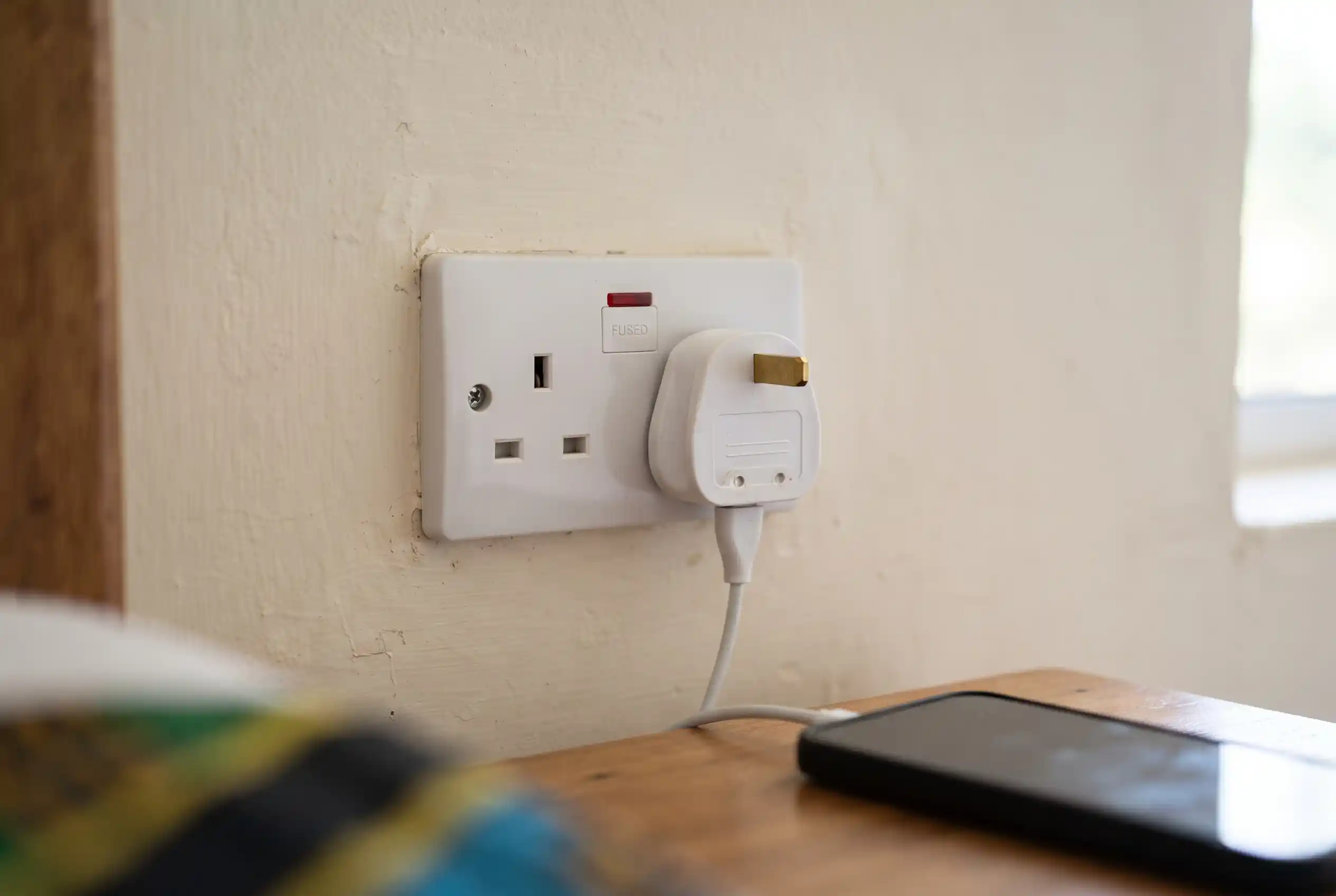
You will meet two plug types in Tanzania. Type G is the square three pin British plug, the BS 1363 standard, with three rectangular pins. It is the modern standard and the one you will find in most newer hotels and lodges. Type D is the older three pin plug with three round pins in a triangle, based on the British BS 546 design and still common in older buildings and some rural areas.
Because both are in use, the safe choice is a travel adapter that covers Type G and will also sit in a Type D socket, or a universal adapter that handles both. Tanzanian sockets are the same across the mainland, in Dar es Salaam, Arusha, and the safari towns, so you do not need different adapters for different regions.
Voltage and frequency
The standard voltage in Tanzania is 230 volts at a frequency of 50 hertz. That matters most for visitors from North America, where the supply is about 120 volts. Most modern electronics, such as phones, tablets, laptops, and camera chargers, are dual voltage and accept anything from 100 to 240 volts, so they work anywhere with just a plug adapter. Check the small print on the charger or the device: if it reads 100 to 240V, you are fine.
The exceptions are single voltage appliances built only for 110 to 120 volts, which some travellers bring in the form of hair dryers, straighteners, or shavers. Plugging a 120 volt only device into 230 volts can destroy it, so for those you need a step down voltage converter, not just a plug adapter. The simplest fix is to leave high wattage hair tools at home, since most lodges provide a hair dryer.
Which travel adapter you need
The adapter depends on your home country:
- United Kingdom and Ireland: your Type G plugs already fit, so you may not need an adapter at all. Pack a small one anyway in case a room has only Type D sockets.
- United States and Canada: you need a Type G adapter, and ideally one that also fits Type D. Watch the voltage, since 230 volts is double what you are used to. Dual voltage devices are fine, single voltage ones are not.
- Europe: your Type C, E, or F plugs do not fit, so you need a UK style Type G adapter. The voltage is the same 230 volts, so no converter is needed. For a refresher on the European side, see our guide to European plug types.
- Australia and New Zealand: your Type I plugs do not fit, so bring a Type G adapter. The voltage is similar, so no converter is required.
If you would rather not guess, our plug and voltage checker tells you the exact plug type, voltage, and whether you need an adapter or a converter for Tanzania from your own country. Our guide to plug adapters for Portugal walks through the same idea for a European destination.
Charging on safari and in lodges
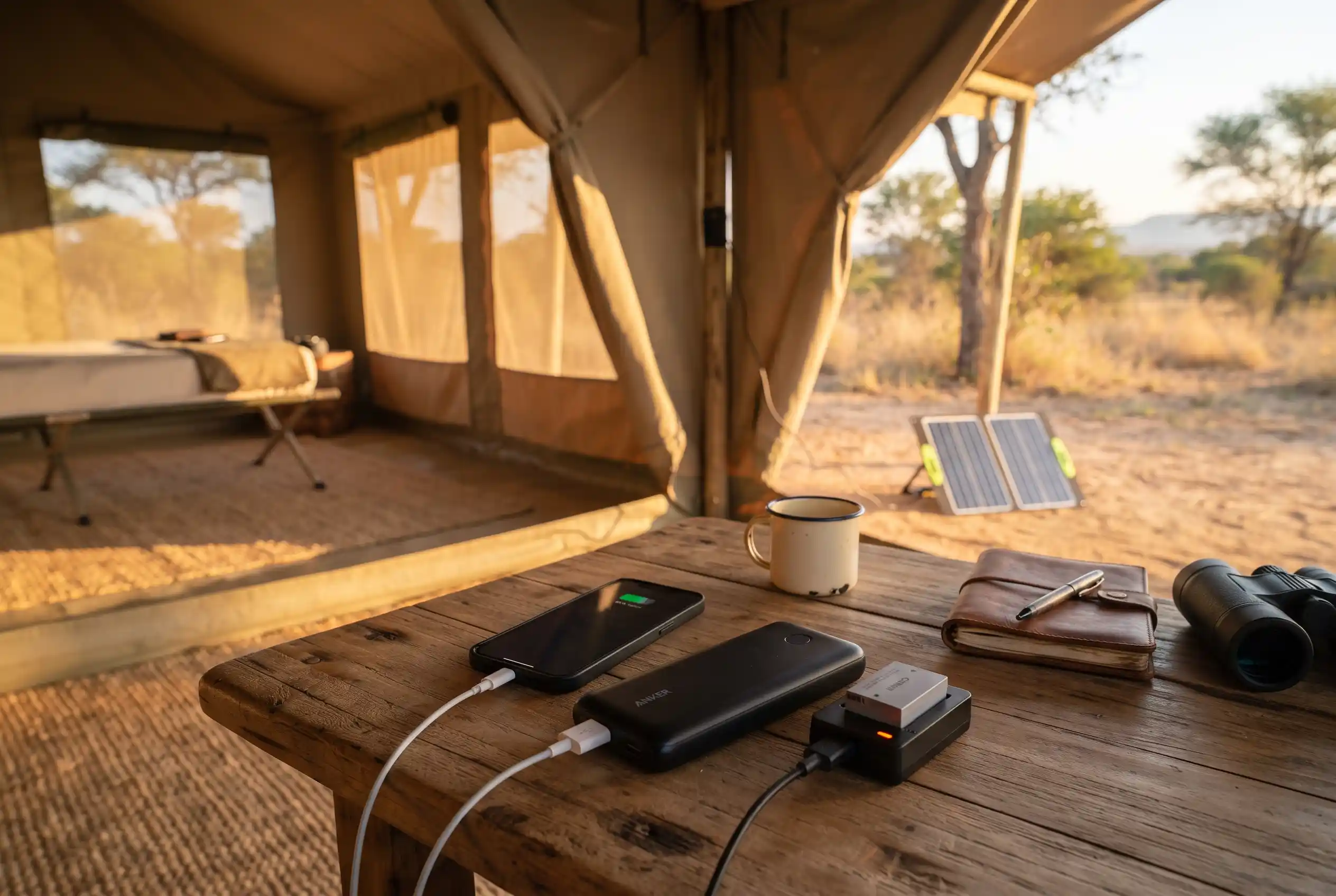
City hotels supply steady 230 volt power, but the moment you head into the national parks the picture changes. Many safari camps run on solar power or a generator, which may only be switched on for part of the day, often in the early morning and the evening. Power cuts are also common across the country, so even a mains connection is not guaranteed around the clock.
A few habits make this easy. Carry a power bank and charge it whenever power is available. Top up your camera batteries and phone during the day rather than waiting for the evening. Many tented camps offer a shared charging point in the main area rather than sockets in each tent, and some provide USB charging, so a cable that charges straight from USB is useful. On game drives, a 12 volt car charger or a power bank keeps a camera going through a long day in the vehicle. Pack a short multi socket or a two port USB plug so one adapter can charge several devices at once.
Power plugs in Zanzibar
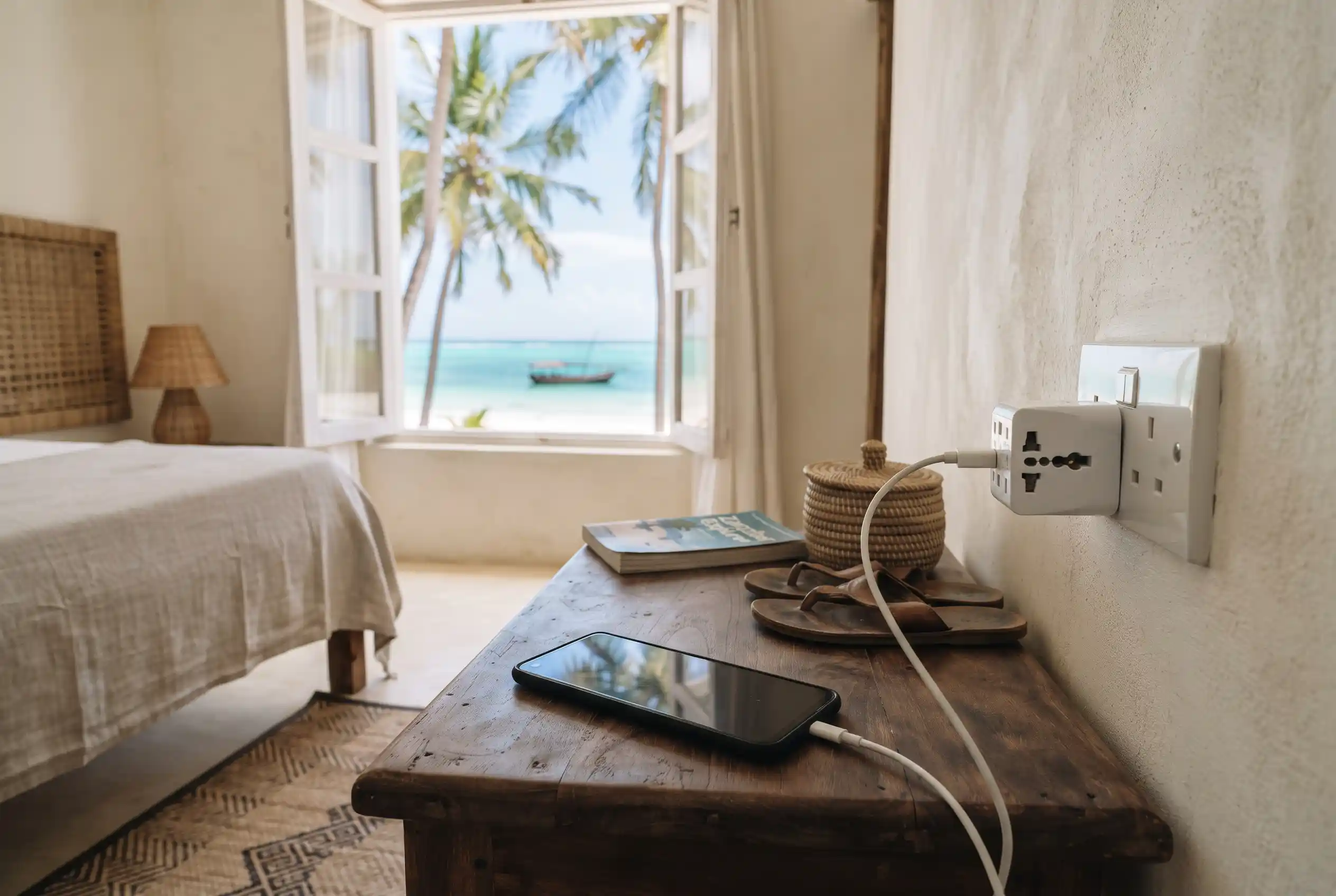
Zanzibar uses the same system as the mainland: Type D and Type G plugs at 230 volts and 50 hertz. Older hotels and guesthouses in Stone Town are more likely to have Type D round pin sockets, while newer beach resorts tend to use Type G, so a universal adapter is the safe bet. As on safari, some smaller places on the islands rely on generators or have occasional power cuts, so a power bank earns its place. If you are planning the beach part of your trip, see our guide to the best beaches in Zanzibar.
What to pack
- A universal travel adapter, or a Type G adapter that also fits Type D, with built in USB ports
- A power bank for safari camps, game drives, and the islands
- A short multi socket or two port USB charger so one adapter serves several devices
- A step down voltage converter only if you must bring a single voltage 110 volt appliance
Buy a reputable adapter rather than the cheapest one, since a poorly made adapter can work loose in a socket or fail to make a solid connection. For general travel advice, the UK government guidance for Tanzania and the Tanzania Tourist Board are useful official sources.
Frequently asked questions
What plug type does Tanzania use?
Tanzania uses Type D and Type G plugs. Type G is the square three pin British plug found in most newer hotels, and Type D is the older round pin plug still common in older buildings. A universal adapter covers both.
What is the voltage in Tanzania?
The standard voltage is 230 volts at 50 hertz. Dual voltage devices rated 100 to 240 volts, such as most phones and laptops, work with only a plug adapter. A single voltage 110 volt appliance needs a step down converter.
Do I need a travel adapter for Tanzania?
If you are from the UK or Ireland, your Type G plugs fit, so an adapter is optional. Visitors from the US, Europe, Australia, and most other countries need a Type G adapter, ideally one that also fits Type D sockets.
Do US appliances work in Tanzania?
US phones, laptops, and camera chargers are usually dual voltage and work with a plug adapter. Single voltage US appliances built only for 120 volts, such as some hair dryers, need a voltage converter or are best left at home.
Are the plugs in Zanzibar the same as the mainland?
Yes. Zanzibar uses the same Type D and Type G plugs at 230 volts and 50 hertz. Older hotels in Stone Town often have Type D sockets, so a universal adapter and a power bank are the safe choice.
How do I charge devices on safari?
Many camps run on solar or a generator with limited hours, and power cuts are common, so carry a power bank, charge during the day, and bring a USB cable and a 12 volt car charger for game drives. Some camps offer only a shared charging point rather than sockets in each tent.