Last updated: 15 November 2026. Checked against the Quran texts cited, HMC and HMS slaughter standards, and the special-meal pages of Delta, United, Emirates and Etihad.
Halal is an Arabic word that means permitted or lawful. Halal food is food that Muslims are allowed to eat under Islamic law: no pork, no blood, no alcohol or other intoxicants, and meat only from permitted animals slaughtered in a set way. The opposite is haram, meaning forbidden.
At home, a halal butcher or a certified label makes this easy. On a trip it is harder: labels are in another language, certification logos are unfamiliar, and the halal restaurants are often in one or two neighbourhoods. This guide explains the rules first, then how to find halal food on a plane and at your destination.
Halal food in short
- Halal means permitted, haram means forbidden, and mashbooh means doubtful.
- Forbidden: pork, blood, carrion, meat dedicated to anything other than God, and intoxicants.
- Meat is halal only when a permitted animal is slaughtered by the Islamic method (zabiha).
- A certifier’s logo is the reliable sign. The word “halal” on its own is the seller’s claim.
- On flights, request the MOML meal at least 24 hours ahead. Emirates and Etihad say all their meals are halal.
Table of Contents
- What halal, haram and mashbooh mean
- What makes food halal or haram
- What makes meat halal
- Ingredients to check on labels
- Halal certification and logos
- Halal vs kosher
- How to find halal food when you travel
- Frequently asked questions
What halal, haram and mashbooh mean
Islamic dietary law sorts food into three groups. The terms appear on menus, packaging and certifier websites, so they are worth knowing before you travel.
| Term | Meaning | Examples |
|---|---|---|
| Halal | Permitted, lawful | Fruit, vegetables, grains, fish, and meat from permitted animals slaughtered by the halal method |
| Haram | Forbidden | Pork, blood, carrion, alcohol, meat slaughtered in a name other than God’s |
| Mashbooh (or mushbooh) | Doubtful, source unclear | Gelatin, some emulsifiers and flavourings that can come from halal or haram sources |
What makes food halal or haram
Most food is halal by default. The rules list what is forbidden, and they come from a few verses of the Quran. Surah 2:173 forbids carrion (animals that died without being slaughtered), blood, pork, and anything slaughtered in a name other than God’s, with an exception for someone forced by necessity. Surah 5:3 repeats these and adds animals killed by strangling, a blow, a fall or goring, or partly eaten by a predator. Surah 5:90 tells believers to avoid intoxicants.
In practice, that means a halal diet avoids:
- Pork and anything made from pigs, including lard, bacon, ham and pork gelatin.
- Blood and blood products, such as black pudding.
- Meat from permitted animals that were not slaughtered by the halal method.
- Alcohol and other intoxicants. Many Muslims also avoid dishes cooked with wine, beer or spirits, even though some of the alcohol burns off.
What makes meat halal
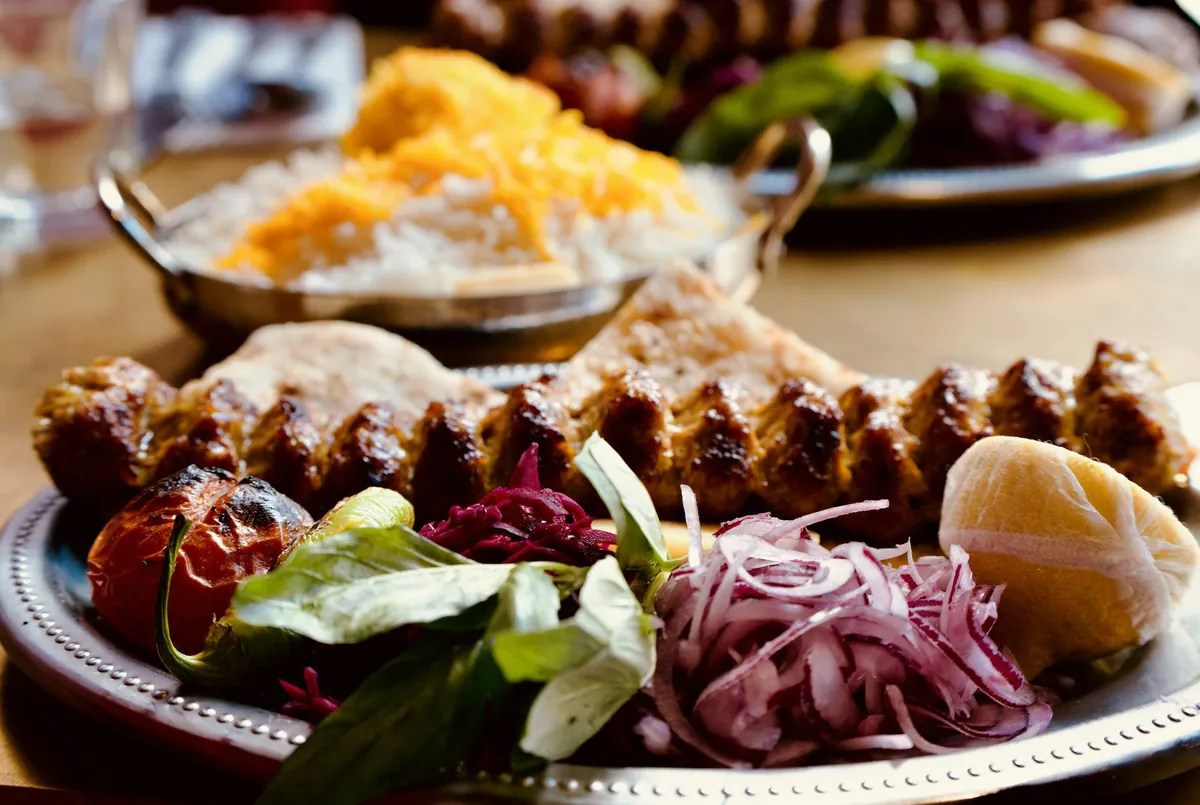
Cattle, sheep, goats, chicken and other permitted animals become halal meat only through zabiha (also written dhabiha), the Islamic slaughter method. The Halal Monitoring Committee’s definition sets out the main requirements:
- The slaughterer is a Muslim and says God’s name (“Bismillah”) over each animal just before the cut.
- The cut is made swiftly by hand with a very sharp knife across the throat, severing the windpipe, the gullet and the jugular veins.
- The blood is drained, because blood is forbidden.
Stunning before slaughter is where standards differ. Some certifiers accept reversible stunning, which leaves the animal alive at the moment of the cut. Others refuse it: HMC in the UK does not accept stunned or machine-slaughtered meat, and HMS (Halal Monitoring Services) in the US certifies hand-slaughtered meat only. If this matters to you, ask which certifier a butcher or restaurant uses, because “halal” alone does not tell you.
Is seafood halal?
Most Islamic schools of law treat all seafood as halal, and it needs no slaughter. The Hanafi school, followed by many Muslims in South Asia and Turkey, traditionally permits only fish. Hanafi scholars disagree about prawns and shrimp, and crab and lobster are generally not allowed in that school. A fish dish is therefore the safest choice when you are unsure of the meat.
Ingredients to check on labels
Packaged food can contain animal-derived ingredients with technical names. Abroad, where you may not read the language, the E-numbers are often the only clue. These are the ones to check:
| Ingredient | Why it matters | Found in |
|---|---|---|
| Gelatin | Often made from pork skin or bones unless labelled as fish, beef-halal or plant-based | Gummy sweets, marshmallows, some yoghurts and desserts |
| Lard | Pork fat | Pastry, refried beans, some breads |
| L-cysteine (E920) | Can come from feathers or hair, or be made synthetically | Bread and baked goods |
| Mono- and diglycerides (E471) | Can be animal or plant fat; listed as doubtful by the American Halal Foundation | Ice cream, margarine, bread |
| Carmine or cochineal (E120) | Red dye made from insects; scholars disagree on it | Red sweets, drinks, yoghurts |
| Animal rennet | Enzyme from calves that may not be halal-slaughtered | Many traditional cheeses |
| Alcohol | Used as a solvent or flavour | Vanilla extract, some sauces, desserts and glazes |
Halal certification and logos
A halal certification body inspects slaughterhouses, factories and restaurants and licenses its logo to the ones that meet its standard. The logo is the most reliable sign you will find, especially in a country where you cannot read the ingredients. Some bodies you will see on labels and shop windows:
| Certifier | Where you will see it | Note |
|---|---|---|
| IFANCA | US packaged food | Uses the Crescent M symbol |
| HMS (Halal Monitoring Services) | US restaurants, butchers and stores | Hand-slaughtered meat only; publishes a city-by-city list of certified places |
| Islamic Services of America (ISA) | US food products | Certifies manufacturers for export |
| American Halal Foundation (AHF) | US food and ingredients | Lists accreditations from Malaysia’s JAKIM and Indonesia’s BPJPH |
| HMC | UK butchers and restaurants | Does not accept stunned or machine-slaughtered meat |
| JAKIM | Malaysia | The government’s halal authority; its logo is common across Southeast Asia |
| UAE certification bodies | UAE | The UAE Ministry of Industry and Advanced Technology requires halal certificates from registered bodies for products and raw materials |
A sign that says “halal” with no certifier named is the owner’s own statement. Many such places are honest, but if you only eat certified meat, ask “who certifies you?” and look for the certificate on the wall, which usually shows an expiry date.
Halal vs kosher
Halal and kosher both forbid pork and blood and both require ritual slaughter, so travellers often ask whether one can stand in for the other. They are not the same:
| Halal | Kosher | |
|---|---|---|
| Pork | Forbidden | Forbidden |
| Alcohol | Forbidden | Allowed, including kosher wine |
| Meat with dairy | Allowed | Not mixed |
| Shellfish | Allowed by most schools | Forbidden |
| Blessing at slaughter | God’s name said over each animal | One blessing can cover many animals in a single session |
The blessing difference is the main reason Muslim opinion is split on kosher meat. Some scholars accept it when halal meat is not available, citing Quran 5:5 on food from the People of the Book. Others, including some Hanafi bodies, do not. A kosher-certified vegetarian or fish dish avoids the question, and it also guarantees no pork.
How to find halal food when you travel
Halal food is hard to find on the road for simple reasons: in many countries Muslims are a small minority, labels are in a language you do not read, and the halal places cluster in particular neighbourhoods rather than near the sights. A little planning solves most of it.
On the plane
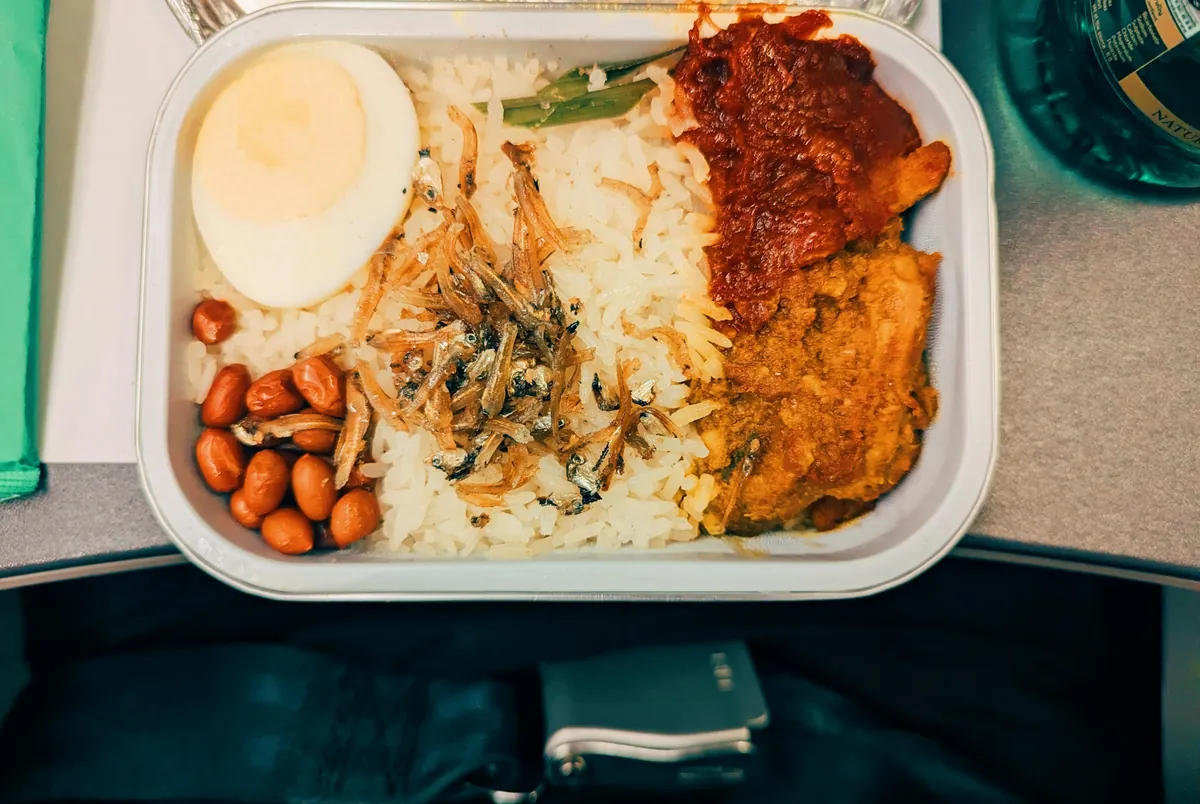
On most airlines a halal meal is a special meal with the code MOML (Muslim meal). Delta says its MOML meals are halal certified and contain no pork or alcohol, and that you must request them at least 24 hours before departure, according to its special meal page. United also asks for 24 hours. Add the meal under “manage booking”, or ask your travel agent to add the MOML code, and check it again at check-in.
Some airlines make the request unnecessary. Emirates says all its meals are halal certified, and Etihad says the same of its meals. On a connecting itinerary, request MOML on every airline that does not serve halal by default. If you want to pack your own food instead, see our guide to bringing food on a plane.
Where halal food is easy and where it takes planning
In Muslim-majority countries such as Malaysia, Indonesia, Türkiye, Saudi Arabia and the UAE, halal is the default and you rarely need to ask. The 2026 Global Muslim Travel Index from CrescentRating and Mastercard ranked Malaysia first overall, with Indonesia, Türkiye and Saudi Arabia joint second. Among non-Muslim-majority destinations, Singapore ranked first, followed by Hong Kong, with Taiwan and the UK joint third.
Elsewhere, halal food is usually concentrated where Muslim communities live. In big cities that means a few neighbourhoods with many halal butchers, restaurants and bakeries. Outside them, and in rural areas, you may find nothing certified, so plan meals around the city stops. UAE residents planning short trips can check our list of visa-free countries for UAE residents, several of which have large Muslim populations.
Questions to ask at a restaurant
- Is the meat halal, and which body certifies it?
- Is all the meat halal, or only some dishes?
- Is wine, beer or another alcohol used in the sauce or marinade?
- Is pork cooked in the same kitchen, and are separate fryers, grills and utensils used?
Clear, specific answers are a good sign. A vague “yes, all halal” with no certifier is common, and how much you trust it is a personal decision.
When there is no halal option
Fish and vegetarian dishes are the usual fallback, as long as they are not cooked with alcohol or on a shared grill with pork. Kosher food guarantees no pork and no mixing of meat and dairy, but opinions differ on kosher meat, as explained above. Supermarkets in larger cities often stock certified halal meat and snacks, which helps if your accommodation has a kitchen.
Directories that list halal places
Certifiers’ own lists are the most dependable sources, because they only include places with a current certificate. HMS, for example, publishes its certified restaurants by city. Community directories such as Zabihah list many more places, but most entries are self-declared. For New York, our NYC halal food finder lists restaurants, carts and cafes by borough and marks which ones are certified.
More food guides: read about Hanoi street food, or browse all our food and drink guides.
Frequently asked questions
Does halal mean no pork?
No pork is one rule, but halal covers more than that. Blood, animals that died before slaughter and intoxicants are also forbidden, and meat from permitted animals counts as halal only when the animal was slaughtered by the halal method.
What does the halal symbol on food mean?
A halal symbol shows that a certification body has checked the product, its ingredients and how it was made. The logo should name or identify the certifier, for example IFANCA’s Crescent M in the US. A plain word “halal” with no certifier is the seller’s own claim.
What does 100% halal mean?
“100% halal” is a marketing phrase, not a separate standard. What matters is who certifies the food. Look for a named certifier on the pack or ask the restaurant which body inspects it.
Is halal meat the same as zabiha?
Zabiha (also written dhabiha) is the Islamic slaughter method, so properly slaughtered halal meat is zabiha. In the US, “zabiha” is often used to mean hand-slaughtered by a Muslim without stunning, which some certifiers require and others do not.
Does halal meat taste different?
The slaughter method itself adds no flavour. Any difference people notice usually comes from the supplier, the breed, the cut or how the meat is cooked.
Can non-Muslims eat halal food?
Yes. Halal food is ordinary food prepared to Islamic dietary rules, and anyone can eat it. Many restaurants and airlines serve halal meat to all customers.
Are prawns and shrimp halal?
Most Islamic schools treat all seafood as halal. The Hanafi school traditionally permits only fish, and its scholars disagree about prawns and shrimp, so some Muslims avoid them.